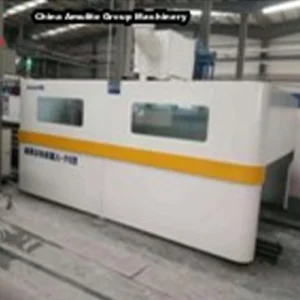
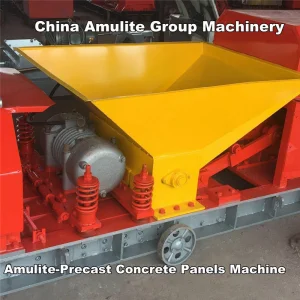
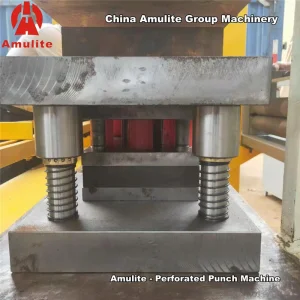
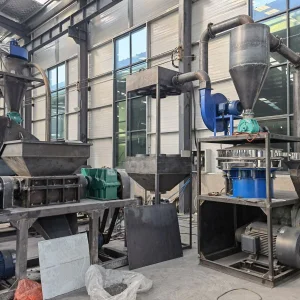
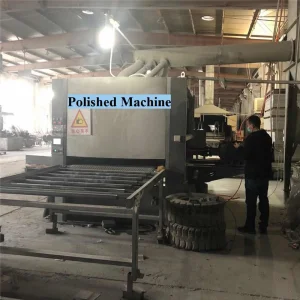
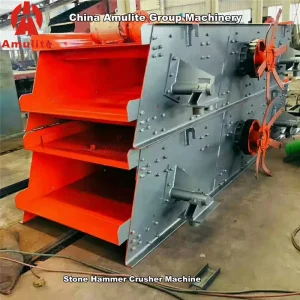
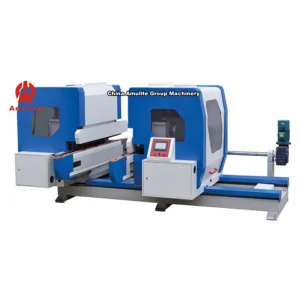
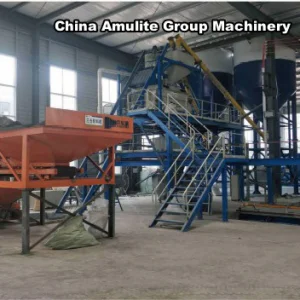
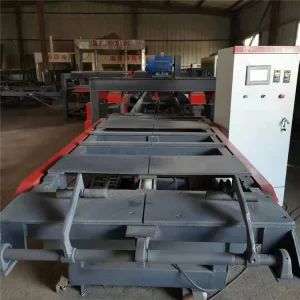
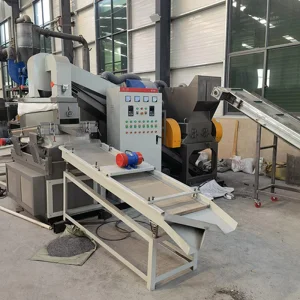
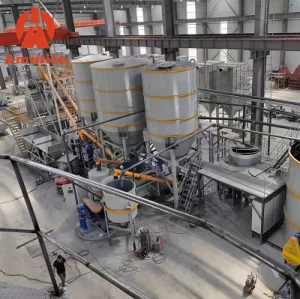
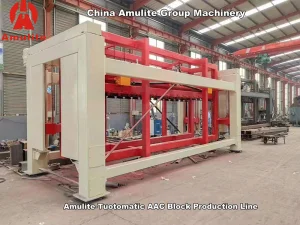
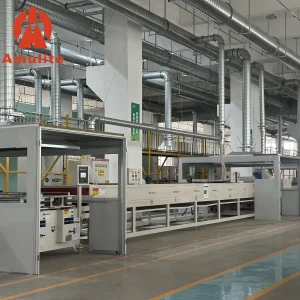
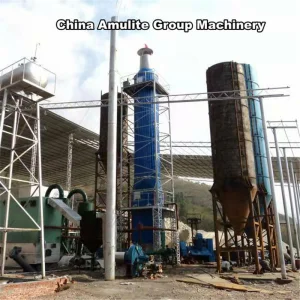
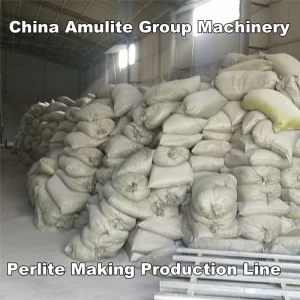
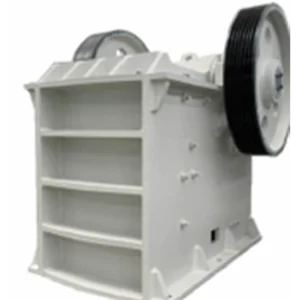
Explore our engineered equipment catalog—spanning automated AAC block lines, high-precision surface processing machinery, precast concrete plant setups, and heavy-duty crushing lines.
The international building envelope and interior cladding sectors are undergoing a massive transformation driven by strict carbon neutrality mandates, rising labor costs, and urgent demands for rapid modular construction. As traditional drywall, timber paneling, and masonry encounter structural supply chain friction and performance limits, high-performance Polyvinyl Chloride (PVC), Wood-Plastic Composite (WPC), and Stone-Plastic Composite (SPC) wall panels have surfaced as the preferred architectural alternative across residential, commercial, and healthcare developments.
Modern procurement directors and factory investors no longer evaluate machinery suppliers merely by output metrics. The focus has shifted toward integrated process stability, energy yield per kilogram of extruded polymer, thermal profile consistency, and multi-layer coaxial co-extrusion versatility. Investing in a state-of-the-art PVC wall panel production line requires deep technical alignment between melt rheology control, vacuum calibration precision, down-stream automated handling, and surface lamination fidelity.
A world-class PVC wall panel manufacturing system requires high mechanical precision across four fundamental processing stages: raw material dosing/compounding, twin-screw plastification, vacuum shaping, and continuous inline surface treatment. Below is the technical breakdown of our factory-tested machine configuration.
Configured with high-torque gearboxes and specialized nitrided alloy screws ($\text{38CrMoAlA}$ with bimetallic coating), our extruders deliver uniform shearing at lower melt temperatures. This preserves the structural integrity of heat-sensitive PVC formulations while allowing high calcium filling ratios for rigid wall board production.
Utilizing imported German tool steel, the hanger-style flow channel inside the T-die guarantees equalized melt velocity across widths from 300mm up to 1200mm. Multi-stage vacuum calibration tables with dual-circuit stainless steel water cooling ensure dimensional stability, precise tongue-and-groove joint tolerances, and micro-flatness.
Equipped with non-marking rubber caterpillar blocks driven by Siemens servo motors, the haul-off unit provides continuous pull force without deforming thin-walled cellular panel structures. The inline dust-free blade cutter ensures clean cross-cuts at high linear extrusion speeds up to 6 meters per minute.
| System Parameter | Conical Twin-Screw (SJSZ-65/132) | Parallel Twin-Screw (JSW-92/188) | Single Screw Secondary Line |
|---|---|---|---|
| Primary Application | Hollow PVC Fluted Wall Panels, UV Marble Sheets | High-Output Heavy SPC/WPC Structural Boards | Decorative Profile Trims & Joint Strips |
| $\text{CaCO}_3$ Filler Capacity | 100 - 250 PHR (High Economy) | 150 - 350 PHR (Ultra-Rigid) | 0 - 50 PHR (Pure Polymer) |
| Extrusion Yield | 280 - 450 kg/h | 600 - 950 kg/h | 80 - 150 kg/h |
| Screw Surface Treatment | PTFE + Plasma Bimetallic Spraying | Tungsten Carbide Alloy Coating | Standard Nitriding ($HV \ge 950$) |
| Energy Consumption Ratio | 0.28 - 0.34 kWh/kg | 0.24 - 0.30 kWh/kg | 0.40 - 0.48 kWh/kg |
Modern industrial parks and building material conglomerates rarely rely on a single product line. High profitability demands an integrated plant architecture capable of manufacturing complementary building products—ranging from lightweight interior PVC panels to structural AAC blocks, fiber cement boards, and EPS sandwich cement wall systems.
Our engineering group provides fully synchronized plant designs where raw material handling, batching silos, thermal curing, and packaging lines share cross-platform PLC automation controls. This macro-level industrial planning drastically reduces capital expenditure (CapEx) while maximizing operational efficiency (OpEx).
Direct inline lamination of decorative hot-stamp foils and PUR woodgrain veneers onto extruded hollow wall profiles. Provides acoustic dampening (NRC 0.45-0.65) and class B1/A2 fire performance depending on formulation chemistry.
Heavy-duty structural wall panel lines using fiber cement board faces filled with lightweight aggregate concrete, expandable polystyrene beads, and cement slurry for rapid exterior wall assemblies.
Fully automated 4.2-meter cutting and autoclave curing lines producing structural autoclaved aerated concrete blocks with thermal conductivity values as low as $0.11 \text{ W/(m}\cdot\text{K)}$.
As global manufacturing evolves toward hyper-automation and zero-emission production, PVC wall panel machinery design is adopting transformative technological innovations. Our R&D engineering division is pioneering three core technological pathways for the 2025–2030 era.
Integration of inline melt pressure transducers and dynamic viscosity sensors directly connected to the extruder drive PLC. AI algorithms dynamically auto-adjust screw RPM, barrel temperature profiles, and feeder speeds to eliminate density variations caused by raw material batch inconsistencies.
Replacing conventional chemical blowing agents (CBA) with physical supercritical carbon dioxide ($\text{scCO}_2$) injection technology. This reduces panel linear weight by up to 25% while creating uniform closed micro-cells ($10-50 \mu m$), increasing flexural impact strength by 40%.
Zero-waste production loops incorporating high-speed inline shredding, edge-trim pulverizing, and direct co-extrusion feed systems. Reclaimed post-industrial PVC scrap is seamlessly fed into the panel core layer while virgin PVC/UV layers encapsulate the outer aesthetic surfaces.
Deploying heavy industrial extrusion equipment into global markets demands strict alignment with local electrical, structural, and safety standards. Our turnkey machinery packages are custom-engineered to meet target market certification guidelines effortlessly.
Full CE Marking compliance under the Machinery Directive 2006/42/EC and Low Voltage Directive 2014/35/EU. Electrical cabinets feature Schneider/Siemens components, IP54 enclosures, dual-channel emergency stop safety relays, and interlocked safety guards across drive shafts.
UL/CSA compliant control panels with NFPA 79 industrial machinery wiring standards. Extruders are built to handle regional power grid requirements ($460\text{V}/60\text{Hz}$ or $230\text{V}/60\text{Hz}$ 3-Phase) with NEMA rated junction boxes and ANSI certified safety labeling.
Equipped with heavy-duty air conditioning units inside main PLC cabinets to handle ambient factory operating temperatures exceeding $50^\circ\text{C}$. Auxiliary water chillers and anti-corrosion stainless steel cooling baths ensure uninterrupted continuous production in desert or humid environments.
Direct technical answers to the most common questions raised by industrial buyers, plant managers, and procurement officers during project evaluation.
Discover our remaining suite of high-efficiency production lines—including automated cutting systems, recycling solutions, perlite expanders, and complete sandwich panel factories.
Consult with our senior machinery engineering team today. Get a customized project proposal, factory layout drawing, raw material formulation budget, and competitive FOB/CIF quotation tailored to your target regional market.