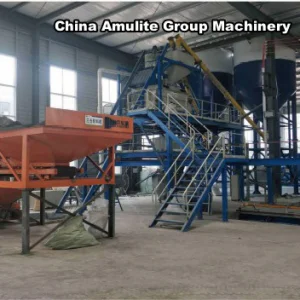
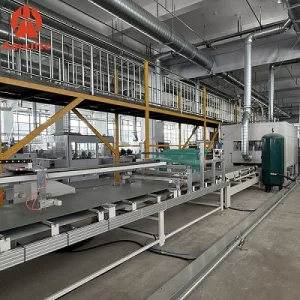
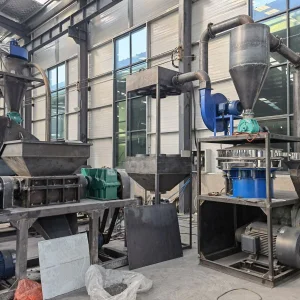
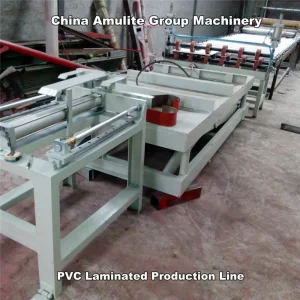
Explore heavy-duty, high-precision building material manufacturing equipment engineered for maximum structural yield and continuous operational efficiency.
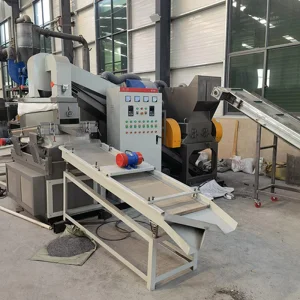
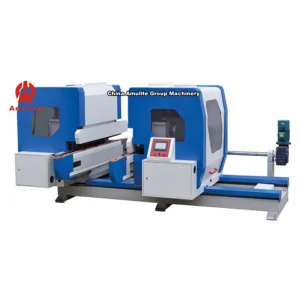
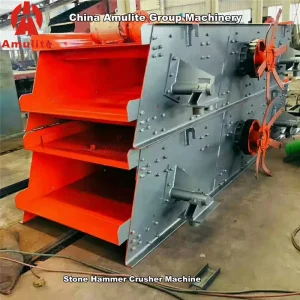
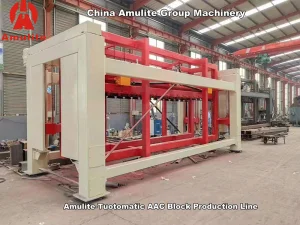
An authoritative analysis of continuous lamination, cold roll profiling accuracy, and thermal barrier optimization for modern industrial roofing and wall panel production.
In the domain of modern modular construction and industrial thermal insulation, the demand for Expanded Polystyrene (EPS) Sandwich Panel Roll Forming Machines has experienced a structural paradigm shift. Driven by international energy-efficiency benchmarks and the accelerated expansion of logistics infrastructure, cold-chain storage facilities, and prefabricated commercial structures, procuring high-performance roll forming lines is no longer merely an equipment purchase—it is a strategic asset allocation decision.
High-quality EPS sandwich panel production systems integrate complex mechanical, hydraulic, pneumatic, and automated electrical subsystems. At the heart of these lines is the continuous roll forming process, wherein color-coated steel coils or aluminum sheets undergo precise multi-stage roller pass sequences to create interlocking male-female joint profiles, corrugated ribs, and architectural micro-ribbing. Simultaneously, pre-expanded EPS foam cores are automatically fed, coated with dual-component polyurethane or polymer adhesives, and pressed under double-belt continuous laminators to form structural, thermal-insulating building envelopes.
Key Engineering Gain: Premium EPS roll forming machines feature hardened Cr12MoV / SKD11 roller dies driven by independent frequency-controlled servo motors. This architecture eliminates linear pitch distortion, reduces sheet surface scratching to <0.01%, and maintains tolerance limits within ±0.5mm across 12-meter panel spans.
Leading manufacturers like China Amulite Group have pioneered advanced manufacturing engineering across comprehensive non-metallic and metallic sheet processing frameworks. By maintaining control over mechanical design, heat treatment, precise CNC machining, and automated control programming, modern suppliers guarantee line operational speeds reaching 4 to 8 meters per minute while preserving maximum bonding shear strength between the metal skin and the EPS core.
Understanding regional procurement trends, capital expenditure evaluation, and technical compliance across global industrial hubs.
Procurement in developed markets prioritizes rigorous FM (Factory Mutual) approvals, fire-retardant EPS grade processing capabilities, energy-efficient PLC drives, and CE/UL certified electrical safety cabinets with safety light curtains and emergency braking systems.
High ambient thermal resistance requirements drive demand for thick EPS core panels (up to 200mm–250mm). Buyers prioritize robust mechanical roll tooling, heavy-duty uncoilers (10-ton hydraulic capacity), and dust-sealed gearboxes suited for arid environments.
Rapid urbanization demands cost-effective modular housing components. EPC contractors search for turnkey suppliers offering quick-change cassette roll formers, automated flying-shear cut-offs, and multi-functional lines capable of processing wall, roof, and ceiling panel geometry.
Enterprise procurement managers must look beyond initial hardware acquisition costs. A lower-priced machine with inferior roller chrome plating or sub-standard frame rigidity can result in structural deformation, frequent sheet jamming, adhesive wasting, and downtime costs exceeding the original machine price within two years. High-tier roll forming plants utilize stress-relieved welded steel plate frames (30mm–40mm side wall thickness), fully ground roll shafts (40Cr steel), and precision gear transmission to maintain long-term alignment stability.
Detailed technical breakdown of the multi-stage EPS continuous roll forming process line.
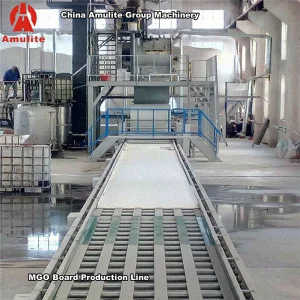
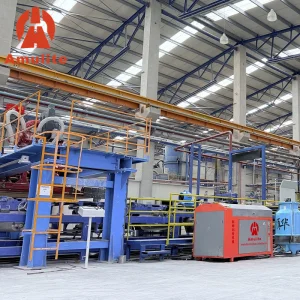
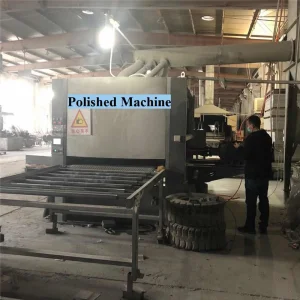
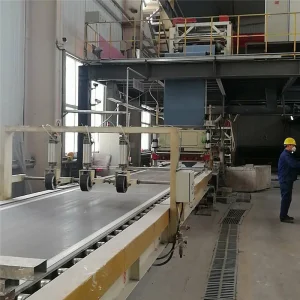
A turnkey EPS sandwich panel machine comprises several specialized machinery modules operating under a synchronized SCADA / PLC control matrix. The diagrammatic engineering workflow spans from raw coil decoiling to final automated pallet stack management.
| Subsystem Module | Technical Parameters & Components | Engineering Impact & Output Contribution |
|---|---|---|
| Hydraulic Uncoiler | Capacity: 5T – 10T; Expansion range: 460mm–520mm; Dual-head motorized with auto loop control. | Ensures smooth, tension-controlled feeding of galvanized or prepainted steel sheets without coil sagging or surface damage. |
| Cold Roll Forming Mill | 14 to 24 forming stations; Shaft diameter: 75mm–90mm; Roller material: 45# forged steel with 0.05mm hard chrome coating. | Progressively shapes top and bottom metal skins with zero micro-cracking of paint coatings and consistent profile dimensions. |
| EPS Core Infeed & Grooving | Auto EPS cutter, lock-joint milling router, dust suction exhaust system; core thickness range: 50mm–250mm. | Shapes the male-female side tongue and groove joint into the EPS foam board, allowing tight thermal sealing between finished panels. |
| Dual-Component Gluing System | Precision metering pumps, multi-nozzle motorized transverse spray carriage, polyurethane / adhesive pump system. | Applies uniform adhesive coverage across 100% of panel contact surfaces, preventing core-to-skin delamination over operational lifetimes. |
| Double Belt Laminator Press | Rubber conveyor belts or caterpillar steel plate belts; Length: 6m – 12m; Temperature-controlled heating plate matrix. | Applies controlled compressive pressure and thermal acceleration to cure adhesives continuously without crushing EPS core cell structures. |
| Flying Shear Cutting Machine | Servo-driven tracking knife system; Band-saw cutter or circular saw; Hydraulic hold-down clamp; PLC length setting tolerance ±1.0mm. | Performs clean, burr-free cross cuts on continuously moving sandwich panels without stopping the upstream roll forming line. |
The roll forming industry is undergoing rapid technical evolution toward Industry 4.0 integration. Next-generation EPS sandwich panel machinery manufactured by leading factories incorporates smart IoT sensor arrays, closed-loop thermal cameras, and predictive maintenance algorithms:
Evaluating vendor capabilities, manufacturing scale, and engineering rigor between regional industrial equipment clusters.
The global supplier landscape for EPS roll forming machines is segmented into high-end European custom engineering firms and high-efficiency, cost-optimized Chinese heavy equipment manufacturing groups. Specialized industrial groups like China Amulite Group bridge this gap by incorporating European component standards (Siemens PLC, Schneider electronics, Festo pneumatics, SKF bearings) with robust Chinese heavy-machinery production capacity.
Top-tier suppliers utilize 5-axis CNC machining centers to process roller dies, ensuring concentricity tolerances under 0.01mm. Shafts undergo high-frequency induction quenching and tempering to withstand structural fatigue during decades of continuous operation.
Modern lines leverage touch-screen HMI systems supporting multi-language operational interfaces, automatic order queuing, remote VPN cloud diagnostics, and line speed synchronization across decoilers, roll formers, and flying shear cutters.
Leading factories conduct rigorous 72-hour full-load dry runs and wet sample trials prior to export packaging. Frame structures are stress-relieved via vibration annealing to eliminate internal weld stresses and prevent structural warping during transoceanic shipping.
Ensuring operational compliance with international building safety codes and local utility grid parameters.
Deploying heavy industrial equipment across international borders requires detailed engineering localization. High-tier roll forming machine suppliers provide comprehensive technical assistance covering electrical voltage adaptations (e.g., 380V 50Hz, 460V 60Hz, 220V 60Hz 3-phase), foundation civil engineering layouts, utility load calculations (electricity, compressed air, hydraulic pressure demands), and local regulatory compliance standardizations.
Professional suppliers execute structured field installation programs led by senior mechanical and electrical field engineers:
Expert answers addressing structural performance, production line customization, mechanical tolerances, and factory maintenance.
Discover complete industrial equipment solutions engineered for precast panels, insulation boards, and automated recycling systems.