High-Quality Asbestos Free Board Production Line Companies & Products

Engineering Next-Generation Non-Asbestos Fiber Cement & Calcium Silicate Board Manufacturing Systems for Global Building Material Leaders

Primary Line & Automated Machinery Solutions

Featured Fiber Board & Industrial Production Equipment

Explore our high-performance production lines, finishing units, and recycling machinery engineered for zero-asbestos building material plants globally.
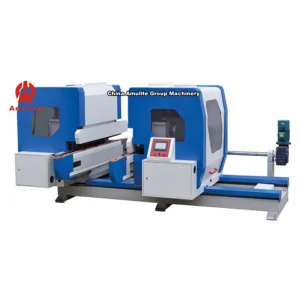
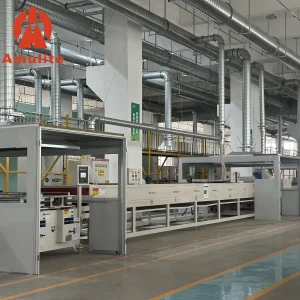
Best AM806BH-10 Technical Parameters Manufacturer
Best AM806BH-10 Technical Parameters Manufacturer, Products
View Technical Parameters
OEM UV Coating/Painting Production Line
OEM UV Coating/Painting Production Line Manufacturer, Factories
Explore Coating Line
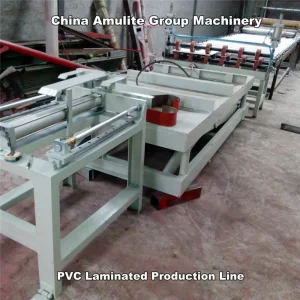
China PVC Laminated Production Line
China PVC Laminated Production Line Factories, Products
Explore Lamination Line
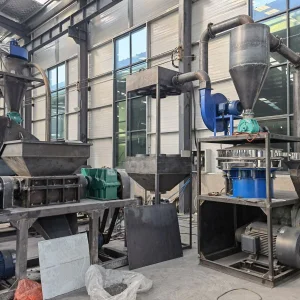
OEM Lithium Battery Recycling Equipment
OEM Lithium Battery Recycling Equipment Factory, Company
View Recycling Systems
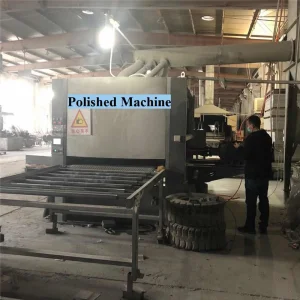
Single Face Polished Machine
China Single Face Polished Machine Manufacturers, Suppliers
View Polishing Machine
Embossed Metal Composite Exterior Panels Line
High-Quality Embossed Metal Composite Exterior Panels Production Line
View Exterior Panel Line
Gypsum Powder Production Line
Buy Gypsum Powder Production Line Supplier, Product
View Powder Line
Automatic Four Side Edge Cutting Machine
OEM 1300 II Type Automatic Four Side Edge Cutting Machine
View Cutting Machine
Industry Engineering Whitepaper

Macro Industry Transformation: Shift to Non-Asbestos Fiber Board Production

A comprehensive analysis of global regulatory compliance, raw material evolution, and state-of-the-art Hatschek manufacturing automation.

Strict Regulatory Compliance

Global bans on chrysotile asbestos under EU REACH, US EPA, and Asian green initiatives require complete plant retrofits toward non-toxic matrix formulations.

Advanced PVA & Pulp Fibers

Replacing mineral fibers with refined wood pulp, Polyvinyl Alcohol (PVA), and synthetic micro-fibers guarantees superior tensile strength and impact resistance.

Hydrothermal Autoclaving

High-pressure steam curing at 1.2 MPa and 190°C drives Tobermorite crystalline phase synthesis, securing A1-class fireproofing and dimensional stability.

Smart SCADA Automation

Integrated Siemens/Schneider PLC systems provide closed-loop control over slurry concentration, sheet thickness, vacuum dewatering, and auto-stacking.

100%
Non-Asbestos Eco Guarantee
1–30M
Annual Capacity (m²/Year)
1.2-1.7
Density Range (g/cm³)
Class A1
Incombustible Fire Rating

Engineering Architecture of Modern Asbestos-Free Board Lines

The global building material landscape has reached a pivotal juncture. Regulatory mandates, environmental health standards (such as ISO 14001 and OSHA silica/dust directives), and modern architectural requirements have forced a complete retirement of legacy chrysotile-based cement board production. Today's high-efficiency Asbestos-Free Board Production Lines utilize sophisticated multi-stage slurry processing, precision Hatschek sheet-forming machines, vacuum dewatering arrays, and high-pressure hydrothermal autoclaves to produce fiber cement and calcium silicate panels that vastly surpass traditional materials in mechanical strength, flexural endurance, and fire safety.

"The transition from asbestos mineral matrices to synthetic polymer (PVA) and refined organic cellulose fiber matrices requires precise control over slurry rheology, hydraulic pressing, and crystal hydro-thermal synthesis. Modern automated lines achieve 99.4% uptime with zero toxic discharge."

1. Slurry Preparation & Chemical Rheology Optimization

The foundational phase of an asbestos-free fiber cement board line lies in raw material hydration and uniform dispersion. Unlike asbestos, which naturally splits into microscopic flexible fibers, alternative reinforcing materials require specialized mechanical treatment:

  • Cellulose Pulp Refining: Imported unbleached Kraft pulp or local recycled fiber is treated in high-consistency hydrapulpers and disc refiners to achieve a target Schopper-Riegler (°SR) freeness of 45–60°SR. This maximizes hydrogen bonding and mechanical mechanical interlocking within the matrix.
  • Matrix Synthesis: Ordinary Portland Cement (OPC Type 1/5), fine silica sand (ground down to a Blaine surface area > 3500 cm²/g), reactive alumina, and recycled green board scrap are dosed via micro-feeder loss-in-weight systems into high-shear mixers.
  • Fiber Reinforcement: Polyvinyl Alcohol (PVA) fibers (typically 6–10 mm in length, with high tenacity > 11.5 cN/dtex) and polypropylene (PP) micro-fibers are introduced to mitigate plastic shrinkage cracking and elevate flexural strength (MOR) above 16 MPa.

2. The Modern Hatschek Sheet Forming & Dewatering Process

The heart of an asbestos-free board line is the Hatschek cylinder machine. Slurry containing 8–12% solids is continuously fed into 3 to 5 vat units. Rotating stainless-steel mesh cylinders pick up thin films of cement-fiber slurry (0.2–0.3 mm per revolution), transferring them onto a continuous synthetic felt belt. Vacuum dewatering boxes located beneath the felt extract excess free water, increasing solid concentration to over 70% before the wet sheet reaches the accumulation roll (format roller).

Technical Parameter Standard Density Board High Density Exterior Cladding Ultra-Light Calcium Silicate
Density (g/cm³) 1.20 – 1.35 1.45 – 1.70 0.80 – 1.05
Flexural Strength (MOR) ≥ 12 MPa ≥ 18 MPa ≥ 8 MPa
Fire Resistance Class BS 476 Part 4 / Class A1 EN 13501-1 A1-s1, d0 ASTM E136 Non-Combustible
Thermal Conductivity 0.24 W/(m·K) 0.31 W/(m·K) 0.12 W/(m·K)
Curing Method Air Cured (28 Days) / Steam Hydraulic Press + Autoclave High-Pressure Autoclave

3. Hydraulic Pressing and Autoclave Hydrothermal Synthesis

For high-density exterior siding and heavy-duty industrial partition boards, the formed green sheets are routed through a 4000-ton to 10000-ton multi-opening hydraulic press line. Pressing reduces internal micro-voids, increases water impermeability, and boosts density above 1.5 g/cm³.

Following pressing, boards undergo pre-curing for 6 to 8 hours at 50°C and 90% humidity to develop initial handling strength. The green boards are then loaded into heavy industrial autoclaves operating at 1.2 MPa saturated steam pressure (190°C) for 10 to 12 hours. During this hydrothermal reaction, amorphous silica and calcium hydroxide chemically react to form Tobermorite crystalline structures [Ca5Si6O16(OH)2·4H2O]. This crystalline lattice eliminates moisture movement, prevents efflorescence, and ensures zero moisture expansion.

Commercial & Localization Strategy

Global Market Intent & Regional Localization Scenarios

Adapting manufacturing parameters to regional raw material supplies, climatic stresses, and local building codes.

North America & EU Standards

Focuses on high-margin exterior rainscreen cladding, decorative wood-grain siding, and tile backer boards compliant with ASTM C1186 Type A and EN 12467 Category A standards.

Asia-Pacific Rapid Urbanization

Demands high-speed 10–30 million m²/year turnkey lines producing lightweight partition panels, ceiling tiles, and floor substrate boards for multi-story residential towers.

Middle East & Tropical Regions

Requires thermal insulation calcium silicate boards capable of withstanding extreme humidity, coastal salt mist, thermal cycling, and high solar radiation exposure.

Technology Roadmap 2026–2035

Future Outlook: Low-Carbon & Smart Fiber Board Manufacturing

Innovative technology pathways driving zero-carbon binder matrices, automated online quality monitoring, and secondary processing automation.

1. Carbon Capture & Geopolymer Mineral Binders

The next decade of fiber cement innovation centers on reducing embodied carbon. Line engineering is evolving toward partial cement replacement using calcined clays, ground granulated blast furnace slag (GGBS), fly ash, and silica fume activated by alkali silicate chemistry. Geopolymer-bound asbestos-free boards exhibit near-zero carbon footprints while maintaining Class A1 fire performance and enhanced resistance to acid rain and chemical attack.

2. Closed-Loop Real-Time Computer Vision & Laser Gauging

Modern production lines feature integrated optical sensor arrays and industrial AI algorithms. High-frequency laser displacement gauges continuously measure sheet thickness across 16 transverse channels following the format roller. Closed-loop feedback automatically adjusts slurry bucket dosing pumps and cylinder vacuum levels in real-time, eliminating human error and maintaining thickness tolerances within ± 0.15 mm across a 1.22 m x 2.44 m sheet.

3. Automated Downstream Value-Add Finishing Machinery

A turnkey asbestos-free board line no longer stops at raw board drying. High-value profitability requires integrated secondary process lines: automated 4-side edge profiling machines (tongue & groove, beveling), calibrated single/double-face calibrating sanders, high-speed UV painting & coating lines, and automatic PVC/HPL lamination units. Modern facilities achieve seamless robotic transfer from autoclave offloading directly through to final shrink-wrapped pallet packaging.

Technical Knowledge Base

Frequently Asked Questions (Engineering Q&A)

Direct responses to fundamental engineering, formulation, and plant ROI questions from certified project leads.

What are the main chemical differences between air-cured and autoclaved non-asbestos boards?
Air-cured fiber cement boards rely on normal hydration of Portland cement to form Calcium Silicate Hydrate (C-S-H) gel, requiring 28 days of wet curing. Autoclaved boards incorporate finely ground silica sand and undergo high-pressure steam reaction at 1.2 MPa (190°C), converting C-S-H gel into crystalline Tobermorite. Autoclaved boards feature dramatically lower moisture movement, higher dimensional stability, and zero long-term carbonation shrinkage.
How does a plant convert an old asbestos board line to an asbestos-free line?
Conversion requires upgrading three key sections: 1) Installing pulp refining (disc refiners, hydrapulpers) and high-accuracy micro-dosing systems for synthetic fibers (PVA/PP); 2) Upgrading the Hatschek vat agitating systems and vacuum dewatering pumps to handle bulkier synthetic fiber slurries; and 3) Replacing or extending curing lines with pre-curing tunnels and industrial steam autoclaves.
What is the typical energy and steam consumption for a 5 million m²/year line?
For a standard 5 million m²/year (based on 6mm board thickness) autoclaved fiber cement line, typical utility requirements are: Electric power connected load ~ 1200 kW; Steam consumption ~ 3.5 to 4.5 tons/hour (at 1.3 MPa boiler pressure); Water consumption ~ 15–20 m³/hour (with 95% water recycling loop engaged).
Why is wood pulp refining degree (°SR) critical for Hatschek sheet formation?
Pulp refining fibrillation controls the filtration rate on the rotating mesh cylinders. If the refining degree is too low (< 30°SR), cement retention is poor, leading to slurry loss and uneven thickness. If it is too high (> 65°SR), vacuum dewatering becomes inefficient, causing sheet delamination, blistering, and format roller slippage during high-speed wrapping.
What quality control standards must non-asbestos boards pass for international trade?
Primary international compliance standards include ASTM C1186 (Standard Specification for Flat Fiber-Cement Sheets in North America), EN 12467 (European Standard for Fiber-Cement Flat Sheets), and ISO 8336. Key testing protocols evaluate flexural strength under wet/dry conditions, freeze-thaw durability (100 cycles), water impermeability, and reaction to fire (BS EN 13501-1 Class A1).
Complementary Building Material Machinery Matrix

Associated Plant Equipment, Recycling & Block Systems

Complete turnkey eco-systems: from AAC block lines and perlite processing to precast concrete and industrial recycling equipment.
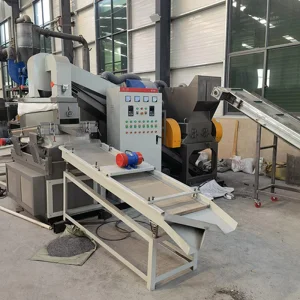
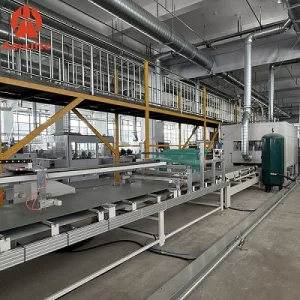
Buy Copper Wire Recycling Machine
Buy Copper Wire Recycling Machine Companies, Products
View Wire Recycling
Flexible Clay Ceramic Tile Production Line
Best Flexible Clay Ceramic Tile Production Line Manufacturer
View Clay Tile Line
China Automatic Bricks Making Production Line
China Automatic Bricks Making Production Line Manufacturers
View Brick Production
Buy Perlite Production Line
Buy Perlite Production Line Manufacturers, Company
View Perlite Line
China Gypsum Board Production Line
China Gypsum Board Production Line Supplier, Factories
View Gypsum Line
Precast Concrete Products Machinery
Best Precast Concrete Products Machinery Manufacturers
View Concrete Machinery
China Non-Asbestos Corrugated Roof Sheets Line
China Non-Asbestos Cement Corrugated Roof Sheets Line
View Roofing Line
Amulite AAC Blocks Automatic Machines 4.2m
Famous Amulite AAC Blocks Customized Automatic Machines 4.2m
View AAC Machines