Explore our engineered turnkey solutions for high-capacity wall panel, board, and specialized industrial manufacturing.
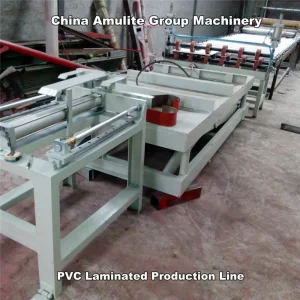
China PVC Laminated Production Line Factories, Products
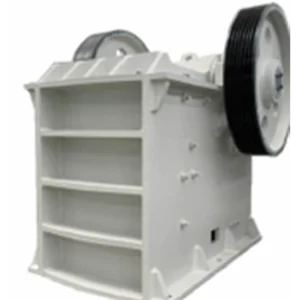
Buy Stone Hammer Crusher 6CX Euro Series Jaw Crusher Company, Product
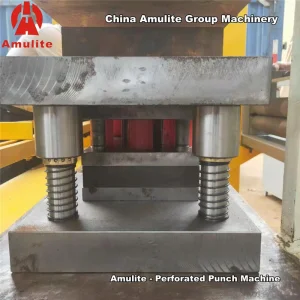
High-Quality Amulite Perforated Punch Machine System Technical Data Manufacturer, Suppliers
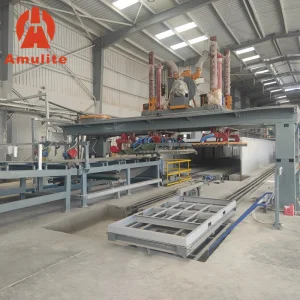
China Non-Asbestos/Asbestos Cement Corrugated Roof Sheets Production Line Company, Product
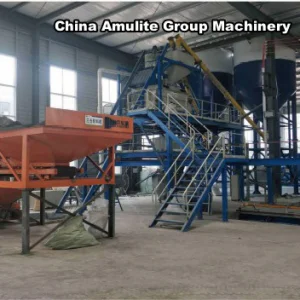
Buy Hollow Core Wall Panels Production Line Factory, Factories
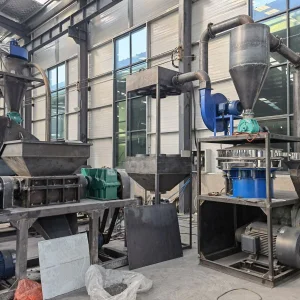
OEM Lithium Battery Recycling Equipment Factory, Company
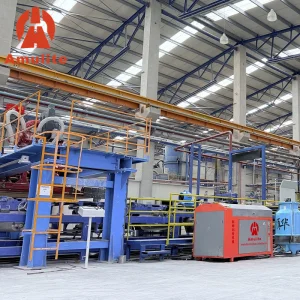
China Fiber Cement Board /Calcium Silicate Board Production Line Factory, Companies
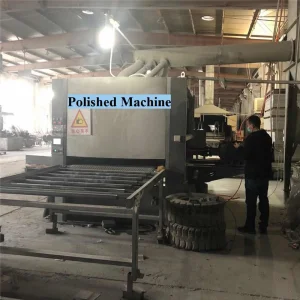
China Single Face Polished Machine Manufacturers, Suppliers
An authoritative analysis of modern composite panel manufacturing, market trajectories, structural engineering shifts, and green building standard mandates.
The modern construction ecosystem is undergoing a paradigm shift driven by stringent decarbonization targets, accelerating global urbanization, and an acute labor deficit in traditional field masonry. At the nexus of this revolution is the high-capacity continuous sandwich board production line—an integrated manufacturing platform designed to yield composite structural components with superior thermal efficiency, seismic resilience, and rapid installation metrics.
Historically utilized primarily in cold storage envelope solutions, structural sandwich panels—comprising fiber cement or silicate facings combined with expanded polystyrene (EPS) cement cores, polyurethane (PU), polyisocyanurate (PIR), or rockwool cores—have expanded exponentially into multi-story residential, commercial partition wall, and modular industrial infrastructure.
Information Gain Insight: Advanced continuous EPS cement sandwich lines have demonstrated up to a 65% reduction in overall site erection duration while slashing total structural weight by 40% compared to traditional concrete masonry units (CMUs).
As global building codes demand compliance with strict operational energy limits (such as ASHRAE 90.1, EU EPBD, and China’s Ultra-Low Energy Building Standards), top-tier sandwich panel factory engineering companies are evolving into material science hubs. Modern line design must now balance dynamic slurry rheology, high-speed automated de-moulding, precise continuous foam extrusion, and real-time Quality Assurance (QA) through industrial internet of things (IIoT) sensors.
The international insulated sandwich panel market, evaluated at over USD 10.5 Billion in 2024, is projected to achieve a Compound Annual Growth Rate (CAGR) of 7.4% through 2032. Growth is disproportionately concentrated in automated sandwich lines producing composite fire-rated cement panels for modular construction.
A deep breakdown of mechanical execution, automated slurry formulation, continuous curing tunnels, and PLC/SCADA control networks.
Precision dosing systems utilize loss-in-weight gravimetric feeders for Portland cement, fly ash, silica sand, and specialized chemical additives. Micro-processor controlled wet mixers introduce pre-foamed EPS beads, achieving homogenous dispersion without bead crushing, maintaining controlled matrix density ranging from 450 to 800 kg/m³.
High-tensile calcium silicate or non-asbestos fiber cement sheets (4mm to 6mm thickness) are automatically fed via suction positioning gantries into vertical or horizontal continuous molding tracks. High-pressure injection heads pump the core slurry into the cavity, ensuring zero air voids and optimum interfacial bond strength.
The continuous panel stream enters temperature-controlled curing chambers with multi-zone humidity control. Steam acceleration profiles reduce curing cycles from 24 hours down to under 4 hours, maximizing turnover while preserving matrix flexural strength ($\ge 1.5\text{ MPa}$) and preventing moisture differential warping.
Strategic technical imperatives shaping the future of sandwich panel manufacturing lines over the coming decade.
Future-proof sandwich lines integrate edge-computing SCADA architectures paired with AI computer vision. Automated optical inspection (AOI) systems scan panel surfaces at speeds up to 30 m/min, detecting micro-cracks, edge chipping, and thickness deviations ($\le \pm 0.5\text{mm}$) in real time. Dynamic feed adjustments continuously calibrate core slurry density.
Environmental regulations are driving the replacement of traditional Ordinary Portland Cement (OPC) with alkali-activated materials (geopolymers), supplementary cementitious materials (SCMs) like GGBS and fly ash, and bio-based core insulation fillers. Modern lines must process ultra-low-carbon binder formulations without compromising demoulding speeds.
How lightweight composite sandwich boards serve distinct engineering demands across diverse climate zones and architectural typologies.
In dense metropolitan high-rises, lightweight EPS cement panels replace heavy hollow clay bricks. Providing up to 45 dB Sound Transmission Class (STC) ratings at 90mm thickness, these panels maximize floor area efficiency while reducing structural dead-loads on superstructures.
Deployed across earthquake-prone regions, steel-frame villas clad with tongue-and-groove composite sandwich panels absorb inter-story shear forces. The high impact strength ($\ge 500\text{ J}$) ensures structural integrity during high-magnitude seismic events.
Utilizing PU/PIR or high-density XPS composite sandwich boards, modern cold-chain infrastructure relies on gas-tight joint profiles to eliminate thermal bridging, preventing condensation formation and maintaining strict sub-zero operational temperatures.
A comparative evaluation of core sandwich line methodologies to assist factory investors and plant managers in capital expenditure decision-making.
| Line Specification Metric | EPS Cement Sandwich Line | Continuous PU/PIR Sandwich Line | Rockwool Fireproof Line |
|---|---|---|---|
| Primary Facing Materials | Fiber Cement / Calcium Silicate (4-6mm) | Color Coated Steel / Aluminum Foil | Prepainted Steel Sheet / Metal Facing |
| Core Density Range | 450 - 750 kg/m³ | 38 - 50 kg/m³ | 80 - 140 kg/m³ |
| Fire Endurance Class | Class A1 (Non-Combustible) | Class B1 / PIR (Flame Retardant) | Class A1 (Pure Mineral Fiber) |
| Thermal Conductivity ($\lambda$) | 0.055 - 0.075 W/m·K | 0.020 - 0.024 W/m·K | 0.038 - 0.045 W/m·K |
| Sound Insulation (STC) | 42 - 50 dB (90mm panel) | 28 - 34 dB | 35 - 42 dB |
| Target Application Focus | Internal/External Masonry Partitions | Cold Storage & Commercial Roofing | High Fire-Risk Industrial Envelopes |
Comprehensive guidance curated by senior process engineers and factory engineering specialists.
Review our full range of processing machinery, block lines, crushers, and material recycling systems.
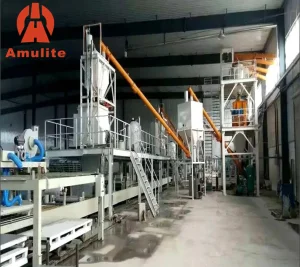
Best XPS Insulation Tile Backer Production Line Supplier, Companies
Famous Amulite AAC Blocks Customized Automatic Machines- 4.2m Manufacturers, Company
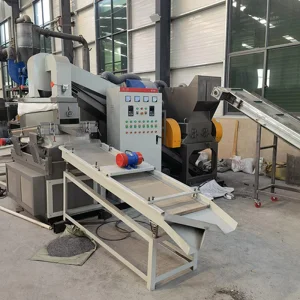
Buy Copper Wire Recycling Machine Companies, Products
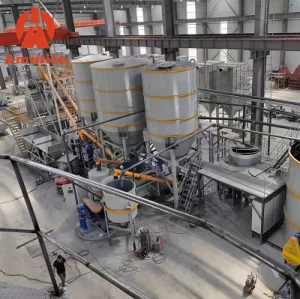
OEM EPS Sandwich Cement Wall Panels Production Line Companies, Products
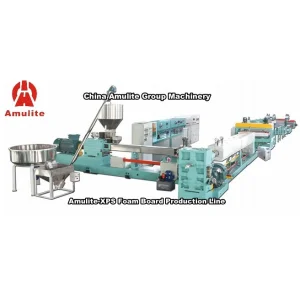
OEM Amulite CO2 XPS Foam Board Production Line Factory, Factories
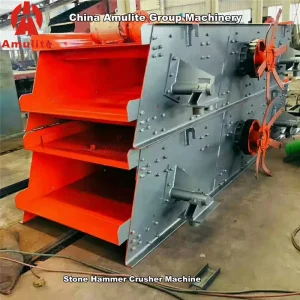
OEM Stone Hammer Crusher Machine Suppliers, Factory
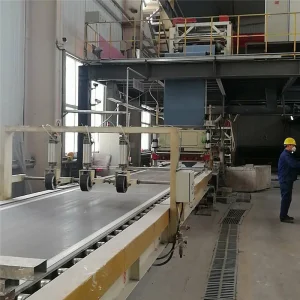
China Gypsum Board Production Line Supplier, Factories
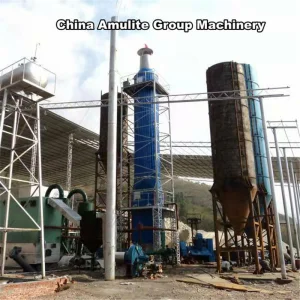
Buy Gypsum Powder Production Line Supplier, Product