Precision-engineered production plants designed for high-yield, continuous manufacturing of fiber cement, EPS sandwich, AAC blocks, and precast hollow core wall systems.
Understanding the mechanical engineering, material physics, and automated process dynamics driving the global transition to lightweight hollow core wall panels.
Information Gain Key Takeaway: Modern hollow core concrete panel extrusion technology reduces structural dead load by up to 45% compared to solid masonry, while increasing speed of vertical erection by 300%. Sourcing machinery from leading Chinese OEM factories offers a 40–60% CAPEX advantage alongside Siemens PLC automation and ISO-compliant structural integrity.
The global prefabricated construction ecosystem is experiencing a seismic shift toward ultra-efficient lightweight partitions and load-bearing precast elements. At the heart of this industrial transformation lies hollow core panel machinery. Built to process dry-mix lightweight concrete, fly ash, expanded perlite, aggregate, and OPC cement, these machines produce continuous slabs engineered with circular or elliptical voids. These interior voids minimize raw material usage while optimizing acoustic attenuation (STC ratings exceeding 48 dB) and thermal insulation values.
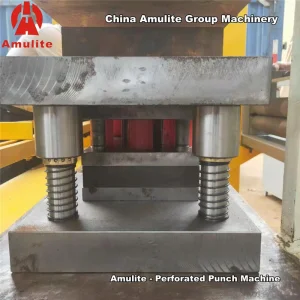
Selecting famous hollow core panel machinery manufacturers requires an exhaustive evaluation of machine vibration frequency, compaction torque, hydraulic ramming pressure, and extrusion screw wear resistance. Leading factories in China have pioneered high-frequency vibratory extrusion and slip-forming machinery capable of casting wall panels ranging from 60mm to 200mm in thickness at speeds exceeding 1.8 to 2.5 linear meters per minute.
High-amplitude, multi-frequency vibrators liquefy the dry concrete matrix, achieving high density without high water-cement ratios, preventing void collapse.
Precision-cast tungsten carbide auger flights withstand continuous abrasive wear from quartz sand, expanded clay, and industrial slag aggregates.
Integrated Siemens/Schneider smart cabinets adjust extrusion speed based on concrete batch consistency, preventing micro-fractures in real-time.
An engineering breakdown of China’s structural steel, hydraulic manufacturing, and integrated machinery supply chain superiority.
The global dominance of Chinese hollow core panel machinery factories is rooted in deep vertical integration. China’s machinery industrial clusters—such as those in Hebei, Shandong, and Henan—combine heavy steel casting, precision CNC machining, heat treatment plants, and international logistics hubs within tight geographical radii. This proximity enables manufacturers like Amulite Group to engineer turnkey plant solutions with unmatched speed and structural resilience.
Unlike light-duty competitors, top Chinese manufacturers construct machine frames using heavy Q355B structural steel beams processed via stress-relieving heat treatments. Frame deflection under continuous 40kN vibration is kept below 0.05mm, ensuring that precast hollow core panels maintain dimensional tolerances within ±1mm across a 6-meter span.
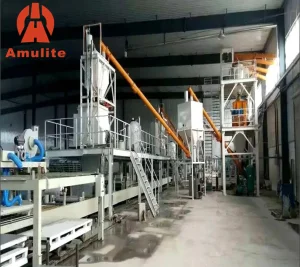
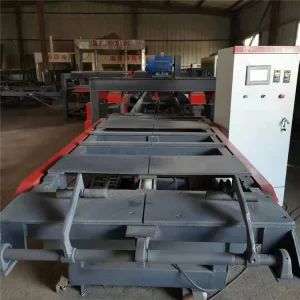
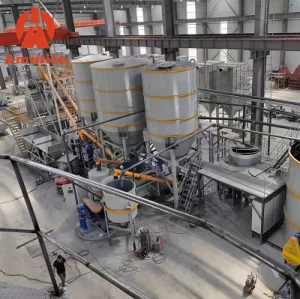
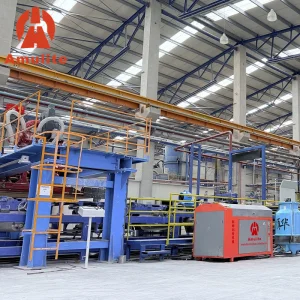
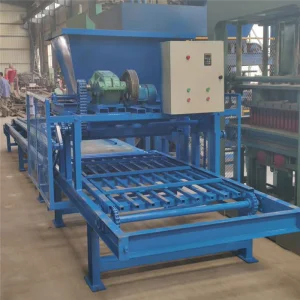
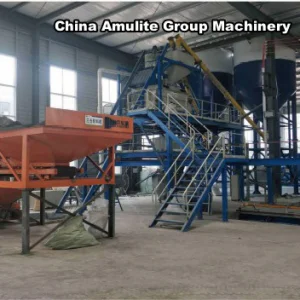
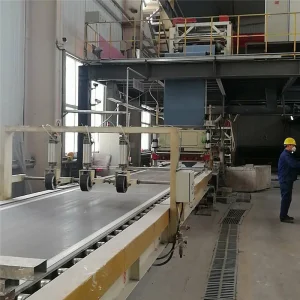
A famous Chinese factory does not merely sell an extruder; it engineers the entire production line ecosystem. This encompasses concrete dry batching plants, planetary mixers, motorized shuttle cars, automatic multi-blade panel cutting saws, hydraulic tilting tables, and automated stacking machinery.
| Evaluation Parameter | European Equipment Tier | China Top-Tier OEM (e.g., Amulite) | Conventional Local Suppliers |
|---|---|---|---|
| Initial Equipment CAPEX | High ($800k – $2.5M+) | Optimal ($150k – $450k) | Low ($80k – $150k) |
| Extrusion Speed (m/min) | 2.0 – 3.0 m/min | 1.8 – 2.5 m/min | 0.8 – 1.2 m/min |
| Frame Steel Grade & Stress Relief | Standard High Steel (Heat Treated) | Q355B Heavy Steel (Heat Treated) | Standard Q235 (Non-Treated) |
| Core Component Brands | Siemens / SEW / Rexroth | Siemens / Schneider / Yuken | Generic Unbranded |
| Wear Life of Screw Augers | 80,000 – 120,000 meters | 60,000 – 100,000 meters | 15,000 – 25,000 meters |
| Turnkey Customization Flexibility | Low (Rigid Standard Modular) | High (Tailored Formulations & Specs) | Minimal (Off-the-shelf only) |
The global shift toward green building, carbon neutrality, and rapid urbanization requires industrialized panel solutions.
Governmental carbon-reduction mandates and severe labor shortages across Western Europe, North America, the Middle East, and Southeast Asia have made precast hollow core panels the preferred architectural solution. By embedding hollow core wall production lines directly near major construction hubs, contractors reduce transportation energy while producing lightweight walling units that comply with strict LEED, BREEAM, and ISO 14001 environmental benchmarks.
An authoritative breakdown of formulation ratios, extrusion vibration physics, and curing parameters for concrete production engineers.
Optimizing raw material mix design is essential to achieve high early-age compressive strength while maintaining a light bulk density (typically 450 kg/m³ to 900 kg/m³ for lightweight partition panels, and 1200–1600 kg/m³ for load-bearing slabs). Below is an industry-standard mix design template engineered for high-speed extruder machinery:
| Material Component | Percentage Weight (%) | Technical Function in Panel Matrix |
|---|---|---|
| Ordinary Portland Cement (OPC 42.5/52.5) | 28% – 35% | Primary hydraulic binder establishing 28-day compressive strength (7.5–15 MPa). |
| Fly Ash / Ground Granulated Blast-Furnace Slag (GGBFS) | 15% – 25% | Pozzolanic additive improving micro-void filling, workability, and long-term durability. |
| Lightweight Aggregate (Ceramsite / Perlite / EPS Beads) | 25% – 35% | Reduces structural mass, boosts acoustic deadening and thermal insulation performance. |
| Fine Quartz Sand (0.1–1.5mm) | 10% – 15% | Provides structural skeleton, preventing shrinkage cracking during rapid curing cycles. |
| Pre-stressed Steel Wires / Glass Fiber Mesh | 1.5% – 3.0% | Absorbs tensile flexural loads, enabling panel spans up to 6.0 meters without deflection. |
| Water-Reducing Admixtures (Polycarboxylate Superplasticizer) | 0.5% – 1.2% | Maintains low water-binder ratio (0.32–0.38) for instant green-state demolding. |
The operation of an automated hollow core panel production factory follows a rigorous sequence designed to maximize throughput while preventing human error:
Computer-controlled hoppers weigh cement, aggregates, and water. Intensive planetary mixers achieve homogenous slurry distribution in 90 seconds.
High-tensile steel strands are anchored and hydraulic jacks pull prestressing tension. The extruding machine travels along long-line casting beds (100–150m length).
Augers push dry-mix concrete around core-forming tubes. High-frequency vibrators compact the concrete, forming continuous hollow voids instantaneously.
Curing heat (steam or thermal oil under covers) accelerates strength gain to 70% in 12–18 hours. Automated diamond-blade saws cut slabs into custom project lengths.
How leading developers and EPC contractors utilize extruded hollow core concrete slabs in diverse climatic and structural environments.
Installed between office suites to achieve STC 50+ acoustic isolation. Tongue-and-groove side profiles allow rapid dry jointing using specialized polymer adhesives.
Lightweight hollow core panels possess high ductility and flexural strength. During seismic events, their reduced mass decreases lateral shear loads on main structural frames.
Prestressed 150mm to 200mm thick hollow core slabs span horizontally between steel columns, creating rapid perimeter cladding that is fire-rated for 240 minutes.
A rigorous procurement protocol for project directors, plant managers, and equipment buyers evaluating Chinese machinery suppliers.
Acquiring a complete precast hollow core wall panel factory line involves significant CAPEX. Procurement teams must enforce strict verification steps to ensure equipment longevity, electrical compliance, and operational safety before shipment:
Direct technical insight addressing critical questions asked by plant managers, civil engineers, and procurement directors.
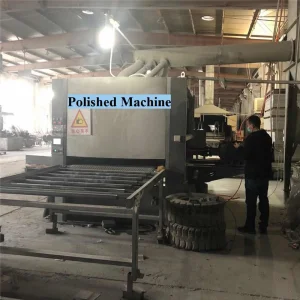
Explore our full engineering portfolio, including recycling systems, surface processing, cutting automation, and specialized board manufacturing equipment.