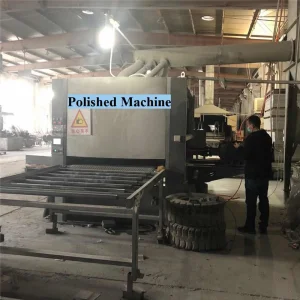
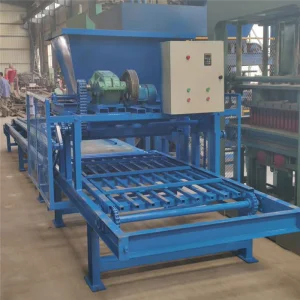
Explore high-capacity production technologies designed for structural roofing, wall cladding, and prefabricated construction components.
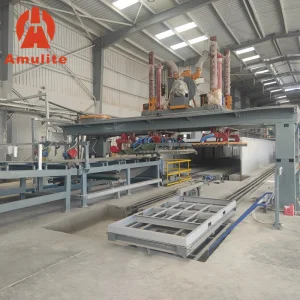
China Non-Asbestos/Asbestos Cement Corrugated Roof Sheets Production Line Company, Product
View Details
High-Quality Embossed Metal Composite Exterior Panels Production Line Manufacturers, Company
View DetailsQuantifiable metrics demonstrating the growth of fiber cement roofing machinery adoption in international commercial projects.
The global modern construction ecosystem demands building envelope solutions that balance high tensile strength, extreme weathering performance, fire retardancy, and low lifecycle costs. In this landscape, fiber cement roofing sheets machine manufacturers play a pivotal role. The transition from legacy corrugated roofing materials toward eco-friendly, non-asbestos fiber-reinforced cementitious composites has fundamentally rewritten equipment specification requirements across global manufacturing lines.
Historically, roofing sheet manufacturing relied heavily on chrysotile fibers. However, stringent global occupational health regulations and evolving green building frameworks (such as LEED and BREEAM) have propelled engineering innovations in non-asbestos synthetic fiber dispersing, slurry vacuum dewatering, and automated profile corrugation systems. Leading original equipment manufacturers (OEMs) now engineer turnkey lines capable of handling diverse matrix formulations involving Ordinary Portland Cement (OPC), reactive silica sand, synthetic PVA (polyvinyl alcohol) fibers, and refined kraft pulp.
Engineered PVA fiber matrix integration requires specialized multi-vat Hatschek sheet forming machines with precise slurry viscosity control. Advanced fiber dispersion units prevent agglomeration, ensuring uniform multi-layer lamination with interlaminar shear strength exceeding 1.5 MPa.
When selecting a high-output fiber cement roofing sheet machine, plant managers and industrial procurement teams must weigh forming methodologies based on local raw material availability, sheet thickness tolerances, and energy efficiency targets.
China has solidified its position as the premier manufacturing hub for advanced building material production lines. Through the integration of Industry 4.0 automation, IoT process diagnostics, and robust heavy machinery supply chains, Chinese equipment manufacturers offer unmatched value propositions for enterprise buyers across Southeast Asia, the Middle East, Africa, Latin America, and Eastern Europe.
Modern Chinese fiber cement machine fabrication incorporates:
Unlike metal cladding, fiber cement corrugated sheets resist aggressive industrial atmospheres, chemical fumes, and marine air corrosion.
Natural thermal mass reduces solar heat gain, while dense composite matrix attenuates heavy rainfall impact noise in agricultural and industrial structures.
Completely non-combustible inorganic composition ensures maximum safety for high-risk industrial plants, warehouses, and municipal facilities.
The versatility of fiber cement roofing sheet machines enables plant operators to tailor finished products to specific environmental stressors and regional building codes:
1. Tropical & Coastal Agricultural Infrastructures: Livestock housing, poultry farms, and grain storage facilities in humid tropical zones suffer rapid deterioration under metal roofing due to ammonia gas and coastal salt spray. Fiber cement sheets manufactured via high-pressure autoclaving exhibit zero decay, offering service lifespans exceeding 30 years without protective coating re-application.
2. Industrial Chemical & Metallurgical Complexes: Fertilizer plants, electroplating workshops, and smelting facilities generate aggressive acid/alkaline vapors. High-density corrugated fiber cement roofing sheets serve as chemically inert structural barriers against interior atmospheric degradation.
3. Severe Freeze-Thaw Subarctic Zones: Autoclaved calcium silicate and fiber cement sheets incorporate micro-pore structures engineered to accommodate ice crystal expansion. This prevents delamination, cracking, and spalling during extreme winter weather cycles.
Expert insights regarding procurement, technical specifications, raw materials, and operating parameters.
Standard turnkey lines engineered by leading manufacturers range from 2 million m² to 10 million m² per annum per line. Capacity is dictated by forming cylinder width (typically 1300mm to 1600mm), vat count (3 to 5 vats), line linear speed (up to 80 m/min), and autoclave curing capacity.
A standard non-asbestos formulation comprises Ordinary Portland Cement (35–45%), finely ground silica sand/quartz powder (40–50%), imported unbleached kraft wood pulp (8–10%), synthetic PVA/PP fibers (1–2%), and functional additives such as flocculants and defoamers.
Air-cured sheets utilize cement hydration alone and require 28 days of wet curing. Autoclaved sheets undergo a hydrothermal reaction between silica and lime at high temperature (180°C) and pressure (1.0–1.2 MPa) for 8–12 hours, forming tobermorite crystalline structures that provide higher dimensional stability, lower moisture absorption, and reduced curing time.
Modern corrugating machinery employs synchronized suction-vacuum templates and soft felt pressing units. As the wet sheet is trimmed to length, robotic vacuum arms carefully transfer the green sheet onto corrugated templates with precise speed matching, eliminating stress fractures prior to initial set.
Leading Chinese exporters provide comprehensive EPC engineering contracts: plant layout civil drawings, foundation load calculations, complete equipment installation supervision, raw material formula tuning, pilot batch trial runs, and on-site operator training until targeted daily output targets are met.
Browse our extended catalog of advanced structural block, panel, and surface treatment manufacturing lines.