Explore our precision-engineered machinery spectrum, designed for heavy-duty operational stability, high throughput, and international building safety compliance.
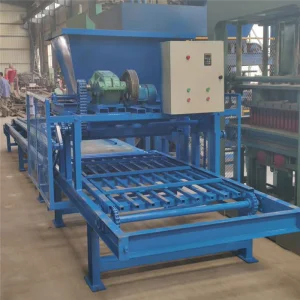
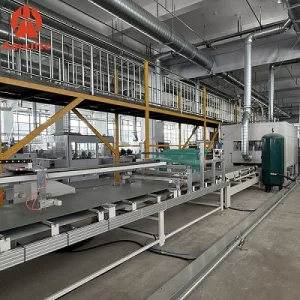
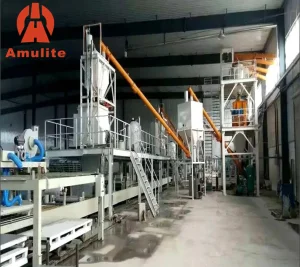
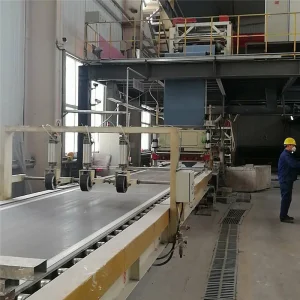
The global construction and building material equipment sector has undergone a structural transformation driven by decarbonization mandates, off-site modular manufacturing, and strict acoustic-thermal efficiency standards. At the core of lightweight wall system manufacturing is the EPS (Expanded Polystyrene) Sandwich Panel Forming Machine. Engineered to produce continuous or semi-continuous composite wall panels—comprising fiber cement/calcium silicate facings and a core matrix of expanded polystyrene beads, Portland cement, fly ash, and specialized foaming agents—these lines represent sophisticated multi-stage automation systems.
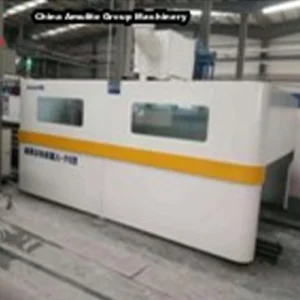
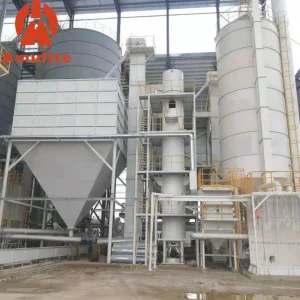
Modern EPS sandwich panel production lines integrate mechanical precision engineering, continuous liquid-solid metering systems, automated hydraulic mold manipulation, and SCADA-based process synchronization. Evaluating top-tier equipment suppliers requires analyzing raw material adaptability, slurry homogeneity management, curing cycle thermodynamics, and mechanical durability of roll-forming components.
A primary failure mode in sub-standard EPS sandwich panels is interfacial shear delamination between the outer cementitious facing board (such as fiber cement board or calcium silicate board) and the inner lightweight EPS concrete core. Leading suppliers address this by incorporating dual-stage ultrasonic core slurry agitators, high-viscosity polymer binder injection systems, and vacuum-assisted core compaction during the initial setting phase. This mechanical-chemical interlocking ensures structural integrity under cyclic wind loads and seismic stress.
The technological evolution of EPS sandwich panel forming equipment is transitioning from traditional batch vertical mold cars to fully automated, high-speed continuous double-belt laminating architectures. Suppliers invest heavily in R&D to enhance line velocity, material utilization efficiency, and zero-defect quality controls.
Integrating inline microwave moisture sensors and radiometric slurry density meters into the mixing station. Real-time feedback loops automatically adjust water-to-cement ratios, compensating for ambient humidity fluctuations and batch raw material variations.
Replacing traditional hydraulic pusher systems with multi-axis CNC servo-driven mold cars. This eliminates mechanical shock during rail transit, preventing micro-cracking in green-state core concrete and reducing mold wear by 40%.
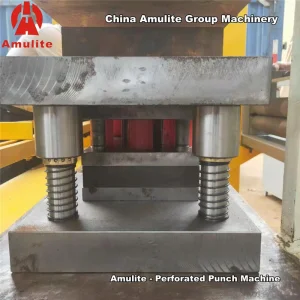
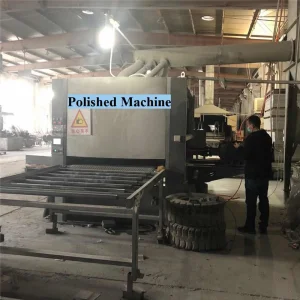
High-precision 6-axis robotic gantries equipped with diamond-tipped milling heads shape precise male-female interlocking joints along panel edges. This guarantees rapid, thermal-bridge-free jobsite installation.
EPS sandwich panel forming machines supply specialized building elements across modern architectural, commercial, and industrial segments. Modern equipment must be versatile enough to switch between panel formulations to serve diverse structural mandates.
Lightweight EPS panels act as self-supporting partition and wall cladding units. Panels offer high thermal resistance (R-value), enabling fast, dry-construction assembly that reduces jobsite labor by up to 70%.
By customizing the core thickness (up to 200 mm) and configuring hydrophobic EPS bead mixtures, forming machines create insulated structural panels for cold storage, food processing plants, and cleanrooms.
Non-loadbearing interior partitions demand high acoustic attenuation (STC ≥ 45 dB) and light structural loading. Forming lines produce hollow or solid core EPS cement boards optimized for urban skyscraper infills.
China's heavy industrial equipment manufacturing sector has transformed into a globally dominant force in building material machinery engineering. Through advanced industrial integration, Chinese manufacturers—led by enterprises such as China Amulite Group—provide unparalleled value, engineering speed, and customizability.
From localized heavy metallurgy facilities to high-precision CNC machining hubs in Hebei and industrial software integration centers, China’s industrial ecosystem enables rapid sourcing of high-grade alloy steel, heavy hydraulic rams, and international-standard electrical components.
Tier-1 Chinese factories assemble the entire mechanical frame, mold tracks, hydraulic stations, and PLC control cabinets within their heavy-duty assembly bays before export. Full dry-run testing under simulated factory load reduces field installation delays by up to 50%.
By leveraging standardized modular design blueprints, robust domestic steel procurement, and efficient engineering workflows, Chinese EPS panel machine suppliers offer turn-key lines at 30-50% lower capital expenditure than European counterparts—without compromising component quality.
Operating machinery across global markets requires compliance with strict safety directives, electrical codes, and environmental regulations. Premier EPS sandwich panel forming machine suppliers ensure their lines meet target market requirements prior to container loading.
Electrical control cabinets are built to IEC standards, featuring Siemens S7 PLC architectures, Schneider electric breakers, and dual-channel safety relays. Machinery destined for the EU or North America strictly follows CE Machinery Directive 2006/42/EC and UL panel wiring requirements.
Lines are customized for local power supplies (e.g., 380V/50Hz 3-phase, 440V/60Hz, or 220V dual-voltage systems), complete with heavy-duty voltage stabilizers, harmonic filters, and thermal overload protection to ensure reliable operation in weak grid regions.
Engineering teams provide complete on-site services, including civil layout design, mechanical installation, electrical commissioning, and local raw material formulation tuning (utilizing locally sourced OPC cement, sand, and fly ash).
For corporate purchasing managers and industrial project developers, evaluating an EPS Sandwich Panel Forming Machine supplier goes far beyond the initial FOB machinery price quote. A holistic Total Cost of Ownership (TCO) framework factors in operational efficiency, waste reduction, maintenance downtime, and energy consumption.
Total Annual Operational Cost (OPEX) = Raw Material Input + Energy Consumption + Direct Labor + Maintenance Downtime Loss
Key technical and commercial inquiries answered by leading equipment engineers to guide your capital investment decisions.
Discover additional complementary plant configurations, raw material processing equipment, and specialized recycling machinery systems.