Famous EPS Composite Panel Manufacturing Machine Factories & Company

Next-Generation Engineering Whitepaper & Industrial Procurement Blueprint: Advanced Automated EPS Cement Sandwich Panel Lines & Smart Machinery Manufacturing Solutions

Featured Industrial Machinery Matrix (Part I)

Explore our premier suite of engineered building material manufacturing solutions, ranging from customized AAC block lines to high-speed EPS composite panel machinery.

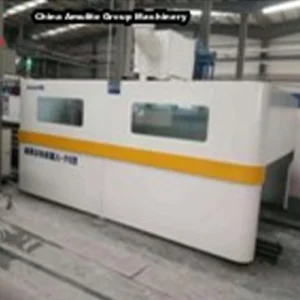
Famous Amulite AAC Blocks Customized Automatic Machines
Famous Amulite AAC Blocks Customized Automatic Machines- 4.2m Manufacturers
View Product Details
Best Flexible Clay Ceramic Tile Production Line
Best Flexible Clay Ceramic Tile Production Line Manufacturer, Companies
View Product Details
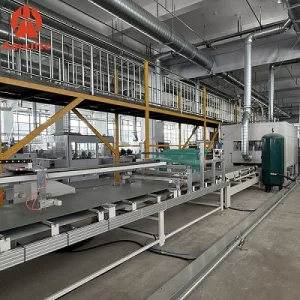
Buy Hollow Core Wall Panels Production Line Factory
Buy Hollow Core Wall Panels Production Line Factory, Factories
View Product Details
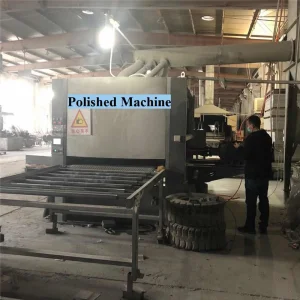
China Single Face Polished Machine
China Single Face Polished Machine Manufacturers, Suppliers
View Product Details
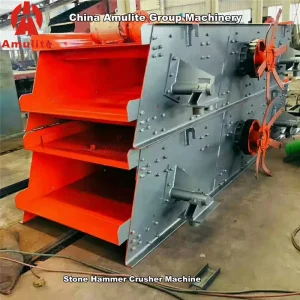
OEM Stone Hammer Crusher Machine
OEM Stone Hammer Crusher Machine Suppliers, Factory
View Product Details
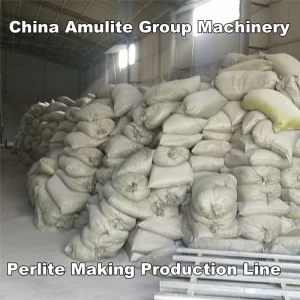
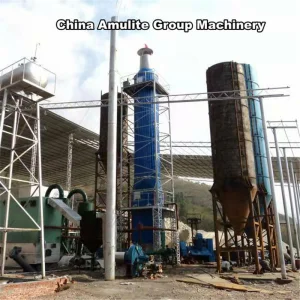
Buy Perlite Production Line
Buy Perlite Production Line Manufacturers, Company
View Product Details
Buy Gypsum Powder Production Line
Buy Gypsum Powder Production Line Supplier, Product
View Product Details
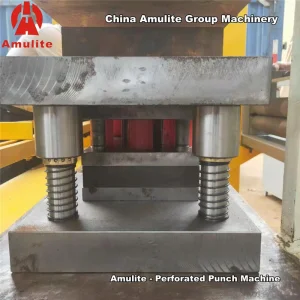
Perforated Punch Machine System
High-Quality Amulite Perforated Punch Machine System Technical Data
View Product Details

1. Comprehensive Technical Architecture of Modern EPS Composite Panel Machinery

In the contemporary global construction landscape, the demand for lightweight, high-strength, energy-efficient, and fire-resistant wall panels has catalyzed an engineering revolution. At the forefront of this industrial transformation is the EPS (Expanded Polystyrene) composite panel manufacturing machine. Engineered to produce multi-layered sandwich panels—typically featuring high-density fiber cement or calcium silicate boards as exterior skins encapsulating a lightweight cementitious core of EPS beads, sand, fly ash, and chemical additives—these automated plants represent the apex of non-metallic building material machinery.

Information Gain Insight: Modern automated EPS composite panel lines achieve dynamic density control ranging from 450 kg/m³ to 800 kg/m³, reducing building dead load by up to 60% compared to traditional brickwork, while elevating shear bond strength between face boards and core matrix above 0.5 MPa.

The mechanical architecture of a premier EPS panel manufacturing line comprises six core integrated subsystems, operating under centralized SCADA (Supervisory Control and Data Acquisition) and Siemens PLC control environments:

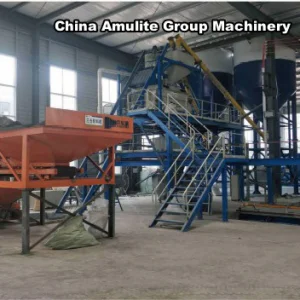
A. Automatic Batching & Dosing

Precision gravimetric loss-in-weight feeders calculate cement, sand, fly ash, and expansion additives with ±0.5% accuracy. Liquid chemical dosing units automatically regulate water-reducer ratios to optimize slurry fluidity.

B. EPS Pre-Expansion & Foaming

Fluidized-bed steam pre-expanders control EPS bead expansion ratio down to 8–15 g/L bulk density. Closed-loop pressure regulation ensures uniform cell structure, structural elasticity, and minimal moisture absorption.

C. High-Shear Slurry Mixing

Dual-shaft planetary mixers coat lightweight EPS beads thoroughly without crushing their delicate cellular structure. Specialized paddle geometry prevents bead segregation during high-volume discharge cycles.

D. Automatic Vertical/Horizontal Mold Cars

Precision-machined steel mold batteries equipped with hydraulic clamping mechanisms allow simultaneous vertical casting of 20 to 40 panel units, guaranteeing wall thickness tolerances within ±0.5 mm.

Enterprise Engineering Capability Indicators

3,000,000 m²
Annual Capacity per Line
±0.5 mm
Panel Thickness Tolerance
4 Hours
A-Class Fire Resistance Rating
60+
Global Export Markets

2. Strategic Competitive Advantages of Chinese EPS Machine Factories

The global market for EPS sandwich wall panel machinery has shifted decisively toward premier Chinese manufacturing conglomerates such as China Amulite Group. This migration of industrial sourcing is driven by deep structural, technological, and supply-chain efficiencies that European or American OEMs struggle to match at comparable price points.

Full-Chain Industrial Ecosystem

China houses the world’s most complete industrial cluster for heavy machinery, hydraulic power packs, automated electrical cabinets, and specialized metallurgy. Raw material sourcing—from thick-walled structural steel tubing to precision CNC machining centers—occurs within a 50-kilometer radius of principal fabrication hubs, drastically shortening lead times.

Cost-to-Performance Supereminence

By optimizing structural design, utilizing modular pre-assembly, and maintaining in-house production of critical sub-assemblies (such as forming cylinders, mold cars, and automated stacking gantries), Chinese manufacturers deliver turnkey EPS lines at 40%–60% lower Capital Expenditure (CAPEX) than European alternatives, without sacrificing component quality.

Tailored Process & Formula Engineering

Leading Chinese OEMs do not merely export steel hardware; they deliver process knowledge. Engineering teams analyze local raw materials—such as volcanic ash in South America, high-sulfur fly ash in India, or desert sand in the Middle East—and custom-formulate the slurry recipes to ensure board strength standards (ISO/ASTM) are met on day one.

Benchmark Analysis: Chinese Turnkey EPS Lines vs. Global Equivalents

Evaluation Parameter Leading Chinese OEMs (e.g., Amulite) European Competitors Regional Assembly Suppliers
Turnkey CAPEX (3.0M m²/yr) Competitive Investment ($350k – $650k) High CAPEX ($1.5M – $3.0M) Variable ($250k – $450k)
Control Systems Integration Siemens PLC + Remote IoT Diagnostics Proprietary PLC Systems Basic Relay / Manual Touchscreen
Mold Car Machining Tolerance ±0.5 mm Laser Guided ±0.3 mm Laser Guided ±1.5 mm Welded Frame
Installation & Commissioning In-house Resident Engineers (30-45 days) Third-party Subcontractors Limited Remote Support
Formulation R&D Lab Support Included with Raw Material Testing High Consultancy Surcharge Not Available

3. Macro-Industry Solutions & Turnkey Modular Applications

EPS composite wall panel machines are not monolithic single-purpose units; they are configurable manufacturing platforms tailored to serve distinct sector-specific structural challenges:

High-Rise Interior Partition Wall Solutions

In multi-story residential and commercial towers, reducing dead load is paramount. Modern EPS sandwich panels (90mm–120mm thickness) replace traditional hollow concrete blocks, increasing usable floor area by 3%–5% while offering 42 dB to 50 dB sound insulation (STC rating) and rapid dry-construction installation.

Thermal Exterior Cladding & Cold Chain

By adjusting the EPS core bead density and adding specialized hydrophobic agents, composite panel lines produce exterior thermal wall panels with thermal conductivity as low as 0.045 W/(m·K), drastically cutting HVAC energy consumption in extreme climates.

Modular & Pre-Engineered Steel Structures

Designed with tongue-and-groove interlocking side profiles, panels produced by our high-precision lines snap seamlessly into steel beam channels, providing rapid enclosure for industrial warehouses, emergency housing, and commercial complexes.

4. Global Industry Trends & Next-Gen Technological Innovations (2025–2030)

As global building codes mandate stringent net-zero carbon targets, fire-safety compliance, and circular economy integration, EPS composite panel equipment design is undergoing fundamental technological shifts:

  • 1. CO2-Blown & Recycled EPS Integration: Next-generation pre-expansion units are engineered to process up to 30% recycled post-consumer polystyrene without degrading the compressive strength of the cured sandwich core.
  • 2. AI-Driven Smart Curing & Moisture Diagnostics: Real-time microwave moisture sensors inside curing chambers continuously communicate with PLC steam valves, optimizing hydration kinetics and trimming curing cycles from 8 hours down to under 4.5 hours.
  • 3. Automated Robot Demolding & Palletizing: High-speed articulated robotic arms featuring vacuum cup matrices replace manual labor in panel stripping, edge trimming, stacking, and plastic stretch wrapping, minimizing breakage to under 0.1%.
  • 4. Hybrid Mineral Cores (Incombustible A-Class Ratings): Advanced slurry formulations blend expanded perlite, lightweight aerated foaming agents, and coated EPS beads to achieve true zero-flame-spread A1 fire protection ratings under international test standards.

5. Global Enterprise Procurement & Factory Audit Framework

Procuring an automated EPS panel line is a multi-million-dollar long-term capital decision. International procurement teams must execute rigorous due diligence to mitigate operational risk. Below is the framework recommended by senior process engineering auditors:

Phase 1: Metallurgical & Structural Inspection

Verify that mold car chassis are fabricated using heavy-duty Q235B or Q345B structural steel, stress-relieved via shot blasting to prevent frame warping after thousands of hydraulic clamping cycles.

Phase 2: Electrical & Hydraulic Component Verification

Insist on globally recognized brands for key components: Siemens/Schneider for PLCs and VFDs, Yuken/Rexroth for hydraulic valves, and SEW/Nord for gear reducers. This guarantees off-the-shelf local spare parts availability.

Phase 3: Factory Acceptance Testing (FAT)

Conduct a dry-run test of the batching station and hydraulic mold opening/closing sequences at the manufacturer's workshop prior to shipment. Inspect weld seams via non-destructive ultrasound testing (NDT).

6. Regional Application Scenarios & Engineering Adaptations

Different global geography requires localized engineering modifications to panel specifications and machinery configurations:

Middle East & Gulf

Focus on extreme thermal resistance (R-value) and high-ambient thermal stability. Machines engineered with double-layer core insulation dosing for heavy solar loading environments.

Southeast Asia

High humidity and seismic activity demand water-resistant calcium silicate facings, anti-fungal chemical additives, and high flexural toughness to withstand ground movement.

Latin America & Africa

Cost-efficient modular plants optimized for low-cost social housing programs, prioritizing semi-automated operation, fast mold turnaround, and low maintenance overheads.

Europe & Central Asia

Strict fire compliance (EN 13501-1) and high sound dampening requirements. Lines configured for dense core matrices with mineral fiber and fire-retardant EPS beads.

7. Deep Technical Q&A: Machinery Procurement & Operational Engineering

Essential technical queries addressed directly by our senior plant commissioning engineers:

Q1: What is the optimal slurry formulation ratio for lightweight EPS cement panels?
A standard structural formulation per cubic meter typically consists of: 300–350 kg Ordinary Portland Cement (OPC 42.5R), 150–200 kg dry fly ash or fine sand, 4–6 kg expandable polystyrene (EPS) beads (pre-expanded to 10–12 g/L), 2.5 kg specialized foaming agent/water-reducer, and appropriate water-cement ratio (0.42–0.48). Exact ratios are optimized during installation based on local raw material testing.
Q2: How does a vertical mold car compare against a continuous horizontal molding belt system?
Vertical mold battery cars allow double-sided smooth finishing, accurate tongue-and-groove profiling on four edges, small footprint usage, and lower initial investment. Continuous belt systems offer higher linear speed but require higher CAPEX and produce flat-edged slabs requiring secondary grooving. For EPS cement sandwich panels, vertical mold cars remain the industry standard worldwide.
Q3: How long does curing take before panels can be safely demolded and stacked?
With standard ambient steam heating (50°C–60°C inside curing chambers or heat pipes embedded in mold cars), initial set strength (approx. 3.5 MPa) is achieved in 3 to 4.5 hours. Demolded panels are stacked on pallets and achieve 70% full compressive strength within 7 days of atmospheric curing.
Q4: What civil infrastructure and utility connections are required for a 1,000,000 m²/year turnkey plant?
A standard plant requires a total enclosed factory footprint of approximately 3,500 to 5,000 square meters (with 8-meter clear ceiling height), an electric power capacity of 180 kW–250 kW (3-phase 380V/50Hz), a steam boiler rated at 1.5–2.0 tons/hour (fueled by gas, biomass, or electricity), and an industrial water supply of 15–20 m³/day with recycling filtration.
Q5: How do you prevent delamination between the face boards and the EPS cement core?
Delamination is prevented by three engineering controls: 1) Utilizing high-shear planetary mixing to create a uniform cement hydration matrix that grips the board surface; 2) Applying dedicated polymer bonding agents or silica fume in the slurry mixture; and 3) Utilizing calcium silicate or fiber cement boards with surface roughness optimized for mechanical keying.

Featured Industrial Machinery Matrix (Part II)

Complete your plant setup with our heavy-duty processing, recycling, and finishing automation line equipment.

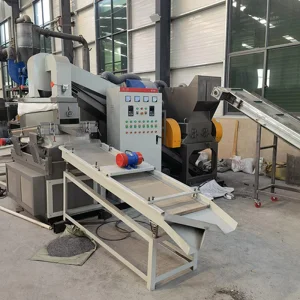
Buy Copper Wire Recycling Machine
Buy Copper Wire Recycling Machine Companies, Products
View Product Details
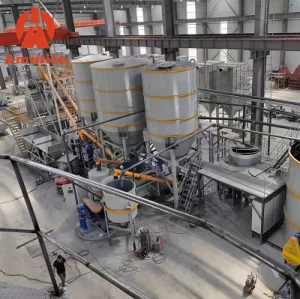
OEM EPS Sandwich Cement Wall Panels Production Line
OEM EPS Sandwich Cement Wall Panels Production Line Companies, Products
View Product Details
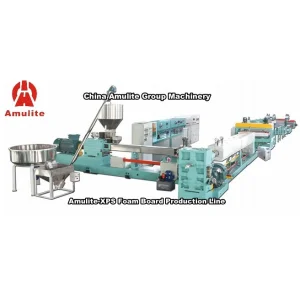
OEM Amulite CO2 XPS Foam Board Production Line
OEM Amulite CO2 XPS Foam Board Production Line Factory, Factories
View Product Details
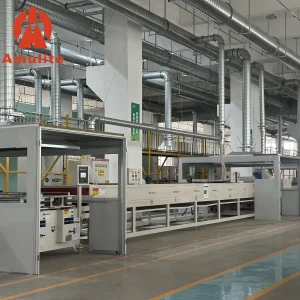
OEM UV Coating Painting Production Line
OEM UV Coating/Painting Production Line Manufacturer, Factories
View Product Details
Best AM806BH-10 Technical Parameters
Best AM806BH-10 Technical Parameters Manufacturer, Products
View Product Details
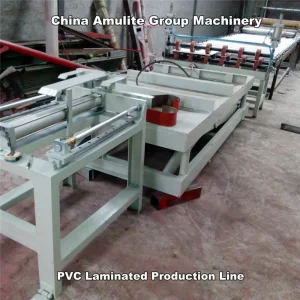
China PVC Laminated Production Line
China PVC Laminated Production Line Factories, Products
View Product Details
China Automatic Bricks Making Production Line
China Automatic Bricks Making Production Line Manufacturers, Products
View Product Details
OEM 1300 II Type Automatic Four Side Edge Cutting Machine
OEM 1300 II Type Automatic Four Side Edge Cutting Machine Factory, Companies
View Product Details