Directly integrated systems engineered by China Amulite Group for structural paneling, masonry units, and specialized architectural boards.
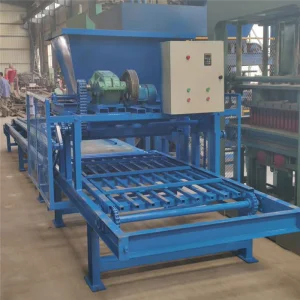
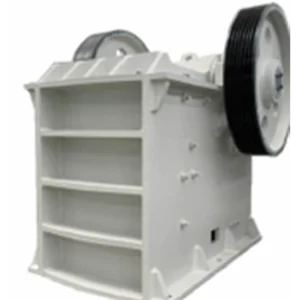
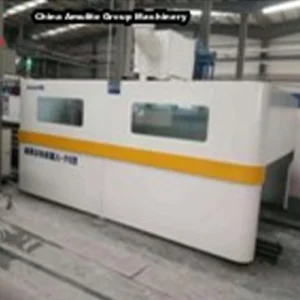
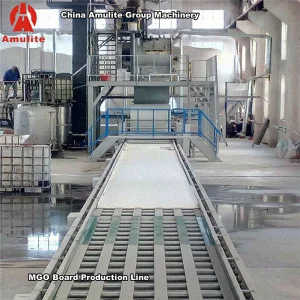
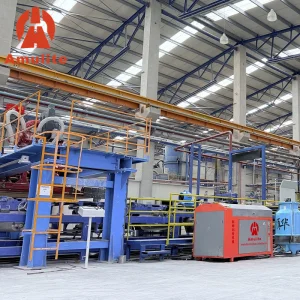
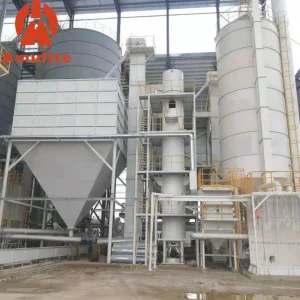
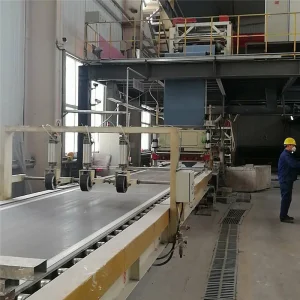
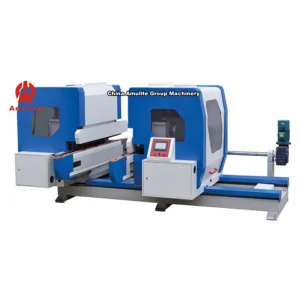
The global construction ecosystem is undergoing a structural transition from traditional wet-on-site masonry to high-precision industrialized off-site prefabrication. At the core of this industrial evolution are modern concrete wall panel production lines, which have transformed from localized batching plants into hyper-automated, PLC-controlled continuous manufacturing complexes. As urbanization accelerates across Asia-Pacific, the Middle East, Latin America, and Eastern Europe, the demand for lightweight, high-strength structural wall elements—such as Autoclaved Aerated Concrete (AAC) panels, EPS sandwich cement panels, fiber-reinforced calcium silicate boards, and heavy-duty precast concrete panels—has reached unprecedented levels.
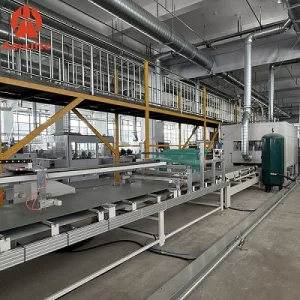
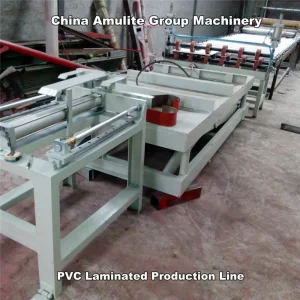
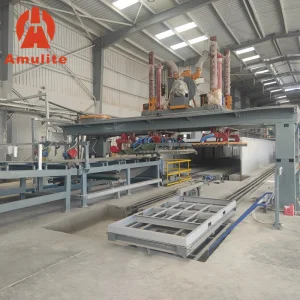
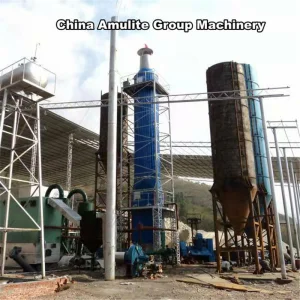
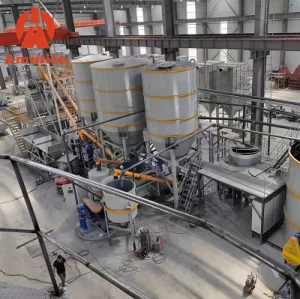
From an enterprise investment perspective, evaluating famous concrete wall panel production line suppliers and factories requires analyzing critical operational metrics: thermal insulation performance (λ-value), flexural strength-to-weight ratios, dry density class, raw material adaptability, and overall capital expenditure (CapEx) payback schedules. Leading engineering consortia like China Amulite Group have established benchmark standards by providing end-to-end turnkey machinery packages that integrate raw material handling, high-shear slurry preparation, dynamic molding, steam autoclaving, automated demolding, and smart robotic stacking.
Strategic Takeaway for Plant Operators: Modern industrial buyers no longer evaluate wall panel production machinery solely on mechanical durability. The defining competitive edge lies in process adaptability—specifically, how efficiently a line processes local industrial waste streams (such as fly ash, slag, silica tailings, and agricultural residues) while maintaining precise dimensional tolerances under continuous multi-shift operations.
The global allocation of concrete wall panel manufacturing machinery is heavily dictated by regional regulatory mandates and macroeconomic catalysts:
Understanding the technical taxonomy of concrete panel machinery is essential for optimized plant selection. Production lines are classified into distinct mechanical methodologies based on curing thermodynamics, slurry rheology, and structural reinforcement strategies.
Utilized primarily for high-density fiber cement boards and calcium silicate boards. Involves multi-vat slurry filtration cylinders, continuous felt conveyance, vacuum dewatering, sheet wrapping around forming cylinders, and high-pressure hydraulic pressing (up to 10,000 tons total press force).
Standard for EPS sandwich cement wall panels and hollow-core concrete panels. Features automated batching of cement, expanded polystyrene (EPS) beads, and foaming agents injected into dynamic vertical mold batteries with central core tubes, achieving high volume yield per footprint area.
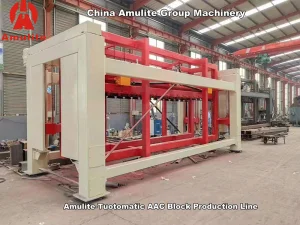
Focuses on high-volume cellular concrete block and reinforced panel fabrication. Aluminum powder reacts with calcium hydroxide to form microscopic hydrogen bubble networks. The pre-cured mass undergoes automated 3D wire cutting followed by 12-hour high-pressure steam curing ($1.2\text{ MPa}, 190^\circ\text{C}$) to form crystalline Tobermorite ($C_5S_6H_5$).
The mechanical performance of finished panels is dictated by hydrothermal phase transformation within autoclaves or curing tunnels. The table below illustrates raw material inputs versus chemical phase evolution across primary panel production methodologies:
| Panel Line Category | Primary Raw Materials | Curing Thermodynamics | Primary Mineral Phase | Typical Dry Density | Flexural Strength |
|---|---|---|---|---|---|
| Fiber Cement Board | OPC Cement, Quartz Sand, Cellulose Pulp, Micro-Silica | Autoclaved ($185^\circ\text{C}, 1.0\text{ MPa}$) / Air Cured | Tobermorite Matrix ($C_5S_6H_5$) | 1.20 – 1.60 g/cm³ | 12 – 28 MPa |
| EPS Sandwich Cement Panel | Cement, EPS Beads, Sand, Fly Ash, Fiber Board Skins | Low-Temp Thermal Tunnel ($50-70^\circ\text{C}$) | Hydrated Cement Gel (C-S-H) + Polymer Matrix | 550 – 750 kg/m³ | 3.5 – 6.5 MPa |
| AAC Wall Panel Line | Silica Sand/Fly Ash, Lime, Cement, Gypsum, Al Powder | Autoclaved Steam ($190^\circ\text{C}, 1.2\text{ MPa}$) | Crystalline Tobermorite Phase | 425 – 625 kg/m³ | 3.2 – 5.5 MPa |
| MGO Fireproof Board | Active MgO, $MgCl_2$/$MgSO_4$, Perlite, Fiber Mesh | Exothermic Ambient / Controlled Humidity | 5-1-8 Phase / 3-1-8 Sulfate Phase | 0.85 – 1.10 g/cm³ | 15 – 22 MPa |
Modern building material manufacturing plants must adapt to localized environmental conditions, regional building codes, and municipal sustainability mandates. A single production machinery design cannot fit all international regulatory environments. Plant engineering must be optimized according to specific local building applications:
In earthquake-prone regions, heavy masonry poses structural failure risks. Plant solutions designed by China Amulite Group emphasize lightweight composite EPS sandwich wall panel lines and flexible clay ceramic tile lines. By reducing structural dead loads by up to 60% compared to traditional solid concrete walls, prefabricated tongue-and-groove EPS panel systems allow high inter-story drift capacity without structural cracking.
High moisture levels degrade standard gypsum plasterboard over time. In these geographies, investors deploy autoclaved fiber cement board and calcium silicate board lines. The resulting products possess zero organic cellulose decay paths, sub-10% equilibrium moisture content, and high resistance to fungal growth, making them suitable for commercial exterior soffits, ventilated curtain walls, and wet-room wall linings.
Dense municipal developments require strict 2-to-4-hour fire endurance ratings for internal shaft walls and boundary partitions. OEM MGO Board Lines and Expanded Perlite Lines engineered with automatic mesh lamination produce non-combustible A1-rated panels that emit zero toxic smoke during thermal exposure, passing international ISO 834 and ASTM E119 fire integrity tests.
Factory Verification Insight (ARFEEN Group Case Benchmark): During overseas factory audits—such as the technical symposium conducted by the ARFEEN Group delegation at China Amulite Group's manufacturing base—inspectors focus heavily on raw material tolerance tests. Amulite's engineering team demonstrates real-time slurry adaptation using client-supplied local sands and cements to verify target flexural strength prior to machine shipment.
The next decade of concrete wall panel manufacturing will be defined by automated smart factories, digital twin monitoring, and aggressive carbon emission reductions. Legacy manual labor lines are being upgraded to closed-loop automated ecosystems:
Centralized control architectures utilizing Siemens S7-1500 Series PLCs with SCADA supervisory networks. Real-time monitoring of slurry density, batch weight tolerances (<0.5% margin of error), autoclaving pressure curves, and automated moisture compensation.
Replacing standard Ordinary Portland Cement (OPC) with alkali-activated geopolymers (fly ash, ground granulated blast-furnace slag). Advanced mixer shear heads accommodate non-standard geopolymer setting times without reducing line speed.
Modern board lines incorporate primary and secondary settling tanks coupled with high-efficiency solid-bowl centrifuges. Green trimming waste, unset board cutoffs, and process water are continuously recycled back into the primary slurry vats.
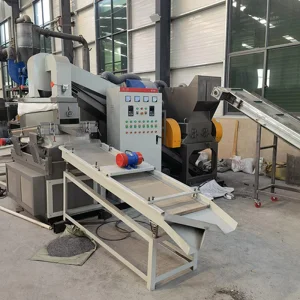
Complete plant solutions including decorative tiles, roof sheet machinery, powder processing, and industrial material recycling.
Direct technical and procurement responses from the engineering division of China Amulite Group.