Explore turnkey manufacturing equipment designed for high-density fiber cement boards, calcium silicate substrates, aerated concrete blocks, and lightweight sandwich wall panels engineered for global construction specs.
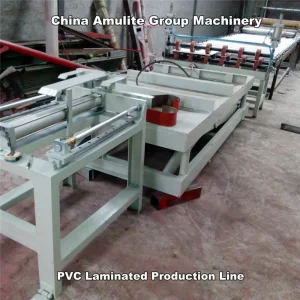
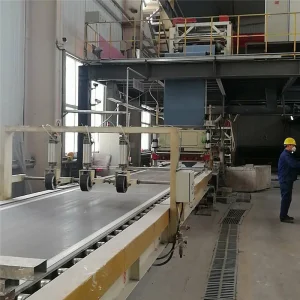
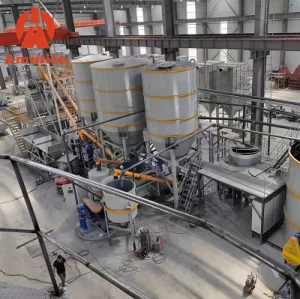
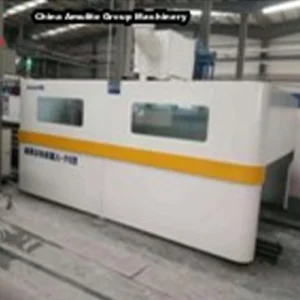
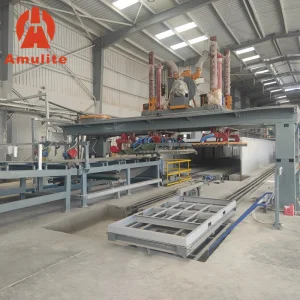
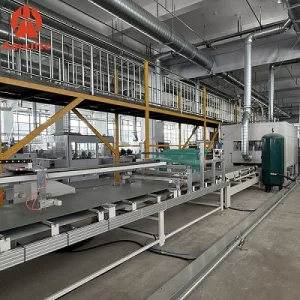
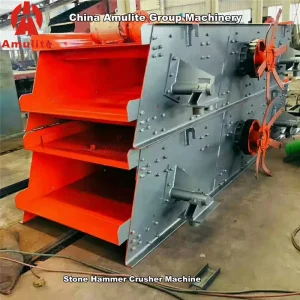
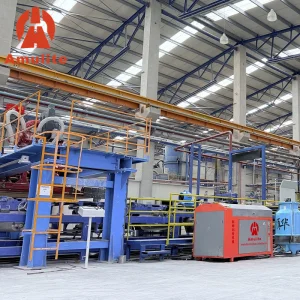
The global modern construction framework is experiencing a paradigm shift from traditional wet-on-site masonry to high-precision, off-site prefabricated wallboard systems. As environmental regulations tighten and labor costs rise across North America, Europe, Asia-Pacific, and the Middle East, composite wallboard production lines have emerged as critical infrastructure investments for building material conglomerates.
Modern composite wallboard manufacturing lines are engineered to accept industrial solid wastes as supplementary cementitious materials (SCMs). By integrating pulverized fly ash, granulated blast-furnace slag (GGBS), and synthetic gypsum (FGD), leading machinery providers enable plants to cut carbon intensity by up to 35% without compromising structural integrity.
Leading companies in the composite wallboard production line sector have transitioned from legacy relay-controlled machinery to fully digitalized Industry 4.0 SCADA architectures. Integrated vision system sensors dynamically evaluate board thickness, moisture density, and surface uniformity in real-time.
The rapid rise of prefabricated Modular Volumetric Construction demands wall panels that offer low self-weight alongside superior flexural strength. Production lines are now tailored to yield multi-layered EPS sandwich wall panels and hollow-core concrete elements with engineered thermal insulation core cavities.
Technical Insight on Information Gain: Advanced Hatschek wet-process lines utilize multi-stage vacuum dewatering boxes operating at negative pressures up to -0.08 MPa. This ensures that the water-to-cement ratio in the green sheet drops below 28% prior to pre-curing, preventing micro-crack development during high-temperature hydrothermal reactions in autoclaves.
A comprehensive walkthrough of the end-to-end mechanical and chemical engineering sequence involved in producing high-grade calcium silicate and fiber cement composite wallboards.
Imported unbleached kraft wood pulp undergoes mechanical refining in double-disc refiners to achieve a target Schopper-Riegler (°SR) freeness of 45–60°. Quartz sand is wet-milled in continuous ball mills to a fineness where 90% passes through a 200-mesh sieve. Slurry mixing tanks homogenize quartz flour, OPC, cellulose fibers, and specialized rheology additives into a stable aqueous suspension with 20–25% solid content.
The prepared slurry enters 3 to 5 stainless steel vats containing rotating wire mesh cylinder moulds. As the cylinders rotate, thin films of fiber-cement matrix (0.2–0.3 mm per revolution) deposit onto a endless synthetic felt belt. The felt carries the film across high-vacuum dewatering boxes to strip free water before transferring the wet sheet onto a precision-machined forming drum until the required board thickness (e.g., 6mm, 9mm, 12mm, 18mm) is wound.
A high-speed synchronization cutter slices the continuous cylindrical sheet into flat green boards of precise dimensions (standard 1220x2440mm or 1220x3050mm). Automated pneumatic vacuum grippers stack the green boards onto steel template plates. Stacks are transferred into climate-controlled pre-curing tunnels operating at 45–55°C and 90% RH for 8–12 hours, initiating preliminary hydration of $C_3S$ and $C_2S$ mineral phases.
Pre-cured boards are loaded into heavy-duty pressure vessels (Autoclaves) operating at 1.0–1.2 MPa saturated steam pressure and temperatures of 180–190°C for 10–12 hours. Under these hydrothermal conditions, fine silica reacts with calcium hydroxide released by cement hydration to synthesize Tobermorite ($C_5S_6H_5$), a crystalline structure that endows the finished composite board with extraordinary dimensional stability, zero moisture movement, and extreme fire resistance.
Post-autoclave boards pass through multi-deck drying ovens powered by waste heat recovery loops to bring final moisture content below 10%. Boards are calibrated using heavy-duty wide-belt sanding machines to achieve thickness tolerances within ±0.2 mm. Optional downstream line modules apply hydrophobic silane sealers, UV-cured decorative coats, or PVC film laminations.
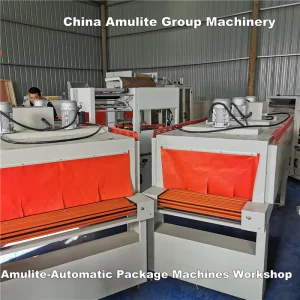
Finished composite boards pass through inline ultrasonic flaw detectors and X-ray density scanners. Non-destructive testing flags delamination micro-voids before boards are grouped by automatic stack bundlers, strapped with corner protectors, and wrapped in shrink film for international containerized shipping.
An objective evaluation of China's industrial ecosystem for building material machinery manufacturing, custom equipment engineering, and raw material formulation flexibility.
China's heavy machinery manufacturing hubs in Hebei, Jiangsu, and Shandong host the world's most concentrated supply chains for heavy structural steel fabrication, high-pressure autoclave manufacturing (ASME/CE certified), PLC cabinet integration, and precision roller machining. This cluster density slashes manufacturing lead times from 12 months down to 90–120 days.
Unlike Western suppliers who force clients to buy proprietary chemical binders, Chinese OEMs specialize in tailoring raw material mix designs around locally available aggregates. Whether utilizing volcanic ash in Indonesia, river sand in Vietnam, or recycled gypsum in Europe, Chinese process engineers tune line parameters on-site to minimize raw material CAPEX.
Chinese machinery suppliers deploy specialized field erection crews alongside senior commissioning engineers directly to overseas client sites across Southeast Asia, Africa, South America, and the Middle East. Installation supervision includes complete mechanical alignment, electrical wiring validation, trial production runs, and local staff operational certification.
Discover how composite wallboards manufactured by these automated production lines fulfill diverse regional climate conditions, architectural building codes, and structural performance criteria.
Primary Markets: Southeast Asia (Indonesia, Philippines, Vietnam), Latin America, Coastal Africa.
Requirements: Resistance to moisture absorption, anti-efflorescence performance, and zero organic degradation under fungal spore exposure.
Line Adaptation: Autoclaved calcium silicate lines producing boards with water absorption rates below 25% and zero wet-to-dry expansion, ideal for wet-area linings and soffits.
Primary Markets: Japan, Turkey, Chile, West Coast North America.
Requirements: High strength-to-weight ratio, shear displacement capacity, rapid dry installation.
Line Adaptation: Continuous EPS sandwich cement wall panel lines featuring fiber-reinforced exterior faces. Panels absorb inter-story seismic drift while reducing overall building dead weight by 60% compared to brick walls.
Primary Markets: Eastern Europe, Central Asia, Canada, Northern China.
Requirements: High freeze-thaw cycle endurance (50+ cycles), low thermal conductivity ($\lambda \le 0.18 \text{ W/m·K}$).
Line Adaptation: High-density fiber cement board lines with inline embossing for timber/stone textures, coupled with hydrophobic surface sealers to prevent water ingress before frost cycles.
A technical evaluation framework designed for Chief Technology Officers, Procurement Directors, and Plant Managers evaluating composite wallboard production line quotes.
Evaluate the thickness of the main forming machine steel frame and ensure all cylinder moulds are dynamic-balance tested at speeds up to 150 m/min. Inaccurate concentricity leads to uneven sheet caliper and high scrap rates.
Verify that autoclaves meet regional safety codes such as ASME Section VIII Div 1, CE-PED, or SELO certifications. Check safety interlock door mechanisms (hydraulic vs. pneumatic) and thermal insulation jacket thickness.
Specify tier-one global electrical vendors (Siemens PLC, Schneider Electric contactors, ABB VFD drives, SEW reducers). Standardized components guarantee local spare part availability and simplified software troubleshooting.
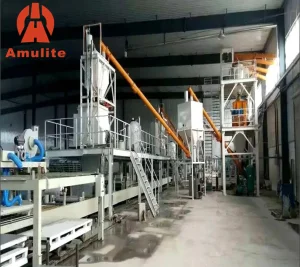
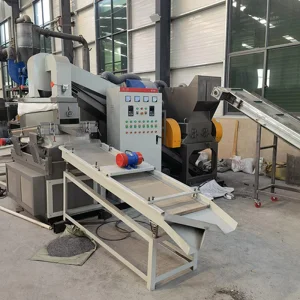
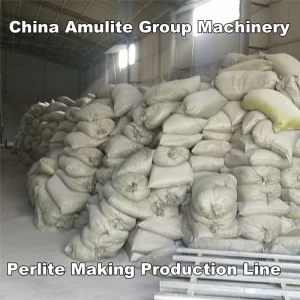
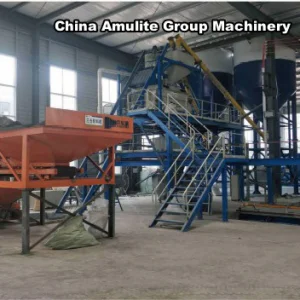
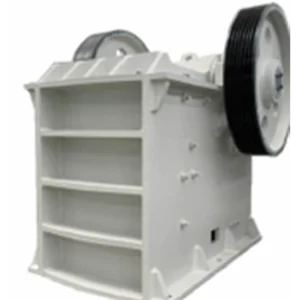
Explore auxiliary equipment, recycling machinery, specialized stone crushers, perlite expansion furnaces, and custom wall panel plant modules.
In-depth engineering answers to common technical queries raised by plant investors, engineering consultants, and factory managers.
Annual output varies according to forming width (typically 1,350 mm or 1,600 mm), net board thickness (4 mm to 20 mm), and the number of operational autoclaves. A standard 4-vat Hatschek line running 300 operational days per year produces between 3 million to 8 million square meters of 6mm equivalent boards. High-capacity continuous lines equipped with dual stackers and automated autoclave shuttles can reach up to 15 million to 30 million m² per year.
The core difference lies in chemical formulation and hydrothermal phase transformation. Calcium silicate boards utilize a higher quartz sand flour ratio ($\text{SiO}_2 > 90\%$) mixed with lime ($\text{Ca(OH)}_2$) and cellulose fibers. During autoclaving, this forms a pure Tobermorite crystal phase ($C_5S_6H_5$), producing lightweight (0.8–1.2 g/cm³), highly fire-resistant indoor insulation boards. Fiber cement boards use a higher cement-to-sand ratio and undergo air-curing or shorter autoclaving, producing higher density (1.3–1.7 g/cm³) weather-resistant exterior siding panels.
In continuous EPS sandwich panel production lines, pre-manufactured 4.5mm or 6mm fiber cement or calcium silicate boards are automatically fed as top and bottom facings into vertical or horizontal mold cars. A lightened slurry core—comprising expanded polystyrene (EPS) beads, Portland cement, sand, foaming agents, and chemical binders—is pumped into the cavity between the two boards. After thermal setting, the composite panel bonds mechanically and chemically without requiring extra adhesive glues.
A full-scale turnkey plant typically requires an installed electrical capacity of 800 kW to 1,500 kW depending on ball mill size and vacuum pump configurations. Autoclave operations require a saturated steam boiler delivering 6 to 15 tons per hour at 1.25 MPa working pressure. Compressed air systems require 6 to 10 m³/min at 0.8 MPa. Closed-loop water recycling circuits treatment systems ensure zero industrial wastewater discharge.
Based on global project benchmark data, a turnkey fiber cement or EPS wall panel line operating at 70%+ capacity payback occurs within 18 to 28 months. Profitability is driven by the margin delta between raw mineral inputs (cement, sand, recycled pulp) and high-value finished building products compliant with ASTM C1185, EN 12467, or ISO 8336 standards.
Contact our process engineering department today to receive a complete technical proposal, equipment sizing calculation, factory layout blueprint, and raw material feasibility report tailored to your region.
Request Technical Consultation