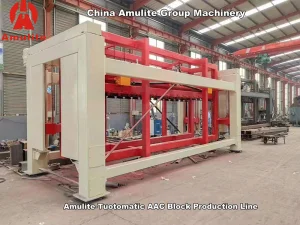
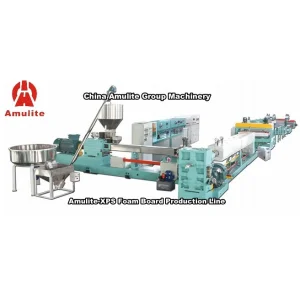
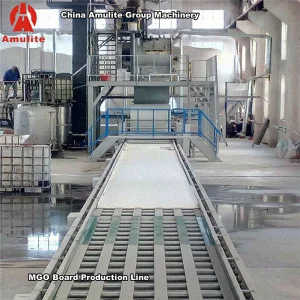
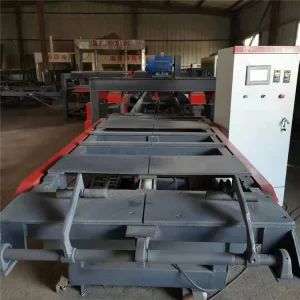
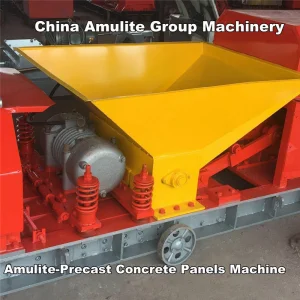
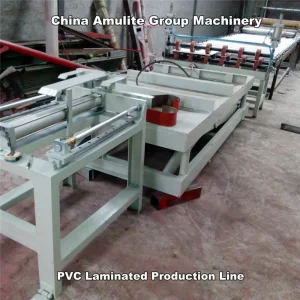
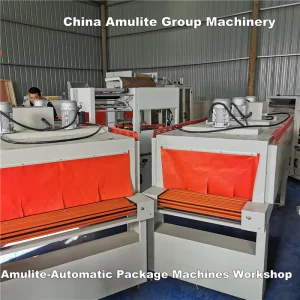
Explore our primary machinery catalog engineered for global industrial deployments, offering unmatched precision, energy efficiency, and structural reliability.
The modern structural landscape is undergoing a systemic transition from legacy cast-in-situ concrete operations to highly automated, off-site industrialized prefabrication. At the core of this technological migration stands the Cement Composite Wall Panel Machine—a sophisticated industrial plant asset designed to formulate, extrude, cure, and profile lightweight, high-strength structural wall elements. Global urban expansion, acute labor deficits, and hyper-stringent environmental mandates have elevated cement composite wall panels from niche architectural alternatives to primary structural components for commercial, residential, and industrial construction.
As premier engineering pioneers, leading suppliers and specialized factories have fundamentally overhauled the operational performance of these production platforms. Modern plants no longer merely mix hydraulic binders with aggregates; they execute ultra-precise micro-structural engineering. By synthesizing Portland cement, siliceous matrix, expanded Polystyrene (EPS) beads, volcanic ash, fiber reinforcement (such as alkali-resistant glass fiber or cellulose), and chemical admixtures under dynamic SCADA-controlled environments, these machines produce wall units that exhibit superior thermal inertia, fire resistance up to Class A1, acoustic attenuation, and seismic resilience.
From a financial evaluation perspective, capital expenditure (CAPEX) in automated cement composite panel infrastructure yields high Return on Investment (ROI). The operational expenditure (OPEX) is dramatically reduced via raw material recycling loops, closed-circuit water management, and low thermal energy consumption during curing cycles. Factories operating top-tier equipment experience up to a 60% reduction in local site labor dependency, transforming construction workflows into streamlined assembly lines.
Procurement directors and master EPC contractors face multi-faceted challenges when selecting a Famous Cement Composite Wall Panel Machine Supplier. Equipment sourcing extends beyond mechanical acquisition; it requires entering a multi-decade technological partnership encompassing chemical formulation optimization, plant layout design, utility integration, and regional regulatory compliance.
Global procurement strategies must adapt to localized environmental demands and raw material supply chain realities:
| Evaluation Vector | Legacy / Low-Cost Machinery | Famous Supplier Advanced Systems (e.g., Amulite) |
|---|---|---|
| Hydraulic & Mechanical Precision | Manual valve controls, high vibration wear, frequent seal replacement. | Proportional servo-hydraulics, precision linear guides, automated wear compensation. |
| Scrap & Waste Rate | 5% to 8% structural waste due to edge micro-cracking and core voiding. | <0.5% waste due to real-time ultrasonic density scanner and dynamic trimming. |
| Automation Grade | High manual intervention (12-18 operators per shift). | Fully integrated PLC + SCADA architecture (3-5 system supervisors per shift). |
| Formulation Adaptability | Fixed to single raw material ratios; high sensitivity to aggregate changes. | Multi-recipe dynamic weighing matrix handling diverse mineral matrices. |
The engineering layout of an industrial-grade cement composite wall panel production line comprises several synchronized subsystems, operating under stringent timing and thermo-chemical protocols.
The process begins in the automated batching tower. Silos containing Ordinary Portland Cement (OPC Class 42.5/52.5), pozzolanic materials (fly ash, silica fume), and aggregate minerals feed into high-precision strain-gauge weighing hoppers. Water-to-cement ratios are governed by dynamic microwave moisture sensors that measure the real-time moisture content of sand and lightweight aggregates. Mixing takes place in intense planetary or twin-shaft mixers, where chemical foaming agents or pre-expanded EPS beads are uniformly dispersed without mechanical crushing.
The synchronized slurry is fed into advanced molding systems. Depending on the product specification, two distinct engineering pathways are implemented:
Curing is the critical phase where cement hydration kinetics dictate final compressive, flexural, and tensile strength. Leading factories utilize automated multi-tier curing tunnels maintained at controlled temperatures (45°C - 65°C) and relative humidity (>90%). For high-density calcium silicate fiber panels, high-pressure steam autoclaves operating at 1.2 MPa and 190°C initiate the hydro-thermal reaction between CaO and SiO2, forming stable, non-expandable Tobermorite crystalline structures.
Upon demolding or post-curing exit, panels pass through automated four-side edge milling and profiling units. High-speed diamond saw blades craft tongue-and-groove joint geometries, ensuring precision interlocking on construction sites. Servo-driven robotic vacuum stackers load finished products onto heavy-duty pallets, which are then shrink-wrapped by automated packaging systems ready for global maritime freight.
The next decade will witness a profound technological convergence of artificial intelligence, green chemistry, and robotics within cement wall panel manufacturing plants.
Future wall panel machines are integrating neural network algorithms connected to inline rheometers. By analyzing ambient humidity, raw material particle size distribution, and slurry viscosity in real-time, the control system automatically adjusts water-admixture ratios on the fly. This eliminates human error and guarantees zero batch rejection.
Top-tier factories are pioneering direct flue-gas carbon injection into the mixing phase. As CO2 reacts with hydrating calcium silicate species, it permanently mineralizes into micro-crystalline Calcium Carbonate ($CaCO_3$). This process sequesters atmospheric carbon within the structural panel while increasing early-stage compressive strength by up to 25%.
From automatic mold cleaning, oil spraying, and reinforcement mesh placement to 3D laser surface profiling—human presence on the factory floor is shifting purely toward system supervision. AI vision cameras scan every panel for micro-fissures, density anomalies, and dimensional deviations at line speeds exceeding 15 meters per minute.
Deploying complex manufacturing lines in international territories demands robust localization strategies, local regulatory alignment, and deep engineering service networks.
Leading suppliers like China Amulite Group provide end-to-end turnkey engineering solutions. This holistic methodology mitigates project execution risks by unifying civil engineering foundation requirements, heavy mechanical erection, electrical PLC integration, raw material sourcing support, and operational staff commissioning under a single contract scope.
Machinery and the resulting composite panels must strictly satisfy international performance benchmarks:
Modern equipment platforms incorporate secure VPN cloud gateway connections. In the event of an operational anomaly or recipe adjustment request, senior control engineers located at the manufacturer's HQ can perform remote debugging, update firmware, and calibrate motion parameters in real-time, minimizing plant downtime. Local spare-part hubs maintain key mechanical wear components—such as hydraulic seals, cutting blades, and vacuum belts—ensuring rapid dispatch within 24–48 hours worldwide.
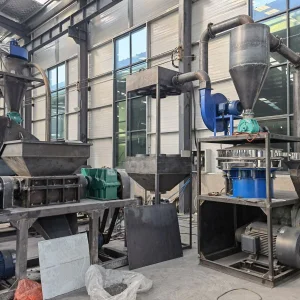
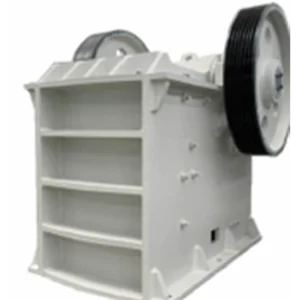
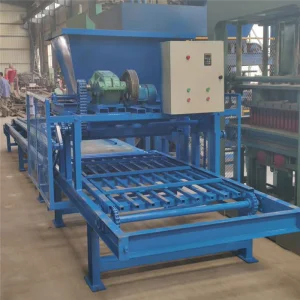
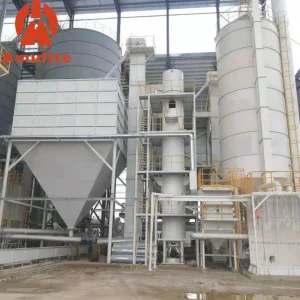
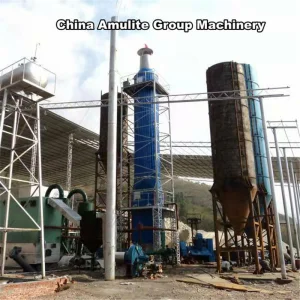
Browse our full range of auxiliary, crushing, and raw-material processing equipment designed to integrate seamlessly into complete wall panel and block manufacturing plants.
Comprehensive technical answers addressing the most critical operational, financial, and mechanical engineering inquiries regarding cement composite wall panel production lines.
A full-scale automated production line typically requires an enclosed factory workshop area of 6,000 to 10,000 square meters, excluding open-air raw material storage silos and finished product curing yards. Connected electrical load ranges between 350 kW and 650 kW depending on the automation level of cutting and stacking systems. Steam supply requirements for accelerated curing range from 2.5 to 6 tons per hour at a operating pressure of 0.8–1.2 MPa.
Modern cement composite panel machinery is engineered with versatile slurry formulation flexibility. Industrial by-products such as Coal Fly Ash (Class F & C), Ground Granulated Blast Furnace Slag (GGBS), and silica residue can replace up to 40% of Portland cement content. Additionally, processed agricultural fibers (such as rice husk ash, bagasse cellulose, or coconut fiber) can be added following surface treatment to enhance flexural ductility and lower overall panel dry density.
EPS Sandwich Cement Panels feature structural calcium silicate/fiber cement facings bonded to a lightweight core matrix of cement, sand, and expanded polystyrene beads. They require simpler thermal curing and offer high impact resistance and superior localized acoustic damping. ALC/AAC panels are solid homogenous cellular structures created via aluminum powder foaming and micro-silica hydro-thermal curing in high-pressure steam autoclaves. AAC offers excellent fire resistance and dimensional stability but requires significantly higher initial plant CAPEX investment.
Preventative maintenance centers on three core zones: (1) Daily automated high-pressure water jet washing of mixing heads and slurry distribution boxes to prevent cured cement scaling; (2) Weekly inspection and lubrication of hydraulic battery mold opening tracks and servo-driven saw blade spindles; (3) Monthly calibration of strain-gauge weighing sensors and ultrasonic thickness detection heads to retain a continuous ±0.5mm dimensional quality tolerance.
Amulite wall panel machines produce panels featuring dynamic tongue-and-groove joint profiles, along with engineered core wire mesh channels. When assembled on site using flexible elastomeric mortars and steel dowel anchoring brackets, the structural partition system absorbs inter-story shear displacements during seismic events without brittle joint shear failure or catastrophic panel dislodgement.