An authoritative engineering assessment of modern high-density fiber cement exterior cladding, detailing structural chemistry, hydrothermal synthesis, and rainscreen facade performance.
The global modern architectural landscape has undergone a paradigm shift toward sustainable, durable, and fire-resilient building envelope systems. Within this evolutionary trajectory, China Fiber Cement Exterior Wall Panel Products have emerged as a premier cladding material for commercial, industrial, and high-end residential facades. Engineered through advanced hydrothermal synthesis and fiber-reinforced cementitious matrices, these panels bridge the critical performance gap between heavy natural stone masonry and lightweight composite paneling.
Historically, building envelopes relied heavily on traditional wet stucco, clay brick veneer, or aluminum composite panels (ACP). However, issues such as thermal bridging, combustible cores, moisture degradation, and intensive maintenance cycles have forced architects and structural engineers to specify materials that offer high flexural strength, dimensional stability, and zero flame spread. High-density autoclaved fiber cement cladding panels manufactured in China incorporate refined quartz sand, high-grade Portland cement, selected unbleached cellulose fibers, and natural mineral additives—processed via the continuous Hatschek wet-layering method and high-pressure steam autoclaving.
Technical Gain Insight: Autoclaving under high pressure (typically 0.8–1.2 MPa at 170°C to 190°C for 12 to 14 hours) triggers a micro-chemical crystallization reaction between amorphous silica (SiO2) and calcium hydroxide (Ca(OH)2), forming Tobermorite crystals [Ca5Si6O16(OH)2·4H2O]. This crystalline matrix permanently eliminates free lime, drastically lowering moisture absorption, expanding flexural strength beyond 16 MPa, and preventing efflorescence over a 50-year service life.
High-pressure steam curing forces silica and lime into a dense, hydrothermally bonded crystalline structure that minimizes shrinkage, eliminates expansion cracking, and resists aggressive atmospheric moisture.
Compliant with EN 13501-1 Class A1 and ASTM E136 standards. The inorganic matrix releases zero toxic smoke or flaming droplets during high-temperature thermal exposure up to 1000°C.
Engineered for extreme thermal cycling (-40°C to +80°C). Retains >90% flexural strength after 100 severe freeze-thaw cycles under ASTM C1186 / EN 12467 testing protocols.
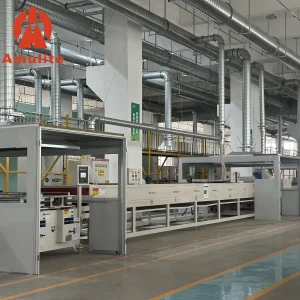
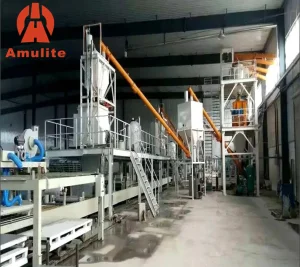
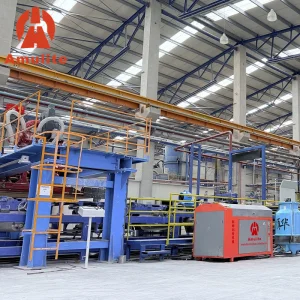
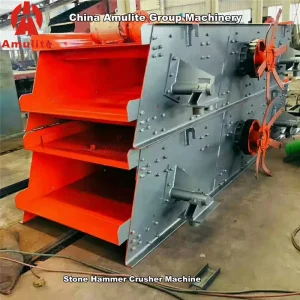
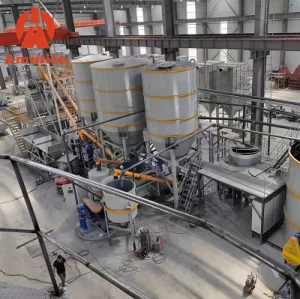
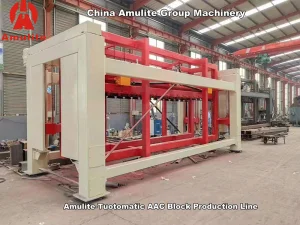
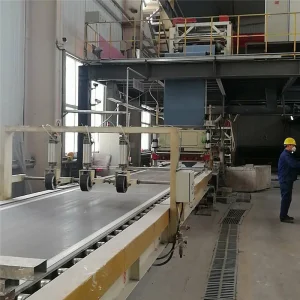
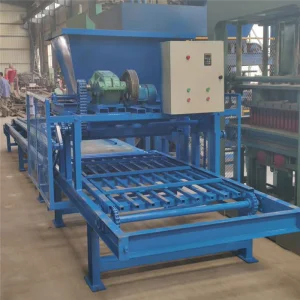
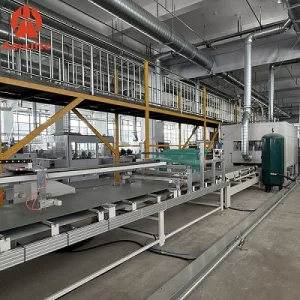
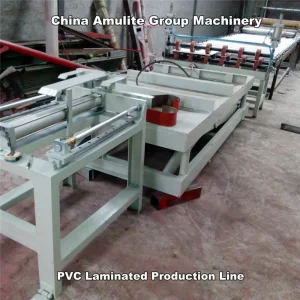
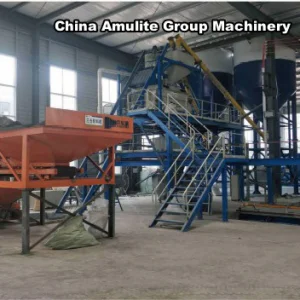
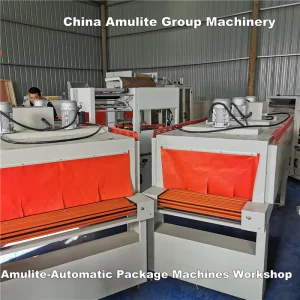
The engineering quality of fiber cement panels depends heavily on the slurry preparation, sheet-forming mechanics, vacuum dewatering efficiency, and post-curing finishing systems. Leading Chinese manufacturing complexes utilize fully automated 4-to-8-vat Hatschek wet-layering lines, integrated with real-time laser thickness sensors, multi-stage hydraulic presses (up to 10,000 tons total force), and automated vacuum stacking systems.
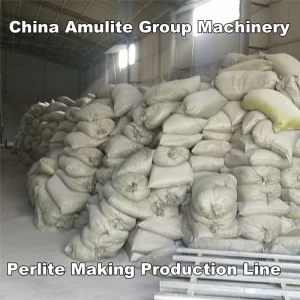
Imported kraft wood pulp undergoing mechanical refining to expand micro-fibrils, ensuring perfect inter-locking bond with Portland cement, ground quartz flour (mesh 325-400), and recycled ultra-fine mineral fillers.
Rotating mesh cylinders pick up thin micro-films (0.2–0.3 mm) of slurry, transferring them continuously onto a running felt. Vacuum dewatering boxes extract excess moisture before the film accumulates on the accumulation roll to form target panel thickness (4 mm to 30 mm).
Green boards undergo high-capacity hydraulic pressing (up to 120 kg/cm² or 10,000 tons) to expel interstitial micro-voids, increasing density from 1.25 g/cm³ to over 1.55 g/cm³, boosting structural flexural rating from Class 3 to Class 5.
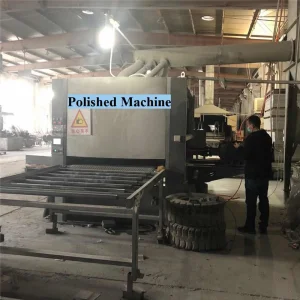
14-hour high-pressure steam autoclaving completes Tobermorite phase transition. Final panels are edge-profiled and coated with multi-layer UV-cured fluorocarbon (FEVE) or polyurethane clear-coats for anti-graffiti and self-cleaning exterior facade performance.
The global dominance of Chinese fiber cement machinery and panel manufacturing is anchored in an unprecedented industrial cluster advantage. By integrating raw mineral extraction, precision heavy machinery casting, automated PLC panel assembly lines, and direct deep-sea port logistics, Chinese manufacturers achieve unparalleled cost-efficiency without compromising engineering tolerances.
China fiber cement exterior wall panels are deployed across diverse geographical zones worldwide, each requiring specific engineering configurations to withstand local environmental stresses:
Configured with hydrophobic silicone mass impregnations and stainless steel rear-fastening rivets. Resists hurricane wind-loads (>5.0 kPa) and salt-spray corrosion without surface degradation or swelling.
High-density autoclaved panels (Category 4/5) with microscopic capillary pore engineering. Prevents trapped water expansion, eliminating spalling, surface scaling, and interlaminar delamination down to -45°C.
Coated with inorganic ceramic pigment finishes and FEVE fluorocarbon coatings. Offers superior color retention (Delta E < 2.0 over 15 years) under intense solar radiation and 50°C daily temperature spikes.
The comparative matrix below illustrates why autoclaved fiber cement exterior wall panels out-perform conventional facade cladding options across lifecycle cost, fire rating, and mechanical endurance metrics:
| Performance Parameter | Autoclaved Fiber Cement Panel | Aluminum Composite Panel (ACP) | Terracotta Facade Tile | EIFS / Exterior Stucco |
|---|---|---|---|---|
| Density Range (g/cm³) | 1.40 – 1.70 | 1.20 – 1.50 | 2.10 – 2.40 | 1.00 – 1.20 |
| Reaction to Fire (EN 13501-1) | Class A1 (Non-Combustible) | Class B / C (Core dependent) | Class A1 | Class B / E (EPS dependent) |
| Flexural Strength (MPa) | 16 – 28 MPa (Class 5) | 120 – 160 (Tensile) | 15 – 20 MPa | < 3.0 MPa |
| Moisture Movement (%) | ≤ 0.12% | ≤ 0.05% | ≤ 0.08% | High cracking risk |
| Thermal Expansion (×10⁻⁶/K) | ≤ 10 | 24.0 (High expansion) | 5.0 | N/A |
| Impact Resistance (Joule) | High (>10J Direct) | Medium (Dents easily) | Brittle (Chips easily) | Low (Punctures) |
| Expected Service Lifespan | 50+ Years | 15 – 20 Years | 50+ Years | 10 – 15 Years |
To guarantee absolute structural reliability for international architectural specifications, premium China fiber cement exterior wall panel products adhere to rigorous global standard testing regimes. Every production batch undergoes comprehensive laboratory sampling across multiple key metrics:
Standard specification for flat fiber-cement sheets. Verifies flexural strength, water absorption, moisture movement, frost resistance, and warm water resistance under North American building codes.
European norm for fiber-cement flat sheets. Category A compliance certifies panels capable of withstanding severe weather conditions including heavy rain, direct heat, and frost cycles.
Full factory audit certification ensuring standardized quality management systems, trace-ability of raw material inputs, environmental life cycle assessment (EPD), and CE conformity marking.
Maximizing the durability of exterior fiber cement panels requires correct specification of the rear ventilated rainscreen framework (VHF system). The rainscreen principle relies on a continuous air cavity behind the panels to equalize pressure, vent excess thermal moisture, and protect the building envelope.
Rainscreen Substructure Rule: Maintain a minimum continuous vertical air gap of 20 mm to 40 mm behind the panel backing. Aluminum or hot-dip galvanized steel sub-framing must be isolated from structural concrete using EPDM thermal break pads to prevent cold bridging.
Panels can be fastened using two main architectural methods: