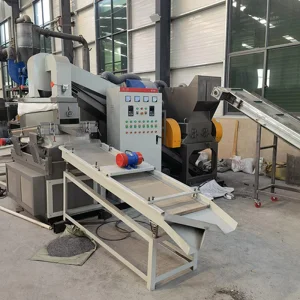
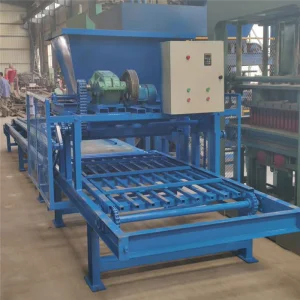
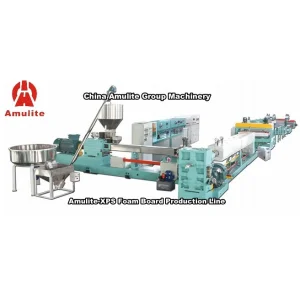
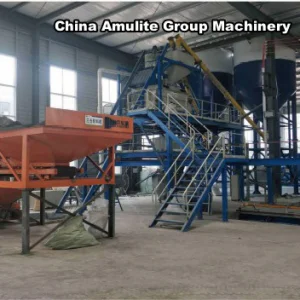
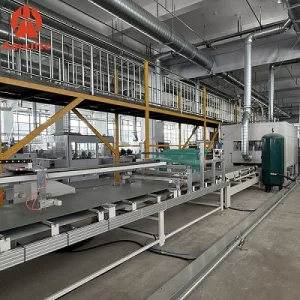
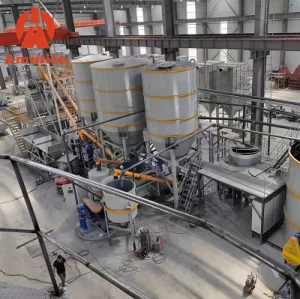
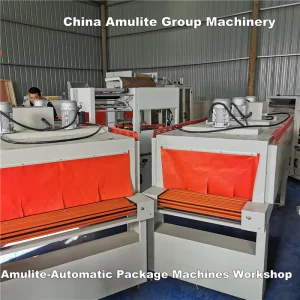
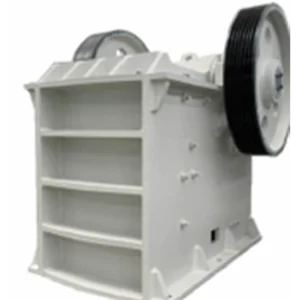
Explore our integrated plant production systems engineered for automated building material manufacturing, precision roll forming, and composite board fabrication.
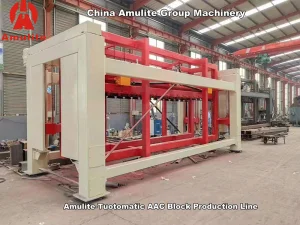
Analyzing structural performance, decarbonization imperatives, and purchasing trends across modern industrial building envelopes.
In contemporary industrial architecture, structural engineering, and cold-chain logistics, the demand for high-performance building envelope materials has reached an unprecedented peak. Cold roll sandwich panel sheets represent the pinnacle of composite structural components, combining the high yield strength of cold-rolled, continuous hot-dip metallic coated steel substrates with advanced, low-density thermal insulation cores. As global net-zero operational standards (such as ASHRAE 90.1, EU Energy Performance of Buildings Directive, and ISO 50001) tighten, the thermal resistance, airtightness, and structural integrity of industrial claddings have shifted from basic architectural choices to strategic capital assets.
The global market for cold roll sandwich panels is experiencing a massive structural transition. Industrial developers, EPC contractors, and pharmaceutical plant developers no longer evaluate wall and roof panels purely on per-square-meter material cost. Instead, modern procurement evaluations center on total lifecycle thermal efficiency, structural span capacity under extreme wind-load dynamics, fire propagation resistance (FM Approval & EN 13501-1 standards), and speed of modular erection. Chinese manufacturing centers have emerged as global leaders in this sector, leveraging vertically integrated steel supply chains, fully automated continuous double-belt lamination lines, and state-of-the-art cold roll forming engineering.
Engineering Core Insight: Modern cold-rolled sandwich panels manufactured in China utilize high-tensile cold-rolled steel coils (yield strength $f_y \ge 350 \text{ MPa}$ to $550 \text{ MPa}$) subject to multi-stage cold deformation. This process guarantees dimensional tolerances under $\pm 0.5 \text{ mm}$ across panel spans up to 18 meters, drastically eliminating thermal bridging during site assembly.
Thermal conductivity ($\lambda$-values) as low as $0.019 \text{ W/m}\cdot\text{K}$ for Polyisocyanurate (PIR) cores, providing up to 40% higher insulation efficiency compared to traditional concrete or legacy mineral wool structures.
Substrates processed via cold-rolling coupled with Zinc-Aluminum-Magnesium (ZAM) or 55% Al-Zn Galvalume coatings, offering up to 4x higher corrosion resistance in coastal or industrial saline environments.
Engineered tongue-and-groove joint profiles (such as Secret-Fix Z-Lock and Cam-Lock mechanisms) enable up to 600 sq.m of daily panel installation per erection team, cutting project delivery timelines by over 50%.
Understanding the interplay between high-tensile metallic skins, protective polymer coatings, and thermo-set core structures.
The strength of a sandwich panel sheet begins in the cold rolling mill. Cold rolling involves passing hot-rolled pickled steel strip through a series of tandem rolling mills at ambient temperature. This process induces strain hardening, increasing yield strength ($f_y$), ultimate tensile strength ($f_u$), and surface hardness while achieving microscopic thickness precision (down to $\pm 0.01 \text{ mm}$).
Following cold rolling, the steel is continuous hot-dip metallic coated. Key substrate chemistries supplied by leading Chinese factories include:
To resist chemical weathering, UV radiation, and atmospheric degradation, cold-rolled substrates are pre-painted via continuous coil coating lines (PPGI / PPGL). Coating systems are tailored to the environment:
Core insulation options include Polyisocyanurate (PIR) with high index ring structures ($>250$) for fire self-extinguishment, high-density Structural Rockwool ($100-140 \text{ kg/m}^3$) for A1 non-combustibility, and Expanded Polystyrene (EPS) for economical thermal shielding.
| Core Insulation Type | Density ($\text{kg/m}^3$) | Thermal Conductivity ($\text{W/m}\cdot\text{K}$) | Fire Reaction Class (EN 13501-1) | Compressive Strength (kPa) | Water Absorption (%) |
|---|---|---|---|---|---|
| PIR (Polyisocyanurate) | 38 – 45 | 0.019 – 0.022 | B-s1, d0 (FM 4880 Approved) | $\ge 150 \text{ kPa}$ | $< 1.0\%$ (Closed Cell $>95\%$) |
| PUR (Polyurethane) | 35 – 40 | 0.023 – 0.025 | B3 / B2 (DIN 4102) | $\ge 120 \text{ kPa}$ | $< 2.0\%$ |
| Structural Rockwool | 100 – 140 | 0.038 – 0.044 | A1 Non-Combustible | $\ge 100 \text{ kPa}$ | $< 1.0\%$ (Hydrophobic treated) |
| EPS (Expanded Polystyrene) | 15 – 25 | 0.035 – 0.039 | B1 / B2 | $\ge 80 \text{ kPa}$ | $< 3.0\%$ |
Why Tier-1 Chinese suppliers dominate global supply chains through advanced automation, scale economics, and continuous quality monitoring.
The technological evolution of China's sandwich panel manufacturing sector is defined by the transition from semi-automated batch pressing to continuous high-speed double-belt caterpillar lamination lines reaching lengths over 250 meters. Suppliers in provinces like Hebei, Shandong, and Jiangsu operate integrated ecosystems where raw steel coils, chemical polyols, and mineral wool slabs are processed within consolidated manufacturing clusters.
Tailored structural and thermal cladding configurations engineered for demanding commercial, industrial, and cleanroom environments.
Config: 150mm – 200mm PIR/PUR Panels with Cam-Lock / Double Tongue & Groove.
Engineered for temperatures down to $-40^\circ\text{C}$. Special labyrinth joints filled with non-setting butyl sealants stop moisture vapor ingress, preventing ice formation inside joints and preserving thermal performance.
Config: 50mm Smooth Flat PVDF / Anti-Static Steel with Walkable Ceiling Grid.
Delivers flush joint transitions compatible with sanitizing chemical washdowns (hydrogen peroxide vapor resistant). Integrated aluminum coving profiles maintain GMP Class A/100 cleanliness compliance.
Config: 100mm Micro-Ribbed Exterior Architectural PIR Wall Panels.
Combines long-span wind-load capacity ($> 1.8 \text{ kN/m}^2$) with aesthetic horizontal micro-rib profiles. Hidden fasteners (Secret-Fix) protect screw heads from weathering while maintaining clean facade lines.
Config: 100mm – 150mm Structural Rockwool Sandwich Panels ($120 \text{ kg/m}^3$).
Delivers up to 4-hour fire resistance (EI120 / REI240 rating). Ideal for chemical storage, power generation plants, and battery factory fire-barrier division walls.
Config: 50mm – 75mm Lightweight EPS / PU Cold-Rolled Wall & Roof Panels.
Engineered for rapid field deployment in mining sites, disaster relief housing, and modular office complexes. Optimized for flat-pack transport and simple hand-tool assembly.
Config: Perforated Cold-Rolled Inner Sheet + Rockwool Core Insulation.
Features micro-perforated internal steel skins ($25-32\%$ open area) paired with high-density rockwool to absorb industrial machinery noise, achieving sound reduction indices up to $R_w = 34 \text{ dB}$.
A step-by-step risk mitigation framework for international EPC buyers sourcing cold roll sandwich panels from Chinese factories.
When drafting Requests for Quotation (RFQs), specify exact steel metallurgical standards rather than generic terms. Insist on EN 10346 / ASTM A653 compliance for structural steel coils, defining minimum yield strength (e.g., S320GD or S350GD). Request Mill Test Certificates (MTC / EN 10204 3.1) showing zinc coating mass ($\text{g/m}^2$) verified via magnetic gauge testing.
For PIR/PUR cores, verify blowing agent compliance (must be 100% CFC/HCFC-free Pentane system) and core foam density distribution (ensuring core center density matches edge density within $\pm 2 \text{ kg/m}^3$).
A rigorous factory quality audit should verify the presence of on-site testing equipment:
Universal Tensile Testing Muffle Furnace Core Ash Content 200°C Autoclave Shear Test Spectrophotometer Color Delta E T-Bend Coating Flexibility MEK Solvent Rub ResistanceEnsure third-party inspection agencies (SGS, TÜV, Bureau Veritas) conduct pre-shipment inspections checking panel flatlands, rib profiles, joint interlocking tightness, cover width measurements, and protective film peelability.
Complete product engineering matrix featuring high-efficiency composite production lines, forming systems, and recycling equipment.
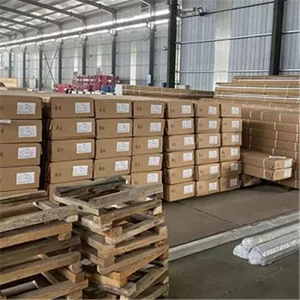
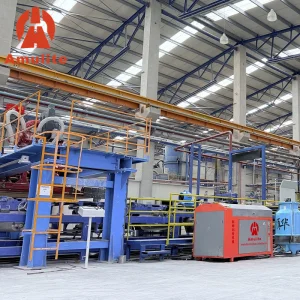
Key R&D pathways reshaping energy efficiency, smart factory integration, and green building standards.
Transitioning from petroleum-based polyols to bio-derived polyols (sourced from agricultural byproducts) combined with Solstice N40 / HFO blowing agents, resulting in near-zero embodied carbon panels.
Integration of infrared thermal imaging camera arrays and ultrasonic flaw detectors across double-belt laminate beds to instantly flag voids, unbonded foam patches, or thickness deviations in real-time.
Direct factory laminating of flexible monocrystalline photovoltaic film onto standing-seam cold-rolled roof panels, creating dual-purpose structural roofing and power generation envelopes.
In-depth engineering answers covering manufacturing lead times, fire ratings, joint designs, and logistics optimization.