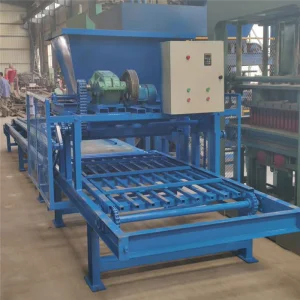
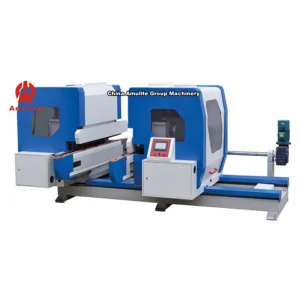
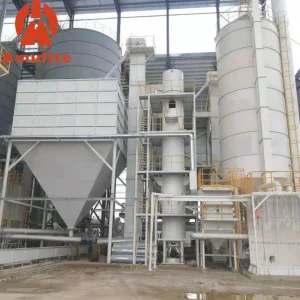
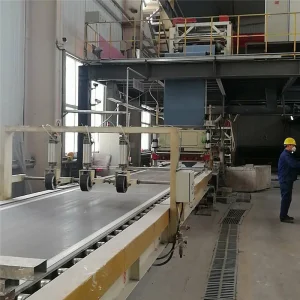
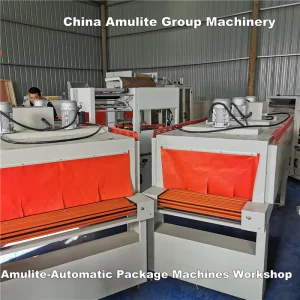
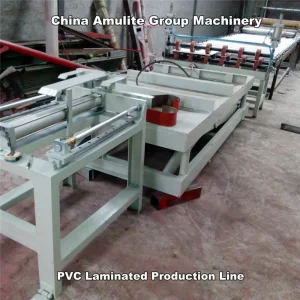
Explore core turnkey equipment, precision polishing units, and specialized panel production infrastructure engineered by top-tier Chinese manufacturing clusters.
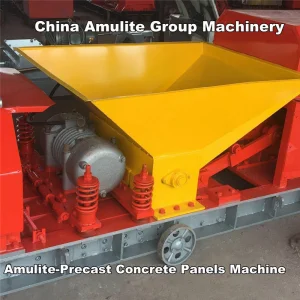
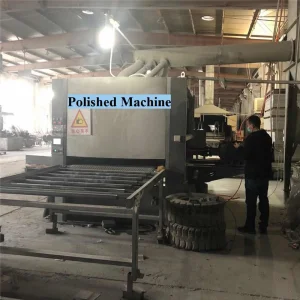
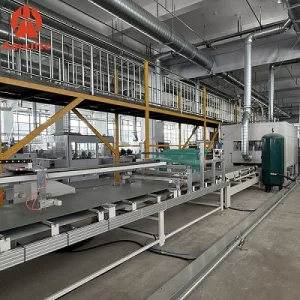
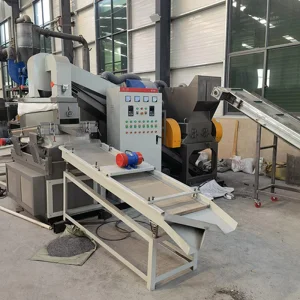
China commands over 70% of the global production capacity for Aluminum Composite Materials (ACM). Through aggressive continuous thermal co-extrusion technology, non-combustible A2 core innovations, and fluoropolymer coating developments, Chinese manufacturers set international benchmarks for quality and cost performance.
Aluminum Composite Panels consist of a multi-layer composite system where two architectural-grade aluminum alloy sheets (typically AA3003 H14 or AA5005 H24) are continuously bonded under high temperature and pressure to a core material.
The operational performance of Chinese ACP/ACM relies on strict metallurgical standards, adhesion peel strength, and weatherability tests adhering to ASTM and EN frameworks.
As global architectural codes demand higher fire resistance, zero-carbon sustainability, and smart surface characteristics, leading Chinese ACP manufacturers are accelerating technological shifts in core chemistry and coil-coating metallurgy.
Traditional polyethylene (PE) core materials face strict building bans on high-rise curtain walls. The Chinese ACP industry has pioneered advanced continuous co-extrusion technology using inorganic mineral fillers, predominantly Magnesium Hydroxide [Mg(OH)₂] and Aluminum Trihydrate [ATH / Al(OH)₃].
Under flame exposure, these mineral cores undergo endothermic decomposition, releasing bound water molecules that dilute oxygen levels and form a protective refractory char layer, fully complying with European EN 13501-1 Class A2-s1, d0 requirements without toxic halogen emissions.
Surface coating chemistry is transitioning from dual-coat PVDF systems to triple-bake FEVE (Fluoroethylene Vinyl Ether) resin formulations and hydrophobic Nano-PVDF coatings. These innovations resolve key facade durability problems:
The convergence of aluminum composite panel technology with thin-film solar photovoltaics represents a high-growth horizon. By embedding flexible CIGS or perovskite solar layers onto structural aluminum sandwich panels, building facades transition from passive thermal envelopes to active energy generators.
Furthermore, digital anodizing and direct-to-metal industrial ink-jet printing allow hyper-realistic timber, marble, and patinated copper aesthetics with 30-year exterior color guarantees.
Because of their superior strength-to-weight ratio, dampening performance, and ease of fabrication, Chinese ACP products serve complex engineering requirements far beyond decorative building envelopes.
In exterior cladding, ACP panels function as pressure-equalized rain-screen curtain walls. Their lightweight nature (approx. 5.5 kg/m² for 4mm panels) drastically reduces structural dead loads on high-rise concrete frameworks compared to natural stone or solid sheet aluminum.
Engineered cassette-fixing systems with ebonite gaskets accommodate thermal expansion while passing extreme dynamic wind load tests up to 5.0 kPa per ASTM E330 standards.
High-tech manufacturing environments—such as semiconductor fabrication plants, pharmaceutical cleanrooms, and EV battery gigafactories—utilize specialized anti-static and anti-bacterial ACP panels.
Coated with conductive copper-tin oxide matrices, these panels prevent electrostatic discharge (ESD) accumulation and withstand continuous sterilization washing using aggressive chlorine or peroxide agents.
Modern transit vehicles, including high-speed trains, metro cars, and commercial marine vessels, deploy fire-proof aluminum honeycomb composite panels and thin ACP lining for ceiling and sidewall assemblies.
These panels provide critical sound isolation (STC ratings > 26 dB) and meet stringent smoke toxicity thresholds specified in EN 45545-2 R1/HL3 transit standards.
| ACP Grade / Core Type | Skin Alloy & Thickness | Fire Classification | Thermal Conductivity | Primary Sector Application |
|---|---|---|---|---|
| Standard LDPE Core | AA1100 / 0.15mm – 0.30mm | Class B3 (Combustible) | 0.29 W/m·K | Interior partitions, retail signage, shopfitting |
| Fire Retardant (FR B1) | AA3003 / 0.30mm – 0.40mm | EN 13501-1 Class B-s1, d0 | 0.21 W/m·K | Low-rise commercial facades, gas stations, canopy cladding |
| Non-Combustible (FR A2) | AA3003 / AA5005 / 0.40mm – 0.50mm | EN 13501-1 Class A2-s1, d0 | 0.15 W/m·K | High-rise residential/commercial curtain walls, airport terminals |
| Aluminum Honeycomb Core | AA5005 / 0.70mm – 1.00mm | ASTM E84 Class A (Zero Spread) | 0.09 W/m·K | Heavy-duty architectural cladding, high-speed rail interiors |
Deploying building envelope products internationally requires absolute conformity with regional municipal fire codes, structural standards, and environmental directives.
Leading Chinese exporters maintain comprehensive testing documentation issued by internationally recognized third-party laboratories including SGS, Intertek, TUV, and UL. Compliance matrices cover key global benchmarks:
To eliminate design-to-installation frictions, enterprise Chinese manufacturers furnish comprehensive digital assets for architects and structural engineers:
Aluminum composite panels are prone to surface abrasion and moisture staining during transoceanic shipping. Leading suppliers implement robust protective packaging protocols:
The dominant competitive positioning of Chinese ACP suppliers stems from fully integrated industrial ecosystems where primary metal refining, continuous coil coating, polymer chemistry, and automated composite lamination occur in high-density regional manufacturing hubs.
Industrial clusters in Guangdong, Shandong, Jiangsu, and Zhejiang operate tightly integrated value chains. Direct access to primary aluminum smelters and continuous casting mills reduces raw material freight overheads and minimizes re-melting energy consumption.
Automated double-roller coil-coating lines process aluminum coils up to 2000mm in width at speeds exceeding 60 meters per minute, ensuring uniform paint thickness control within ±1.5 microns.
Factory 4.0 implementation across Chinese production lines incorporates Automatic Optical Inspection (AOI) systems that scan 100% of the moving coil surface for micro-pinholes, color shifts, and coating blisters in real time.
Laser thickness gauge sensors automatically adjust thermal extrusion dies to prevent core thickness variation, eliminating board waviness and ensuring flawless flatness across large architectural orders.
With standardized continuous production lines operating 24/7, tier-1 Chinese manufacturers can produce upwards of 30,000 square meters of high-grade ACP daily per line.
This massive scale grants project developers unmatched lead-time security, enabling rapid supply for mega-infrastructure projects such as international airports, transit hubs, and commercial master developments.
For international procurement directors, facade consultants, and general contractors, sourcing ACP from China requires a structured methodology to balance Total Cost of Ownership (TCO) with zero-defect quality assurance.
Before issuing contracts, procurement teams must verify supplier capabilities across four key operational dimensions:
While ex-factory unit pricing ($/m²) is a key metric, strategic sourcing considers long-term project economic variables:
In-depth responses to critical questions asked by global developers, architects, and industrial buyers when evaluating China ACP companies and product portfolios.
PE core ACP utilizes low-density polyethylene resin, which is lightweight and flexible but highly combustible, limiting its application to interior signage and low-rise structures. FR A2 core ACP incorporates over 90% non-combustible inorganic mineral materials (such as Magnesium Hydroxide and Aluminum Trihydrate). Under fire conditions, A2 core panels do not propagate flame, emit minimal smoke, and generate zero flaming droplets, satisfying strict international high-rise building regulations (EN 13501-1 Class A2-s1, d0).
PVDF (Polyvinylidene Fluoride) coatings contain 70% fluorocarbon resin (Kynar 500) and excel in extreme UV resistance, thermal stability, and chalk resistance with a matte-to-medium gloss finish (25-35%). FEVE (Fluoroethylene Vinyl Ether) coatings offer equivalent atmospheric durability but provide a much broader gloss range (up to 85% high gloss) and vibrant color saturation. PVDF is ideal for standard high-rise curtain walls, while FEVE is selected for high-gloss corporate branding and striking architectural accents.
For exterior architectural facade applications, building codes require an aluminum skin thickness of 0.40mm to 0.50mm (paired with 4mm or 6mm total panel thickness) using structural alloys like AA3003 or AA5005 to resist wind pressures and structural deflection. For interior partitions, furniture trim, or visual signage, lighter skins ranging from 0.12mm to 0.30mm over a 2mm or 3mm total panel thickness are standard to optimize cost.
180° peel strength measures the adhesive bond integrity between the aluminum skins and the central core. Inadequate peel strength leads to panel delamination over time when exposed to wind shear, moisture ingress, and freeze-thaw thermal cycles. Per ASTM D903 standards, premium architectural ACP must achieve a peel strength ≥ 9.0 N/mm. Tier-1 Chinese manufacturers utilize co-extruded macromolecular adhesive films under precise heat and pressure to ensure permanent chemical and mechanical bonding.
Yes. Leading factories operate computer-controlled color matching laboratories equipped with industrial spectrophotometers to match RAL, Pantone, or physical customer swatches within a ∆E < 0.8 color variance. Advanced coil coating lines also produce specialized finishes including anodized brushed metal, reflective mirror surfaces, multi-tone chameleon shift coatings, and high-definition printed timber/granite patterns featuring 3D tactile textures.
Buyers should request a comprehensive Quality Assurance Dossier including: (1) Factory Quality Control Inspection Certificate detailing dimensional tolerances, film thickness, gloss level, and peel strength; (2) Raw Material Mill Test Certificates (MTC) for aluminum coils and paint batches; (3) Third-party fire reaction test reports (SGS/Intertek); and (4) Container Loading Inspection photos verifying pallet securing and moisture barrier integrity.
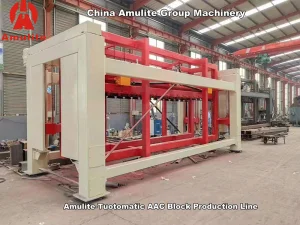
Explore additional turnkey production lines, crusher plants, AAC block systems, and automated packaging units engineered for global building material projects.