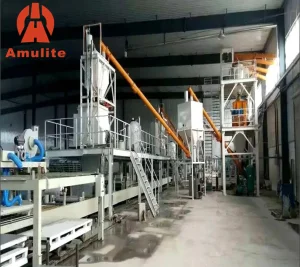
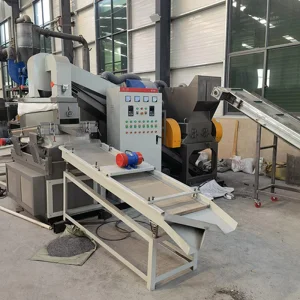
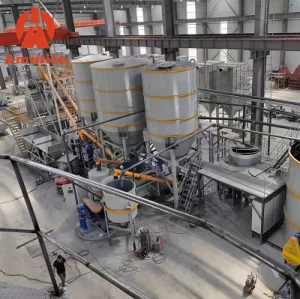
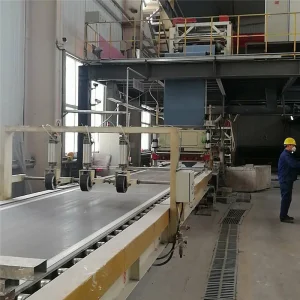
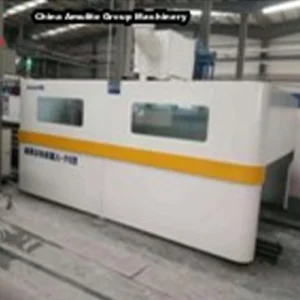
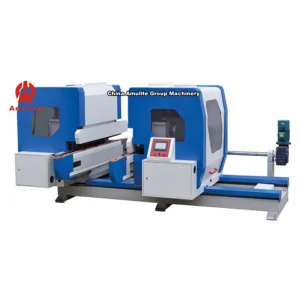
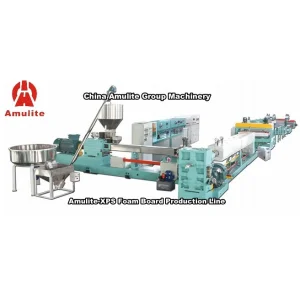
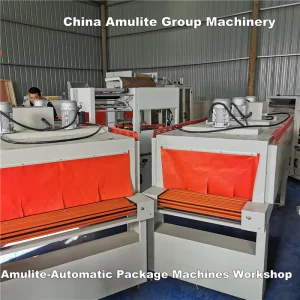
Explore our flagship equipment solutions engineered for global building material manufacturers, featuring automated slurry preparation, hydraulic pressing, and autoclaving systems.
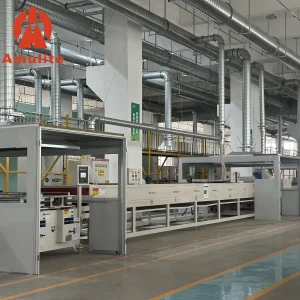
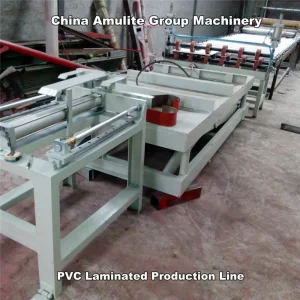
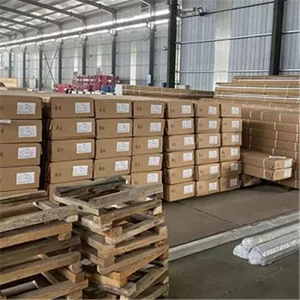
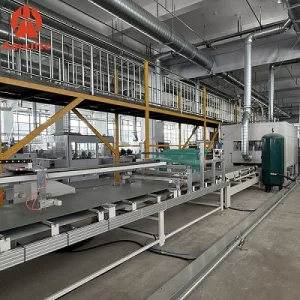
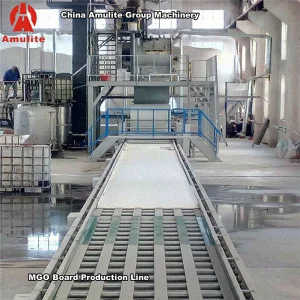
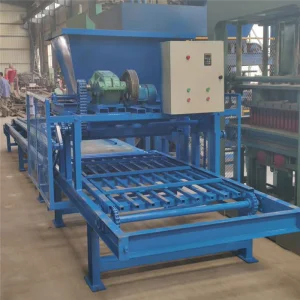
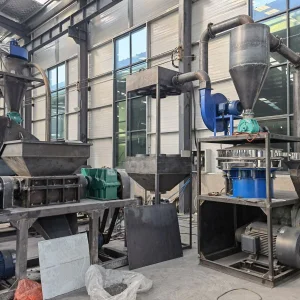
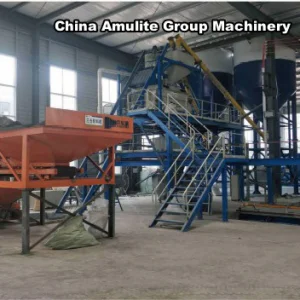
The non-metallic mineral building materials industry is undergoing a structural transformation toward high-performance, lightweight, fireproof, and eco-friendly panel products. Among these, 4-18mm calcium silicate boards have emerged as an indispensable cornerstone for modern dry-construction methods. Engineered through a precise hydrothermal reaction between siliceous and calcareous materials, calcium silicate boards deliver Class A1 non-combustible fire protection, superior flexural strength, dimensional stability under high humidity, and resistance to biological degradation.
Historically relied upon for basic ceiling and partition applications, global engineering specifications now mandate strict performance metrics for calcium silicate panels used in high-rise commercial structures, subterranean transport tunnels, cleanroom facilities, and prefabricated exterior wall cladding systems. Consequently, international procurement teams are shifting focus from simple machinery acquisition to sourcing full-turnkey manufacturing lines capable of tight thickness tolerances, dynamic slurry distribution control, low energy consumption, and high operational reliability.
This technical whitepaper examines the industrial landscape of China 4-18mm Calcium Silicate Board Production Line suppliers, evaluating technological advances in the Hatschek wet-forming process, hydrothermal autoclave dynamics, automated stacking/destacking logistics, and Industry 4.0 PLC system integration.
Understanding international compliance framework and technical parameters required by Tier-1 EPC contractors and building material conglomerates.
Global buyers operating across North America, Europe, the Middle East, Southeast Asia, and Latin America evaluate production machinery based on compliance with rigorous testing standards, such as ASTM C1186 (Standard Specification for Flat Fiber-Cement Sheets), EN 12467 (Fiber-cement flat sheets), and ISO 8336. The production line must yield boards that meet precise physical and mechanical performance targets across the entire 4mm to 18mm thickness spectrum.
| Thickness Range | Primary Global Application | Target Density (g/cm³) | Flexural Strength (EMC) | Critical Machine Requirement |
|---|---|---|---|---|
| 4mm - 6mm | Suspended Ceilings, Acoustic Tiles, Interior Underlayment | 1.0 - 1.25 g/cm³ | ≥ 10.0 MPa | High-speed sheet cutting, ultra-smooth cylinder dewatering, precise thickness gauges. |
| 8mm - 12mm | Internal Partition Walls, Wet Area Backer Boards, Fire Doors | 1.20 - 1.35 g/cm³ | ≥ 13.0 MPa | Multi-layer film accumulation control, high-pressure hydraulic pre-pressing (up to 4000T). |
| 14mm - 18mm | Exterior Wall Cladding, Subfloor Substrates, Tunnel Fire Barriers | 1.30 - 1.50 g/cm³ | ≥ 16.0 MPa | Heavy-duty auto-stackers, extended autoclave curing cycle management, edge profiling systems. |
To achieve these rigorous standards, leading Chinese equipment manufacturers have integrated advanced multi-vat Hatschek forming units with online thickness feedback loops and multi-stage vacuum dewatering systems. This ensures that density variation across a 1220x2440mm or 1220x3050mm board is maintained within an ultra-strict variance of ≤ ±2.0%.
Over the past two decades, China has established an unassailable ecosystem for non-metallic building material machinery design and fabrication. China’s leadership as a global supplier of 4-18mm calcium silicate board lines is built upon four structural pillars:
From high-precision CNC boring of forming cylinders to pressure-vessel fabrication for autoclaves and in-house assembly of PLC control cabinets (Siemens/Schneider), Chinese factories minimize lead times by sourcing 90%+ of components within a 100km industrial radius.
Chinese engineering institutes have optimized the chemical synthesis of Tobermorite crystalline structures (C5S6H5). Lines are engineered specifically to process local raw materials—such as quartz sand, slaked lime, Portland cement, and recycled cellulose fibers—reducing operating expenses (OPEX) by up to 25%.
Whether a client requires a baseline 3-million-m²/year setup or an automated 20-million-m²/year mega-plant, Chinese suppliers offer standardized modular footprints that drastically cut civil construction timelines and engineering costs.
Turnkey suppliers provide end-to-end support including raw material trial testing, plant layout drafting, structural load calculation, field erection supervision, formulation debugging, and operator certification.
A detailed breakdown of the physical and chemical transformations during automated production.
Quartz sand is wet-milled in a ball mill to achieve a specific surface area of > 3500 cm²/g. Quicklime is hydrated into slaked lime slurry, while unbleached kraft pulp is repulped and refined to a Canadian Standard Freeness (CSF) of 450-550 ml.
Precision PLC mass-flow meters meter slurry components into mixing vats. Rotating mesh cylinders pick up micro-thin films (0.2-0.3mm thick), transferring them onto a continuous synthetic felt, where vacuum boxes dewater the film before accumulation onto the making roll.
Once the target thickness (4mm to 18mm) is reached on the accumulator cylinder, a high-speed water-jet or wire-cutter severs the green sheet. Sheets pass into a heavy hydraulic press (up to 7000T) to eliminate internal voids, boost density, and raise flexural strength.
Green boards are stacked with steel templates and routed to a pre-curing tunnel at 50-60°C and 90% RH for 8-12 hours. The initial hydration reaction gives boards sufficient green strength for automated mechanical template separation.
Destacked boards are loaded into autoclaves running saturated steam at 1.0-1.2 MPa (180°C to 190°C) for 10 to 14 hours. Silica and calcium react chemically to form crystalline Tobermorite, providing permanent dimensional stability and fire resistance.
Autoclaved boards enter multi-deck dryers to reduce moisture content below 10%. Calibrating sanding machines smooth board faces to within ±0.2mm tolerance, followed by edge trimming, automated stacking, and shrink-wrapping.
How varying board thicknesses translate to demanding real-world commercial and industrial job sites.
Utilized extensively in semiconductor plants, pharmaceutical facilities, and commercial kitchens where washability and mold resistance are mandatory. Boards receive anti-static or anti-bacterial UV coatings.
Installed with light-gauge steel stud framing to form 1-hour to 4-hour fire-rated partition walls in hospitals, hotels, and high-density residential towers. Eliminates dry-rot and sagging under elevated ambient moisture.
Serves as a heavy-duty substrate board for ventilated facades, curtain wall backings, mezzanine flooring, and subway tunnel linings subjected to constant air pressure fluctuations and seismic loads.
In-depth technical answers addressing common investor queries regarding equipment selection, raw material formulation, and operation.
Explore complementary production systems, foam board equipment, wall panel plants, and resource recovery machinery engineered by our group.