Explore flagship manufacturing systems, autoclaved curing lines, and specialized processing machinery engineered by leading global manufacturers.
The global construction sector is undergoing a monumental paradigm shift toward lightweight, non-combustible, structural building envelope materials. At the center of this transformation is Reinforced Fiber Cement Board (RFCB)—a composite matrix consisting of Ordinary Portland Cement (OPC), high-purity silica sand, synthetic reinforcement fibers (such as Polyvinyl Alcohol [PVA]), refined unbleached cellulose pulp, and specialized performance additives. Engineered to replace traditional plywood, drywall, and asbestos-based panels, reinforced fiber cement boards deliver unparalleled dimensional stability, Class A1 fire resistance, exceptional flexural strength (Module of Rupture MOR > 16 MPa), and extreme moisture immunity.
For global procurement directors, real estate developers, and industrial equipment buyers seeking to buy reinforced fiber cement board machinery from certified manufacturers and companies, understanding the underlying chemistry, manufacturing parameters, and equipment supply chains is critical. Operating a modern fiber cement production plant demands a delicate balance between slurry hydrodynamics, vacuum dewatering efficiency, hydraulic sheet pressing, and high-pressure autoclaved steam curing.
The structural integrity of a high-density reinforced fiber cement board is governed by the matrix interfacial transition zone (ITZ). In non-asbestos formulations, cellulose fibers serve as processing fibers that transport slurry through the wet-forming Hatschek cylinder system, while high-tensile PVA or alkali-resistant (AR) glass fibers provide mechanical reinforcement across micro-crack boundaries.
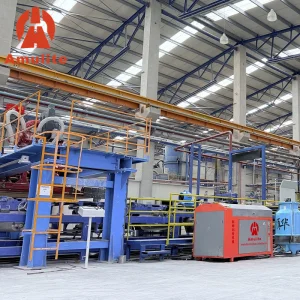
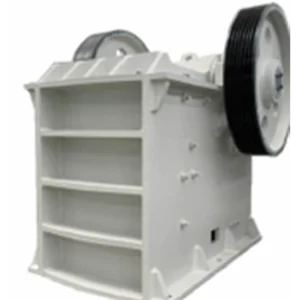
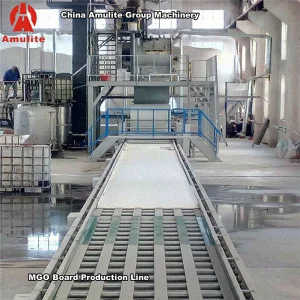
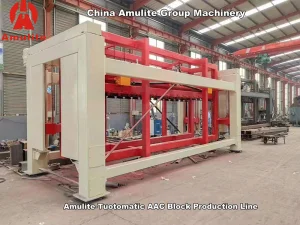
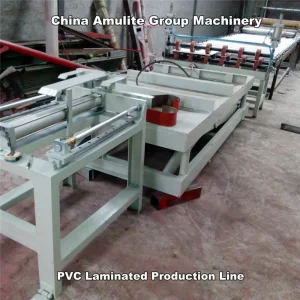
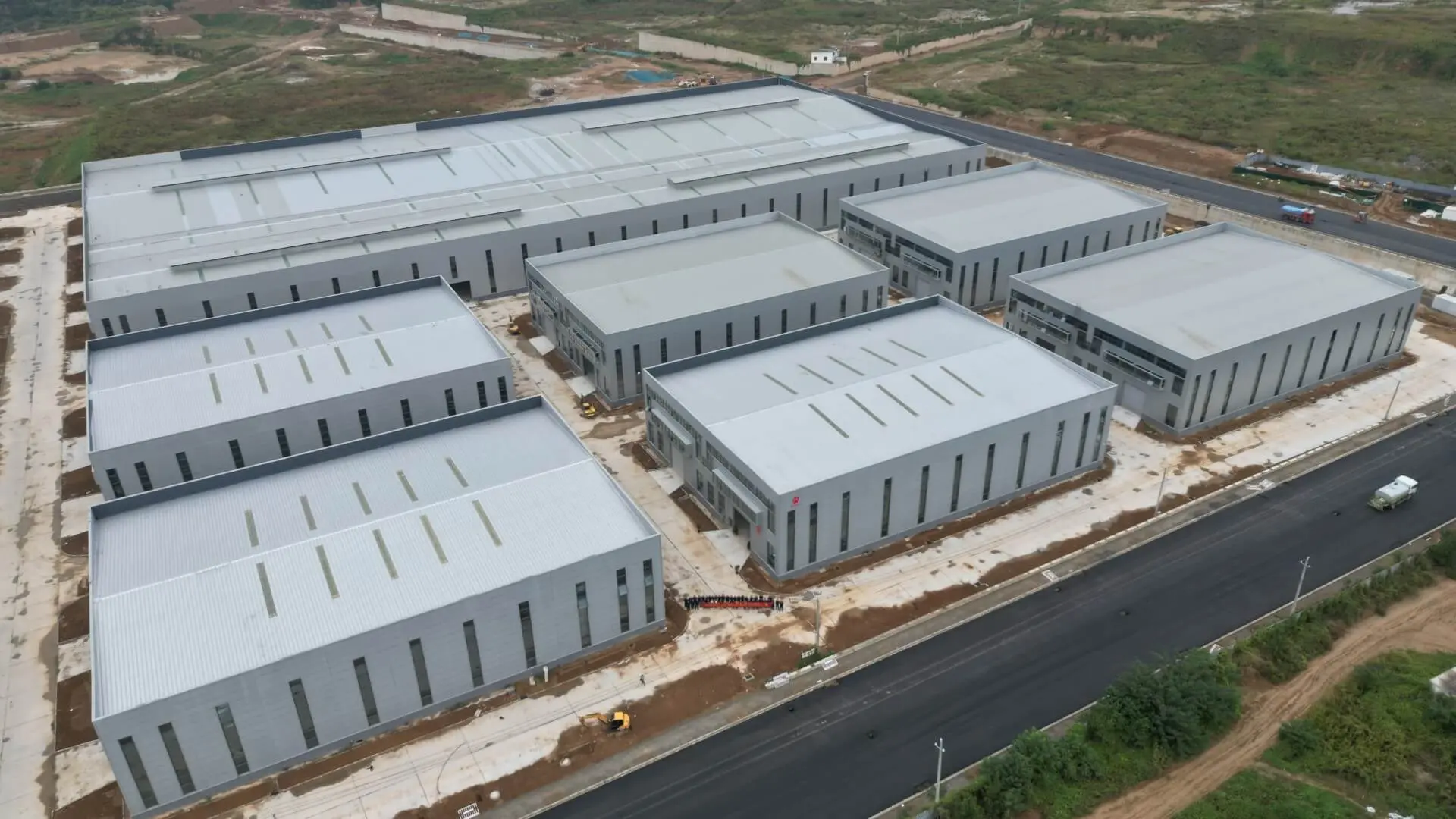 Figure 1: Heavy-duty assembly bay for turnkey fiber cement board forming machines at China Amulite Group.
An in-depth look into regional consumption trends, supply chain economics, and industrial demand for fiber cement manufacturing systems.
Driven by strict zero-combustibility building codes (EN 13501-1 Class A1 / ASTM E136) and severe weather resistance demands. High growth in rainscreen facade systems, fiber cement siding planks, and tile backer boards replacing gypsum in wet zones.
Rapid urban development and government initiatives for rapid-assembly prefabricated housing in India, Indonesia, Vietnam, and the Philippines. Accelerated replacement of asbestos-cement corrugated sheets with non-asbestos autoclave boards.
Extensive deployment in extreme climate insulation panels, industrial warehouse lining, and modular worker accommodation. High demand for fire-rated calcium silicate partition boards capable of withstanding ambient thermal spikes above 50°C.
When capital investors evaluate how to buy reinforced fiber cement board machinery from OEM factories, operational expenditure (OPEX) calculations hinge on local raw material availability. Advanced machinery manufacturers, such as China Amulite Group, engineer customized slurry preparation circuits capable of accommodating localized industrial byproducts, including fly ash from coal power plants, blast furnace slag, and recycled silica flour, reducing raw material procurement costs by up to 28% without compromising flexural strength.
From raw batching to hydrothermal synthesis: standard engineering workflow for high-density reinforced fiber cement boards.
Cellulose pulp sheets are hydrapulped into discrete fibers at high consistency. Cement, ground quartz sand, and synthetic fibers are precisely weighed using multi-component gravimetric batchers before being agitated into a uniform slurry (15%–20% solid concentration).
The slurry feeds into multiple vat units (typically 3 to 5 vats). Rotating wire-mesh cylinders pick up micro-thin film layers (0.2–0.3 mm) and transfer them onto a continuous running felt under controlled vacuum dewatering pressure.
The wet film winds around the dynamic main forming drum until the pre-programmed sheet thickness (e.g., 6mm, 9mm, 12mm, 18mm) is reached. An integrated water-jet or mechanical rotary knife performs automated high-precision cross-cutting.
Green boards are stacked between steel templates. A high-tonnage hydraulic press (3,000 to 10,000 tons total press load) compresses the sheets, eliminating internal void pockets and elevating board density from 1.2 g/cm³ to over 1.65 g/cm³ for structural applications.
Boards undergo high-pressure steam curing inside autoclaves operating at 10–12 bar saturated steam pressure (180°C to 190°C) for 8 to 12 hours. This process triggers the chemical transformation of silica and calcium into crystalline Tobermorite, guaranteeing zero moisture expansion.
Cured boards undergo heavy-duty double-sided calibration sanding, four-side edge chamfering, and high-speed UV painting or water-repellent sealer application to yield final commercial architectural finishes.
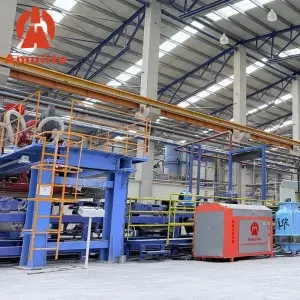
Standard engineering parameters across board classes manufactured using Amulite turnkey lines (Tested per ASTM C1185 and EN 12467 standard testing protocols).
| Technical Metric / Specification Parameter | Medium-Density Board (Indoor Partition) | High-Density Board (Exterior Facade) | Ultra-Heavy Load Board (Flooring / Decking) |
|---|---|---|---|
| Dry Density Range ($\rho$) | 1.10 – 1.30 g/cm³ | 1.35 – 1.50 g/cm³ | 1.55 – 1.75 g/cm³ |
| Flexural Strength (MOR) - Ambient | ≥ 10.5 MPa | ≥ 16.0 MPa | ≥ 22.0 MPa |
| Water Absorption Rate | ≤ 28% | ≤ 20% | ≤ 14% |
| Moisture Movement (Linear Swelling) | ≤ 0.18% | ≤ 0.12% | ≤ 0.08% |
| Thermal Conductivity ($\lambda$) | 0.16 – 0.20 W/(m·K) | 0.21 – 0.25 W/(m·K) | 0.26 – 0.30 W/(m·K) |
| Fire Resistance Class (EN 13501-1) | Class A1 Non-Combustible | Class A1 Non-Combustible | Class A1 Non-Combustible |
| Freeze-Thaw Resistance (100 Cycles) | Pass (Unlaminated) | Retains > 85% Strength | Retains > 92% Strength |
| Autoclave Hydrothermal Phase | Non-Autoclaved or Low-Pressure | Full Autoclaved ($C_5S_6H_5$) | High-Press Autoclaved + Hydraulic Press |
How engineered fiber-reinforced sheets deliver failure-free structural performance across extreme build environments.
Pre-painted UV-resistant fiber cement facade planks installed over lightweight steel framing. Offers superior wind-load resistance, acoustic dampening, and extreme UV resistance, preventing envelope degradation in high-rise coastal towers.
Heavy-duty 15mm–24mm fiber cement floor underlayment panels. Immune to rot, mold, moisture degradation, and structural sagging, providing an inert, rigid base for ceramic tiles, epoxy toppings, and hardwood flooring in commercial kitchens and hospitals.
Specialized high-density calcium silicate matrix formulations engineered to withstand hydrocarbon fire curves (RWS / RABT curves). Maintains structural cohesion at temperatures surpassing 1,100°C for up to 4 hours in subterranean transit tunnels.
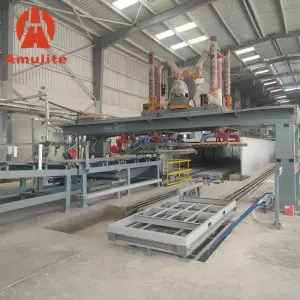
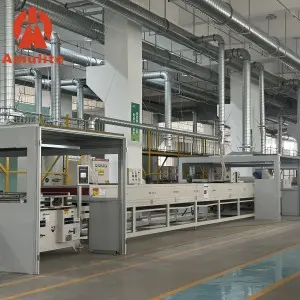

As carbon neutral regulations accelerate globally, the fiber cement board manufacturing sector is experiencing rapid technological evolution. Equipment buyers and machinery operators must evaluate how prospective machinery suppliers align with future-proof industrial standards:
Traditional autoclaved formulations rely heavily on high OPC ratios. Next-generation turnkey lines designed by China Amulite Group incorporate multi-dosing powder systems capable of replacing up to 40% of clinker with calcined LC3 clays, pozzolanic volcanic ash, and ultra-fine ground granulated blast-furnace slag (GGBS), reducing embodied carbon per square meter by over 30% while retaining structural Tobermorite conversion kinetics.
Modern high-speed Hatschek lines running at linear speeds up to 120 meters/minute require real-time quality control. Integrated dynamic laser-scanning profiling system continuously monitors green board thickness and mass density across 32 measurement zones. The central Siemens S7-1500 PLC automatically adjusts dynamic felt speed, cylinder slurry levels, and vacuum dewatering pressure to maintain strict thickness tolerances within ±0.15 mm.
To meet extreme seismic shock specifications and hyper-flexural requirements in modular high-rise construction, advanced manufacturers are migrating toward hybrid micro-reinforcements. Combining nano-fibrillated cellulose (NFC) with short-cut alkali-resistant synthetic polymer fibers creates a dual-network micro-mesh, elevating sheet tensile strain capacity prior to failure by more than 45%.
Direct technical guidance for investment groups, plant owners, and procurement directors evaluating turnkey fiber cement machinery.
Complementary processing lines, recycling equipment, and precast concrete machinery engineered for global building material manufacturing complexes.
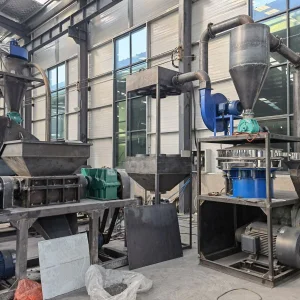
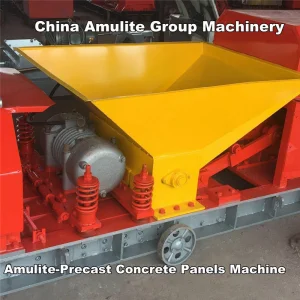
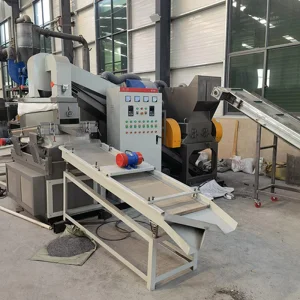
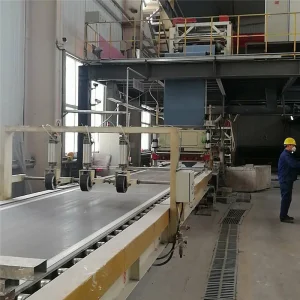
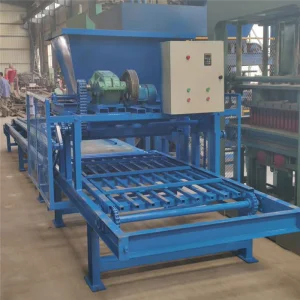
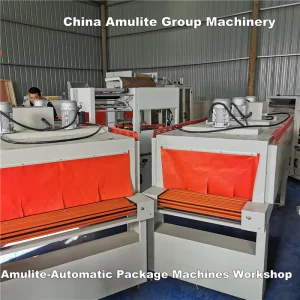
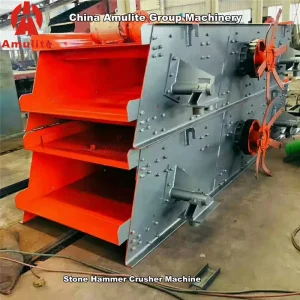
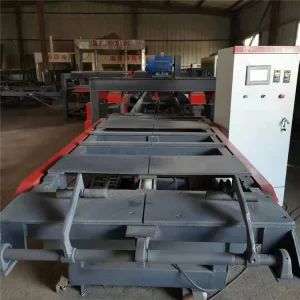
Partner with an authoritative machinery manufacturer featuring a 100,000 m² heavy-fabrication plant, 27 project engineering teams, and over 200 operational lines delivered across 60+ countries worldwide.