Industrial Engineering & Technology Whitepaper

Buy New Technology Ceiling Board Making Machine Manufacturers & Factories

Next-Generation Automated Manufacturing Infrastructure, Acoustic Mineral Fiber & Fiber-Cement Ceiling Tile Engineering, Global Standards Compliance, and Industrial Plant Solutions

Primary Industrial Equipment Matrix

Explore high-capacity production lines engineered for non-asbestos fiber cement, calcium silicate, perlite acoustic tiles, and modular precast building materials.
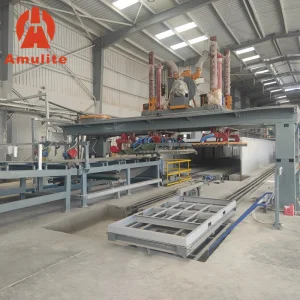
China Non-Asbestos/Asbestos Cement Corrugated Roof Sheets Production Line Company, Product
View Product
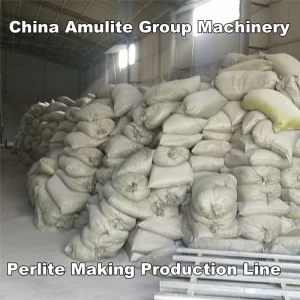
Buy Perlite Production Line Manufacturers, Company
View Product
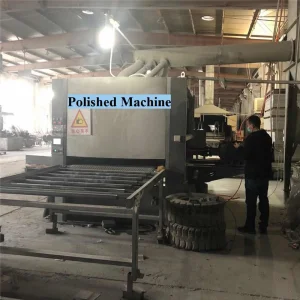
China Single Face Polished Machine Manufacturers, Suppliers
View Product
Famous Amulite AAC Blocks Customized Automatic Machines- 4.2m Manufacturers, Company
View Product
Best Flexible Clay Ceramic Tile Production Line Manufacturer, Companies
View Product
China Automatic Bricks Making Production Line Manufacturers, Products
View Product
Buy Hollow Core Wall Panels Production Line Factory, Factories
View Product
Best Precast Concrete Products Machinery Manufacturers, Products
View Product

Global Commercial Dynamics of Ceiling Board Manufacturing

Analyzing macroeconomic shifts, fire compliance mandates, and acoustic standard advancements driving the demand for next-generation ceiling board making machinery.

The global interior architecture market is undergoing a structural transformation driven by strict green building certifications (LEED v4.1, BREEAM), stringent acoustic isolation mandates (ISO 354 / ASTM C423), and elevated fire-resistance standards (Class A / EN 13501-1 A1 non-combustible). Consequently, global building material manufacturers can no longer rely on legacy, labor-intensive ceiling board machinery. Modern commercial infrastructure projects demand lightweight, mold-resistant, acoustically optimized, and micro-calibrated ceiling tiles.

Investing in a high-efficiency new technology ceiling board making machine requires deep technical evaluation of chemical dosing precision, slurry rheology, high-pressure hydraulic compaction, and automated edge-profiling. Leading machinery original equipment manufacturers (OEMs) have shifted from standalone wet-process tanks to fully integrated Industry 4.0 production environments featuring SCADA-driven PLC control systems, real-time radiometric density monitoring, and heat-recovery thermal tunnels.

30M+
Annual Capacity (m²)
< 0.15%
Thickness Tolerance
28%
Thermal Energy Saved
ISO 9001
Global Compliance
Commercial Drivers Impacting Production Equipment Capital Investments

A1 Non-Combustible Mandates

Strict regional codes mandate fire-rated calcium silicate and mineral wool ceiling tiles. Modern machinery must execute uniform chemical bonding without structural micro-cracks under elevated autoclave steam pressures.

Acoustic Coefficient NRC Optimization

High Noise Reduction Coefficient (NRC ≥ 0.70 to 0.90) requires exact control over surface needle-punching, micro-perforation, and organic binder distribution during the wet-forming phase.

Operational OEE & Scrap Reduction

Advanced four-side precision trimming systems minimize raw edge breakage, increasing Overall Equipment Effectiveness (OEE) beyond 92% with minimal scrap recycling overhead.

Engineering Architecture of Next-Gen Ceiling Board Lines

Deconstructing the multi-stage mechanical workflow from raw material pulping to high-pressure autoclaving and automatic four-side profiling.

Key Technical Insight: The Hatschek Wet-Forming vs. Fourdrinier Process

Modern high-density ceiling board plants utilize multi-vat Hatschek wet-forming cylinders paired with multi-stage vacuum dewatering boxes. This achieves precise layer-by-layer lamination (0.2mm to 0.3mm per layer), ensuring structural isotropic strength, zero warping during humidity flux, and superior flexural modulus (MOR > 14 MPa).

Comparative Technical Matrix: Ceiling Board Production Technologies
Performance Parameter Calcium Silicate Ceiling Line Expanded Perlite Acoustic Line Gypsum PVC Laminated Line Fiber Cement Exterior/Ceiling Line
Raw Material Matrix Quartz Sand, Lime, Cellulose Fiber Expanded Perlite, Starch, Mineral Wool Desulfurized Gypsum, Protective Paper OPC Cement, Silica Sand, Kraft Pulp
Density Range (g/cm³) 0.80 – 1.25 0.28 – 0.45 0.70 – 0.85 1.20 – 1.65
Bending Strength (MOR) ≥ 12.0 MPa ≥ 2.5 MPa ≥ 6.5 MPa ≥ 16.0 MPa
Fire Resistance Class A1 Non-Combustible Class A / A2 B1 / Class 1 A1 Non-Combustible
Moisture Absorption Rate < 25% (Autoclaved) < 10% (Water Repellent Treated) < 10% (Moisture Proof Type) < 18% (Autoclaved)
Dominant Curing Process Autoclave (1.2 MPa, 190°C) Multi-Deck Drying Tunnel (180°C) Hot-Air Convection Dryer Autoclave or Natural Hydrothermal
Core Mechanical Sub-Systems Breakdown

1. Automated Dosing & Slurry Homogenization

Microprocessor-controlled loss-in-weight feeders dose quartz flour, lime slurries, and unbleached Kraft pulp fibers. High-shear turbomixers enforce sub-micron dispersion, eliminating agglomeration risks.

2. Multi-Cylinder Web Forming & Vacuum Dewatering

Equipped with stainless-steel mesh cylinders (70–100 mesh) operating inside constant-level slurry vats. Vacuum dewatering shoes extract moisture down to 28-32% before mechanical pressing.

3. High-Tonnage Hydraulic Pressing Station

Main hydraulic press exerts up to 70,000 kN of total force, removing residual inter-layer air gaps, increasing density up to 1.45 g/cm³, and delivering smooth surface flatness for subsequent sanding.

Smart Factory Automation & Green Decarbonization

Integrating artificial intelligence, digital twin monitoring, and thermal heat recovery to cut operational carbon footprint and drive manufacturing profitability.

Closed-Loop Thickness Calibration

Non-contact laser displacement sensors scan the green board web continuously, feeding real-time corrective signals back to the vat slurry feed pumps to maintain thickness variations under ±0.1mm.

Autoclave Steam Heat Recovery

Proprietary flash steam recovery loops redirect blow-down energy from high-pressure autoclaves back into pre-heating raw wash-water tanks, lowering boiler natural gas consumption by 24%–28%.

Low-Carbon Supplementary Cementitious Formulas

Machinery is specifically calibrated to process up to 40% fly ash, ground granulated blast-furnace slag (GGBS), or calcined clay additives without compromising initial green-strength demolding.

Localized Application Scenarios & Architectural Use Cases

Engineered for versatile deployment across high-humidity, high-traffic, and acoustically sensitive commercial real estate projects.

Grade-A Commercial Office Towers

Micro-perforated acoustic ceiling tiles manufactured via automated pin-punching machinery satisfy noise-attenuation requirements (CAC > 35 dB) while delivering sleek, unblemished aesthetic ceilings.

Healthcare & Cleanroom Facilities

Autoclaved calcium silicate boards produce anti-microbial, zero-VOC ceiling systems capable of withstanding aggressive daily chemical disinfection without surface pitting or fiber release.

Tropical & High-Humidity Microclimates

Traditional gypsum sag under high relative humidity (>80% RH). Autoclaved fiber-cement ceiling boards manufactured on specialized machinery exhibit zero sag and less than 0.08% linear moisture expansion.

Localization Support, Quality Assurance & Compliance

Full lifecycle engineering assistance—from local raw material testing to international certification alignment.

Global Regulatory Standards Supported

Every ceiling board plant manufactured by our facilities is customized to fulfill regional building code compliance and safety directives:

  • European Union (CE Marking): EN 12467 for fiber-cement flat sheets and EN 13964 for suspended ceilings.
  • North American Market: ASTM C1186 Standard Specification for Flat Fiber-Cement Sheets & ASTM E84 Surface Burning Characteristics.
  • Middle East & Africa (SASO / ESMA): Civil Defense approval for non-combustible building materials and anti-fungal certification.
  • CIS Region (GOST Certification): Structural safety and low-temperature durability compliance for extreme climatic zone operation.

Turnkey Raw Material Localization Laboratory Testing

Before equipment fabrication begins, our chemical engineers analyze your locally sourced silica sand, cement, fly ash, and pulp fibers. We run comprehensive pilot-scale slurry tests to formulate the exact chemical recipes needed to achieve target flexural strength while minimizing raw material costs.

Technology Roadmap & Future Outlook (2025–2035)

Pioneering advancements in zero-waste board manufacturing, bio-composites, and automated robotic handling.

Phase 1: Bio-Based & Carbon-Negative Matrices

Integrating agricultural waste fibers (bagasse, hemp, rice husk ash) into cement-silica matrices, reducing dependence on virgin wood pulp while sequestering embodied carbon.

Phase 2: Fully Autonomous Robotic Stacking

Replacing traditional pneumatic vacuum stackers with 6-axis heavy-payload industrial robots equipped with AI vision guidance for zero-edge chipping during green sheet transfer.

Phase 3: Closed-Loop Zero Landfill Reclamation

Inline pulverizers collect green edge trims and cured board scrap, converting them back into active micro-fillers, achieving 100% material recycling across the entire line.

Frequently Asked Questions (FAQ)

Detailed technical answers for industrial plant investors, procurement managers, and plant operations engineers.

1. What is the typical Return on Investment (ROI) period for an automated ceiling board plant?
Depending on local energy tariffs, raw material procurement costs, and target market product pricing, a 5-million m²/year calcium silicate or perlite ceiling board production line typically achieves full capital expenditure ROI within 18 to 28 months of commercial operation.
2. How does autoclaving improve the dimensional stability of ceiling boards?
Autoclaving subjects green sheets to high-pressure saturated steam (typically 1.0 to 1.3 MPa at 180°C to 195°C for 8 to 12 hours). This triggers a hydrothermal reaction between free silica (SiO₂) and calcium hydroxide (Ca(OH)₂), forming crystalline Tobermorite (C₅S₆H₅). Tobermorite imparts permanent dimensional stability, preventing post-installation board shrinkage or sagging under high ambient humidity.
3. What ceiling board thicknesses can be produced on a single Hatschek line?
Our multi-cylinder Hatschek machines can produce ceiling boards and wall panels ranging from 4mm up to 25mm in thickness. Thickness adjustment is controlled via PLC software by regulating forming cylinder revolution speed, vat slurry consistency, and accumulator roll winding cycles.
4. What installation and commissioning support is provided on overseas customer sites?
We deploy a comprehensive field engineering team consisting of mechanical installation engineers, electrical PLC programmers, chemical formulation specialists, and commissioning managers. We remain on site through civil foundation verification, equipment alignment, dry runs, slurry wet trials, and mass-production acceptance testing, alongside full local team operator training.
5. What electrical, steam, and water infrastructure is required to support a standard line?
A standard 5-million m²/year calcium silicate line typically requires an installed electrical power capacity of ~850 kW to 1200 kW, a 6 to 10 t/h steam boiler operating at 1.25 MPa, and a recycled process water loop providing ~25-35 m³/h makeup water capacity.
6. Can existing gypsum board lines be converted to non-asbestos fiber cement lines?
While basic post-drying and handling conveyors can sometimes be retrofitted, wet-end slurry forming systems, pulping units, high-pressure presses, and autoclave curing systems require purpose-built heavy engineering. A dedicated fiber-cement line is recommended to ensure structural integrity and operational safety.

Specialized & Auxiliary Machinery Solutions

Discover high-performance trimming, polishing, tile backer, and material recycling production equipment to complement your ceiling manufacturing plant.

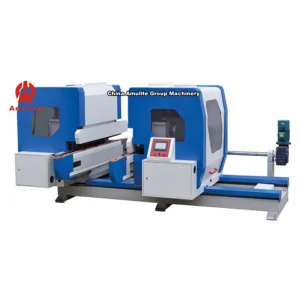
OEM 1300 II Type Automatic Four Side Edge Cutting Machine Factory, Companies
View Product
Best XPS Insulation Tile Backer Production Line Supplier, Companies
View Product
OEM EPS Sandwich Cement Wall Panels Production Line Companies, Products
View Product
Buy Copper Wire Recycling Machine Companies, Products
View Product
OEM Lithium Battery Recycling Equipment Factory, Company
View Product
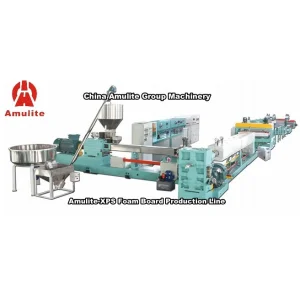
OEM Amulite CO2 XPS Foam Board Production Line Factory, Factories
View Product
Best AM806BH-10 Technical Parameters Manufacturer, Products
View Product
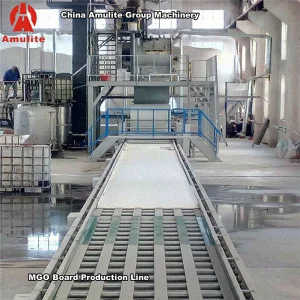
OEM China Amulite Group MGO Board Production Line Factories, Product
View Product