Explore our certified heavy-duty equipment series engineered for high durability, zero asbestos compliance, and maximum operational yield.
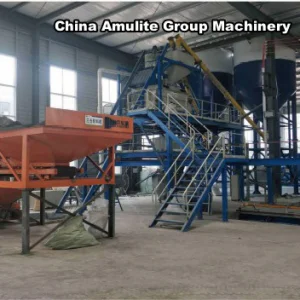
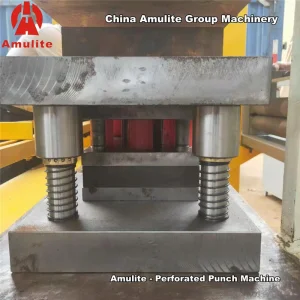
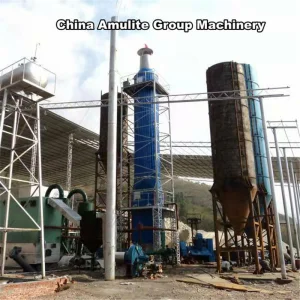
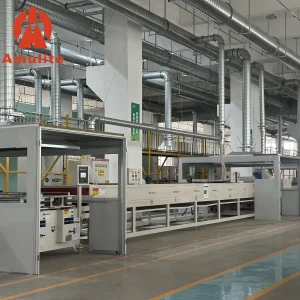
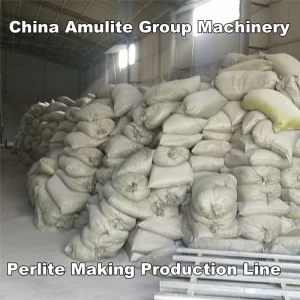
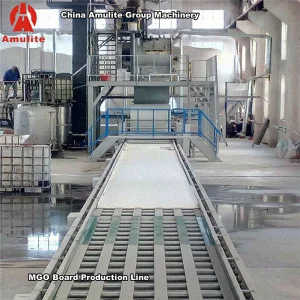
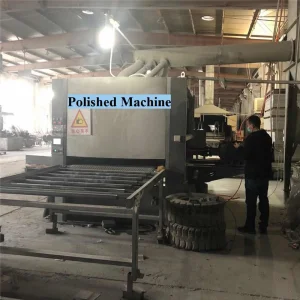
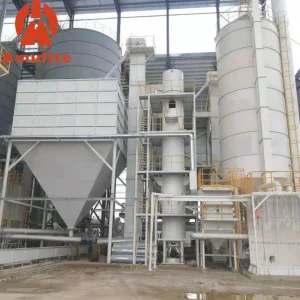
Understanding the fundamental engineering difference between wet-process Hatschek systems, flow-on technology, and modern hydrothermal autoclaving for building boards.
The global benchmark for thin, high-density fiber cement sheets. Utilizes multiple rotating sieve cylinders (3–8 vats) submerged in a dilute slurry (solid concentration 8–12%) to build laminations layer-by-layer on a continuous felt under high vacuum (-0.04 to -0.07 MPa).
Designed for medium-density and high-thickness architectural wall cladding. Slurry is extruded directly onto a moving wire via pressure headboxes. Ideal for boards exceeding 20mm thickness, maintaining uniform density without inter-laminar delamination risks.
Saturated steam curing at 170°C–190°C under 1.0–1.2 MPa pressure for 10–12 hours. Reacts quartz silica powder ($SiO_2$) with calcium hydroxide ($Ca(OH)_2$) to synthesize C-S-H crystalline Tobermorite ($C_5S_6H_5$), ensuring zero moisture expansion.
In modern non-asbestos fiber cement board (NAFCB) engineering, replacing chrysotile requires a precise micro-reinforcement matrix. Premium lines integrate unbleached Kraft cellulose fibers (beating degree 30–45 °SR) for flexible tensile strength alongside synthetic PVA or polypropylene micro-fibers to arrest micro-cracking during early cement hydration.
Capital equipment buyers must balance initial CAPEX against raw material availability, local power infrastructure, and regional building standards.
Driven by rapid urbanization and high ambient humidity. Demands high moisture resistance and termite-proof wallboard. Manufacturers prioritize high-capacity autoclaved calcium silicate lines using local silica sand and fly ash additives to optimize cost-per-square-meter.
Requires high thermal insulation performance for extreme exterior temperatures. Production lines are often configured with integrated expanded perlite dosing units or EPS sandwich core machinery to supply thermal cladding systems for desert environments.
Strict focus on EN 12467 Category A/B performance standards and environmental carbon footprint. Focuses on air-cured or low-energy curing systems paired with automated inline UV-coating and surface grain embossing systems for high-value decorative facade siding.
| Plant Configuration Parameter | Standard Air-Cured Line | Autoclaved High-Density Line | Calcium Silicate Board Line |
|---|---|---|---|
| Primary Raw Materials | OPC, Kraft Pulp, Synthetic Fibers | OPC, Quartz Sand ($SiO_2 \ge 90\%$), Pulp | Lime ($CaO$), Quartz Powder, Pulp, Mica |
| Dry Bulk Density Range | $1.1 - 1.3 \text{ g/cm}^3$ | $1.3 - 1.7 \text{ g/cm}^3$ (Post-Pressed) | $0.8 - 1.2 \text{ g/cm}^3$ |
| Flexural Strength (MOR) | $\ge 12 \text{ MPa}$ | $\ge 18 - 28 \text{ MPa}$ | $\ge 9 - 14 \text{ MPa}$ |
| Curing Infrastructure | Pre-cure Tunnel + 28-day moist room | Pre-cure + 1.2MPa Steam Autoclave | Multi-stage Steam Autoclaving System |
| Typical Product Application | Interior Ceilings, Drywall Backer | Exterior Siding, Heavy-duty Flooring | Fireproof Partitioning, Thermal Insulation |
From raw material processing to final stack packaging: a complete breakdown of the 6 core automated modules.
High-consistency pulper breaks down cellulose sheets into micro-fibers. Electronic load-cell dosing systems feed exact ratios of cement, silica powder, and mineral additives into continuous turbulent mixers.
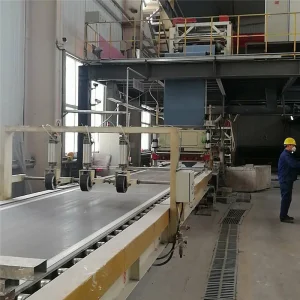
Sieve cylinders filter out water while collecting ultra-thin fiber-cement films ($0.2–0.3\text{mm}$). The endless woven felt transfers layers onto the main forming drum until target board thickness ($4–30\text{mm}$) is reached.
Optional 7,000–10,000 ton multi-daylight hydraulic presses squeeze excess water, increasing board density to over $1.6\text{ g/cm}^3$, significantly raising freeze-thaw durability and flexural strength.
Vacuum-handling robots stack fresh green boards onto steel templates. Pallets enter temperature-controlled pre-curing tunnels ($45–55^\circ\text{C}$, $95\%\text{ RH}$) for initial chemical setting over 8–12 hours.
Automated rail cars transport green boards into heavy steam autoclaves. Controlled ramp-up, soak, and ramp-down steam cycles complete the crystalline silicate hydro-thermal reaction.
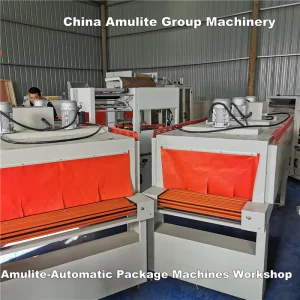
Post-curing processing includes edge squaring, face sanding, calibration profiling (tongue & groove), and inline multi-pass UV decorative painting or hydrophobic sealing lines.
Discover how modern manufacturing lines incorporate artificial intelligence, closed-loop water recovery, and zero-carbon matrix formulations.
Online ultrasonic sensors continuously track slurry solids density and flocculation rates. Siemens SCADA systems automatically adjust chemical retention aid dosing to ensure zero thickness variance across the continuous felt.
Process water from vacuum dewatering boxes is captured in multi-stage clarifier sedimentation tanks. Clarified water is recycled back into hydropulpers, achieving a 100% closed-loop process with zero municipal effluent discharge.
Transitioning from pure OPC to alkali-activated slag (AAS) and pozzolanic industrial byproducts. Reduces embodied carbon by up to 40% while preserving fireproofing performance and mechanical strength.
Ensuring manufactured building products comply with strict international fire safety, structural performance, and environmental health directives.
Lines are calibrated to produce flat sheets meeting international standards for flexural strength, water soak testing, warmth-moisture cycling, and freeze-thaw endurance (Category A, Class 1-5).
All pressure vessels (autoclaves) carry CE/ASME certification with dual safety interlocks. Control cabinets feature IP55 protection, Schneider/Siemens switchgear, and emergency shutdown integration.
Engineering guarantees clean supply lines using strict raw material isolation, eliminating any risk of mineral fiber contamination to pass stringent environmental and occupational safety audits worldwide.
In-depth technical answers addressing operational, financial, and engineering questions before purchasing a production line.
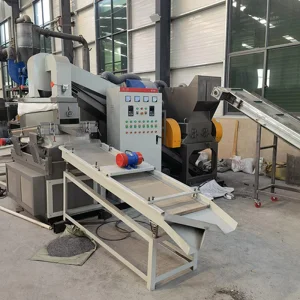
Explore specialized machinery lines, surface finishing systems, and mineral processing units engineered for non-metallic building material plants.