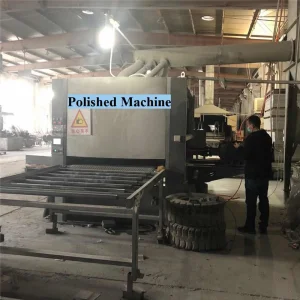
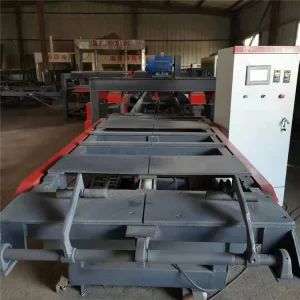
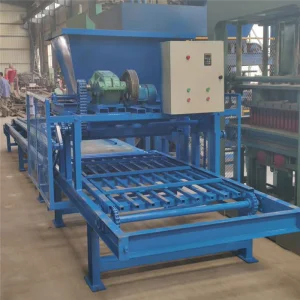
Explore high-capacity production line machinery engineered for manufacturing 16mm high-density autoclaved fiber cement boards, calcium silicate panels, and structural wall components.
Why procurement leads and structural engineers specify 16mm fiber cement boards for heavy-duty structural decking, high-traffic partitions, and extreme-environment cladding.
When searching to Buy Fiber Cement Board 16mm from qualified suppliers and manufacturing companies, structural integrity, dimensional stability under hydrothermal load, and material density are paramount. A 16mm gauge fiber cement sheet represents the critical transition threshold between lightweight non-structural cladding panels and heavy-duty structural load-bearing subfloor elements. Manufactured predominantly via the continuous Hatschek wet-process system, 16mm boards undergo intense vacuum dewatering, hydraulic pressing, and high-pressure steam autoclave curing (10–12 bar at 180°C to 190°C for over 12 hours).
This hydrothermal synthesis triggers a complete mineralogical phase transformation within the raw matrix—combining high-grade Ordinary Portland Cement (OPC Grade 52.5N), micro-silica sand (quartz grounded to 325 mesh size), and natural cellulous pulp fibers. The resulting micro-crystalline structure forms Tobermorite (C-S-H phase), an incredibly dense hydrated calcium silicate mineral that eliminates moisture swelling, imparts structural flexural resistance, and delivers an absolute A1 non-combustible fire rating.
| Physical / Mechanical Property | 16mm Standard Density (1.20 - 1.35 g/cm³) | 16mm High Density (1.45 - 1.70 g/cm³) | Test Standard / Regulatory Compliance |
|---|---|---|---|
| Dry Density (g/cm³) | 1.25 ± 0.05 g/cm³ | 1.55 ± 0.08 g/cm³ | ASTM C1185 / EN 12467 |
| Bending / Flexural Strength (EMC) | ≥ 10.5 MPa | ≥ 16.0 - 22.0 MPa | ASTM C1186 Grade IV / EN 12467 Class 4 |
| Modulus of Elasticity (MOE) | 5,500 - 7,000 MPa | 8,500 - 11,500 MPa | ISO 8336 Physical Testing |
| Water Absorption Rate (%) | ≤ 28% | ≤ 18% | 24-Hour Total Immersion Test |
| Thermal Conductivity (W/m·K) | 0.21 W/m·K | 0.25 W/m·K | ASTM C518 Thermal Performance |
| Fire Reaction Class | Class A1 / Class 0 | Class A1 Non-Combustible | EN 13501-1 / BS 476 Part 4/6/7 |
| Moisture Movement (Linear) | ≤ 0.12% | ≤ 0.08% | 30% to 90% RH Ambient Cycle |
| Sound Transmission Class (STC) | 38 dB (Bare Sheet) | 44 - 48 dB (Bare Sheet) | ASTM E90 Acoustic Attenuation |
16mm Fiber Cement Board features a modulus of elasticity exceeding 9,000 MPa when autoclaved under 1.2 MPa saturated steam pressure. This density ensures that under point-load testing (such as joist-supported mezzanine flooring on 400mm center-to-center spans), deflection ratios remain well within L/360 limits while offering zero organic decay, termite immunity, and zero VOC emissions.
From seismic structural subflooring in North America to extreme coastal rainscreen facades in Southeast Asia and Middle Eastern fire-rated duct enclosures.
In logistics hubs, industrial steel structures, and modular container buildings, 16mm autoclaved fiber cement boards act as high-capacity load-bearing subfloors. Screw-fixed directly onto cold-formed steel (CFS) joists or structural steel C-channels at 400mm–600mm spacing, the 16mm panel supports point loads up to 4.5 kN, providing a solid, squeak-free, fireproof floor substrate superior to plywood or OSB.
Commercial high-rise architectures require heavy-gauge exterior backing boards capable of resisting extreme negative wind suction pressures. 16mm boards provide the requisite tensile and flexural anchor strength for rear-ventilated facade systems. They can be directly calibrated, CNC router-cut, UV-coated, or stone-veneered for architectural curtain wall framing.
In data centers, hospital corridors, and high-occupancy commercial complexes, 16mm fiber cement boards installed on both sides of a 75mm or 100mm light gauge steel stud system filled with rockwool easily achieve certified 2-hour to 4-hour fire resistance ratings (BS 476 Part 22 / UL 263), while preventing moisture degradation during construction exposure.
Commercial kitchens, swimming pool enclosures, public restrooms, and sauna rooms subject building materials to continuous 100% relative humidity. Unlike paper-faced gypsum or magnesia boards prone to delamination, 16mm autoclaved fiber cement does not soften, disintegrate, or harbor mold growth, making it the premier heavy-duty tile backer substrate.
Offsite construction OEMs rely on pre-cut 16mm fiber cement sheets to construct floor chassis and structural acoustic ceiling diaphragms for modular bathroom pods and hotel modules. High screw-holding capability (>1,200 N per screw point) ensures secure anchoring of sanitaryware fixtures during transit and crane rigging.
With an intrinsic surface density of approximately 24-26 kg/m² for a 16mm sheet, these panels are deployed alongside highways, railway tracks, and mechanical equipment enclosures as heavy-duty noise barriers capable of withstanding freeze-thaw cycles and high impact stresses.
How leading Chinese fiber cement machinery manufacturers are advancing nano-silica integration, carbon-capture cementitious matrixes, and fully digital automated production lines.
The global fiber cement manufacturing industry is undergoing a structural technological evolution driven by strict global carbon-neutrality directives (EU CBAM compliance), resource optimization, and strict safety guidelines banning all asbestos mineral additions. The future technological roadmap for 16mm fiber cement board manufacturing concentrates on four core engineering fronts:
Modern 16mm board formulations replace chrysotile asbestos with high-yield, alkali-resistant refined wood pulp fibers (bleached sulfate kraft pulp) combined with synthetic synthetic micro-fibers such as Polyvinyl Alcohol (PVA) and Polyacrylonitrile (PAN). This hybrid fiber network creates an elastomeric bridging mechanism within the hardened calcium silicate matrix, dramatically boosting impact toughness (Charpy impact strength > 2.5 kJ/m²) and preventing brittle shear failures under dynamic floor vibration.
To reduce embodied carbon in 16mm fiber cement boards, state-of-the-art Chinese plants are integrating Supplementary Cementitious Materials (SCMs)—including ground granulated blast-furnace slag (GGBFS), ultra-fine calcined clay (metakaolin), and reactive flash-calcined fly ash. Replacing up to 35% of traditional OPC with activated pozzolans reduces greenhouse gas footprints while enhancing long-term sulfate resistance and micro-pore impermeability.
Next-generation Hatschek lines feature secondary online heavy-duty 10,000-ton multi-daylight hydraulic presses. By applying 20–25 MPa of uniform surface pressure prior to autoclaving, air micro-voids are compressed out of the wet green sheet. Furthermore, colloidal nano-silica (SiO2 particles < 50 nm) is introduced into the slurry mixing tanks, accelerating the formation of C-S-H gel crystals during early-stage hydration and pushing board bending strengths beyond 24 MPa.
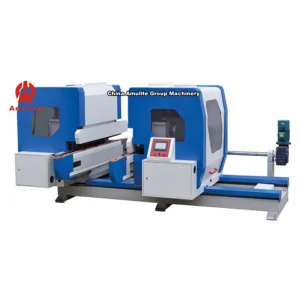
Leading plant suppliers like Amulite Group integrate closed-loop PLC automation systems with real-time NIR (Near-Infrared) moisture monitoring, ultrasonic thickness gauging, and automated vision-guided edge profiling cutters. Robot automated stacking, automatic pallet wrapping, and digital twin SCADA tracking allow single-line outputs exceeding 10 million square meters per year with minimal labor intervention and zero edge-chipping defects.
Analyzing the raw material clusters, machine manufacturing ecosystems, and turnkey speed advantages that make Chinese suppliers the premier choice for global B2B buyers.
Acquiring 16mm fiber cement boards or investing in complete turn-key production line machinery from China offers unparalleled strategic commercial advantages. China’s non-metallic building material manufacturing ecosystem leads the global market in scale, cost efficiency, and technical innovation. Key supply chain pillars include:
Understanding regional demand dynamics, building code mandates, and the key international quality standards required for global distribution.
The global demand for 16mm fiber cement boards continues to accelerate rapidly, driven by the expansion of prefabricated modular housing, multi-family residential towers, modern logistics warehousing, and urban retrofit projects. Regional market drivers show unique characteristics:
Demand is anchored by heavy-gauge subflooring for light-gauge steel (LGS) framing, residential deck underlayment, and exterior backer boards compliant with ASTM C1186 (Standard Specification for Flat Fiber-Cement Sheets). Fire resistance and acoustic STC ratings are primary buying criteria.
Driven by strict Euroclass A1 fire safety regulations post-Grenfell, requiring mandatory testing under EN 13501-1 and product compliance with EN 12467 (Category A, Class 4 or 5). Environmental Product Declarations (EPD) and CE marking are required for public sector tenders.
High relative humidity and severe monsoon weather necessitate boards with low water absorption (AS/NZS 2908.2). 16mm boards are widely specified for high-durability wet area flooring, exterior eaves, and commercial soffits.
How top-tier suppliers de-risk overseas procurement through complete factory acceptance testing, structural engineering support, and full traceability.
Procuring industrial building materials or setting up a board manufacturing facility overseas requires reliable technical support and quality verification. Reputable manufacturing partners provide comprehensive compliance packages to ensure seamless project integration:
Prior to shipment, every batch of 16mm fiber cement boards or complete production machinery undergoes rigorous FAT inspections. This includes hydraulic calibration tests, sheet thickness tolerance checks (±0.2mm), dry density verification, and flexural rupture testing in certified laboratory facilities.
For investors acquiring full production line machinery, experienced commissioning engineers, PLC automation experts, and process technicians are dispatched directly to the customer's job site. Services include foundation alignment verification, mechanical erection, PLC tuning, and local raw material formulation optimization.
Sustained production requires immediate availability of critical wear parts—including Hatschek forming felts, vacuum box dewatering strips, autoclaved rubber seals, and carbide-tipped cutting blades. Leading suppliers maintain global spare-part warehouses alongside 24/7 remote PLC diagnostic support.
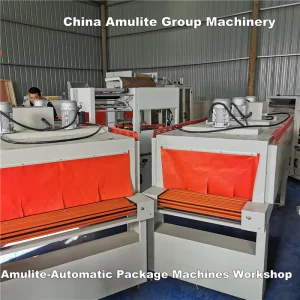
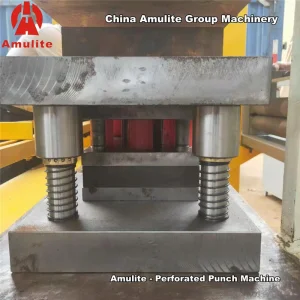
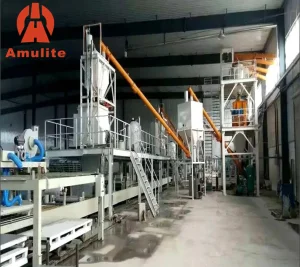
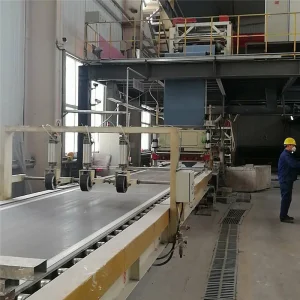
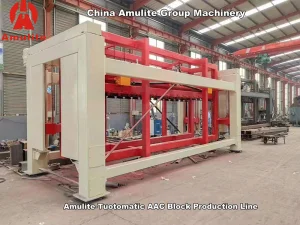
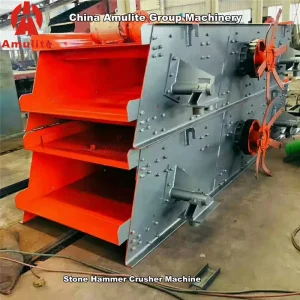
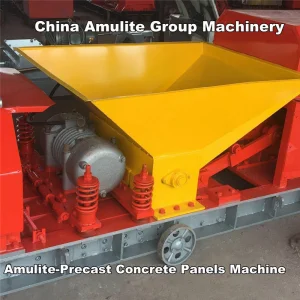
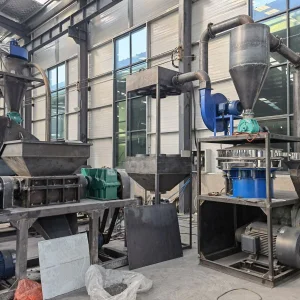
Complete product portfolio covering automated packaging, high-speed edge trimming, XPS tile backer lines, and AAC block plant machinery.
Clear, direct technical answers for structural engineers, commercial buyers, and factory investment groups.