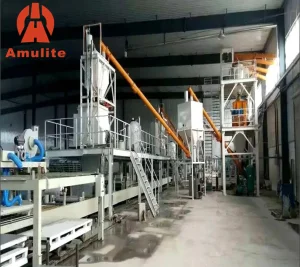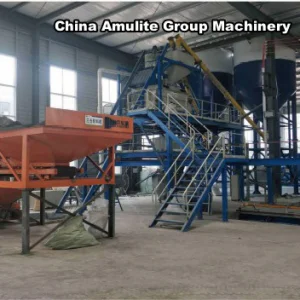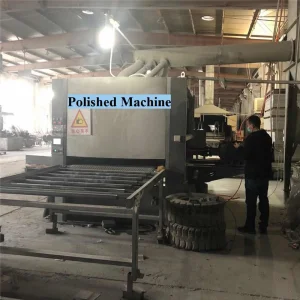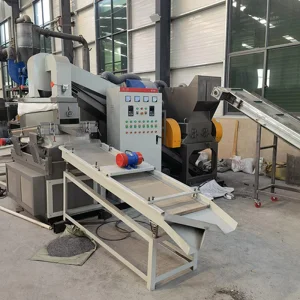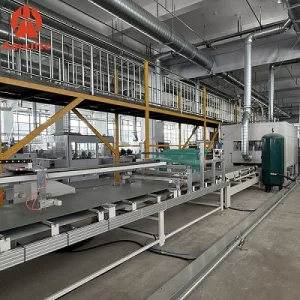
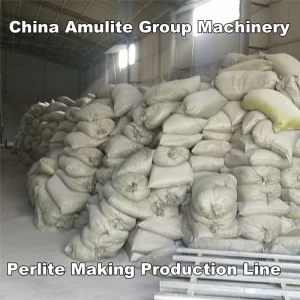
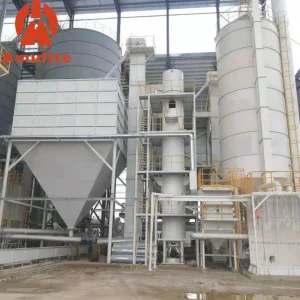
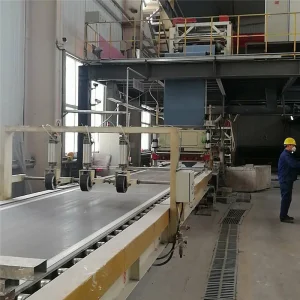
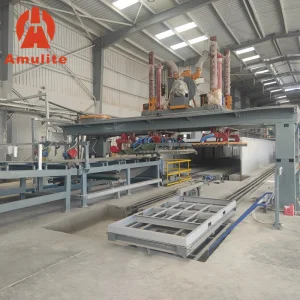
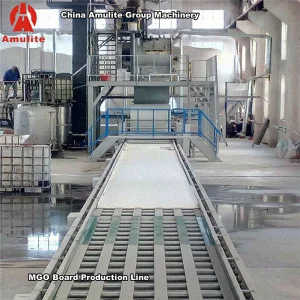
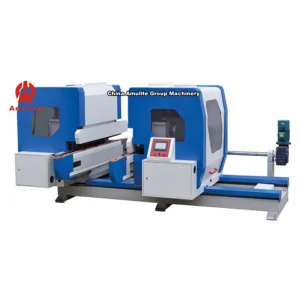
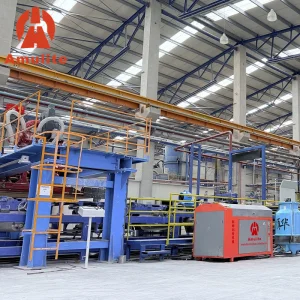
The global construction sector is undergoing an unprecedented paradigm shift toward Modern Methods of Construction (MMC) and industrialized prefabrication. At the epicenter of this structural evolution is the EPS (Expanded Polystyrene) Concrete Wall Panel Machine. Industrial developers, commercial builders, and housing authorities are rapidly abandoning labor-intensive brick-and-mortar masonry in favor of engineered lightweight compound wall panels featuring Expanded Polystyrene beads, Portland cement, fly ash, and high-density calcium silicate facing boards.
To acquire an automated EPS sandwich wall panel production line from top manufacturers requires a rigorous understanding of system architecture, slurry dosing accuracy, vertical mold battery hydraulics, and raw material thermodynamics. A modern EPS lightweight cement panel manufacturing plant delivers structural elements that combine lightweight properties (550–650 kg/m³ bulk density), high flexural strength (>8.5 MPa), superior acoustic insulation (STC rating 42–52 dB), and outstanding thermal retention.
Information Gain Insight: Sourcing an EPS panel production line directly from established Chinese machinery manufacturers provides turnkey capital efficiency—enabling plant owners to reduce initial CAPEX by 35% to 55% while achieving automated daily yields exceeding 1,500 to 3,000 square meters of wall panels.
Precision steam pre-expanding units process raw expandable polystyrene beads with density control systems (±0.5 g/L accuracy). Fluidized bed drying and multi-channel pneumatic transport push expanded beads into anti-static aging silos for optimal volume stabilization.
Dual-shaft forced horizontal mixers equipped with strain-gauge load cells precisely blend OPC cement, fine silica sand, fly ash, chemical foaming agents, water, and pre-expanded EPS beads into a perfectly homogenous, zero-segregation concrete slurry.
Heavy-duty structural steel vertical mold battery cars feature automatic opening, closing, hydraulic clamping, and tongue-and-groove side molding bars. Automatic board positioning systems clamp 5mm calcium silicate boards effortlessly onto both mold faces.
Positive-displacement progressive cavity pumps continuously inject high-viscosity EPS slurry into vertical mold cavities. Vibration assistance systems eliminate void formation around internal reinforcement pins or hollow channels.
Thermal-controlled steam curing chambers or ambient reaction tracks cure panels to structural hardness within 3 to 5 hours. Hydraulic tilting demolders safely rotate cured panels 90 degrees onto automatic stacking and palletizing conveyors.
Siemens S7-1500 PLC systems integrated with SCADA software monitor mix proportions, steam pressures, hydraulic mold forces, and hourly square-meter throughput in real time with remote maintenance diagnostics.
| Evaluation Parameter | Vertical Mold Battery System | Horizontal Flat Mold Line | Continuous Automatic Line |
|---|---|---|---|
| Daily Capacity Range | 1,200 – 3,500 m²/day (Modular expansion) | 500 – 1,200 m²/day | 3,000 – 8,000 m²/day |
| Plant Footprint Required | Compact (1,500 – 2,500 m²) | Medium (2,500 – 4,000 m²) | Large (>6,000 m²) |
| Facing Sheet Integration | Dual-sided Calcium Silicate / Fiber Cement | Single or Dual-sided option | Steel Sheet / Flexible Board facing |
| Thickness Flexibility | 60mm, 75mm, 90mm, 100mm, 120mm, 150mm, 200mm | Fixed per mold cartridge | Continuous adjustment (50-150mm) |
| Labor Requirement | 6 – 10 Workers per shift | 12 – 18 Workers per shift | 4 – 6 Operators (High Automation) |
| Initial CAPEX Investment | Moderate (High ROI for mid-to-large projects) | Lower entry hurdle | High Capital Investment |
| Ideal Application | High-rise interior partitions, residential housing | Custom architectural shapes | Mass production of standardized panels |
Chinese factories excel in providing end-to-end EPC (Engineering, Procurement, Construction) solutions. Machined structural components, customized hydraulic cylinders, and specialized mold profiles are built under rigorous ISO9001 and CE compliance standards.
By leveraging concentrated industrial clusters, raw material proximity, and highly skilled mechanical engineering workforces, Chinese manufacturers offer equipment at a 40% to 60% lower initial capital expenditure compared to European equivalents.
Standardized equipment modules enable fabrication lead times of just 45 to 60 days. Factory pre-assembly and pre-wiring drastically reduce installation and commissioning downtime on destination plant sites across South America, the Middle East, and Asia.
Furthermore, leading Chinese machinery corporations maintain in-house material science testing labs. They do not merely sell steel equipment; they deliver optimized chemical mix formulations matched to the buyer's local raw materials (e.g., local cement grades, volcanic fly ash, silica sand particle distributions, and recycled EPS aggregates).
Scenario: Multi-story towers in high-density urban environments requiring rapid space division.
Value Delivery: EPS panels weigh approximately 1/6th of solid brick walls. Reducing dead load allows structural engineers to reduce steel column sizes and foundation concrete volumes by up to 20%. Tongue-and-groove male/female interlocks enable two workers to install 40–50 m² of wall surface daily.
Scenario: Government initiatives for mass residential housing in Latin America, Southeast Asia, and Africa.
Value Delivery: Pre-cut EPS sandwich wall panels require no wet plastering before painting or wallpapering. Electrical conduits and plumbing chases are cut directly into the panel surface with grooving tools, reducing wet construction time by 60%.
Scenario: Logistics parks, food processing plants, and pharmaceutical warehouses.
Value Delivery: The closed-cell structure of expandable polystyrene beads coupled with calcium silicate facings delivers low moisture absorption (<2%) and thermal conductivity values below 0.045 W/m·K, eliminating thermal bridging and lowering refrigeration energy consumption.
Scenario: Hotels, schools, hospitals, and earthquake-prone geographical regions.
Value Delivery: Flexible structural steel connector pins and cementitious bonding mortars create a monolithic wall unit with high seismic shear resistance. Panels absorb shock energy without brittle catastrophic collapse, boasting an STC rating of up to 52 dB.
Modern machine designs are modifying slurry agitators to handle zero-OPC geopolymer cements, industrial slag, expanded perlite mixes, and 100% post-consumer recycled EPS granulates to meet strict LEED and BREEAM green building certifications.
Integration of inline laser scanning sensors and machine vision systems detects panel thickness deviations, edge chips, surface planarity issues, and density variances instantly before panels enter curing logistics tracks.
Automated 6-axis heavy payload articulated robots eliminate manual handling during demolding, turnover, edge profiling, shrink-wrapping, and automatic wooden pallet binding.
Inspect the steel frame thickness of vertical mold cars. Quality suppliers utilize Q235B or Q345B heavy structural channel steel with shot-blasting, anti-corrosion primer coating, and CNC machining on side sealing tracks to prevent slurry leakage.
Ensure that international electrical brands (e.g., Siemens PLC, Schneider contactors, AIRTAC or Festo pneumatic valves, ABB inverter drives) are utilized across control cabinets for effortless local spare-part sourcing.
Verify that the manufacturer provides experienced mechanical and process engineers for on-site foundation layout checking, electrical wiring verification, mix formulation tuning, and plant operator certification.
Examine hydraulic station working pressure ratings, valve manifold safety features, and steam boiler pre-expander certifications (ASME or CE marked) to maintain strict plant safety standards.