Direct factory procurement for automated board manufacturing, brick pressing, crushing, and environmental recycling lines engineered for global infrastructure scale.
The global construction machinery and industrial equipment market is undergoing an unprecedented transition driven by strict decarbonization targets, rising labor costs, and the mandatory integration of digital twin monitoring across modern manufacturing plants.
Traditional hydraulic systems are rapidly being superseded by direct-drive servo electric actuators and variable frequency drives (VFDs). This paradigm shift reduces baseline thermal losses by up to 35%, decreases energy consumption during idle phases, and enables precise micro-metering of cement, fly ash, and silica slurries.
Modern production lines—such as Fiber Cement Board and Autoclaved Aerated Concrete (AAC) systems—require edge-computing PLCs linked directly to centralized SCADA dashboards. Real-time viscosity feedback, automatic thickness adjustment, and automated density checks guarantee operational consistency.
Industrial EPC buyers demand modular skid-mounted machinery to accelerate physical site installation. By standardizing component footprints, machinery leads times drop by 30%, while allowing rapid capacity expansion from initial pilot production to full multi-million-square-meter outputs.
Navigating global machinery procurement requires looking beyond initial CAPEX. Procurement directors and engineering consultants must perform rigorous Total Cost of Ownership (TCO) evaluations covering operational expenditure (OPEX), maintenance downtime risk, raw material adaptability, and local electrical grid compatibility.
Procurement Benchmark Insight: Over a 10-year machinery operational lifecycle, initial capital purchase represents only 22% of total operational expenditure. Energy consumption (38%), raw material efficiency (26%), and unplanned downtime (14%) dictate long-term project profitability.
Global suppliers must design machinery capable of processing diverse raw material inputs. Plants operating in regions with limited quartz sand must adapt to processed river sand, crushed granite dust, or pozzolanic fly ash without sacrificing sheet tensile strength or fire-rating certifications (A1 non-combustible standards).
To prevent costly component lock-in, premium machinery platforms utilize standardized industrial hydraulics, pneumatics, and electrical components from globally recognized vendors (e.g., Siemens PLC networks, Schneider electric distribution, Festo pneumatics, SEW-Eurodrive gear motors). This ensures spare parts are procurable locally overnight.
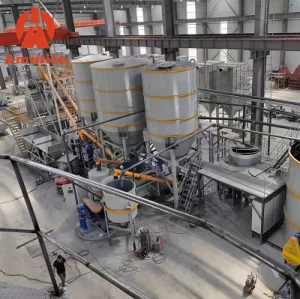
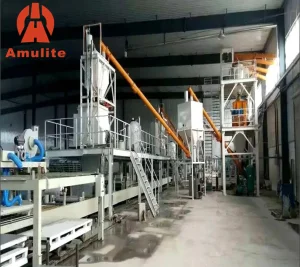
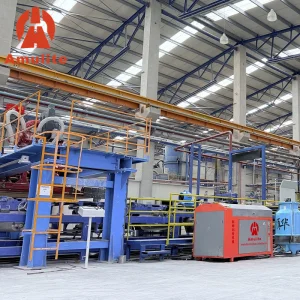
From raw mineral extraction to automated finished product packaging, our integrated manufacturing lines deliver high throughput, minimal labor dependency, and strict adherence to structural engineering standards.
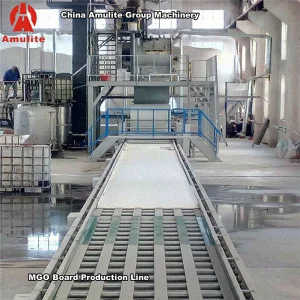
Utilizing high-speed Hatschek forming cylinders, automated sheet accumulation, vacuum dewatering stations, hydraulic pressing up to 10,000 tons, and high-pressure steam autoclaves. Produces boards from 4mm to 30mm thickness with densities ranging from 1.1 g/cm³ to 1.7 g/cm³.
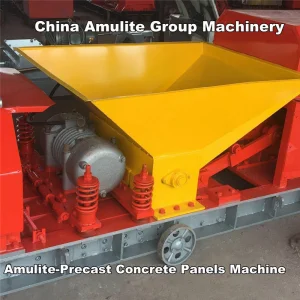
Continuous vertical or horizontal mold-car production systems designed for lightweight wall panels with fiber-cement facings and expanded polystyrene (EPS) / lightweight aggregate concrete cores. Features precise automatic slurry injection, core curing controls, and demolding robots.
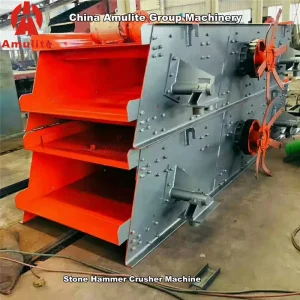
Heavy-duty hammer crushers, jaw crushers, and fine-grinding ball mills engineered to reduce raw quarry stone, recycled concrete, or industrial slag down to targeted mesh sizes. Fully integrated with closed-circuit dust extraction complying with global ambient particulate standards.
Deploying heavy industrial machinery into international jurisdictions requires meticulous compliance management. We bridge technical regulations between original equipment manufacturers and regional site requirements.
All machinery electrical systems are designed and wired to meet specific target grid codes (3-phase 380V/415V/480V at 50Hz or 60Hz). Pressure vessels, steam generators, and curing autoclaves comply fully with ASME Section VIII, CE PED (Pressure Equipment Directive), and GOST-R certification standards.
Expatriate installation engineering teams lead physical assembly, foundation calibration, cable runs, cold dry testing, and full-capacity wet trial runs. Simultaneously, localized technical manuals, HMI interface languages, and maintenance training regimens are provided to empower local plant staff.
Integrated safety hardware includes dual-channel emergency stop safety loops, light curtains surrounding automated stacking zones, anti-burst hydraulic valves, sound-dampening enclosures, and centralized pulse-jet dust collectors maintaining airborne dust levels below 2.0 mg/m³.
Strategic engineering initiatives shaping the future of non-metallic mineral processing and structural panel fabrication.
Embedding vibration, acoustic, and thermal sensors into main drive gearboxes, forming vats, and hydraulic pumps. AI predictive algorithms analyze operational vibration spectra to schedule maintenance days before component breakdown occurs, eliminating catastrophic downtime.
Complete zero-discharge plant hydrology. Water recovery centrifuges and automatic solid-liquid clarifiers capture 99.5% of process runoff, recycling both industrial water and uncured cement fines directly back into the primary mixing phase without degrading board flexural strength.
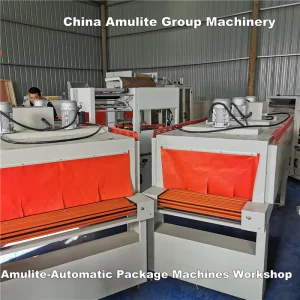
Integration of multi-axis heavy articulated robots for automated board inspection, edge-trim defect detection, automated palletizing, stretch wrapping, and autonomous guided vehicle (AGV) transport from factory line to finished goods warehouses.
Discover advanced machinery designed for specialized building materials, thermal insulation backing, mineral processing, and lithium-ion battery recycling.
In-depth technical answers addressing engineering parameters, turnkey commissioning, material formulation, and lifecycle investment returns.
Amulite Group engineers production lines ranging from an annual capacity of 2 million square meters (ideal for regional greenfield plants) up to 20 million square meters per year for high-density industrial hubs. Capacity is customized based on forming machine cylinder quantity (3 to 6 vats), hydraulic press pressure specifications, autoclave vessel volume, and automation levels in off-bearing, stacking, and packaging sections.
Raw material composition dictates equipment metallurgy and process engineering. For instance, plants utilizing quartz sand require high-energy ball mills and high-pressure steam autoclaves (12 bar, 190°C) to facilitate hydrothermal synthesis (tobermorite crystal structure development). Conversely, air-cured fiber cement lines using high-early-strength Portland cement rely on extended curing tunnels and chemical accelerants. Our process laboratories analyze your local sand, cement, fly ash, and pulp samples to calibrate the machine configuration prior to manufacturing.
Turnkey scope encompasses complete preliminary civil foundation engineering drawings, factory layout and electrical utility load mapping, equipment manufacturing, dry factory assembly testing, ocean shipping logistics, on-site mechanical and electrical installation supervision, PLC programming integration, initial raw material trial recipe formulation, and operator training until target daily board output and bending strength specs (BS EN 12467 / ASTM C1186 standards) are achieved.
EPS sandwich cement wall panel lines produce large-format, lightweight wall elements (e.g., 600mm x 2440mm/3000mm) that replace up to 120 traditional masonry bricks per panel. This cuts structural building deadweight by up to 50% and accelerates construction speed by 300%. While traditional brick-making machinery focuses on localized clay or concrete block compression, EPS panel machinery combines fiber cement surface sheeting with lightweight core slurry pumping for high thermal insulation and acoustic isolation.
All industrial production lines meet CE Machinery Directive 2006/42/EC and Low Voltage Directive 2014/35/EU. Autoclaves and pressure components are designed under strict adherence to ASME Section VIII Division 1 or European PED (2014/68/EU) standards, accompanied by third-party non-destructive testing (NDT), hydrostatic test certification, and X-ray weld inspections.
Under typical operating conditions and average regional market prices for fiber cement siding, interior ceiling boards, or aerated concrete blocks, full plant capital payback (ROI) is generally achieved within 18 to 30 months from initial commercial operation. Factors accelerating ROI include energy heat-recovery installations, automated robotic handling reducing labor costs, and sourcing low-cost industrial fly ash or slag to replace raw cement materials.