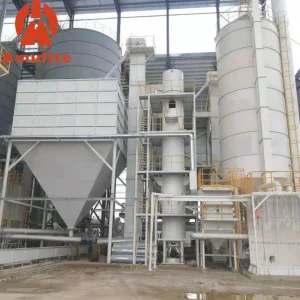
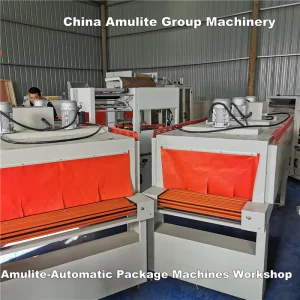
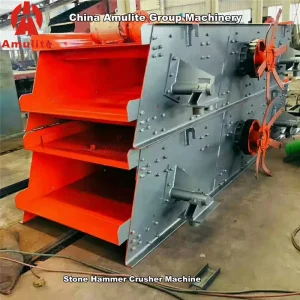
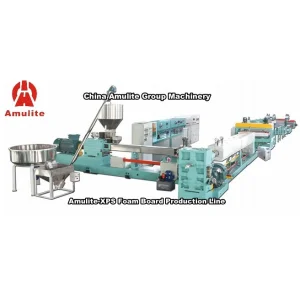
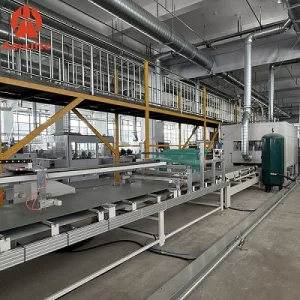
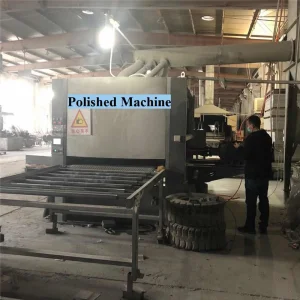
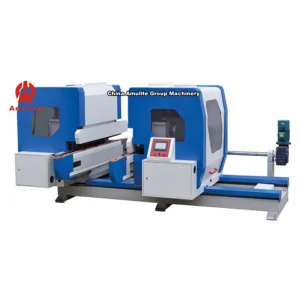
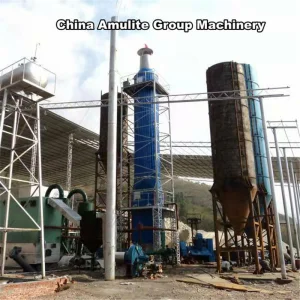
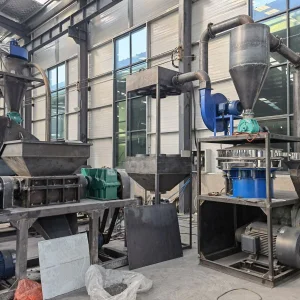
Explore our top-tier industrial machinery configurations for heavy-duty structural building boards, wall panel lines, and high-efficiency crushing components.
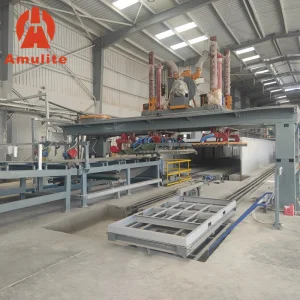
Evaluating modern industrial board production lines (Fiber Cement, Calcium Silicate, EPS Sandwich Panels, and Gypsum Boards) from raw material chemistry to capital asset yield.
In the rapidly evolving global building materials market, selecting an industrial-grade board production line factory is no longer merely a procurement transaction—it is a long-term capital investment in manufacturing agility, energy efficiency, and material compliance. Global demand for non-combustible (Class A1 fire-rated), lightweight, moisture-resistant, and high-flexural-strength partition and exterior cladding boards is projected to grow exponentially due to strict regional building codes and the rise of modular off-site prefabricated construction.
When decision-makers search to buy a board production line, they face complex engineering choices between distinct manufacturing technologies: the wet-process Hatschek technique, dry-mix extrusion, continuous hydraulic pressing, and autoclaved high-pressure steam curing systems. This whitepaper establishes an authoritative baseline for factory design, machinery sizing, slurry rheology control, energy recovery integration, and operational cost mitigation.
A comparative evaluation of core forming and curing methodologies powering modern building board production facilities.
| Process Technology | Primary Raw Materials | Core Curing Mechanism | Thickness Range | Ideal Application Scenario |
|---|---|---|---|---|
| Autoclaved Hatschek Line | Pulp, OPC, Silica Quartz Powder, Fly Ash | High-Pressure Steam Autoclave (120–180°C, 1.2 MPa) | 4 mm – 25 mm | Exterior façade cladding, high-moisture wet rooms, fireproof partitions. |
| Flow-On / Slurry Pressing Line | Cement, Perlite, Reinforcing Mesh, Additives | Moisture-controlled pre-curing tunnel + ambient humidity | 6 mm – 30 mm | Heavy-duty structural floor slabs, acoustic barrier panels. |
| EPS Sandwich Panel Line | Cement skin board, EPS beads, Foaming agent | Continuous vertical/horizontal moulding curing core | 50 mm – 200 mm | Lightweight load-bearing walls, fast-track modular housing. |
| Gypsum Plasterboard Line | Natural/FGD Gypsum, Paper liner, Starch, Retarders | Multi-deck high-efficiency gas/steam drying tunnel | 8 mm – 15 mm | Interior drywalls, drop ceilings, acoustic wall linings. |
Automated computer-controlled raw material dosing systems ensure exact ratios of cellulose fiber freeness (30–40°SR), silica quartz mesh size (>325 mesh), and Ordinary Portland Cement. Precise gravimetric feeding eliminates batch variance and guarantees uniform flexural strength (>16 MPa).
Multi-vat forming cylinders transfer ultra-thin slurry films onto a continuous felt. High-vacuum dewatering boxes strip free moisture down to 28-32% before hydraulic cutting and robotic high-speed vacuum stackers position sheets onto autoclave cars with sub-millimeter precision.
Under 1.2 MPa saturated steam pressure at 180°C, silica quartz and calcium hydroxide undergo a hydrothermal reaction forming crystalline Tobermorite ($C_5S_6H_5$). This micro-crystalline transformation renders the finished boards dimensionally stable, freeze-thaw proof, and non-combustible.
Market drivers, localized regulatory standards, and supply chain strategies for establishing high-yield board production plants globally.
Investing in a turnkey board manufacturing line requires matching equipment specifications to localized market requirements and raw material availability. Industrial investors across North America, Europe, Asia-Pacific, and the Middle East face varying compliance standards and cost structures:
Demand is driven by severe fire code mandates (ASTM E136, EN 13501-1 Class A1) and continuous insulation requirements. Lines destined for these regions prioritize low-carbon formulations, recycled cellulose content, automated digital quality tracking, and CE/UL certified electrical safety systems.
Rapid infrastructure development demands massive volumes of high-density fiber cement boards and hollow-core wall panels. Priority rests on maximum annual output (10M–30M m²/year), heavy-duty structural durability, and low operational cost per square meter.
Extreme temperature fluctuations require thermal-insulating EPS sandwich cement panels and non-warping calcium silicate boards. Production machinery must withstand high-ambient-temperature environments with dust-sealed PLC cabinets and water-recycling slurry loops.
How modern board manufacturing outputs integrate across key construction sectors.
Autoclaved fiber cement panels (8mm–12mm) engineered for ventilated rainscreen systems, offering UV stability, wind load resistance up to 5.5 kPa, and custom textured or through-colored aesthetic finishes.
High-density calcium silicate boards (12mm–25mm) providing up to 4-hour fire endurance ratings for ductwork encasements, structural steel protection, and commercial elevator shaft linings.
EPS cement sandwich panels and hollow-core lightweight concrete wall panels designed for rapid assembly in modular housing pods, reducing structural dead load by up to 60% compared to solid masonry.
Verifiable engineering metrics, factory acceptance testing (FAT), and global certification protocols.
Every machinery component—from raw material turbo pulpers to automated hydraulic presses—undergoes strict non-destructive testing (NDT), ultrasonic weld checks, and full CE machinery directive safety compliance.
We provide client raw material analysis (XRF/XRD testing) prior to plant design. We test locally sourced cement, sand, and pulp to formulate optimal recipes before equipment shipment, guaranteeing target board performance.
Prior to dispatch, complete production lines undergo dry-run assembly, electronic PLC staging, and hydraulic pressure testing. Overseas clients can inspect plants in-person or via live interactive VR audit streams.
Emerging innovations in AI closed-loop control, carbon-capture curing, and energy optimization for next-decade board plants.
The next decade of building material manufacturing will be defined by smart automation and carbon-neutral production pipelines. Forward-thinking investors purchasing board lines are integrating key technology upgrades into their CAPEX plans:
Real-time laser thickness sensors scan green sheets directly after the forming cylinder. AI feedback loops automatically adjust vat slurry flow and accumulator roll pneumatic pressure to maintain exact sheet thickness within ±0.05 mm tolerance.
Closed-loop water filtration systems capture 100% of process water and slurry trim waste, reintroducing them into the raw material mixer. Advanced curing channels inject flue-gas CO2 to accelerate cementitious carbonation and lower net carbon footprint.
Exhaust steam from autoclaves is harnessed through multi-stage heat exchangers to pre-heat boiler feedwater and power low-temperature board drying tunnels, cutting thermal energy costs by up to 35%.
Direct answers from our senior engineering directorate regarding plant capacity, raw material sourcing, installation timelines, and operational ROI.
For a standard 5 million m²/year autoclaved fiber cement board line, payback periods typically range between 18 to 36 months, depending on regional cement and quartz sand pricing, electricity costs, and localized end-product market positioning. High-margin decorative and sanded facade boards yield accelerated financial returns.
Yes. Up to 30%–40% of silica sand or Portland cement can be substituted with industrial fly ash or ground granulated blast-furnace slag (GGBS), provided the chemical silicon dioxide ($SiO_2$) content meets minimum hydrothermal reaction thresholds. Our laboratory conducts free material assays to optimize custom formulations.
Manufacturing complex heavy machinery takes approximately 90 to 150 days. On-site installation supervision, foundation checks, civil engineering guidance, electrical cabling integration, and final trial commissioning require an additional 45 to 60 days on site with our resident field engineers.
The Hatschek wet-process uses multi-vat cylinder molds to build ultra-thin laminate layers, providing superior flexural strength, density consistency, and dimensional control for thin boards (4mm-12mm). The Flow-On process deposits thick slurry directly onto a conveyor, making it suitable for thicker, heavy-density industrial structural boards.
Explore our specialized auxiliary machinery, foam board production lines, ceramic tile equipment, and precision finishing technology.
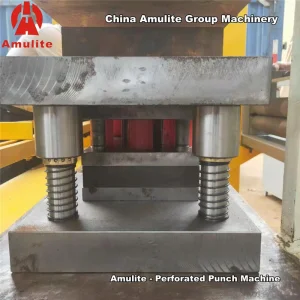
Request a comprehensive technical quotation, plant CAD layout drawing, and customized raw material feasibility study from our senior process engineering department.
Request Engineering Proposal & Catalog