Engineered for high-volume automated manufacturing, low labor intensity, and high structural precision.
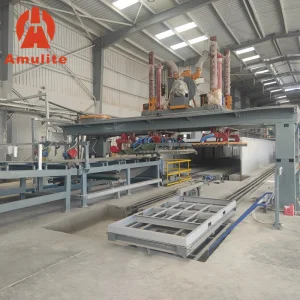
China Non-Asbestos/Asbestos Cement Corrugated Roof Sheets Production Line Company, Product
View Specifications →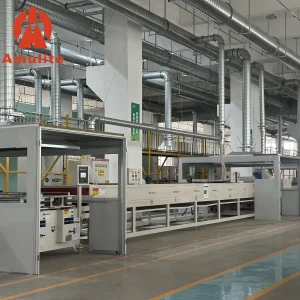
OEM UV Coating/Painting Production Line Manufacturer, Factories
View Specifications →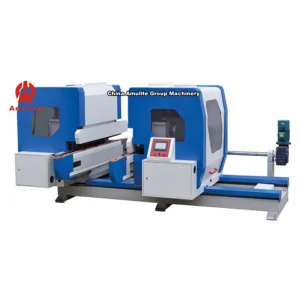
Best AM806BH-10 Technical Parameters Manufacturer, Products
View Specifications →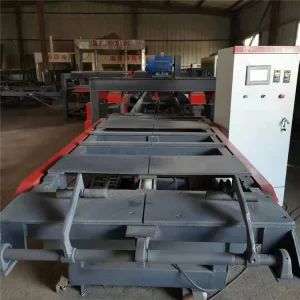
OEM 1300 II Type Automatic Four Side Edge Cutting Machine Factory, Companies
View Specifications →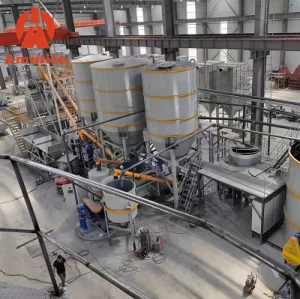
OEM EPS Sandwich Cement Wall Panels Production Line Companies, Products
View Specifications →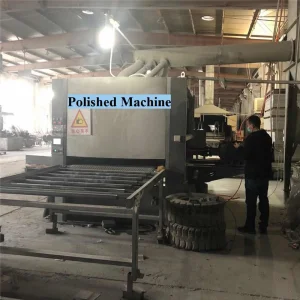
China Single Face Polished Machine Manufacturers, Suppliers
View Specifications →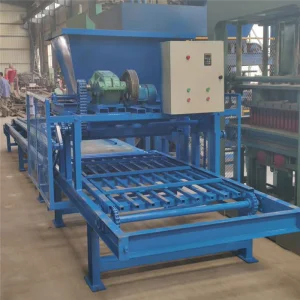
China Automatic Bricks Making Production Line Manufacturers, Products
View Specifications →
High-Quality Embossed Metal Composite Exterior Panels Production Line Manufacturers, Company
View Specifications →An in-depth analysis of how off-site modular construction is driving technical demand for high-precision, vertical hydraulic mold cars and continuous panel extruders.
The global building sector is undergoing a structural transition from traditional wet, in-situ masonry construction to Industrialized Building Systems (IBS) and Prefabricated Volumetric Construction. Central to this paradigm shift is the wall panel mold machine—a specialized category of heavy industrial manufacturing equipment engineered to produce lightweight concrete panels, precast concrete hollow-core partitions, EPS (Expanded Polystyrene) sandwich boards, and fiber cement cladding systems with sub-millimeter dimensional tolerances.
Driven by urbanization, labor shortages in Tier-1 infrastructure markets, and international decarbonization mandates (such as Net-Zero Building codes in the EU and North America), the demand for high-throughput mold machines has surged. Industrial wall panels offer up to 40% thermal insulation improvements and reduce structural dead loads by up to 50% compared to solid clay bricks. Consequently, modern panel mold machines must deliver rigorous structural integrity, precise core-pipe alignment, automated hydraulic mold opening/closing, and rapid thermal steam-curing turnarounds.
Integrates calcium silicate or fiber cement face sheets with a lightweight aggregate slurry (OPC cement, EPS beads, fly ash). Requires vertical gang-mold batteries equipped with automated slurry pumping and vibration systems.
Utilizes hydraulic pin-drawing or continuous auger extrusion to cast vertical structural voids. Designed for high acoustic isolation (45dB+) and fire ratings (up to 4 hours) in high-rise interior walling.
Relies on multi-meter mold boxes coupled with precision wire cutting machines and high-pressure steam autoclaves to induce matrix foaming and mineral crystallization (Tobermorite structure).
Standardized metrics achieved across modern industrial production facilities equipped with Chinese high-efficiency machinery.
Detailed breakdown of mechanical, hydraulic, and electrical subsystems driving modern precast equipment.
A commercial-grade wall panel mold machine is not merely a static steel container; it is an integrated mechanical-hydraulic system designed to withstand hydrostatic pressure, slurry abrasion, dynamic vibratory consolidation, and elevated thermal stress.
Vertical mold cars (often arranged in batteries of 10 to 40 cavities per car) are the standard for space-efficient production. Manufactured from high-tensile Q235B or Q345B structural steel plates, these side panels are CNC-milled to ensure extreme flatness. Dual-side hydraulic clamping cylinders deliver up to 500 kN of locking force, preventing slurry leakage along tongue-and-groove side formers during high-frequency vibration.
For hollow-core lightweight concrete panels, internal void formation is achieved via seamless steel pneumatic or hydraulic core tubes. Advanced mold machines feature automated core-pulling systems linked to proximity sensors and linear encoders. Core extraction timing is critical: pulling too early causes internal slurry collapse, while pulling too late results in concrete binding. Modern PLC algorithms analyze initial cement setting via ultrasonic monitoring or thermal feedback to execute automated pin extraction at optimal green strength (typically 0.4 to 0.8 MPa).
To eliminate micro-voids and honeycombing in lightweight aggregate concrete (containing EPS foam beads, expanded perlite, or ceramsite), hydraulic mold cars are fitted with variable-frequency eccentric vibrators. Operating between 2,800 to 4,500 RPM, these units fluidize the viscous cementitious paste, forcing entrapped air bubbles upward while ensuring complete encapsulation of core pipes and internal wire mesh reinforcement.
| Machine Type / Parameter | EPS Sandwich Panel Mold | Lightweight Hollow-Core Mold | Autoclaved AAC Board Mold |
|---|---|---|---|
| Forming Orientation | Vertical Hydraulic Gang Mold | Vertical / Horizontal Extruder | Horizontal Box Mold (Canted Vertical) |
| Standard Panel Thickness | 60mm, 90mm, 120mm, 150mm, 200mm | 75mm, 90mm, 120mm, 150mm | 50mm to 300mm (Variable) |
| Demolding Strength Required | 1.5 – 2.5 MPa | 2.0 – 3.0 MPa | 0.3 – 0.5 MPa (Green Cake Cut) |
| Core Materials Supported | EPS Beads, Cement, Fly Ash, Sand | Lytag, Foam Concrete, Perlite | Quartz Sand, Lime, OPC, Aluminum Powder |
| Automation Grade | Semi-Automatic to Fully Robotic | Continuous Automatic Line | Fully Automated Industry 4.0 PLC |
Why leading global EPC contractors and building material conglomerates source their wall panel production lines from specialized Chinese engineering hubs.
Over the past two decades, China has emerged as the global epicenter for heavy industrial machinery fabrication, specifically in the non-metallic building materials domain. Sourcing wall panel mold machines from premier Chinese OEM suppliers provides global buyers with distinct structural advantages:
Direct integration with domestic metallurgy giants allows Chinese machinery suppliers to procure heavy structural H-beams, cold-rolled steel plates, and seamless hydraulic tubing at lower raw material costs, translating into 30% to 45% Capital Expenditure (CAPEX) savings for overseas buyers.
Chinese OEMs excel in tailoring mold cavity sizes, tongue-and-groove profiles, and hydraulic opening mechanisms to meet regional building standards (e.g., BS EN, ASTM, GOST, or DIN standards) without demanding excessive tooling lead times.
Leading vendors do not just supply standalone molds; they deliver integrated plant solutions incorporating raw material dosing, planetary slurry mixers, automatic transfer cars, steam curing chambers, and robotic palletizers backed by experienced field engineers.
How localized climatic, economic, and architectural requirements dictate wall panel equipment configuration.
Wall panel mold machinery is deployed across diverse economic regions, each presenting unique structural demands and local material availability:
In arid, high-temperature environments, ambient cooling requirements drive building codes. Mold machines in this market are configured to cast composite wall panels featuring thick EPS foam cores (100mm to 150mm) sand-wiched between high-density cementitious facings. This construction achieves thermal transmittance values ($U$-value $< 0.28 \text{ W/m}^2\text{K}$), drastically reducing HVAC electricity demand in residential developments.
In earthquake-prone belts, precast lightweight hollow-core and EPS sandwich wall panels provide structural flexibility and low seismic mass. Hydraulic vertical gang molds enable low-cost regional factories to mass-produce interlocking tongue-and-groove partition panels. These panels can be manually installed by two workers without heavy tower cranes, accelerating social housing construction timelines by up to 60%.
Cold-climate zones demand high freeze-thaw resistance ($F50$+ rating) and structural load capacity. Production lines in these regions utilize high-pressure steam autoclaves combined with specialized mold batteries designed to handle dense lightweight aggregate mixtures, creating durable perimeter walling for industrial logistics parks and commercial centers.
Key technical criteria, quality assurance standards, and Total Cost of Ownership (TCO) considerations before purchasing.
Procuring industrial wall panel mold equipment represents a major capital investment. Procurement teams must conduct rigorous technical evaluations based on the following criteria:
Verify that mold side plates use structural steel with minimum 10mm thickness. Plates must undergo stress-relief annealing to prevent warping under repeated thermal cycling ($60^\circ\text{C} - 80^\circ\text{C}$ steam curing).
Ensure hydraulic power packs, directional valves, and seals utilize globally recognized components (e.g., Rexroth, Parker, Eaton) to guarantee seal longevity against abrasive cement slurry contamination.
Demand open-architecture Programmable Logic Controllers (Siemens S7-1500 or Schneider Electric) equipped with remote Ethernet diagnostics for quick troubleshooting and firmware updates.
How digital twins, green concrete, and automated demolding robotics are reshaping wall panel manufacturing.
The next decade of precast wall panel manufacturing is defined by three major technological shifts:
1. Low-Carbon Geopolymer Matrix Formulations: As Portland cement faces global carbon taxes, panel machinery is being adapted to handle alkali-activated geopolymer pastes (utilizing blast furnace slag and industrial fly ash). Mold machinery suppliers are upgrading mold linings with non-stick Teflon and stainless steel alloys to withstand corrosive chemical initiators.
2. Robotic Demolding & Autonomous Handling: Leading automated plants are replacing manual mold cleaning and oil spraying with 6-axis industrial robots equipped with laser vision scanners. These systems clean mold cavities, apply release agents uniformly, and stack finished wall panels with millimeter precision.
3. IoT-Enabled Sensor Integration: Modern mold cars are embedded with wireless temperature, moisture, and pressure sensors. Real-time data streams to a centralized Manufacturing Execution System (MES), predicting concrete hydration curves and adjusting curing chamber temperatures dynamically to minimize energy usage.
Direct technical answers from industry engineers regarding operation, maintenance, and plant setup.
Complete your modular plant ecosystem with specialized board processing, trimming, coating, and recycling systems.
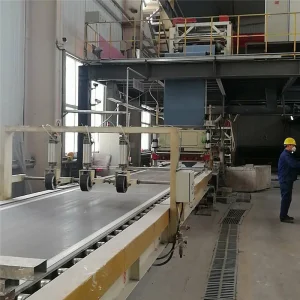
China Gypsum Board Production Line Supplier, Factories
View Specifications →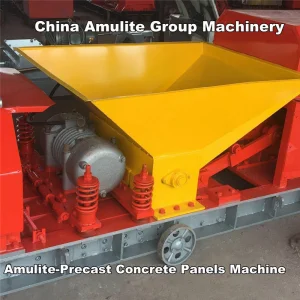
Best Precast Concrete Products Machinery Manufacturers, Products
View Specifications →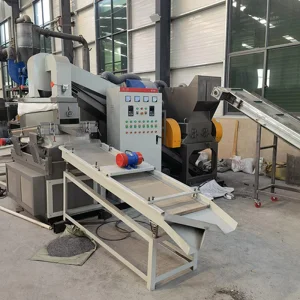
Buy Copper Wire Recycling Machine Companies, Products
View Specifications →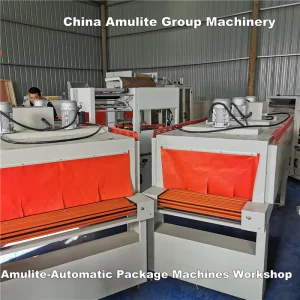
Famous Automatic Package Machines Workshop Factory, Company
View Specifications →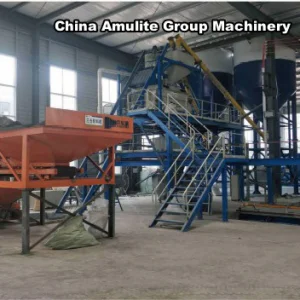
Buy Hollow Core Wall Panels Production Line Factory, Factories
View Specifications →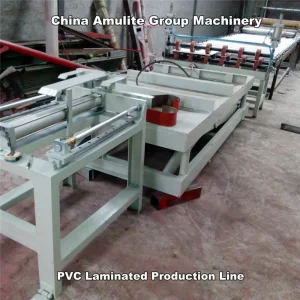
China PVC Laminated Production Line Factories, Products
View Specifications →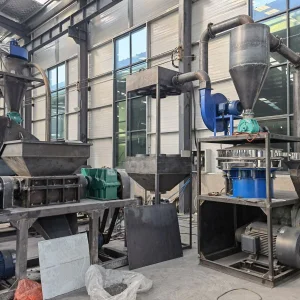
OEM Lithium Battery Recycling Equipment Factory, Company
View Specifications →
Famous Amulite AAC Blocks Customized Automatic Machines- 4.2m Manufacturers, Company
View Specifications →