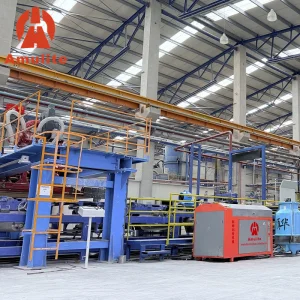
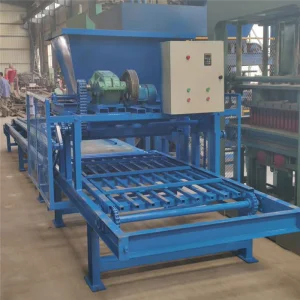
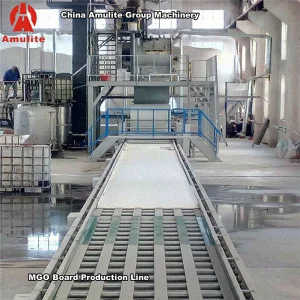
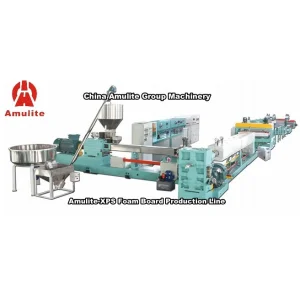
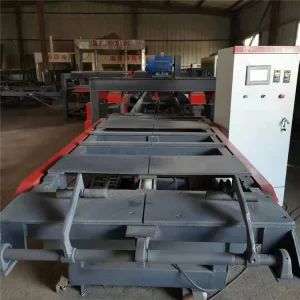
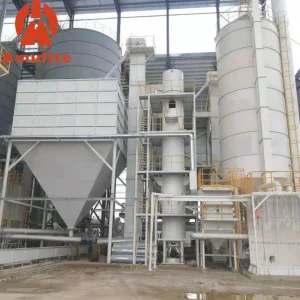
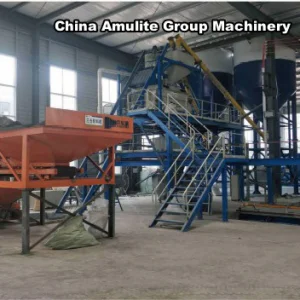
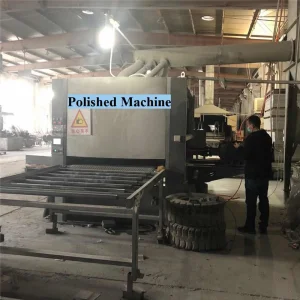
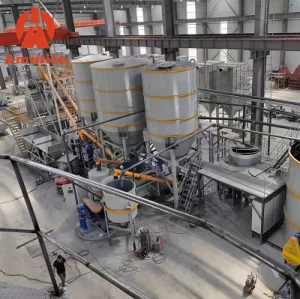
Engineered for maximum output, structural reliability, and low operational cost across international markets.
The global construction sector is undergoing a structural paradigm shift toward modular prefabrication, thermal decarbonization, and rapid vertical assembly. Within this macro evolution, the industrial demand for high-capacity EPS (Expanded Polystyrene) cement sandwich panel production machinery has surged unprecedentedly. Modern infrastructure developers no longer view wall panels simply as space dividers, but as engineered structural composite elements providing integrated acoustic dampening, fire resistance, and structural shear performance.
Across North America, Europe, Asia-Pacific, and the Middle East, stringently enforced energy efficiency standards (such as the EU's Nearly Zero-Energy Buildings directive and global LEED certifications) have accelerated the phase-out of legacy solid brickwork and heavy cast-in-place concrete. Lightweight aggregate sandwich panels—featuring fiber cement board or calcium silicate board facings bonded to an expanded polystyrene foam and cementitious slurry core—represent the gold standard of modern dry-wall construction.
Global architectural trends project a CAGR of 7.4% in lightweight precast wall panel adoption, driven by acute labor shortages and aggressive project delivery timelines in fast-growing urban centers.
Composite sandwich panels deliver low thermal conductivity (λ ≤ 0.045 W/m·K) paired with high compressive strength, achieving A1 class non-combustibility and up to 4 hours of fire resistance under ISO 834 fire endurance tests.
Unlike conventional machinery suppliers offering standardized equipment, top-tier manufacturers integrate proprietary slurry metering, vacuum-assisted foam expansion, and real-time density calibration modules into turnkey plants.
Consequently, searching for the Best Sandwich Machine Manufacturer & Product requires evaluating total engineering capability—moving beyond raw iron casting to evaluate process automation software, hydraulic clamping precision, slurry formulation flexibility, and long-term aftermarket field engineering support.
Why global EPC contractors and building material conglomerates partner with premier Chinese machinery manufacturers like China Amulite Group for industrial scaling.
China's centralized heavy-equipment manufacturing hubs in Hebei enable seamless vertical integration. From CNC gantry milling of massive structural mold cars to precision PLC assembly, raw material sourcing costs are optimized by 30-40% compared to Western European machinery builders.
Chinese engineering teams lead the industry in adapting machinery designs to local raw materials. Whether utilizing regional Portland cement grades, coal fly ash, expanded perlite, or recycled silica sands, lines are tailored for maximum yield without costly imported chemical additives.
Leading Chinese sandwich machine manufacturers provide full lifecycle execution: civil engineering floor layout design, power-load estimation, heavy machinery manufacturing, pre-shipment dry-run testing, localized on-site installation, and operational workforce training.
Standardized performance benchmarks for high-output automatic EPS cement sandwich wall panel production lines.
| Performance Metric | Standard Automatic Line | High-Yield Heavy Duty Line | Custom Industrial Enterprise Line |
|---|---|---|---|
| Annual Production Capacity | 300,000 – 500,000 m² / year | 1,000,000 – 2,000,000 m² / year | 3,000,000+ m² / year (Multi-station) |
| Panel Thickness Range | 60 mm – 150 mm | 50 mm – 200 mm | Custom up to 300 mm (Cold storage / Structural) |
| Panel Dimensions (L × W) | 2270 / 2440 × 610 mm | 2440 / 3000 × 610 mm | Custom length up to 6000 mm |
| Core Raw Material Mix | Cement, EPS Beads, Fly Ash, Water | Cement, EPS, Sand, Fly Ash, Chemical Additives | Custom Lightweight Aggregate / Fiber Matrix |
| Facings Options | 5mm Fiber Cement / Calcium Silicate Board | 5-8mm Non-Asbestos Board / MGO Board | Patterned Metal / Flexible Ceramic Facing |
| Curing System Type | Natural Curing / Solar Thermal Tunnel | Accelerated Steam Chamber Curing | Automated PLC Continuous Steam Tunnel |
| Control Automation Level | Semi-Automatic PLC Control | Full Centralized Siemens SCADA System | AI Digital Twin Integrated Smart Hub |
From raw material expansion to robotic stacking—the six essential stages of automated panel production.
Polystyrene resin beads undergo high-precision steam expansion, fluid-bed drying, and silo stabilization to achieve precise bulk density (12–20 kg/m³).
Cement, fly ash, expanded EPS beads, water, and specialized chemical admixtures are weighed via electronic sensors and homogenized in a planetary slurry mixer.
Facings (Fiber Cement / Calcium Silicate) are automatically positioned into vertical mold cars. The core slurry is pressure-injected into sealed mold cavities.
Hydraulic clamping systems maintain mold geometry while the panels undergo initial thermal hydration in temperature-controlled curing chambers.
Sandwich wall panel machines engineered by premier manufacturers are adaptable across diverse geographic environments and building codes. The resulting EPS cement sandwich panels offer key solutions across major construction sectors:
How intelligent machine learning, zero-waste recycling, and automated robotics are reshaping industrial sandwich panel production line design.
Real-time sensor arrays track slurry viscosity, hydration temperature, and mold pressure curves, automatically modifying chemical dosage via AI feedback loops to prevent internal void defects.
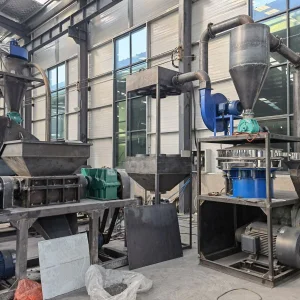
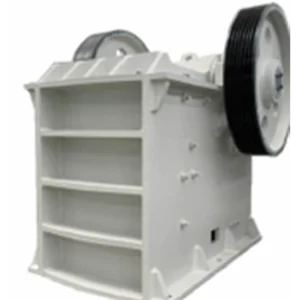
Next-generation lines integrate specialized edge-trimming reclaimers and crushing systems that convert panel trimmings back into usable fine aggregate, reducing plant material waste to near zero.
Articulated industrial robots equipped with vacuum suction frames handle finished board demolding, stacking, and palletizing without manual intervention, preventing edge chips and improving operator safety.
Closed-loop thermal curing circuits capture waste heat from cement exothermic hydration, reducing external boiler steam consumption by up to 35% during winter production shifts.
When investing in a commercial EPS cement sandwich panel machine line, corporate procurement teams and factory owners must perform rigorous due diligence across five essential engineering vectors:
Verify that mold cars utilize heavy-gauge structural channel steel (Q235/Q345 grade) with stress-relieved welding. Inferior frames deflect under slurry pressure, resulting in uneven panel thickness.
Ensure critical automation hardware uses globally supported brands (e.g., Siemens PLC, Schneider Electric relays, Yuken hydraulics, AirTAC pneumatics) to guarantee local spare part availability.
Inspect mixer blade design and weighing load-cell accuracy. Controlled EPS bead dispersion prevents foam segregation, guaranteeing uniform fire resistance and structural strength across the panel area.
Choose manufacturers that perform pre-shipment dry runs and mechanical alignment tests inside their production bays before containerizing machinery components.
Direct engineering answers to common procurement, operational, and material questions.
Explore related high-performance processing equipment and board production systems.