Explore turnkey equipment configurations engineered for high-throughput EPS/XPS foam panel formation, concrete sandwich bonding, lightweight wall cladding, and structural insulation board manufacturing.
Analyzing the shift toward zero-carbon structural insulation panels (SIPs), continuous extrusion innovations, and green energy compliance across worldwide building sectors.
The global construction equipment market is witnessing a paradigm shift toward Expanded Polystyrene (EPS) and Extruded Polystyrene (XPS) panel manufacturing machines. Modern building codes—such as the European Union’s Energy Performance of Buildings Directive (EPBD), US Title 24, and Middle East Sustainable Building Frameworks—are enforcing rigorous thermal resistance values. Consequently, industrial real estate developers, prefabricated modular home manufacturers, and EPC contractors require panel production equipment that delivers extreme structural integrity coupled with high thermal insulation performance.
A rigorous evaluation framework for industrial procurement directors, factory operational heads, and project engineering leads selecting polystyrene panel machinery.
Evaluating capital expenditure against lifetime energy metrics. Advanced vacuum-assisted EPS block molding machines drastically cut steam cycles from 6 minutes to under 2.5 minutes, dramatically altering per-cubic-meter ROI.
Inconsistent bead expansion leads to structural weakness and raw material wastage. Top suppliers utilize fluid-bed dryers with real-time weighing systems ensuring continuous expansion density accuracy to within ±0.5 g/L.
Industrial scale production generates edge trim waste. Sourcing lines with integrated heavy-duty EPS crushers, dust de-dusters, and proportional virgin-to-recycled bead blenders guarantees zero scrap dumping.
| Procurement Parameter | Standard Entry-Level Line | High-End Industrial Whitepaper Benchmark Line | Impact on Plant Operational Performance |
|---|---|---|---|
| Pre-Expansion Technology | Manual Batch Expansion | Continuous Double-Stage Pressurized Expansion with Weight Sensors | Eliminates bead clumping; guarantees precise block weight. |
| Molding Steam Cycle | 4.5 – 6.0 Minutes | 1.8 – 2.5 Minutes (High-Vacuum System) | Increases daily block output capacity by up to 140%. |
| Cutting Wire Precision | Static Heating Wires | Oscillating High-Frequency Heated Wire Grid + Servo Drives | Produces smooth panel surfaces (±0.5mm sheet thickness tolerance). |
| Automation & Control | Relay / Basic Touchscreen | Siemens PLC + Remote Diagnostics + Automated Stacking | Reduces factory floor labor by 65%; enables 24/7 running. |
Step-by-step technological workflow of turnkey polystyrene foam panel, cement sandwich board, and composite cladding production lines.
The manufacturing process begins with expandable polystyrene resin beads containing pentane as a blowing agent. Raw beads are fed into a closed pressurized pre-expander where controlled steam application softens the polymer matrix, allowing pentane to vaporize and expand the beads up to 40 to 50 times their original volume. Advanced systems utilize fluid-bed drying and fluidized bed aging silos to stabilize internal bead pressure before molding.
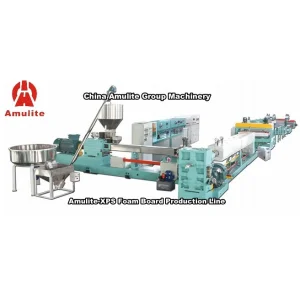
In block molding configurations, aged beads are pneumatically conveyed into a heavy-duty steel mold cavity. High-pressure steam is injected through micro-slotted stainless steel vents, causing the beads to fuse into a monolithic block. For XPS foam board production lines, continuous twin-screw extruders melt polystyrene resin, injecting eco-friendly blowing agents (CO₂ / Ethanol) under high pressure through a slot die to produce rigid continuous insulation boards with closed-cell structures.
For composite building panels (such as EPS Sandwich Cement Wall Panels or Decorative Embossed Metal Panels), the foam core undergoes automatic slicing using CNC oscillating wire cutter banks. The core sheets are then fed into continuous double-belt pressure laminators. High-tack polyurethane adhesive is precisely sprayed onto fiber cement, MGO, or metal skins, which are pressed against the EPS core under thermal curing chambers.
Combines lightweight EPS cement mortar core with fiber cement board facings. Ideal for fast-track interior partition walls and exterior wall envelopes in high-rise residential construction.
Produces rigid closed-cell extruded insulation boards with high compressive strength (> 350 kPa), tailored for foundation perimeter insulation, cold storage, and inverted roof assemblies.
Automatically weaves galvanized steel wire mesh around EPS core panels with truss wire piercing, creating lightweight load-bearing wall elements for shotcrete construction.
Ensuring factory equipment meets stringent international safety mandates, electrical standards, and structural fire ratings.
Deploying heavy machinery across international jurisdictions demands strict adherence to local building codes, electrical compliance, and environmental protection guidelines. Leading machinery manufacturers provide turnkey engineering support that encompasses international certifications and localized field engineering support.
All pressure vessels (autoclaves, steam boilers, pre-expanders) are engineered to meet EU Pressure Equipment Directive (PED) 2014/68/EU, ASME Section VIII standards, and ISO 9001 quality system management.
Factory-certified field engineering teams handle foundation layout checking, mechanical assembly, electrical wiring verification, and pilot formulation trials using locally sourced cements and aggregates.
Machines are configured to integrate specialized flame-retardant additives (such as polymeric FR or graphite-enhanced EPS) ensuring finished panels achieve ASTM E84 Class A and EN 13501-1 B-s1,d0 fire ratings.
Extrapolating the future of smart panel fabrication through AI vision defect detection, bio-based foam substitutes, and robotic handling.
High-resolution camera arrays inspect freshly cut EPS/XPS boards at speeds up to 60 m/min. Deep learning algorithms identify surface micro-cracks, void spaces, or edge deformities in real time, automatically ejecting sub-standard panels before packaging.
Next-generation expanders are optimized for graphite-infused polystyrene beads. The embedded carbon particles reflect radiant heat, improving panel insulation values by up to 20% compared to standard white EPS at identical densities.
Replacing traditional hydraulic stackers with 6-axis articulated industrial robots and Autonomous Mobile Robots (AMRs) for transfer of finished panel packs directly to warehouse storage, minimizing manual labor costs.
In-depth technical responses addressing common procurement, technical, and operational queries from global factory owners.
Production capacity varies depending on line configuration. Standard continuous block molding lines yield between 500,000 m³ to 2,000,000 m³ of EPS foam blocks annually. For automated sandwich wall panel lines (EPS cement core), typical output ranges from 500,000 m² to 3,000,000 m² per year per single-shift operation.
EPS (Expanded Polystyrene) machines utilize steam to expand pre-foamed beads inside a mold cavity, creating a porous bead matrix. XPS (Extruded Polystyrene) machines melt polystyrene resin granules in a continuous extruder, injecting blowing agents (CO₂ or gas) under high pressure to force plastic out of a die, yielding a solid, continuous closed-cell panel with higher compressive strength and moisture resistance.
A standard plant requires a dedicated steam boiler (capacity 1.0 to 4.0 tons/hour depending on mold size), a high-pressure air compressor system (0.8 - 1.0 MPa), a cooling water tower with closed circulation, and an electrical power connection ranging between 150 kW to 450 kW depending on automation level.
Yes. Modern EPS block machines can incorporate up to 15% to 30% recycled crushed EPS foam mixed with virgin expanded beads without sacrificing structural block cohesion or thermal rating. High-grade recycling crushers and de-dusters clean and size the scrap before re-blending.
Turnkey delivery contracts typically include plant civil layout engineering, equipment installation supervision by resident engineers, electrical/PLC commission, raw material formulation optimization, and hands-on operational training for local machine operators until target production efficiency is achieved.
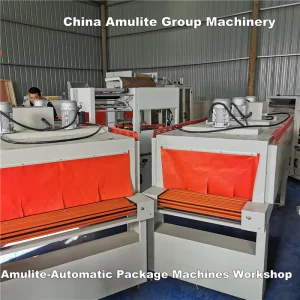
Explore full plant machinery solutions including crushing units, automated packaging stations, surface finishing systems, and precast concrete equipment.