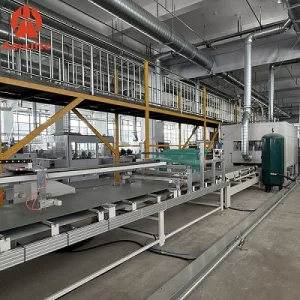
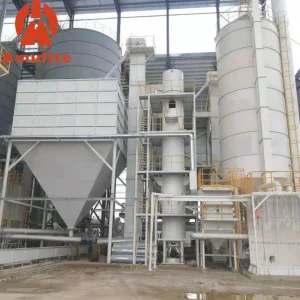
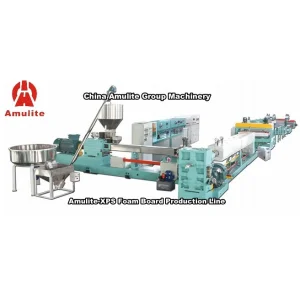
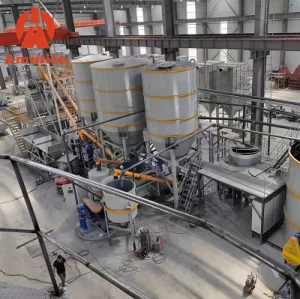
Explore our flagship automated production lines engineered for maximum material efficiency and international quality standards.
A comprehensive engineering guide to slurry formation, hydro-thermal synthesis, and high-capacity plant automation.
Calcium silicate boards represent the peak of architectural fireproofing technology, delivering Class A1 non-combustibility, superior flexural strength (≥ 12 MPa), low thermal conductivity (≤ 0.12 W/m·K), and complete moisture insensitivity. Modern building codes worldwide are accelerating the replacement of traditional gypsum board and asbestos-cement sheeting with autoclaved fiber-reinforced calcium silicate board systems. Operating a profitable calcium silicate board line requires precise control over raw material slurry dynamics, wet sheet lamination via the Hatschek process, high-pressure autoclave hydro-thermal reaction mechanisms, and automated energy recovery systems.
The core structural integrity of a fireproof calcium silicate board originates from the chemical reaction between siliceous materials (fine quartz sand, silica fume) and calcareous materials (slaked lime, cement) under high-pressure saturated steam conditions. Unlike conventional cement products that rely on hydration curing, calcium silicate boards undergo a hydrothermal crystallization process inside an autoclave operating at 170°C – 190°C (1.0 to 1.3 MPa steam pressure) over a duration of 10 to 14 hours.
During this reaction, the calcium hydroxide $\text{Ca(OH)}_2$ reacts with reactive silicon dioxide $\text{SiO}_2$ to synthesize crystalline Tobermorite ($\text{C}_5\text{S}_6\text{H}_5$):
The needle-like Tobermorite crystals interlock seamlessly with dispersed reinforcement fibers (cellulose pulp, alkali-resistant glass fibers), producing a dense matrix characterized by zero organic content, high structural strength, ultra-low volumetric moisture movement, and absolute fire immunity. Understanding this hydro-thermal dynamics is essential when selecting a turnkey line supplier capable of designing pressure vessels and steam distribution networks that eliminate thermal gradient flaws inside the autoclave batch.
Investors and plant directors evaluating building panel equipment must weigh critical performance variables. The table below highlights the performance, capex, and operational parameters comparing Calcium Silicate Board lines against alternative panel production equipment:
| Performance / Process Feature | Calcium Silicate Board Line | Fiber Cement Board Line | Gypsum Wallboard Line | MGO (Magnesium Oxide) Line |
|---|---|---|---|---|
| Primary Raw Materials | Quartz Sand, Lime, Cement, Pulp | Cement, Silica, Cellulose Fiber | Desulfurized Gypsum, Paper | Magnesite, MgCl₂, Fiberglass |
| Curing Mechanism | Autoclaved Hydro-Thermal (180°C) | Air Cured or Autoclaved | Thermal Oven Drying | Exothermic Chemical Reaction |
| Fire Resistance Class | Class A1 (Incombustible) | Class A1 (Incombustible) | Class A2 / B1 (Fire Resistant) | Class A1 (Incombustible) |
| Bulk Density Range | 0.8 – 1.4 g/cm³ | 1.2 – 1.7 g/cm³ | 0.6 – 0.8 g/cm³ | 0.9 – 1.2 g/cm³ |
| Flexural Strength (Dry) | 10 – 16 MPa | 12 – 22 MPa | 4 – 8 MPa | 9 – 15 MPa |
| Moisture Movement / Swelling | Very Low (< 0.12%) | Low (< 0.20%) | High (Degrades in wet areas) | Medium (Risk of halogenation) |
| Standard Board Thickness | 4 mm – 25 mm | 4 mm – 30 mm | 9 mm – 15 mm | 3 mm – 20 mm |
From raw material processing to continuous green-sheet stacking, autoclaving, and high-speed edge profiling.
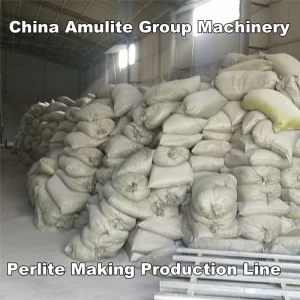
The line begins with automated raw material batching. Quartz sand undergoes wet ball-milling to achieve a fineness of over 200 mesh (90% passing rate), releasing high-reactivity silica content. Concurrently, imported unbleached Kraft wood pulp is processed in a high-consistency hydrapulper and disc refiner to achieve optimum Canadian Standard Freeness (CSF 450–550 ml). Lime is slaked, weighed via loss-in-weight feeders, and thoroughly blended in dynamic homogenizing tanks controlled by SCADA algorithms.
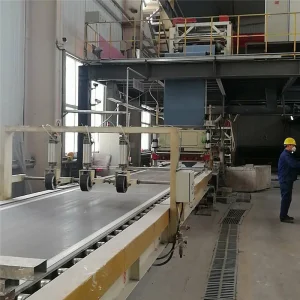
Our state-of-the-art Hatschek sheet machine features 3 to 5 stainless steel vat agitator units. Slurry concentration is maintained at 7-10% solid ratio. As the synthetic felt passes over rotating mesh cylinders, ultra-thin film layers (0.2 mm) are deposited, continuously transferred, and dewatered through high-vacuum suction boxes operating at -0.04 to -0.06 MPa. The accumulated film layers are continuously wound around a precision-machined forming drum until the target thickness (4–25 mm) is acquired, where a automatic flying cutter severs the green sheet instantly.
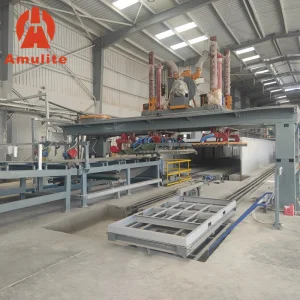
The trimmed green sheets are transferred via pneumatic vacuum lifters onto steel templates. For high-density board production (density > 1.2 g/cm³), the stacked green boards undergo 4,000 to 7,000 ton hydraulic pressing to expel entrapped moisture and increase board density. Green stacks enter a temperature-controlled pre-curing tunnel (50°C – 60°C, 4–6 hours) to gain sufficient green strength for template separation prior to autoclaving.
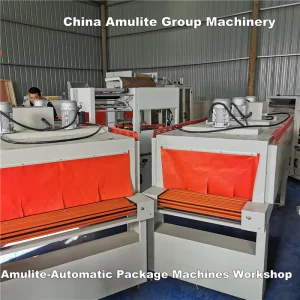
Automated ferry carts transport board stacks into heavy-duty pressure autoclaves. Saturated steam is injected following a strict ramp-up curve (2 hours heating, 8–10 hours holding at 1.2 MPa / 188°C, 1.5 hours blowdown). Following autoclaving, boards pass through multi-deck energy-recovery tunnel dryers to lower moisture content below 10%. Finally, boards pass through double-sided calibration sanding machines and automatic 4-edge trim saws to meet exact dimensional tolerances (ISO 8336 standards).
Why leading global building materials groups select Chinese equipment manufacturers for turnkey engineering projects.
Chinese turnkey production lines lower total capital expenditures by 40% to 60% compared to European equipment suppliers while matching mechanical speed, structural steel strength, and PLC control complexity. This allows investors to achieve operational ROI within 18–24 months.
Utilizing premium Chinese heavy-industrial supply chains, forming drums, press rollers, and autoclave bodies are manufactured from thick Q345R pressure-vessel grade steel, ultrasonically tested for micro-cracks and stress-relieved via post-weld heat treatment.
Chinese engineering directors provide comprehensive overseas deployment. From civil foundation verification, mechanical assembly, electrical wiring, slurry formula fine-tuning with local sand/lime samples, to operator skill training, turnkey handovers are guaranteed.
Equipped with global tier-1 automation architectures including Siemens S7-1500 PLCs, Schneider electrical breakers, ABB frequency drives, and Festo pneumatic solenoids, ensuring spare parts accessibility anywhere in the world.
Adapting your board plant for zero-carbon mandates, recycled industrial wastes, and smart IoT control.
Modern regulatory frameworks place heavy carbon tax levies on energy-intensive raw materials. Leading calcium silicate board manufacturing lines have adapted to utilize secondary industrial waste products as partial replacements for virgin quartz sand and lime:
By installing laser thickness sensors and continuous nuclear/ultrasonic density meters along the green sheet belt, the main PLC dynamically adjusts the rotational speed of the Hatschek forming cylinders and vacuum box negative pressure. This closes the process control loop, keeping board thickness variance within ±0.1 mm while optimizing vacuum pump motor power consumption by up to 18%.
How fireproof calcium silicate boards produced by our machinery fulfill demanding architectural engineering specifications.
Lightweight boards (density 0.95–1.1 g/cm³) are installed on light steel keel frameworks to construct 2 to 4-hour fire barrier walls meeting BS 476 Part 22 and EN 13501-2 standards in commercial skyscrapers.
High-density boards (density > 1.3 g/cm³) coated with anti-static and water-repellent enamel finishes serve as sub-surface tunnel lining panels capable of withstanding intense wind piston pressures and RWS fire curves.
Zero-outgassing, non-dusting calcium silicate board sheets laminated with high-pressure decorative panels (HPL) provide sterile, impact-resistant wall cladding systems in microelectronic cleanrooms.
Low-density, sound-insulating silicate boards engineered with expanded perlite cores comply with IMO FTP Code fire safety specifications for passenger liners and marine oil rig living quarters.
Essential checklist for EPC contractors and factory investors evaluating board manufacturing machinery manufacturers.
Before issuing final dispatch payments for a calcium silicate board production line, procurement teams must enforce rigorous FAT criteria at the manufacturer’s assembly bay:
Purchasing a calcium silicate board line is an investment where operational expenditures (OPEX) rapidly overtake initial capital outlay (CAPEX). Over a ten-year operational lifespan, standard TCO distribution follows this cost ratio:
Strategic procurement focusing on raw material slurry savings and steam recycling yields millions in operational profit over a decade.
Clear, definitive technical responses to common buyer queries regarding calcium silicate board equipment.
Explore our complete industrial portfolio covering block making, crushing, recycling, and specialized board handling equipment.