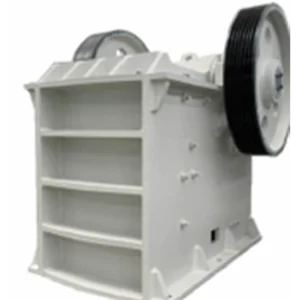
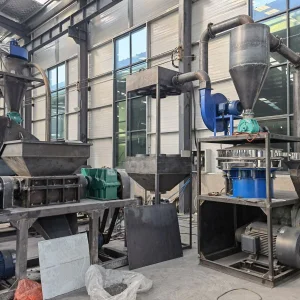
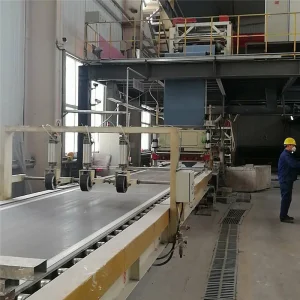
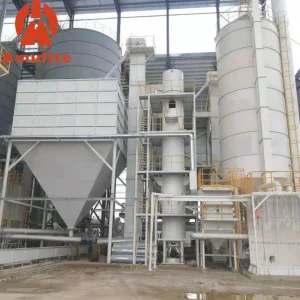
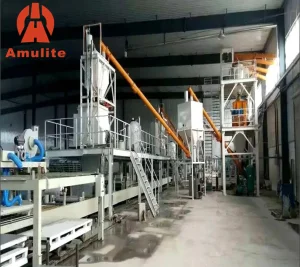
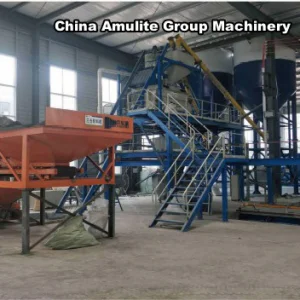
Explore our top-tier industrial machinery configurations for precast concrete, fiber cement, and wall panel manufacturing.
Understanding the global structural shift toward modular precast concrete construction, carbon neutrality, and thermal insulation efficiency.
The global construction equipment sector is undergoing a profound structural transition. Driven by strict decarbonization targets, escalating labor costs, and urgent demands for faster building delivery, precast concrete panels and fiber cement wall solutions have shifted from alternative materials to mandatory engineering standards across modern residential, commercial, and industrial infrastructure. Selecting the best concrete panel production line company requires evaluating not merely machinery output, but comprehensive engineering resilience, slurry hydration control, automated curing dynamics, and total cost of ownership (TCO).
Information Gain Key Insight: Modern concrete panel production lines must bridge the gap between high flexural strength (up to 28 MPa) and ultralight bulk density (under 600 kg/m³). Achieving this balance requires precise micro-dosing of expanding agents, high-pressure autoclaving, and automated dewatering systems.
| Panel Technology Type | Primary Raw Materials | Density Range (kg/m³) | Flexural Strength | Typical Industrial Applications |
|---|---|---|---|---|
| Precast Concrete Panels (PCP) | Portland Cement, Aggregate, Sand, Rebar | 1800 - 2400 | 15 - 35 MPa | Load-bearing exterior walls, structural facades, highway noise barriers |
| Fiber Cement Boards (FCB) | OPC Cement, Quartz Sand, Cellulose Fiber | 1200 - 1700 | 12 - 28 MPa | Fireproof ceilings, exterior ventilated cladding, tile backer boards |
| EPS Cement Sandwich Panels | Cement, Expanded Polystyrene Beads, Fly Ash | 550 - 800 | 3.5 - 8.5 MPa | Non-load-bearing internal partitions, cold-room envelope systems |
| Autoclaved Aerated Concrete (AAC) | Quicklime, Cement, Silica Sand, Aluminum Powder | 420 - 650 | 3.2 - 6.0 MPa | Thermal insulation wall blocks, lightweight roof panels, floor slabs |
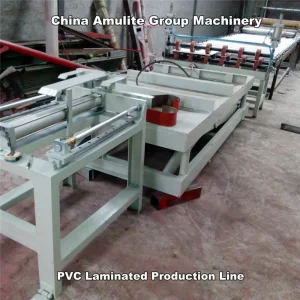
Continuous production of high-precision EPS sandwich panels enabling rapid assembly of residential housing with superior acoustic insulation (STC rating > 45dB).
High-density fiber cement board machinery utilizing 3-8 vat Hatschek sheet-forming processes to produce A1 fire-rated exterior cladding for skyscrapers.
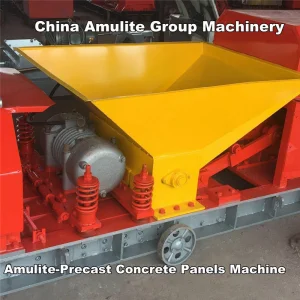
Precast heavy concrete machinery integrated with automated steel wire tensioning for heavy-duty structural columns, beams, and pre-stressed wall slabs.
Exploring state-of-the-art process automation, closed-loop hydration chemistry, and AI-driven quality inspection.
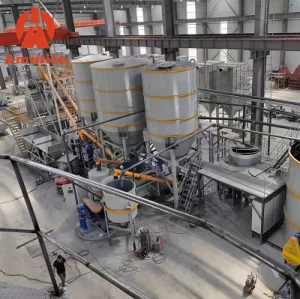
Modern production lines utilize gravimetric micro-feeders combined with PLC-controlled high-shear mixers. Liquid additives, cellulose pulp refining, and silica powder are homogenized to a target viscosity tolerance within ±0.5%, ensuring zero phase separation during board formation.
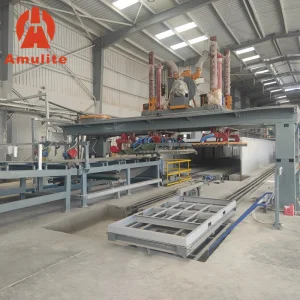
For fiber cement and calcium silicate panels, Multi-Vat Hatschek technology uses precision wire mesh cylinders to transfer micro-thin slurry layers onto running felts. Vacuum dewatering boxes remove excess water up to 28-32% moisture content before high-pressure hydraulic pressing (up to 10,000 tons total press load).
Optimal crystal formation (Tobermorite matrix phase) relies on hydro-thermal synthesis inside autoclaves operating at 10-12 bar pressure and saturated steam temperatures of 175°C to 190°C for 10-12 hours. This eliminates post-installation expansion and guarantees dimensional stability.
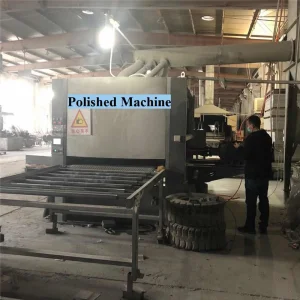
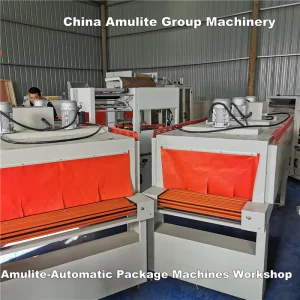
Four-side high-speed edge trimming machines combined with single-face/double-face wide belt sanding units ensure surface thickness tolerances within ±0.1mm. High-speed Gantry or 6-Axis Articulated Robots handle automated sheet stacking and film packaging.
How integrated manufacturing hubs deliver world-class machinery quality, rapid execution, and unbeatable ROI.
By conducting structural steel fabrication, CNC lathe machining, stress-relief heat treatment, and assembly in-house, production lead times are shortened by up to 40% while preserving strict mechanical tolerances.
Core electrical and hydraulic systems are standardized with international brands: Siemens PLC & SCADA modules, Schneider electrics, SEW gear reducers, Yuken/Bosch Rexroth hydraulics, and Festo pneumatics.
China's complete industrial supply chain cluster enables equipment manufacturers to deliver fully automated 10-million-square-meter turnkey plants at a fraction of European machinery CAPEX, ensuring ROI recovery within 18 to 24 months.
Key engineering criteria, power utility planning, and acceptance protocols for B2B machinery procurement directors.
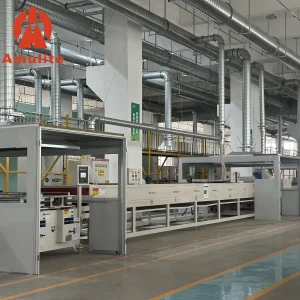
A standard 5-million m²/year fiber cement board production line requires a minimum factory shop footprint of 180m x 24m (4,320 m²), electrical connected load of approximately 650 kW, and steam consumption of 4.5 to 6.0 tons/hour at 1.25 MPa.
Prior to shipment, dry-run mechanical testing, PLC loop checking, pressure vessel hydrostatic testing (up to 1.5x working pressure for autoclaves), and laser alignment verification must be executed and certified by certified quality auditors.
Evaluating total lifetime operational costs includes raw material consumption ratios (e.g. pulp recycling efficiency), steam energy heat-recovery loops, cutting blade longevity, and consumable replacement cycles.
Full compliance with international engineering codes, local raw material trials, and worldwide on-site installation commissioning.
All machinery manufacturing conforms with EU CE Machine Directives (2006/42/EC), ISO 9001:2015 Quality Management Systems, ISO 14001 Environmental Standards, and ASME / PED certification for high-pressure autoclaves.
Engineers analyze client-supplied sand, fly ash, local cement, and recycled fibers in our R&D lab to customize chemical formulations. We ensure final panels pass ASTM C1185, EN 12467, and BS 476 fire resistance standards.
Senior field engineering teams manage mechanical erection, electrical wiring, PLC debugging, trial production, and local operator training until full capacity design output is achieved. Cloud-based remote PLC diagnostics provide 24/7 technical assistance.
Direct technical answers from senior process machinery engineers.
Manufacturing standard lead time is 90 to 120 days depending on line automation scale. On-site installation, civil layout alignment, piping, electrical wiring, and commissioning require approximately 45 to 60 days conducted by our field engineers.
Yes. Fly ash (Class F or Class C) or natural pozzolanic materials can replace 25% to 45% of quartz sand depending on silica purity (SiO₂ > 65% recommended). Our laboratory evaluates your raw material samples to optimize hydro-thermal reaction parameters during autoclaving.
Our automatic EPS cement panel lines utilize specialized positive-pressure slurry injectors and dual-shaft continuous mixers. Micro-air-entraining agents stabilize the wet slurry density, preventing EPS bead flotation or agglomeration during vertical mold slurry filling.
While both utilize similar Hatschek forming machinery, calcium silicate lines emphasize high-purity silica and lime reactions cured in autoclaves to yield lower density (0.8 - 1.2 g/cm³) thermal fireproof panels, whereas fiber cement lines often utilize air-curing or shorter autoclave cycles for higher-density facade boards (1.3 - 1.7 g/cm³).
Our 1300 II Type Automatic Four Side Edge Cutting Machine features optical alignment sensors, servo-driven positioning saws, auto-dust extraction hoods, and PLC-interlocked conveyor speeds up to 45 meters/minute with precision diagonal tolerance under 0.5mm.
We supply a complete 2-year wearable spare parts package (felts, wire meshes, cutting blades, vacuum seals, pneumatic valves) and guarantee lifetime remote PLC software updates and emergency engineer dispatch within 72 hours worldwide.
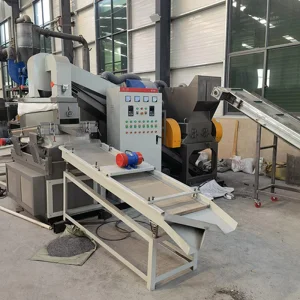
Explore our secondary and specialized industrial production equipment designed for sustainable construction and recycling.