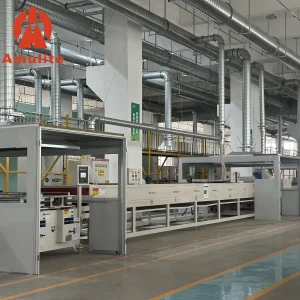
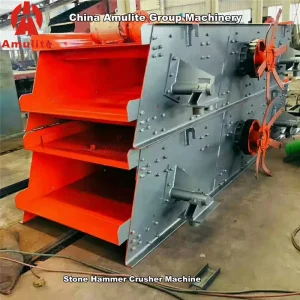
Explore our premier automated production machinery engineering portfolio, designed for high output, precise board thickness control, and long-term industrial reliability.
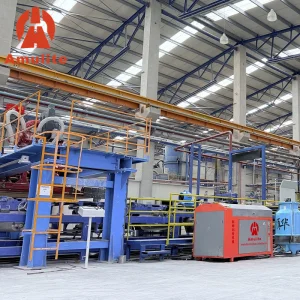
In modern commercial and residential construction, suspended ceiling systems serve essential functions beyond aesthetics—they dictate acoustic performance, thermal insulation, Class A1 fire safety, and indoor environment quality (IEQ). Selecting the Best Ceiling Board Making Machine Factory requires evaluating structural engineering capabilities, slurry chemistry compatibility, industrial automation integration, and long-term Total Cost of Ownership (TCO).
Historically, ceiling board manufacturing relied on semi-automated batch pressing, which resulted in uneven density distribution, high water absorption, and low flexural strength. Modern manufacturing lines engineered by leading Chinese suppliers utilize fully automated Hatschek multi-vat wet-process systems, continuous extrusion forming, and high-pressure hydrothermal autoclave reaction technology. These systems produce high-density Fiber Cement Ceiling Boards, Calcium Silicate Boards, Magnesium Oxide (MGO) Boards, and PVC-Laminated Gypsum Ceiling Tiles at speeds exceeding 15 to 30 million square meters per year.
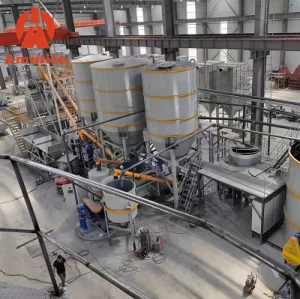
A commercial-grade ceiling board production line comprises five distinct, highly synchronized engineering subsystems:
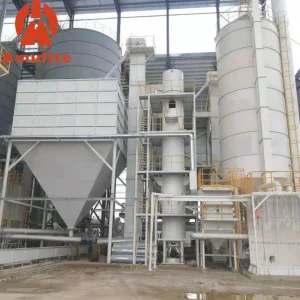
Automated gravimetric batching scales measure Portland cement, micro-silica sand (quartz powder), cellulous pulp fibers, and functional additives. Superfine wet-milling ensures homogeneous dispersion, preventing agglomeration and fiber clumping.
Utilizing 3 to 5 rotating mesh vats, thin green layers (0.2–0.3mm per revolution) are deposited onto a continuous felt belt. High-vacuum dewatering boxes extract excess moisture, achieving structural cohesion before winding onto the accumulating drum.
Green boards undergo pre-curing before entering hydrothermal autoclaves operating at 1.0–1.3 MPa steam pressure (175°C to 190°C) for 10–12 hours. This process converts raw silica and lime into crystalline Tobermorite ($C_5S_6H_5$), eliminating moisture dimensional instability.
| Ceiling Board Category | Primary Machinery Used | Density Range (g/cm³) | Flexural Strength (MPa) | Thermal Conductivity |
|---|---|---|---|---|
| Fiber Cement Ceiling Board | Hatschek Forming + Autoclave Line | 1.2 – 1.5 g/cm³ | ≥ 14.0 MPa | 0.15 W/(m·K) |
| Calcium Silicate Ceiling Board | Flow-on / Hatschek + High-Temp Autoclave | 0.9 – 1.2 g/cm³ | ≥ 10.5 MPa | 0.12 W/(m·K) |
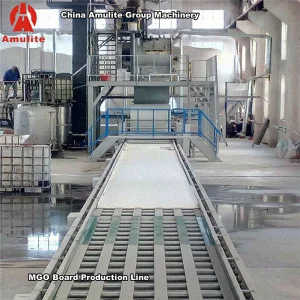
| MGO Fireproof Ceiling Board | Continuous Extrusion & Mesh Layup Line | 0.8 – 1.1 g/cm³ | ≥ 12.0 MPa | 0.09 W/(m·K) |
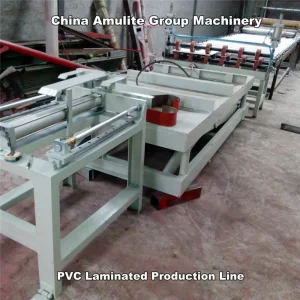
| PVC Laminated Gypsum Board | Auto-Laminating & Edge Banding Machine | 0.7 – 0.85 g/cm³ | ≥ 6.5 MPa | 0.18 W/(m·K) |
Global buyers sourcing from a China Ceiling Board Making Machine Factory gain significant operational and financial benefits. Driven by extensive industrial clusters in regions such as Hebei (Shijiazhuang heavy equipment hub), Chinese manufacturers integrate raw material refining, precision heavy machining, and advanced automation engineering under one unified ecosystem.
From raw steel plate cutting, boiler-grade pressure vessel welding for autoclaves, to custom CNC turning of large-diameter forming cylinders, 95% of components are manufactured in-house. This prevents supply chain delays and guarantees strict quality control.
Turnkey production lines from leading Chinese machinery groups cost 40% to 60% less than European equivalents while providing matching technical parameters, Siemens/Schneider PLC integrations, and robust structural duty cycles.
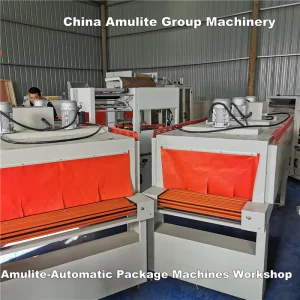
Standard turnkey plant delivery times range from 90 to 120 days. Modular assembly protocols allow complete factory dry-testing of electrical control panels and hydraulic press stations prior to export packing.
For global building material manufacturers, institutional investors, and EPC contractors, purchasing a ceiling board line involves evaluated capital payback dynamics. Key operational metrics include:
Autoclave steam heat exchangers and multi-stage dryer heat recovery reduce natural gas/coal consumption by up to 22%, dramatically cutting variable production costs.
Advanced edge-trimming recycle units collect wet green board off-cuts and pump them directly back into the slurry mixing tanks, achieving zero solid waste during forming operations.
Robotic vacuum lifters and auto-bundling systems reduce shop-floor labor requirements from 45 operators per shift down to fewer than 12 supervisory technicians.
A major operational pitfall for overseas investors is purchasing machinery that only functions with hyper-specific chemical grades. Amulite Group's dedicated process engineers conduct local raw material testing prior to equipment configuration:
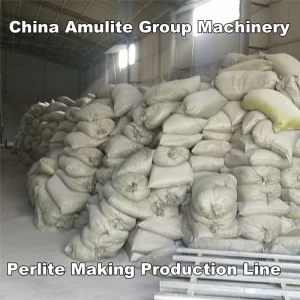
Lines are calibrated to utilize locally available Ordinary Portland Cement (OPC), recycled waste paper pulp, unrefined quartz sand, fly ash from local power plants, or volcanic perlite aggregate. This eliminates expensive raw material import reliance.
All machinery components meet strict European CE standards, pressure vessels hold ASME/PED certifications, and integrated control panels comply with ISO9001 and UL electrical safety specifications.
Different climatic regions and architectural building codes dictate specific board characteristics:
Southeast Asia, Latin America, and Coastal Africa require 100% water-impermeable, anti-sagging calcium silicate ceiling tiles designed to withstand 95%+ relative humidity without structural warping.
European and North American commercial offices, healthcare facilities, and educational institutions require high-NRC (Noise Reduction Coefficient) perforated fiber cement or gypsum ceiling tiles lined with acoustic tissue backings.
Chemical plants, server data centers, and high-rise commercial corridors demand 2-to-4 hour fire barrier MGO or autoclaved fiber cement ceilings rated to Class A1 non-combustibility.
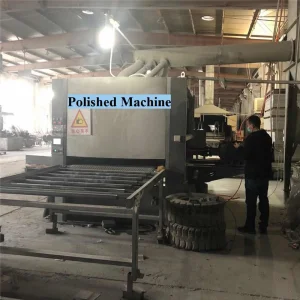
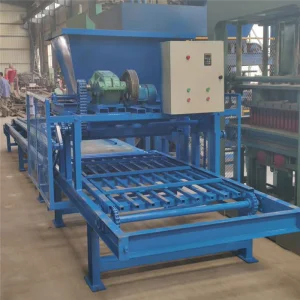
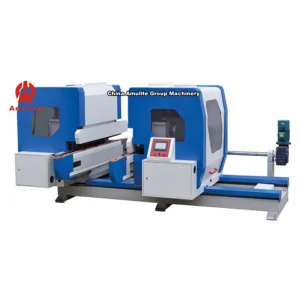
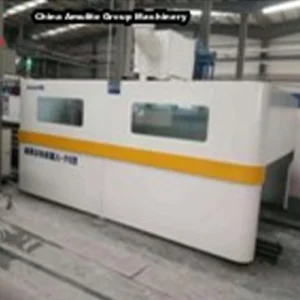
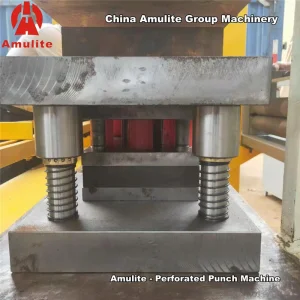
Complete your factory setup with our specialized heavy machinery, surface finishing, and secondary processing systems.
Direct answers to crucial questions evaluated during feasibility studies and capital equipment tenders.