Explore our core industrial plant solutions designed for high-yield building panel fabrication, recycling machinery, and heavy-duty mineral processing.
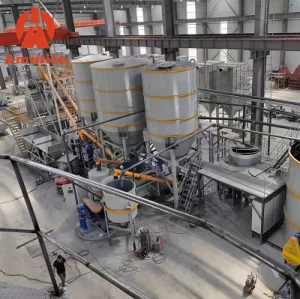
OEM EPS Sandwich Cement Wall Panels Production Line Companies, Products
View Machine Details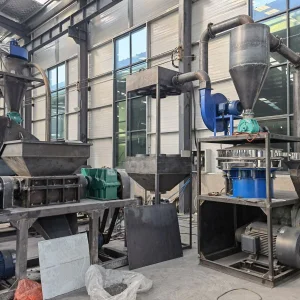
OEM Lithium Battery Recycling Equipment Factory, Company
View Machine Details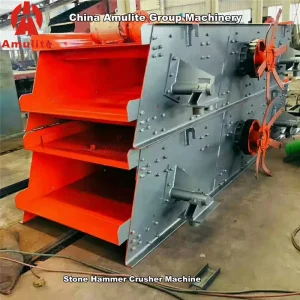
OEM Stone Hammer Crusher Machine Suppliers, Factory
View Machine Details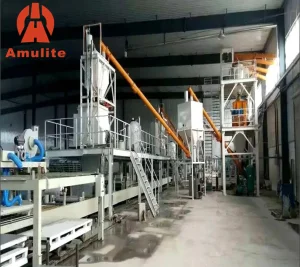
Best XPS Insulation Tile Backer Production Line Supplier, Companies
View Machine Details
Famous Amulite AAC Blocks Customized Automatic Machines- 4.2m Manufacturers, Company
View Machine Details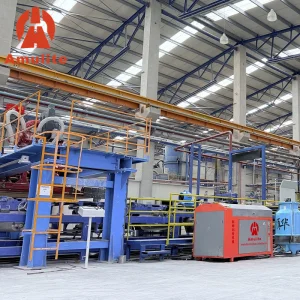
China Fiber Cement Board /Calcium Silicate Board Production Line Factory, Companies
View Machine Details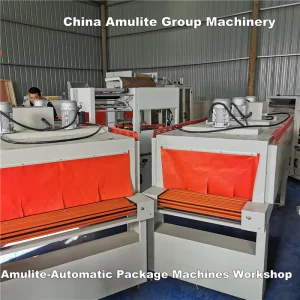
Famous Automatic Package Machines Workshop Factory, Company
View Machine Details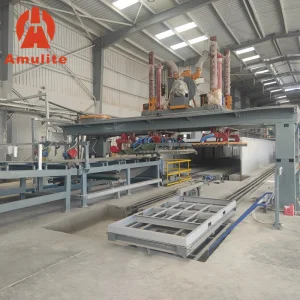
China Non-Asbestos/Asbestos Cement Corrugated Roof Sheets Production Line Company, Product
View Machine DetailsThe global transition toward non-combustible, moisture-resistant, and high-strength construction materials has positioned the Calcium Silicate Board Construction Line as a vital cornerstone of modern industrial manufacturing. Calcium silicate boards—engineered through hydro-thermal synthesis of siliceous and calcareous materials reinforced with cellulose fibers—have surpassed traditional gypsum drywall and fiber-cement solutions in high-end commercial projects, fire-rated partitions, and exterior cladding.
Driven by strict urban building safety regulations (such as EN 13501-1 fire classification standards and ASTM C1185 compliance), global industrial output of calcium silicate panels is growing at a compound annual rate exceeding 7.2%. Plant operators and real estate developers are aggressively phasing out asbestos-containing and low-density chalk products, substituting them with high-autoclave, eco-friendly calcium silicate board processing equipment.
Industrial machinery engineering is undergoing a technological revolution driven by AI-assisted slurry dosing, zero-carbon autoclave curing, and multi-vat Hatschek sheet forming technology.
Automated Closed-Loop Viscosity Regulation utilizes optical sensors and inline PLC algorithms to adjust pulp refining ratios, quartz powder mesh particle sizes, and lime slaking rates in real-time, eliminating human batching error.
The transition from ambient air curing to high-pressure saturated steam autoclaving (1.2–1.5 MPa, 190°C) triggers the complete crystallization of Tobermorite ($C_5S_6H_5$), providing superior mechanical rigidity and zero linear expansion in humid climates.
Modern production lines seamlessly process fly ash, industrial silica residues, and recycled cellulose kraft pulp, dramatically reducing raw material procurement overhead while meeting global ESG circular economy standards.
A comprehensive technical overview of the multi-stage industrial engineering workflow required to transform raw silica, lime, and cellulose fibers into high-performance structural boards.
Cellulose kraft pulp is processed through hydraulic pulpers and disc refiners to reach optimal Canadian Standard Freeness (CSF). Simultaneously, quartz sand is wet-milled in continuous ball mills to a fine mesh powder (passing through 200-mesh screens at over 92%).
The blended slurry (consisting of silica powder, slaked lime, Portland cement, and refined fiber pulp) is pumped into multi-vat Hatschek sheet machines. Dynamic rotating cylinder sieves collect thin slurry films, transferring them onto a continuous running felt. The films are wrapped layer-upon-layer around a heavy-duty forming drum until the exact board thickness (from 4mm to 30mm) is achieved.
Newly formed green boards undergo high-pressure hydraulic compaction (up to 7,000–10,000 tons of total pressing capacity). This step extracts interstitial water, collapses voids, and elevates board density from 1.1 g/cm³ up to 1.6 g/cm³, vastly upgrading flexural strength (MOR > 16 MPa).
The stack of pressed boards enters massive horizontal pressure vessels (autoclaves) for 10 to 12 hours under 1.2 MPa steam pressure at 190°C. Under these hydrothermal parameters, free silica reacts with calcium hydroxide, forming a dense micro-crystalline Tobermorite matrix that guarantees dimensional stability and moisture immunity.
Different geographic regions present distinct environmental demands. Calcium silicate board plants are customized to manufacture regional board grades optimized for local architectural requirements.
In equatorial zones subject to extreme rainfall and high ambient humidity, traditional plasterboard rapidly absorbs water and sags. High-density calcium silicate boards manufactured by our machinery display near-zero water absorption expansion, resisting fungal growth, mold, and humidity-induced delamination in commercial bathrooms, cleanrooms, and exterior soffits.
Building codes in earthquake-prone regions demand lightweight dry-wall partitioning systems with high flexural impact resistance. Fibre-reinforced calcium silicate wall panels produced via autoclaved pressing provide structural flexibility, damping seismic kinetic forces without brittle cracking or structural panel collapse.
Subway tunnels, datacenter cable vaults, and commercial skyscraper elevator shafts require up to 4 hours of passive fire protection. Our heavy-duty calcium silicate board lines produce specialized 15–25mm thick fireproof panels that release zero toxic smoke or hazardous fumes under direct 1200°C flame testing.
From greenfield site evaluation to commercial board commissioning, our engineering teams provide complete lifecycle support for factory investors.
We conduct localized mineral audits on your quartz sand, limestone, and cement feedstocks to optimize chemical ratios ($SiO_2$ vs $CaO$). Factory layout designs are optimized for raw material storage, steam piping, water treatment loops, and finished product logistics.
Heavy machinery components—including multi-cylinder sheet forming vats, hydraulic stackers, high-speed trim saws, and 3.2m diameter pressure autoclaves—are manufactured under strict ISO 9001 and CE quality standards before factory pre-shipment trial runs.
Resident project engineers oversee mechanical installation, electrical wiring, PLC control integration (Siemens/Schneider architecture), and closed-loop water filtration system hookups directly at your plant location.
Our chemical engineers work alongside your local technicians to fine-tune slurry mixing parameters, autoclave steam pressurization curves, and automated packaging sequences until target yield (over 98% pass rate) is stably achieved.
Expert insights into equipment configuration, raw material parameters, plant yields, and operational ROI.
Explore our full catalogue of building material equipment, including brick-making systems, tile lines, gypsum board plants, and auxiliary finishing machinery.
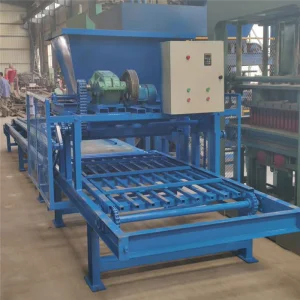
China Automatic Bricks Making Production Line Manufacturers, Products
View Machine Details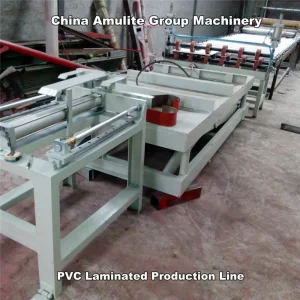
China PVC Laminated Production Line Factories, Products
View Machine Details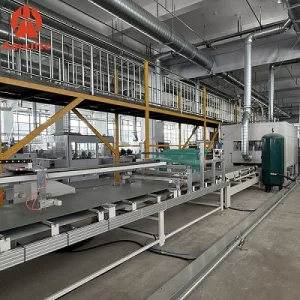
Best Flexible Clay Ceramic Tile Production Line Manufacturer, Companies
View Machine Details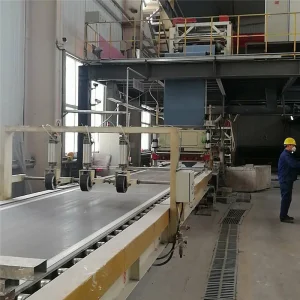
China Gypsum Board Production Line Supplier, Factories
View Machine Details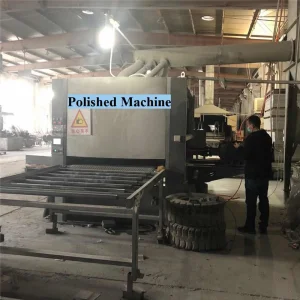
China Single Face Polished Machine Manufacturers, Suppliers
View Machine Details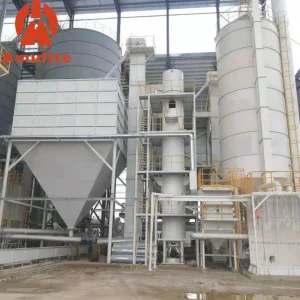
China Expanded perlite production line Supplier, Products
View Machine Details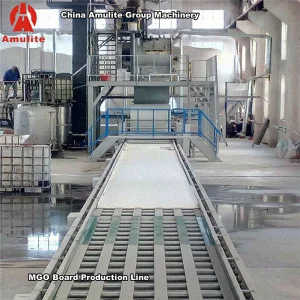
OEM China Amulite Group MGO Board Production Line Factories, Product
View Machine Details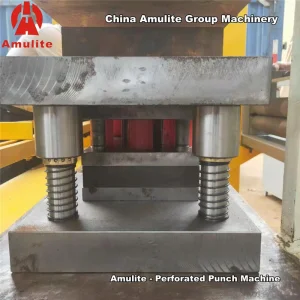
High-Quality Amulite Perforated Punch Machine System Technical Data Manufacturer, Suppliers
View Machine Details