Next-Generation Aggregate Crushing Solutions Engineered for Egypt’s Mining Sector, Infrastructure Expansion & Harsh Quarry Operating Conditions
Explore our flagship heavy-duty impact hammer crushers optimized for processing limestone, basalt, gypsum, and silica rocks across Egyptian quarries.
The Arab Republic of Egypt is undergoing an unprecedented infrastructure transformation. Driven by national initiatives under Egypt Vision 2030—including the massive expansion of the New Administrative Capital (NAC), extensive national road networks connecting Upper and Lower Egypt, coastal port modernizations in Ain Sokhna and Alexandria, and major agricultural reclamation drives in Toshka and the Western Desert—the demand for high-grade construction aggregates, crushed limestone, and processed industrial minerals has reached historic highs.
At the center of this industrial boom lies the critical necessity for efficient, durable, and cost-effective crushing machinery. Egyptian mining companies, quarry operators, and civil engineering contractors face unique geological and climate challenges. The regional geology varies dramatically: from the massive, dense limestone formations along the Nile Valley (Beni Suef, Minya, and Assiut) to abrasive basalt and granite complexes in the Eastern Desert and Aswan, alongside vast gypsum deposits along the Red Sea coast and Sinai peninsula.
Traditional two-stage crushing systems (Jaw Crusher paired with standard Cone Crushers) often suffer from high operational expenditures (OPEX) in Egyptian environments due to high electricity tariffs, severe airborne dust accumulation, and thermal stress caused by summer temperatures exceeding 45°C. The Stone Hammer Crusher Machine has emerged as the definitive technical solution across Egypt due to its ability to achieve a massive crushing ratio (up to 20:1) in a single pass, replacing multi-stage plants while cutting capital investment (CAPEX) by up to 40%.
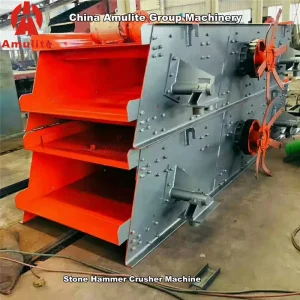
A Stone Hammer Crusher Machine operates on the principle of dynamic kinetic impact crushing. Raw boulders fed into the rotor chamber are struck instantaneously by high-velocity rotating hammers attached to a heavy-duty balanced rotor assembly. The stone is fractured upon first impact, thrown against interior breaker plates, and further reduced through stone-on-stone collisions prior to passing through an adjustable bottom screen or grate bar assembly.
Over the past decade, Chinese heavy equipment manufacturers have established an overwhelming competitive edge in supplying crushing and screening plants to North Africa, and Egypt in particular. This success is not merely based on competitive pricing, but on deep metallurgical engineering, customized equipment adaptation, and robust global supply chain integration under China's Belt and Road Initiative (BRI).
Standard European crushers often utilize rigid, off-the-shelf wear component specs designed for softer European limestone. Chinese OEM factories work directly with Egyptian quarry metallurgists to formulate custom alloy hammer compositions. By analyzing the silica content ($SiO_2$) and Mohs hardness of specific local rock samples from Beni Suef or Sinai, Chinese manufacturers adjust manganese-to-chromium ratios, adding molybdenum and vanadium to prevent catastrophic brittle fractures under high kinetic impacts.
Leading Chinese crushing equipment suppliers offer end-to-end Turnkey Engineering, Procurement, and Construction (EPC) solutions. From civil engineering layout drawings, structural steel supports, motor drives, and vibrating feeders to advanced dust collection systems, Egyptian clients receive fully integrated, modular plants designed for fast assembly on-site within 30 to 45 days.
Egyptian operators face foreign currency exchange considerations and capital allocation constraints. Chinese OEM stone hammer crushers deliver equal or superior throughput capacity (TPH) compared to Western brands at 35% to 50% lower initial capital expenditure, while maintaining full compliance with ISO 9001, CE, and Egyptian GOEIC import requirements.
Unplanned downtime in a crushing plant can cost thousands of USD daily. Top Chinese machinery groups maintain dedicated spare part distribution networks, consignment stocks of wear hammers, liners, and bearings, along with Arabic-speaking field engineers capable of responding to on-site commissioning and maintenance requests across Egypt.
Egypt is one of North Africa's largest producers of Portland cement. Hammer crushers are extensively deployed as primary and secondary pre-reducers for raw limestone before ball mill grinding. The hammer crusher's ability to handle sticky, moist soft-to-medium limestone prevents hopper clogging and delivers a uniform discharge size (< 25mm), resulting in up to 20% electrical energy savings in downstream grinding mills.
Due to environmental restrictions on dredging natural river sand from the Nile River, the Egyptian construction sector relies heavily on manufactured sand (M-Sand) produced from crushed limestone and granite. Fine stone hammer crushers equipped with high-speed rotors produce cubical sand grains with optimal particle size distribution (PSD), meeting ECP 203 standards for high-strength concrete structures.
Gypsum quarries along the Suez Gulf and Sinai Peninsula utilize non-clogging hammer crushers designed specifically for soft, low-abrasion minerals. The high impact speed cleanly fractures raw gypsum rocks into fine feed material for continuous calcination kettles and automated gypsum board production lines.
Modern building material factories in Cairo's industrial zones (such as 10th of Ramadan City and 6th of October City) utilize specialized fine hammer mills to crush silica sand, lime, and recycled AAC waste, facilitating precise slurry mixing for autoclaved aerated concrete block production.
Designing a high-yield crushing plant in Egypt requires balancing feed size, material hardness, desired output gradation, energy consumption, and environmental regulations. Below is a standard high-efficiency plant flowsheet developed by OEM process engineers for Egyptian aggregate producers:
Scalper grid removes clay & fines
Primary & Secondary Reduction
3 or 4 Deck Sizing System
0-5mm, 5-15mm, 15-30mm
Note: Oversized rock (+30mm) is automatically returned via a closed-circuit return conveyor back to the hammer crusher feed hopper for 100% material utilization.
Procuring capital industrial machinery from overseas factories involves strict regulatory, financial, and logistical steps. Egyptian procurement directors and plant managers should adhere to the following key guidelines to ensure smooth import clearance and equipment deployment:
Modern stone hammer crushers entering the Egyptian market are increasingly integrated with Siemens PLC control cabinets and cloud-based IoT sensor modules. Plant operators in Cairo can monitor rotor vibration levels, main bearing temperatures, motor amp draw, and hammer wear rates in real time via smartphone or desktop dashboards, preventing catastrophic bearing failures before they occur.
Environmental regulations enforced by the Egyptian Environmental Affairs Agency (EEAA) require strict dust control near residential corridors and agricultural zones along the Nile. Next-generation hammer crushing systems feature fully enclosed impact housings, high-pressure dry-fog dust suppression nozzles, and integrated pulse-jet baghouse dust collectors.
Expert technical answers regarding equipment selection, wear maintenance, fuel efficiency, and operation in Egypt.
While hammer crushers excel primarily in soft to medium-hard rocks like limestone and gypsum, heavy-duty hammer crushers equipped with bimetallic composite hammers (high manganese steel substrate inlaid with ultra-hard ceramic/tungsten carbide particles) can process medium-hard basalt. However, for extremely abrasive granite or high-silica basalt (>15% silica), a jaw-and-cone crusher setup is recommended to optimize wear component costs.
Under standard operational conditions in Beni Suef (processing clean limestone with silica content under 3%), high-chrome alloy hammer heads typically achieve a operational lifespan between 2,800 to 3,800 crushing hours before requiring hardfacing rebuilds or replacement. Reversible hammer designs allow operators to flip the hammers 180 degrees, doubling total wear life before scrapping.
A heavy hammer crusher completes both primary (run-of-mine boulder reduction) and secondary/tertiary fine crushing within a single machine housing. By eliminating intermediate belt conveyors, secondary screens, surge bins, and a second heavy electric motor drive, total installed kilowatt power demand is reduced by 35% to 45% for equivalent hourly tonnage output.
Standard stone hammer crushers handle raw material moisture up to 8%-10%. For wet, sticky material encountered during rainy spells or near coastal deposits, the bottom grate bar section can be equipped with a hydraulic opening device or converted to a non-grid design paired with a mud-scraping breaker plate to ensure continuous, non-clogging production.
All Chinese industrial machinery manufactured for export to Egypt is equipped with heavy industrial electrical motors rated for 380V, 50Hz, 3-Phase power supply, fully compatible with Egyptian Electricity Holding Company (EEHC) industrial grid standards and field diesel generator sets.
Explore our full selection of heavy hammer crushers, jaw impact systems, edge trimmers, and specialized building material equipment tailored for Egyptian industrial operators.