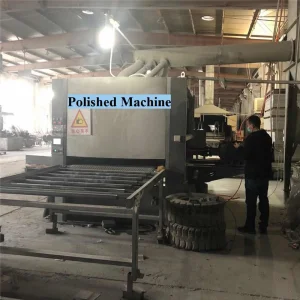
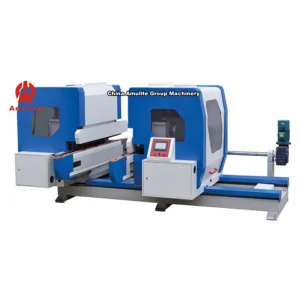
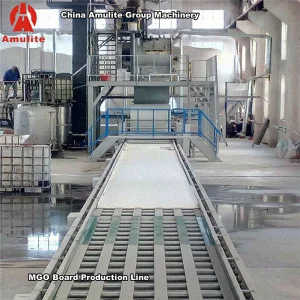
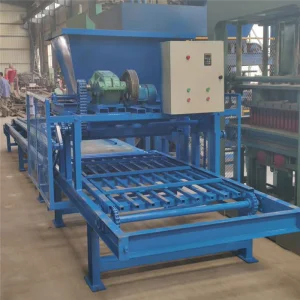
Engineered for maximum calibration accuracy, automated throughput, and long-term durability under heavy industrial duty cycles in Tashkent and regional industrial centers.
Uzbekistan is undergoing a structural economic transformation. Driven by the "Uzbekistan 2030" Strategy and massive urban infrastructure developments across Tashkent, Samarkand, Namangan, and the Navoi Free Industrial Zone, demand for advanced building materials has reached an all-time high. Modern commercial complexes, state-funded housing initiatives, and industrial parks demand exterior cladding, interior wall panels, and flooring products with immaculate surface tolerances.
In response, regional manufacturers of fiber cement boards, calcium silicate substrates, magnesium oxide (MGO) panels, and synthetic quartz are transitioning from manual finishing techniques to high-speed, automated single face polished machines. Achieving micron-level surface roughness ($R_a < 0.2\ \mu\text{m}$) and strict thickness variance limits ($\pm0.05\text{ mm}$) is no longer optional—it is a critical benchmark for tier-1 supply contracts.
A technical breakdown of kinematic principles, vibration damping bed designs, multi-stage diamond polishing heads, and closed-loop pneumatic calibration controls.
Constructed using stress-relieved heavy structural steel plate (Q355B) and high-density cast iron mounting beds. This dampens micro-vibrations generated during high-speed rotation, preventing micro-fractures on board edges.
Equipped with 4 to 12 independent polishing spindles featuring planetary rotation geometry. Spindles utilize variable frequency drives (VFD) allowing operators to tune rotational speed between 400 and 1800 RPM.
Real-time downforce sensing continuously adjusts pneumatic pressure cylinders across individual heads. This compensates for slight board thickness variation, guaranteeing uniform material removal without gouging.
Processes surfaces via sequential grit stages—from coarse diamond calibration discs (60#–120#) to fine resin-bond smoothing heads (800#–3000#), achieving ultra-gloss or satin architectural finishes.
Integrated closed-loop hydro-cyclone filtration separates ceramic and cement dust from cooling water, recovering up to 92% of process water while preventing abrasive re-circulation scratches.
Industrial IoT integration via Siemens S7-1500 PLC allows factory managers in Tashkent or remote engineering support in China to monitor power usage, spindle vibration, disc wear, and thermal profiles.
Adapting machinery specs for Central Asia's unique mineral compositions, regional raw materials, and specific building substrate finishing requirements.
Uzbekistan’s expanding fiber cement board (FCB) sector relies heavily on local quartz sand and Portland cement mixtures. Autoclave curing leaves natural surface unevenness. Single face polishing machines calibrate board thickness before applying UV decorative coatings or wood-grain printing.
For high-rise commercial structures in Tashkent’s International Business Center, magnesium oxide (MGO) and calcium silicate boards require smooth single-side surfacing to accept non-combustible laminate films. Pneumatic float heads prevent board cracking under pressure.
With Uzbekistan's rich natural stone reserves in Navoi and Samarkand, single-side polishing systems process heavy marble, granite slabs, and cementitious terrazzo tiles to mirror-finish gloss levels exceeding 85 GU (Gloss Units).
| Parameter | Standard Specification |
|---|---|
| Max Board Width | 1220 mm / 1300 mm / Custom |
| Processing Thickness | 4 mm – 50 mm |
| Spindle Quantity | 4 / 6 / 8 / 10 / 12 Heads |
| Feed Speed Range | 5 – 35 m/min (VFD Regulated) |
| Thickness Tolerance | ±0.03 mm to ±0.05 mm |
| Surface Gloss Level | Up to 90 GU (Product Dependent) |
| Total Installed Power | 45 kW – 160 kW |
| Control Hardware | Siemens PLC + 10" Touch HMI |
Why Central Asian industrial enterprises select Chinese machinery manufacturers as strategic partners for complete production lines and specialized polishing systems.
China Amulite Group manufactures all critical structural components in-house across a 100,000 m² factory base—including laser cutting, stress-relief heat treatment, CNC machining, and electrical control assembly.
Direct rail transit via the China-Central Asia Express (Lianyungang/Xi'an to Tashkent) ensures machinery and spare parts reach Uzbek job sites within 12 to 18 days, minimizing lead times compared to sea shipping paths.
Every unit undergoes strict pre-shipment dry-running tests, static balance inspections, and electrical safety insulation audits to guarantee compliance with European CE standards and GOST certifications.
Evaluating Capital Expenditure (CapEx) against long-term Operational Expenditure (OpEx) for building material producers in Central Asia.
When procuring surface polishing machinery, forward-thinking plant managers look beyond initial purchase price. Operational efficiency, abrasive disc consumption rate, power factor optimization, and maintenance downtime dominate the 10-year lifecycle cost structure.
In typical Uzbek plant setups operating 16 hours daily, capital payback for an automated single face polishing line is routinely realized within 11 to 14 months through yield improvements and reduced finishing scrap.
Direct technical guidance from senior engineering staff regarding installation, maintenance, voltage compatibility, and operation in Uzbekistan.
Line output is controlled by feed velocity and the number of operational heads. A 6-head or 8-head line running standard 1220x2440mm fiber cement sheets delivers feed speeds between 15m/min and 30m/min, translating to approximately 3,000 to 6,000 m² of polished board surface per 8-hour shift.
Our electrical panels exported to Uzbekistan are engineered with heavy-duty voltage stabilization buffers, surge protection relays, and wide-tolerance Schneider/Siemens electrical components capable of managing ±15% line voltage fluctuations without tripping PLC controllers.
Yes. Depending on product formulation (e.g., MGO board vs. autoclaved calcium silicate vs. stone slabs), machines can be configured with dry dust collection shrouds attached to HEPA extraction systems or wet slurry coolant recirculation manifolds with automated hydro-cyclone filtration.
Grit 60#–120# coarse metal-bond diamond calibration discs typically achieve 25,000 to 40,000 m² of processing before replacement, while resin-bond fine polishing pads (800#–3000#) yield 15,000 to 25,000 m², depending on raw sand silica content and surface hardness.
Yes. Amulite Group dispatches experienced field engineers directly to client factories in Tashkent, Samarkand, Navoi, or Fergana. Engineers manage mechanical erection, laser alignment, trial runs, and train local staff in Russian or English.
All machines ship with CE documentation, electrical schematics, foundation civil layout drawings, step-by-step operating manuals in Russian/English, and a comprehensive 12-month structural and mechanical warranty.
Explore our turnkey plants and specialized processing machinery designed for modern building material factories across Uzbekistan and Central Asia.
Contact our senior engineering team today to receive a complete technical proposal, CAD factory layout, utility load matrix, and detailed quotation for your plant.
Send Inquiry Now