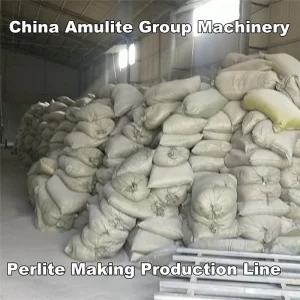
Monrovia Engineered Perlite Production Line
- Vertical expansion furnace design
- Thermal efficiency: ≥84% heat recovery
- Expansion ratio: 15–25 times volumetric
- Integrated cyclone pre-heater
Verified plant-scale engineering systems deployed for building material manufacturing, resource recycling, and precision fabrication plants.
An in-depth analysis of port logistics, building sector urbanization, and why expanded perlite infrastructure is vital for Liberia's coastal climate.
Greater Monrovia serves as the epicentre of Liberia's economic activity, accounting for over 60% of domestic commercial capital flows. Rapid population density growth within districts like Bushrod Island, Sinkor, Paynesville, and Caldwell has created an unprecedented deficit in affordable, climate-resilient residential and commercial infrastructure. The Ministry of Public Works (MPW) and national development schemes continuously prioritize scalable construction methodologies that can substitute cumbersome, slow-curing conventional concrete masonry units (CMUs).
The high-salinity marine atmosphere combined with Monrovia's equatorial monsoonal climate—delivering over 4,600 mm of annual precipitation—exposes ordinary building structures to excessive thermal load and moisture-induced delamination. This dynamic creates high demand for mineral aggregates like expanded perlite, which provide non-combustible A1-rated fire insulation, superior acoustic isolation, and impervious thermal envelopes for exterior cladding and interior partitioning.
Historically, building contractors operating in Monrovia have imported finished lightweight boards, gypsum acoustic tiles, and cryogenic insulation materials at high shipping tariffs and volatile foreign exchange costs. Raw perlite ore, however, can be shipped in dense, bulk fractional form via breakbulk or dry container into the Free Port of Monrovia at a fraction of the cost of finished lightweight goods.
By establishing a dedicated vertical expansion perlite line within industrial zones along the Freeport corridor or the Somalia Drive manufacturing belt, industrial entrepreneurs capture significant arbitrage. Expanding dense volcanic glass locally at volumetric factors between 15x and 25x saves up to 88% in ocean freight costs compared to importing pre-expanded products, making domestic manufacturing in Montserrado County highly lucrative.
A rigorous examination of perlite crystal pop kinetics, water flash vaporization, and multi-stage dust control systems engineered for equatorial reliability.
Crude perlite contains between 2.0% and 5.0% chemically bound molecular water trapped inside its aluminosilicate vitreous matrix. If exposed directly to sudden flame temperatures above 1,000°C without controlled preheating, the raw particles experience explosive structural shattering into non-commercial microscopic dust (<45 μm). Our system utilizes a dual-cyclone rotary preheater utilizing exhaust waste gas at 320°C–400°C, raising core ore temperature uniformly to 420°C while expelling uncombined surface moisture before calcination entry.
The preheated granules drop by gravity into the high-velocity vertical combustion tube, constructed from high-nickel heat-resistant alloy (Cr25Ni20/SUS310S). Dual low-NOx burners firing light diesel, heavy fuel oil (HFO), or LPG generate an upward thermal velocity profile between 850°C and 1,150°C. As the mineral reaches softening consistency (780°C–850°C), internal crystal water rapidly turns to superheated steam, expanding the softened glass into cellular spherical bubbles with an apparent bulk density of 40–120 kg/m³.
Immediate pneumatic evacuation lifts newly formed lightweight perlite away from the radiant flame core to avoid over-calcination and cell collapse. A high-efficiency primary vortex cyclone separates coarse cellular grains (0.5–3.0 mm) suited for lightweight insulation mortars and agricultural substrates. Secondary cyclone systems funnel fine fractions into specialized collection hoppers, while an automated reverse-pulse jet bag filter removes residual sub-micron particulates, keeping factory stack emissions below 10 mg/Nm³.
| Performance Parameter | Legacy Horizontal Rotary Kilns | Amulite Advanced Vertical Expansion Line | Monrovia Operational Benefit |
|---|---|---|---|
| Thermal Efficiency | 52% – 60% (High radiative loss) | 82% – 86% (Closed cyclone heat recovery) | Crucial for lowering diesel/fuel import costs in Liberia |
| Particle Fragmentation Rate | 18% – 25% (Tumbling mechanical attrition) | <4% (Suspended pneumatic levitation) | Significantly higher yield of high-value structural grade perlites |
| Bulk Density Uniformity | ±18 kg/m³ variable variance | ±3.5 kg/m³ precise consistency | Ensures stable mix design in lightweight cement sandwich boards |
| Stack Emission Level | 80 – 150 mg/Nm³ (Excessive ambient soot) | ≤10 mg/Nm³ (Reverse-pulse PTFE filtration) | 100% compliant with Liberia EPA (Environmental Protection Agency) |
| Footprint Area Required | 850 m² minimum plant footprint | 280 m² compact tower footprint | Substantially cuts land lease costs in port industrial areas |
How on-site perlite calcination fuels high-margin production lines: from lightweight sandwich panels to acoustic ceiling tiles.
By blending expanded perlite beads with EPS granules and Portland cement, wall panel manufacturers produce non-load-bearing composite partition slabs. Incorporating perlite increases fire endurance ratings from 90 minutes to beyond 240 minutes (BS EN 1364-1 standard), while dropping panel surface density to 55–65 kg/m². This enables faster installation times in commercial developments across Monrovia.
Expanded perlite serves as the core functional volumetric filler inside Magnesium Oxychloride/Oxysulfate (MGO) and Calcium Silicate matrix recipes. It prevents board warping under severe thermal differentials, mitigates cracking during mechanical screw fastening, and boosts sound transmission class (STC) ratings to above 48 dB, which is ideal for hospitals, educational facilities, and multi-tenant offices.
Beyond wallboard plants, fine perlite powder is critical for industrial thermal insulation. Expanded perlite serves as loose-fill insulation in cryogenic cold boxes (such as LNG oxygen storage systems), and acts as a lightweight aggregate for refractory thermal castables operating up to 1,000°C in mining smelters and palm oil processing plants across West Africa.
Site topography evaluation, electrical load calculation, fuel supply assessment (HFO/Diesel/Gas), and civil foundation designs optimized for coastal soils.
Precision fabrication of SUS310S furnace towers, automated PLC control cabinets, dynamic cyclones, and full workshop dry-testing prior to port dispatch.
Liberia deployment by senior installation engineers for mechanical erection, refractory drying, trial firings, and calibration of bulk density tolerances.
Comprehensive training on burner safety routines, air-to-fuel ratio tuning, routine cyclone maintenance, and locally stocked spare parts availability.
Equipment design adaptations addressing high-humidity coastal corrosion, intermittent electrical infrastructure, and environmental permitting in Liberia.
Monrovia’s coastal strip is subject to severe atmospheric corrosion caused by warm Atlantic winds and constant sea spray. Ordinary carbon steel structural elements deteriorate rapidly if left unprotected.
Industrial operations drawing from the Liberia Electricity Corporation (LEC) grid often experience voltage sags and phase imbalances. Uncontrolled shutdowns on a running furnace can cause refractory cracking and alloy tube warping.
Comprehensive engineering, installation, and procurement answers tailored for investors and industrial plant operators in the West African market.
Explore our complete range of certified production systems, including composite boards, automated surface finishing, panel casting lines, and material handling solutions.