Analyzing Victoria’s Big Build, urban infill mandates, stringent EPA environmental codes, and the shift toward heavy automated masonry production.
The Greater Melbourne metropolitan region, spanning fast-growing outer corridors like Wyndham, Whittlesea, Casey, and Melton, is undergoing unprecedented residential and commercial expansion. Driven by the Victorian State Government’s long-term housing targets and mega-infrastructure investments—such as the Suburban Rail Loop, regional housing upgrades, and commercial hub developments—demand for high-durability, thermally efficient, and acoustically insulated building units has reached a historic high.
Traditional manual brickmaking and legacy batching plants can no longer meet the volume, speed, and tight dimensional tolerance standards enforced by modern Australian Building Codes (NCC 2022). As a direct result, Tier-1 construction contractors and masonry producers across Victoria are transitioning toward high-capacity OEM bricks making machinery capable of operating under continuous multi-shift automated cycles with near-zero material waste.
Operating an industrial manufacturing plant within Victoria requires strict adherence to the Environment Protection Authority (EPA) Victoria Guidelines regarding noise abatement, dust emissions, storm-water run-off, and carbon footprint intensity. Clay kiln firing faces increasing regulatory pressure due to high energy consumption and emissions targets toward Australia's Net-Zero 2050 framework.
Consequently, the Melbourne market exhibits a massive strategic pivot toward cold-cured concrete masonry, Autoclaved Aerated Concrete (AAC), recycled aggregate paving units, and engineered cementitious wall panels. Equipment installed in Melbourne factories must integrate dust extraction, closed-loop water slurry recycling, high-efficiency servo hydraulics, and compatibility with low-carbon supplementary cementitious materials (SCMs) such as blast furnace slag and fly ash.
Advanced hydraulic pressing systems engineered for ultra-high density unit forming, exceeding Australian structural load-bearing parameters.
Variable frequency drive (VFD) motors and smart hydraulic power packs designed to minimize kWh energy consumption per thousand units produced.
Precision moulds and vibration technology ensuring exact dimensional tolerances required by Victorian structural design codes.
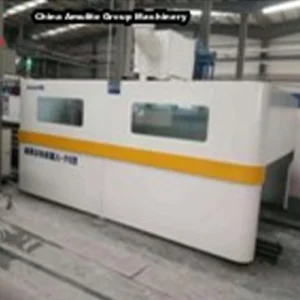
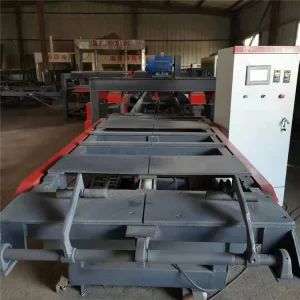
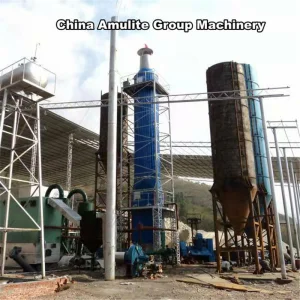
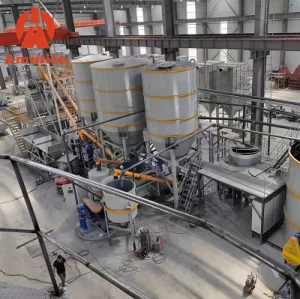
Proven industrial plant configurations engineered for automated manufacturing of masonry units, ceramic flexible tiles, and protective coatings.
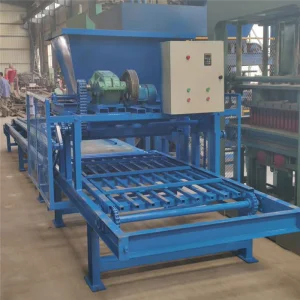
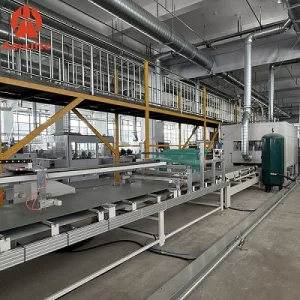
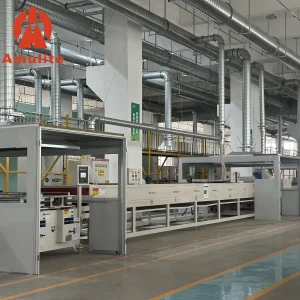
Bridging international machinery innovations with Melbourne’s specific raw materials, labor costs, and site logistics.
How heavy hydraulic engineering, servo vibration technology, and intelligent PLC control deliver zero-defect block manufacturing.
The foundation of high-strength masonry begins in the batching plant. Multi-bin cold aggregate feeders utilize load-cell belt weighers with dynamic moisture compensation probes. Microprocessor-controlled water-dosing systems instantly adjust liquid input based on real-time sand humidity, ensuring a constant water-cement ratio crucial for structural compressive strength.
Eliminating internal voids and micro-cracks requires synchronized table vibration coupled with top-mould hydraulic compaction force. OEM machines feature multi-axis servo vibration motors that deliver instantaneous vertical amplitude control, achieving uniform material distribution across high-cavity brick moulds within milliseconds.
Mould durability under high-frequency vibration is paramount. Critical wear components are CNC-machined from low-carbon alloy steels and undergo carburizing heat treatment (hardness >60 HRC). This guarantees dimensional stability up to 150,000 to 200,000 cycles before liner replacement is needed, dramatically lowering cost-per-unit.
Configuring OEM machinery output to match the precise product requirements of Victorian structural engineers and architects.
Designed for Melbourne inner-city residential towers (Docklands, Southbank, Parkville), OEM block machines produce high-density acoustic masonry units that exceed RW+Ctr sound attenuation specs while maintaining high fire-resistance ratings (FRL 120/120/120).
For estate developments in Geelong, Ballarat, and Northern Melbourne, machines are outfitted with texture-embossing attachments and color-dosing modules, producing premium face bricks with rustic, split-face, or smooth contemporary finishes.
Addressing VicRoads and local council municipal drainage policies, specialized moulds enable rapid production of heavy-duty interlocking permeable paving units for industrial logistics parks, port facilities, and urban walkways.
How we ensure seamless equipment integration, safety compliance, and uninterrupted spare parts availability in Victoria.
Importing industrial machinery into Australia carries operational risks if equipment fails local safety standards. Our OEM brick making production lines are engineered from the schematic phase to comply with AS/NZS 3000 (Wiring Rules) and AS 4024 (Safety of Machinery).
A high-volume brick plant cannot afford unexpected downtime. We provide full project lifecycle support designed specifically for Australian industrial buyers.
Equipping Melbourne factory operators with forward-compatible machinery built for green masonry trends.
Integration of direct CO₂ mineral injection technology during batch mixing. CO₂ is permanently trapped as calcium carbonate within the concrete matrix, increasing early compressive strength by 15% while reducing OPC cement requirements.
Inline optical cameras powered by machine-learning algorithms scanning 100% of cured bricks on the palletizing line for edge chips, micro-cracks, and color variations—automatically sorting substandard units before packaging.
Closed-loop, zero-discharge washdown water reclamation systems that reintroduce fine suspended solids back into aggregate batching without altering mix rheology, achieving 100% EPA Victoria water compliance.
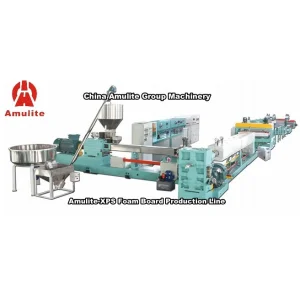
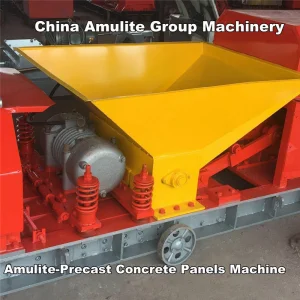
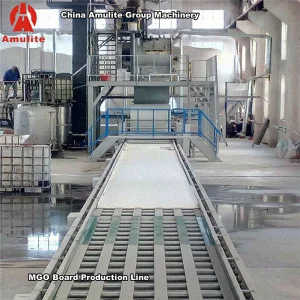
Expand your manufacturing portfolio with specialized production lines certified for global export and local Australian operation.
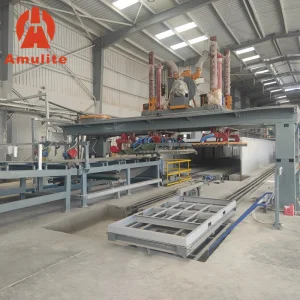
Direct answers from our senior engineering team regarding setup, compliance, ROI, and raw material compatibility.
Our OEM machinery systems feature customizable vibratory frequency controllers and heavy-duty hydraulic pressure valves specifically calibrated for variable aggregate gradings. Prior to machinery configuration, our laboratory tests samples of your local Melbourne basalt screenings, recycled crushed concrete, or river sands to establish the optimal aggregate-to-binder ratio, water content, and compaction cycle.
Equipment manufacturing and pre-assembly dry testing take approximately 60 to 90 days. Ocean freight from our plant to the Port of Melbourne typically requires 18 to 22 days. On-site foundation layout approval is conducted in advance, allowing our field installation engineers to complete mechanical assembly, electrical wiring, PLC loading, and trial production runs within 30 to 45 days of site delivery.
Finished units produced on our automated block and brick machines easily meet and exceed AS/NZS 4455.1 requirements. Dimensional tolerances can be maintained within ±0.5 mm for height, length, and width. Compressive strengths are fully adjustable via mix design and hydraulic force, routinely achieving between 15 MPa for lightweight partition blocks and over 35 MPa for heavy civil paving units.
Yes. All core electrical and hydraulic components are sourced from globally standardized brands (such as Siemens, Schneider, Rexroth, and Eaton), ensuring off-the-shelf component availability across Victoria. Additionally, our remote PLC diagnostic gateway allows our software engineers to connect to your plant’s control network in real time to troubleshoot, adjust parameters, or update operating software without delay.
Plan your next automated masonry plant, AAC line, or fiber cement board facility with proven engineering experts. Gain complete civil footprint drawings, utility load requirements, and ROI feasibility analysis tailored to the Melbourne market.