High-performance production systems and industrial auxiliary components field-tested for the demanding engineering standards of the Osaka Metropolitan Area.
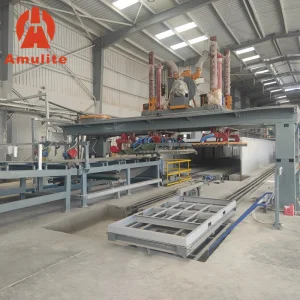
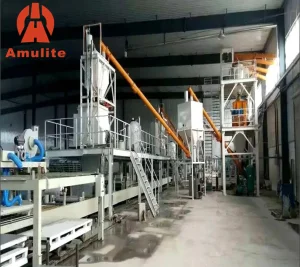
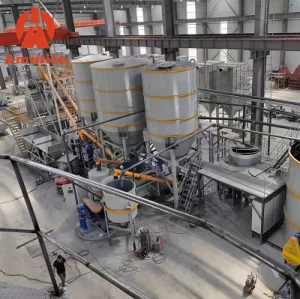
An in-depth technical analysis of Kansai’s commercial expansion, Expo 2025 infrastructure readiness, and high-performance building material machinery requirements.
The Osaka metropolitan area, serving as the economic engine of Japan's Kansai region, is undergoing an unprecedented wave of urban re-development and industrial modernization. Driven by massive capital investments surrounding Expo 2025 Osaka, Yumeshima waterfront developments, Umekita Phase II urban renewal, and ongoing earthquake resiliency retrofitting, the demand for premium building materials—specifically fireproof fiber cement boards, lightweight calcium silicate panels, high-density EPS sandwich wall elements, and autoclaved aerated concrete (AAC)—has reached historical peaks.
To sustain this dynamic architectural expansion, manufacturing plants across Osaka, Sakai, Amagasaki, and the broader Bay Area require state-of-the-art machinery and precision-engineered auxiliary equipment. Equipment suppliers servicing the Osaka market must address rigorous Japanese Industrial Standards (JIS), stringent anti-seismic design requirements, strict municipal environmental compliance, and the pressing local need for energy efficiency and continuous zero-downtime automation.
Information Gain Insight for Osaka Engineering Procurement: Operating in Japan's high-cost power and labor environment requires capital equipment that minimizes operational expenditure (OPEX). Modern Hatschek forming lines, automated PLC slurry dosing, and high-efficiency autoclave accessories delivered by China Amulite Group reduce thermal energy waste by up to 28% while satisfying JIS A 5430 flexural and fire-resistance specifications.
1. Seismic & Structural Safety Integrity: Buildings in Osaka are subject to rigorous seismic safety protocols under the Building Standard Law of Japan. Building material production lines must deliver consistent density gradients, high flexural strength (Class 4 to Class 5 fiber cement boards), and superior structural stability. Our accessories—from high-pressure hydraulic presses to multi-cylinder forming rolls—are calibrated for extreme mechanical reliability.
2. Expo 2025 & Prefabrication Speed: The accelerated timelines for Expo 2025 pavilion construction and surrounding commercial accommodation have accelerated the adoption of prefabricated EPS sandwich wall panels and lightweight gypsum partition systems. Equipment suppliers must provide continuous, high-speed automated production lines capable of turn-around speeds exceeding 30 million square meters annually.
3. Sustainability & Carbon Neutrality Goals: Osaka Prefecture’s Green Building Policy mandates reduced carbon footprints across construction material life cycles. Accessories such as heat-recovery steam valves, closed-loop slurry recycling systems, and energy-optimized drying kilns represent essential upgrades for progressive plants across Kansai.
Explore the engineering sophistication behind China Amulite Group’s auxiliary machinery, process automation modules, and raw material handling systems.
Precision-machined forming cylinders engineered from high-grade stainless steel with anti-corrosion mesh coatings. Designed to eliminate slurry accumulation and maintain uniform board thickness across 1300mm–1600mm sheet widths.
PLC-controlled multi-stage mixing tanks equipped with ultrasonic density sensors and load cells. Ensures flawless ratio control of OPC cement, silica sand, cellulose pulp, and recycled fibers for optimal hydration cure.
Heavy-duty steam distribution headers, quick-opening hydraulic door mechanisms, and automated condensate evacuation valves certified under international pressure vessel regulations to maximize hydrothermal synthesis efficiency.
Diamond-tipped cutter heads and automated edge profiling machines that deliver exact tongue-and-groove or bevel edges for architectural exterior cladding panels installed on Osaka high-rises.
Vacuum-lift robotic arms integrated with Siemens/Schneider PLC control panels for delicate handling of uncured and cured fiber cement or calcium silicate sheets, minimizing edge breakage rates to under 0.1%.
Multi-deck flue gas heat exchangers that capture waste heat from board dryers and redirect thermal energy back to pre-heating raw water feeds, reducing overall fuel consumption by 18-25%.
Why leading industrial procurement directors in Osaka choose Amulite as their long-term machinery and technical support partner.
China Amulite Group operates a massive 100,000 m² state-of-the-art manufacturing facility in Hebei, China, housing heavy structural fabrication bays, advanced CNC milling complexes, automated welding stations, and full-line pre-assembly testing rigs. By keeping 100% of critical component manufacturing in-house—including forming cylinders, autoclaves, hydraulic press beds, and electrical PLC control cabinets—we deliver uncompromised build quality at direct-from-factory cost structures.
Procuring equipment directly from Amulite saves Osaka clients 35% to 50% compared to European or domestic Japanese equipment OEMs, without compromising on precision tolerances or component longevity.
From initial plant layout design, civil foundation blueprints, raw material slurry formulation testing, on-site commissioning, to local operator training—we provide total lifecycle project ownership.
Leveraging direct maritime routes between Shanghai/Qingdao ports and Osaka Port (Nanko District), critical replacement parts and consumables reach Kansai manufacturing sites within 48 to 72 hours.
Engineered building material solutions solving specific structural, environmental, and spatial challenges across Kansai's urban grid.
Non-asbestos fiber cement facade boards produced on Amulite lines provide lightweight, fireproof, wind-resistant curtain wall backing panels for high-rise commercial towers in Osaka's core business hubs.
XPS tile backer boards and moisture-resistant calcium silicate panels engineered for sub-sea level humidity resilience, perfect for resort, convention, and Expo infrastructure along Osaka Bay.
Heavy-duty precast concrete elements and EPS lightweight cement wall panels manufactured for rapid construction of multi-story logistics hubs near Kansai International Airport (KIX).
Explore our full line-up of industrial machinery and processing units serving building material manufacturers across Osaka and global markets.
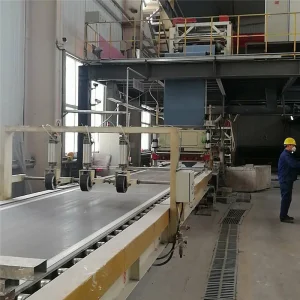
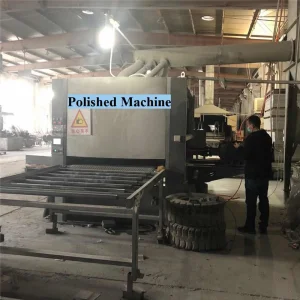
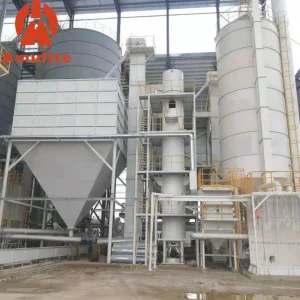
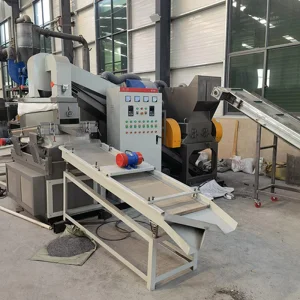
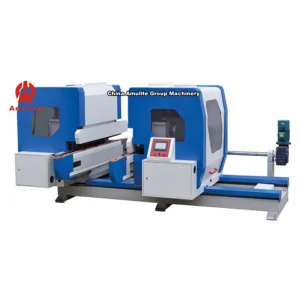
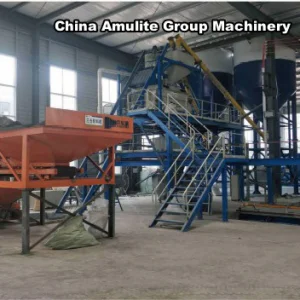
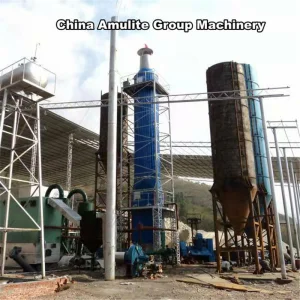
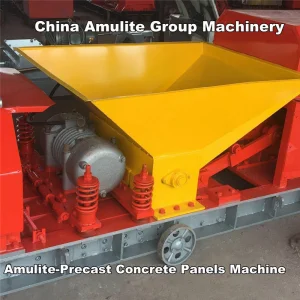
Key technological transformations shaping building material manufacturing across Japan and international industrial corridors.
As the building materials sector shifts toward decarbonization and digital transformation, plant operators in Osaka are integrating intelligent manufacturing paradigms into their production infrastructure. Amulite Group remains at the forefront of these technological innovations:
Modern Amulite production lines incorporate smart sensor arrays across all forming vats, vacuum pumps, autoclaves, and hydraulic systems. By monitoring vibration metrics, thermal fluctuations, and pressure differentials in real-time, operators can predict component wear and schedule preventive maintenance without un-planned downtime.
With Japan aiming for carbon neutrality by 2050, building material manufacturers are substituting standard Portland cement with ground granulated blast-furnace slag (GGBS), fly ash, and silica fume. Amulite’s automated dosing accessories are engineered to handle variable slurry viscosity and aggressive mineral compositions while maintaining high flexural strength.
Water conservation guidelines in Osaka Bay industrial zones require complete recycling of process water. Our advanced clarification centrifuges and multi-tier filtration accessories reclaim 98% of process slurry water, returning clean water back to the Hatschek mixing tanks.
Expert technical insights regarding machine delivery, JIS compliance, installation support, and operational ROI in Kansai.
Amulite production lines are highly scalable, offering annual capacities ranging from 1 million m² for specialized lines up to 30 million m² for high-volume automated complexes. Output volume is determined by forming cylinder counts, sheet width (1300mm–1600mm), autoclave capacity, and automated stacking configurations.
Our engineering teams formulate precision slurry mixing curves and integrate high-pressure hydraulic dewatering units that achieve dry board densities exceeding 1.3 to 1.5 g/cm³. This ensures finished fiber cement and calcium silicate sheets easily meet JIS flexural strength, freeze-thaw, and non-combustibility requirements.
Typical manufacturing lead time is 90 to 150 days depending on plant customization. Ocean freight from our factory port directly to Osaka Port takes approximately 4 to 7 days. Mechanical installation takes 30 to 60 days on-site, followed by 15 to 30 days of trial production and engineer-led training.
Yes. Our senior process engineers create custom 3D CAD plant layouts, civil load diagrams, piping schematics, and electrical single-line drawings tailored to brownfield renovation sites or greenfield plots in Osaka's industrial zones.
We supply a 2-year recommended operational spare parts inventory with every line shipment. Furthermore, our engineers offer 24/7 remote PLC diagnostics and can dispatch field service engineers directly to Kansai facilities whenever emergency support is required.