Engineered to meet Australian WHS silica dust control mandates, AS/NZS electrical safety standards, and high-throughput architectural board demand across Greater Sydney.
The commercial and residential construction sectors across Greater Sydney and New South Wales (NSW) are experiencing a fundamental shift toward Offsite Manufacturing (OSM) and Modern Methods of Construction (MMC). Driven by major infrastructure initiatives—such as the Western Sydney Aerotropolis, Parramatta Light Rail Stage 2, and high-density residential developments in Sydney Olympic Park—the demand for non-combustible, high-precision building elements has reached an unprecedented peak.
Under the strict regulatory updates of the National Construction Code (NCC 2022 / 2026), building envelopes and interior partition systems in Sydney must conform to rigorous non-combustibility requirements (AS 1530.1), structural integrity standards (AS/NZS 1170), and acoustic insulation metrics (Rw + Ctr). Traditional manual cutting methods for dense engineered panels—such as fiber cement boards, calcium silicate substrates, magnesium oxide (MGO) boards, and autoclaved aerated concrete (AAC) blocks—are no longer viable due to high labor overheads, material waste, dimension inaccuracies, and strict SafeWork NSW crystalline silica dust compliance laws.
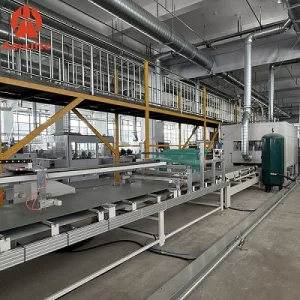
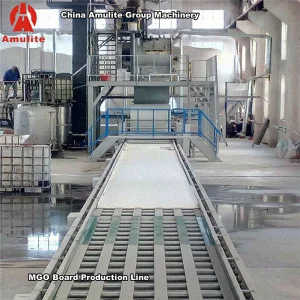
To maintain commercial profitability and operational compliance, leading Sydney building material processors and modular housing fabricators are integrating fully automated four-side edge cutting systems. These high-precision automated systems optimize continuous processing lines, achieving trim tolerances within ±0.2 mm while eliminating manual handling risks and dust emissions.
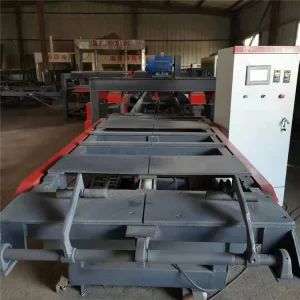
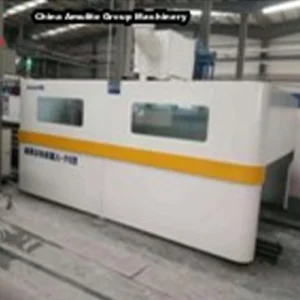
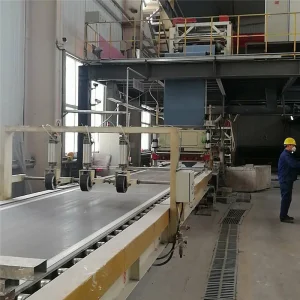
The flagship OEM 1300 II Type Automatic Four Side Edge Cutting Machine System represents a milestone in heavy-duty machinery design for non-metallic sheet processing. Specifically built to process high-density fiber cement, calcium silicate, MGO fireproof boards, and EPS sandwich panels, the system operates through a synchronized, multi-stage mechanical workflow:
Utilizing dual-axis CNC servo motors paired with laser-aligned photoelectric sensor arrays, incoming raw panels are automatically centered, squarified, and aligned before entering the saw station. This guarantees zero edge-slip even when handling boards up to 1300mm wide and 3000mm long.
Equipped with four independently controlled diamond-tipped carbide saw blade assemblies (two longitudinal saws and two transverse saws). The saw spindles operate at rotational speeds up to 6,000 RPM, delivering clean, micro-burr-free cut edges across thicknesses from 4mm to 30mm.
To fully satisfy SafeWork NSW airborne hazardous dust regulations, the cutting station features an integrated shroud housing coupled with high-efficiency cyclone dust ports. Dust particulates are captured at the point of saw blade contact before dispersing into plant atmosphere.
Centralized control is governed by Siemens S7-1500 series PLCs featuring a 12-inch multi-language touch screen interface. Sydney plant operations benefit from real-time Ethernet telemetry, automated recipe loading, and remote diagnostic capabilities.
Globally, the building material machinery sector is undergoing a rapid transition toward digitalized green manufacturing. According to international market intelligence, the global market for fiber cement, AAC, and lightweight drywall panels is projected to grow at a CAGR of 6.2% through 2030. Key macro drivers include decarbonization of concrete production, zero-waste lean manufacturing, and labor automation.
Replacing manual push-table saws with automated continuous 4-side trimming lines increases daily output volume significantly while cutting labor allocation by two-thirds.
Precision CNC optical positioning minimizes border trim width from 25mm down to 8mm, salvaging thousands of square meters of premium board raw materials annually.
Designed with Category 4 emergency safety stops, light curtains, dual-channel safety relays, and compliant local power configurations for seamless Australian approval.
Amulite Group’s fully automatic cutting systems and production line machinery serve diverse sector applications tailored specifically to New South Wales site conditions and build typologies:
Commercial developments in Sydney CBD and North Sydney demand high-density compressed fiber cement (CFC) and MGO cladding boards engineered to withstand wind load shear forces exceeding 2.5 kPa. The 1300 II Automatic Cutting System executes precise edge beveling and groove slotting to allow seamless installation of secret-fix facade bracket systems.
Rapid housing expansions across Blacktown, Penrith, and Badgerys Creek utilize pre-assembled EPS sandwich wall panels and AAC light-weight blocks. Automated high-speed saws trim panel skins flush with internal cementitious cores, ensuring tight joint locking without thermal acoustic leakage.
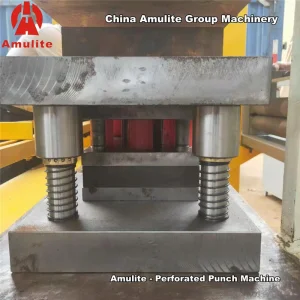
Sydney Metro railway tunnels and underground arterial road systems require specialized perforated acoustic panels and ultra-dense calcium silicate fire linings. Specialized CNC punching combined with automatic peripheral trimming delivers consistent acoustic hole pitch patterns across thousands of panel meters.
Deploying industrial machinery within Australia requires absolute adherence to federal and state safety directives. China Amulite Group provides full-spectrum compliance documentation and technical support tailored to the Australian market:
As building material plants across New South Wales transition toward full Industry 4.0 smart factory integration, Amulite Group’s R&D technology roadmap focuses on three next-generation automation pillars:
High-speed optical camera modules positioned post-cutting scan panel corners and edges in real time. Neural networks detect surface micro-cracks or edge chipping exceeding 0.05mm, automatically diverting non-conforming boards before packaging.
Heavy-load 6-axis articulated robots featuring vacuum cup grippers interface directly with the cutting machine outlet, automatically sorting and stacking finished sheets onto dispatch pallets categorized by size and thickness.
Vibration and thermal sensors mounted on main saw spindles feed real-time operational data to cloud analytical models, predicting blade wear rates and scheduled maintenance intervals to prevent unplanned downtime.
Detailed technical insights for plant managers, project engineers, and procurement directors evaluating automatic board cutting machinery in Sydney and international markets:
The OEM 1300 II Automatic Cutting System is engineered to process sheet widths up to 1,300mm (customizable to 1,600mm) and lengths from 2,400mm up to 3,650mm. It handles material densities ranging from lightweight aerated concrete (500 kg/m³) up to high-density autoclaved fiber cement and calcium silicate panels (1,700 kg/m³) across panel thicknesses of 4mm to 30mm.
The machine integrates localized negative-pressure vacuum shrouds at each saw head, connecting to a heavy-duty pulse-jet dust collector system. Dust particulates generated during cutting are trapped at source, maintaining ambient silica dust levels well below the Australian Workplace Exposure Standard (WEEL) of 0.05 mg/m³ over an 8-hour shift.
Yes. The OEM 1300 II features a modular conveyor bed and standardized Profinet / Ethernet IP communication interfaces. It can function as a standalone off-line cutting cell or seamlessly integrate inline after the autoclave / drying curing tunnel in existing production facilities.
Manufacturing of the complete cutting system takes approximately 45 to 60 days. Ocean freight from our factory port to Port Botany (Sydney) typically requires 14 to 20 days. On-site mechanical installation, electrical connection, and trial commissioning take 10 to 14 days under the direction of our resident field service engineers.
Amulite Group maintains dedicated technical support networks and remote PLC diagnostic links. Standard replacement components (bearings, sensors, pneumatic valves, saw blades) utilize globally available brands (Siemens, Schneider, SMC, SKF), while specialized OEM mechanical parts are dispatched via express air freight within 48 hours.
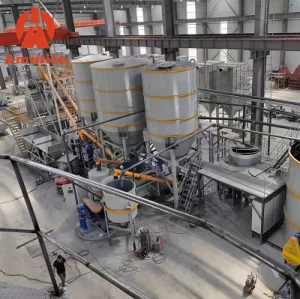
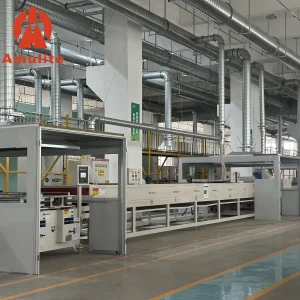
Explore our full range of turnkey manufacturing lines engineered for high-volume output of cement wall panels, AAC blocks, gypsum plasterboards, and specialized coatings.
Contact our process engineering team today to receive a complete technical proposal, factory layout drawing, utility demand analysis, and ROI calculation customized for your local production targets.
Send Inquiry Now