



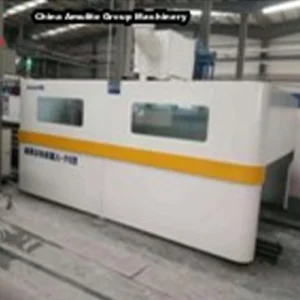
Advanced automated block handling, release agent oiling, and mineral sheet processing systems tailored for Scandinavian manufacturing environments.
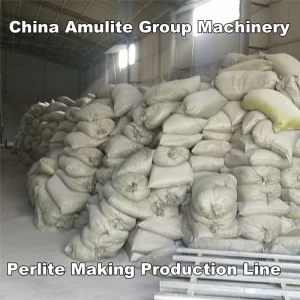
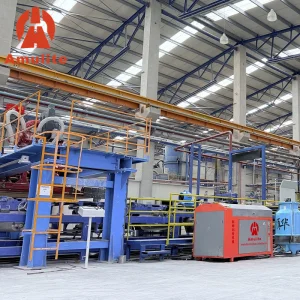
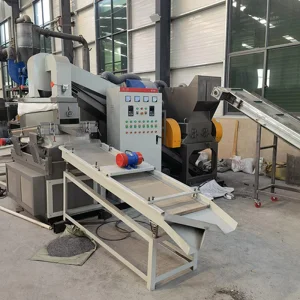
Norway's modern building sector is currently undergoing a profound structural shift driven by stringent energy efficiency directives (such as TEK17 regulations), ambitious zero-carbon targets, and extreme cold-climate performance mandates. Autoclaved Aerated Concrete (AAC) has surfaced as a cornerstone building material across Oslo, Viken, Vestland, and Trøndelag. Offering exceptional thermal insulation ($U$-values exceeding standard modular masonry), structural lightness, and superior fire resistance, AAC blocks are ideal for Nordic architectural frameworks. However, achieving precision dimensions and pristine block surface integrity requires uncompromising manufacturing rigor—specifically during the demoulding and cake-cutting phase.
Historically, manual or non-uniform oil spraying resulted in surface micro-cracking, adhesion degradation, and excessive chemical runoff. The implementation of a Famous AAC Blocks Automatic Oiling System engineered specifically for Norwegian environmental conditions solves these operational friction points. By combining micro-metering servo atomization, closed-loop oil recovery, and sub-zero viscosity compensation, automated oiling machinery establishes a new benchmark for resource-efficient plant automation.
Operating an automated AAC plant in Norway involves navigating distinct climatic and socio-economic variables that do not apply in warmer manufacturing regions:
Information Gain Insight: Precision release agent application is not merely a cosmetic maintenance detail—it directly governs the green-cake cutting geometry. Uniform oil films reduce side-plate friction by up to 82%, preventing micro-shearing when the 4.2-meter AAC cake is rotated and split prior to autoclaving.
Our engineered AAC mould oiling system bridges high-capacity fabrication with smart PLC automation. Designed to accommodate standard 4.2m, 4.8m, and 6.0m mould dimensions, the machine operates through a synchronized 4-stage process:
Optical sensors identify incoming mould frame geometries and side plates, verifying alignment to ±0.1mm before triggering the spray cycle.
High-pressure airless nozzles deliver a micro-thin, uniform oil film (5–12 µm thickness), ensuring zero pooling or dry spots across all inner surfaces.
Integrated suction hoods capture atomized mist, routing unused fluid through HEPA and coalescing filters back into the main supply reservoir.
| Evaluation Parameter | Traditional Manual / Hand Spraying | Amulite Automated System (Norway Edition) | Operational Impact / Advantage |
|---|---|---|---|
| Oil Coating Uniformity | Irregular (15–60 µm film with heavy pooling) | Ultra-Consistent (5–12 µm micro-mist layer) | Eliminates surface pitting & adhesion flaws |
| Annual Oil Consumption | Baseline (100% Volume Usage) | Optimized (55%–60% Total Volume Usage) | Saves 15,000+ Liters of release agent/year |
| Labor Allocation | 2–3 Operators per shift per production line | Fully Automated (0.1 FTE supervision) | Reallocates high-cost Scandinavian labor |
| Environmental Safety | High VOC emissions, floor spill hazards | Zero airborne misting, closed filtration | Complies with ISO 14001 & TEK17 mandates |
| Mould Demoulding Defect Rate | 3.5% – 5.0% damaged block edges | < 0.2% edge erosion or fracture | Dramatically increases usable factory yield |
Procuring heavy industrial building material machinery requires a delicate balance between fiscal responsibility, structural durability, and localized after-sales compliance. China Amulite Group integrates heavy-industry steel fabrication with international electrical engineering standards to deliver turnkey plant setups across Northern Europe.
As the construction industry transitions toward fully digitalized supply chains, AAC block plants in Skien, Drammen, and Kristiansand are integrating artificial intelligence into their batching and demoulding phases. Modern oiling systems are now fitted with vision-guided AI camera arrays that dynamically evaluate mould cleanliness before spraying. If residual concrete slurry is detected on a side plate, the system automatically triggers localized high-pressure air jetting prior to oil application.
Simultaneously, traditional petroleum-based release fluids are rapidly being replaced by synthetic bio-ester fluids formulated from renewable rapeseed oil. Our automatic oiling system features specialized temperature and pressure regulation curves calibrated for these high-viscosity green fluids, guaranteeing smooth demoulding without compromising environmental compliance.
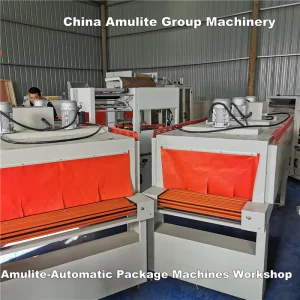
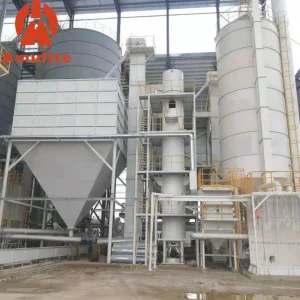
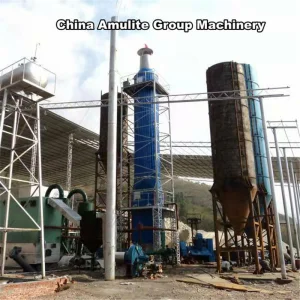
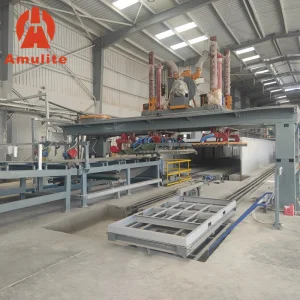
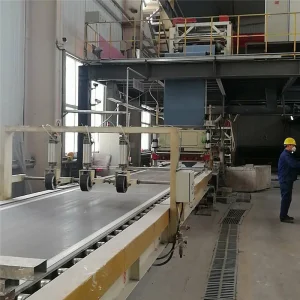
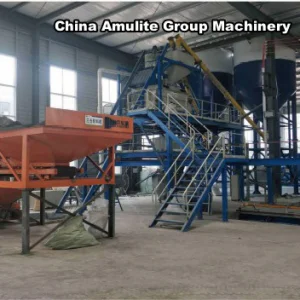
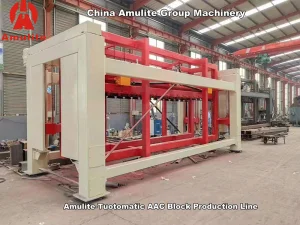
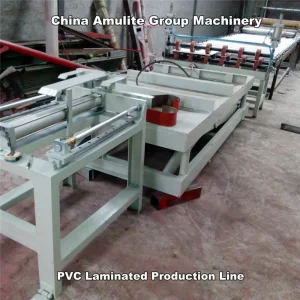
Explore our extended range of turnkey machinery, supporting AAC plants, board manufacturing, packaging, and raw material processing.
Addressing engineering, installation, and compliance inquiries for Norwegian AAC plant investors.
Consult with our senior process engineers today for a tailored technical proposal, ROI analysis, and full equipment layout custom-designed for your factory specifications.
Send Inquiry Now