Engineered for high thermal performance under Argentina’s IRAM 11605 standards, offering high industrial ROI, automated precision batching, and reduced labor requirements.
Argentina's construction industry is experiencing a structural evolution. Driven by strict energy efficiency legislation, rising thermal performance standards (IRAM 11605 and Ley 13.059 of Buenos Aires Province), and high inflation rates, property developers, structural engineers, and contractors are abandoning heavy, thermally inefficient traditional red hollow clay bricks (ladrillos huecos) in favor of high-precision Autoclaved Aerated Concrete (AAC) blocks and reinforced wall panels.
AAC materials offer a unique combination of structural light weight (density classes ranging from D300 to D600 kg/m³), exceptional thermal insulation ($\lambda \le 0.08 - 0.14 \text{ W/m}\cdot\text{K}$), and high fire resistance (A1 non-combustible up to 4 hours under EN 13501-1 standards). In key metropolitan zones including Gran Buenos Aires (AMBA), Córdoba, Rosario, and Mendoza, building envelope designs require superior envelope performance to reduce seasonal air conditioning and heating energy demand.
Furthermore, in seismic regions such as Mendoza, San Juan, and the Andean provinces regulated under CIRSOC 103, reducing structural dead loads by up to 65% significantly decreases inertial earthquake forces on concrete frames and foundations. This leads to substantial savings in steel rebar and structural concrete volumes. China's turnkey automatic AAC block production lines provide Argentine manufacturers with a cost-effective path to local industrial independence. By establishing local manufacturing capacity, companies can protect capital investments, utilize local Argentine silica sand, lime, and gypsum, and supply high-demand construction materials throughout the Mercosur region.
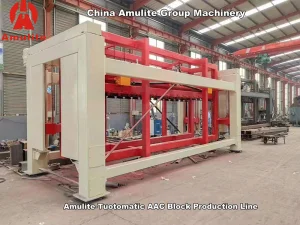
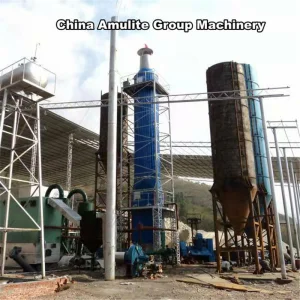
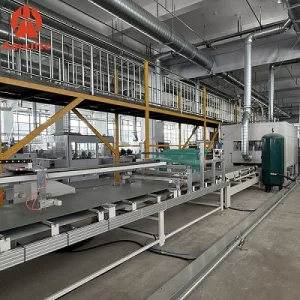
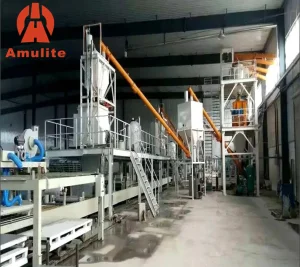
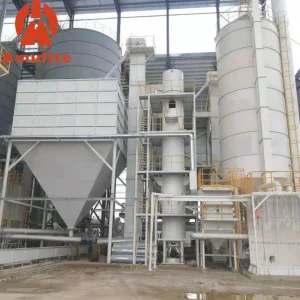
Our automatic AAC block production lines integrate SCADA-PLC centralized controls, high-accuracy raw material dosing, dynamic hydrothermal curing, and precision wire-cutting systems.
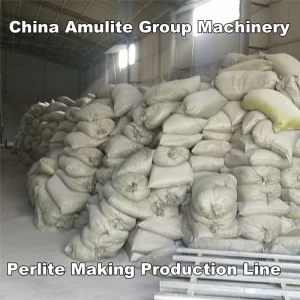
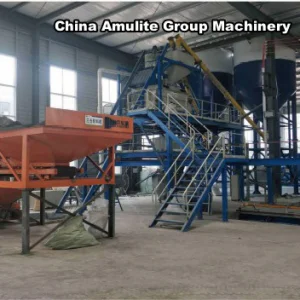
Silica sand slurry, quicklime, cement, gypsum, and aluminum powder expansion agent are weighed using micro-processor controlled load cells with $\pm 0.1\%$ weighing precision. High-shear slurry mixers ensure homogenous aeration and consistent bubble formation.
Cast moulds enter a climate-controlled pre-curing chamber maintaining $40^\circ\text{C} - 45^\circ\text{C}$ temperature and controlled humidity. Hydrogen gas generated by the reaction between aluminum powder and calcium hydroxide forms millions of micro-air pores.
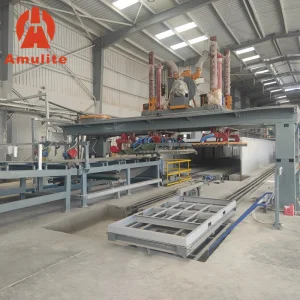
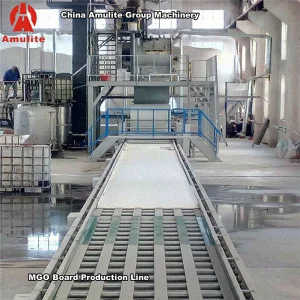
The semi-cured green cake is demoulded by a 90-degree tilting crane and placed onto the cutting car. High-tensile steel wires perform longitudinal and horizontal cutting simultaneously, maintaining block dimensional accuracy within $\pm 1.0\text{ mm}$.
Cakes enter heavy-duty pressure vessel autoclaves operating at $1.2 - 1.3\text{ MPa}$ pressure and $190^\circ\text{C} - 200^\circ\text{C}$ saturated steam temperature for 10 to 12 hours. This process initiates the chemical reaction forming Tobermorite crystals ($\text{C}_5\text{S}_6\text{H}_5$).
Post-autoclave, blocks pass through an automatic green cake separator to prevent adhesion. Finished blocks are automatically stacked on wooden pallets, wrapped in protective stretch film, and prepared for logistics transport.
Siemens S7-1500 PLCs linked with IoT gateways enable real-time monitoring of steam consumption, cycle times, raw material usage, and preventative maintenance metrics from our central support hub in China.
Our engineering team optimizes AAC slurry formulations to match locally available Argentine raw materials, ensuring high compressive strength while minimizing production costs.
Achieving compressive strengths between $3.5\text{ MPa}$ and $7.5\text{ MPa}$ for D500 and D600 block grades depends on maintaining the optimal calcium-to-silica ($\text{CaO}/\text{SiO}_2$) molar ratio ($0.8 - 1.0$). Below is the standard material specification adapted for Argentine river sand (Río Paraná / Río de la Plata deposits) and local quicklime:
| Raw Material | Mass Percentage (%) | Chemical Specification & Quality Requirement | Local Argentine Supply Sources |
|---|---|---|---|
| Silica Sand / Fly Ash | 65% – 70% | $\text{SiO}_2 > 85\%$, Clay Content $< 1.5\%$, Fineness $< 15\%$ residue on $200\text{-mesh}$ screen | Río Paraná Sand Dredging, Entre Ríos, Santa Fe deposits |
| Quicklime (Cal Viva) | 18% – 22% | Active $\text{CaO} > 75\% - 85\%$, Slaking speed 10–15 min, Temperature rise $> 60^\circ\text{C}$ | Córdoba & San Juan Limestone Quarries |
| Portland Cement | 6% – 10% | Grade CPC 40 / CPN 40, High early strength, $\text{C}_3\text{S} > 55\%$ | Local Argentine Cement Plants (Loma Negra, Holcim Argentina) |
| Gypsum (Yeso) | 3% – 5% | $\text{CaSO}_4\cdot2\text{H}_2\text{O} > 80\%$, Fineness $< 10\%$ residue on $200\text{-mesh}$ | Neuquén Basin & Mendoza Natural Gypsum Deposits |
| Aluminum Powder Paste | 0.07% – 0.09% | Active Al content $> 85\%$, Water-solubility grade, Solid content $70\%$ | Certified Industrial Chemical Distributors in Argentina |
During the 12-hour high-pressure steam autoclaving cycle at $190^\circ\text{C}$, the micro-crystalline silica ($\text{SiO}_2$) reacts with hydrated lime ($\text{Ca(OH)}_2$) under saturated moisture conditions to form 11Å Tobermorite crystals ($\text{Ca}_5\text{Si}_6\text{O}_{16}(\text{OH})_2\cdot4\text{H}_2\text{O}$). This crystalline lattice provides AAC blocks with high structural dimensional stability, minimal drying shrinkage ($< 0.2\text{ mm/m}$), and superior load-bearing capability.
In Autonomous City of Buenos Aires (CABA) and Rosario, high-density residential towers require high acoustic isolation between apartments ($R'_w + C \ge 45\text{ dB}$). Thin-bed jointed AAC interior partitions reduce acoustic transmission while accelerating interior installation speeds by up to 300% compared to traditional plasterwork.
In southern provinces (Bariloche, Neuquén, Tierra del Fuego), sub-zero winter temperatures mandate high building envelope insulation under Zone 5 & 6 thermal standards. AAC external walls with $200\text{ mm}$ thickness achieve $U$-values down to $0.42\text{ W/m}^2\cdot\text{K}$ without requiring additional synthetic insulation layers.
Mining camps across Jujuy, Salta, and Catamarca demand fast, fire-rated structural housing at high altitudes. Reinforced AAC floor and wall panels provide pre-fabricated structural modules with high thermal mass, maintaining comfortable interior temperatures amidst severe desert diurnal temperature swings.
Lower CAPEX, heavy industrial manufacturing capacity, and integrated international shipping logistics ensure rapid plant deployment and reliable operational startup.
Compared to European equipment manufacturers, China Amulite Group provides turnkey AAC machinery plants with lower capital investment costs, high component reliability (utilizing Siemens, Schneider, and ABB components), and shorter payback periods.
Direct maritime routes from Ningbo, Shanghai, and Tianjin ports to the Port of Buenos Aires and Port of Zárate allow full breakdown heavy machinery transport via flat-rack and open-top containers, avoiding transit delays.
Complete technical documentation, electrical schematics designed to 380V/50Hz specs, international pressure vessel safety certifications (ISO/CE/ASME autoclaves), and Mercosur custom clearance declarations are fully provided.
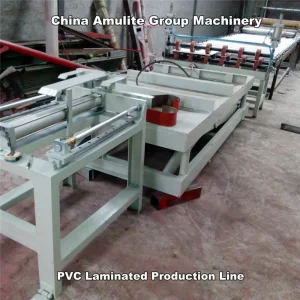
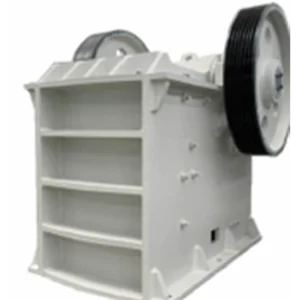
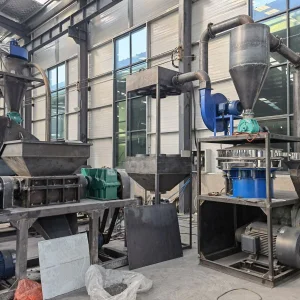
Integrated industrial equipment lines designed to complement your AAC plant investments with pre-cast panel production, insulation systems, and crushing machinery.
Technical, economic, and logistical queries answered by our senior EPC engineering director.
Consult with our senior technical engineering team today. Get a turnkey plant proposal including detailed equipment lists, 3D factory layout drawings, local material formulations, and financial ROI models.
Send Inquiry Now