The worldwide construction sector is undergoing a structural paradigm shift towards offsite modular manufacturing, decarbonization, and ultra-lightweight structural materials. Modern Fiber Cement Sandwich Wall Boards (featuring high-density calcium silicate or fiber cement skins paired with lightweight core mixes of expanded polystyrene beads, cement, fly ash, and chemical foaming agents) represent the pinnacle of modern wall engineering.
Traditional masonry is rapidly being replaced by precast structural sandwich panels. Industrial automation allows OEMs to manufacture panels with integrated tongue-and-groove male/female locking joints, driving rapid deployment in commercial high-rises and residential developments.
With stringent net-zero energy building codes in Europe, North America, and the Middle East, composite sandwich panels provide superior thermal insulation (K-value ≤ 0.045 W/m·K) and acoustic dampening (up to 45dB sound transmission loss).
State-of-the-art manufacturing lines actively absorb industrial by-products such as fly ash, bottom slag, and recycled EPS fragments into the slurry formulation, significantly mitigating landfill impact and reducing total raw material expenditure.
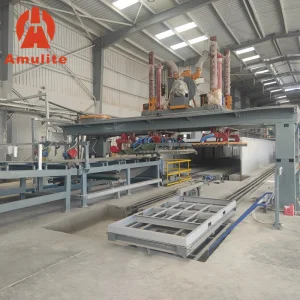
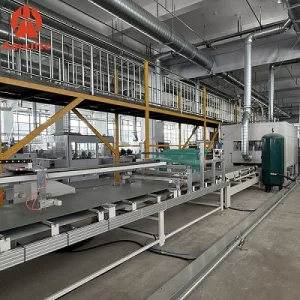
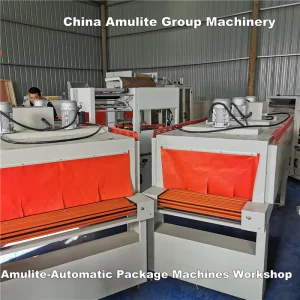
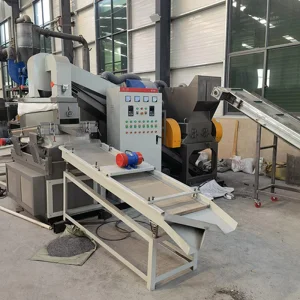
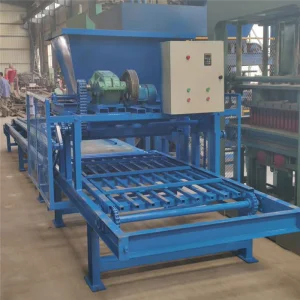
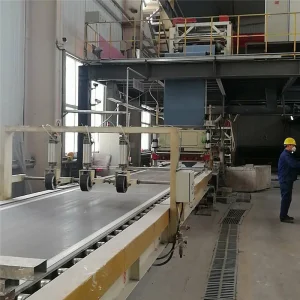
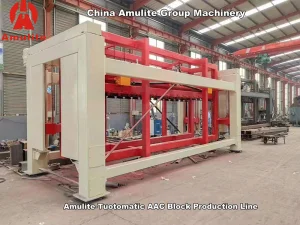
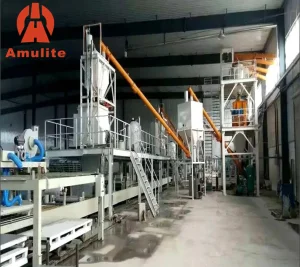
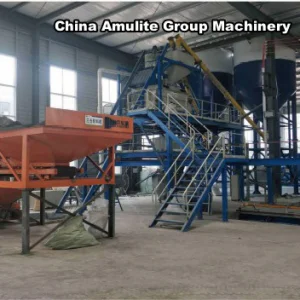
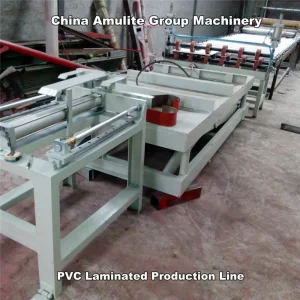
Our OEM Fiber Cement Sandwich Wall Board Production Lines leverage continuous high-pressure hydraulic vertical or horizontal mould cars, closed-loop PLC metering, and automated demoulding systems. Below is an exhaustive breakdown of the technical process flow.
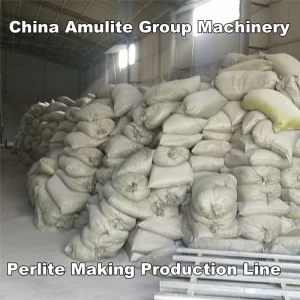
Computerized loss-in-weight batching systems precisely measure cement, silica flour, expanded EPS beads, water, and specialized early-strength admixtures. Ultra-high shear planetary mixers guarantee uniform bubble dispersion and zero EPS bead segregation during slurry injection.
Robotic manipulators equipped with vacuum suction cups position 4.5mm–6mm fiber cement or calcium silicate boards onto precision-machined vertical mould cars. Double-sided alignment sensors ensure 0.5mm strict positioning accuracy.
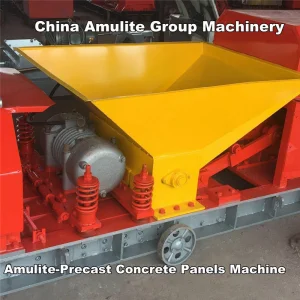
Slurry pumps inject the lightweight foam-cement-EPS matrix directly into the hollow cavities between the two outer boards. Synchronized high-frequency pneumatic vibrators remove micro-voids, ensuring solid core integrity and mechanical bond strength ≥ 1.5 MPa.
After rapid thermal setting in temperature-controlled curing chambers, mould cars undergo automatic hydraulic turning. The demoulded panels pass through dynamic multi-blade milling machines to carve precise male/female side grooves for fast site joining.
| Technical Parameter | Standard Configuration | Heavy-Duty Automated Line | Industry Compliance Standards |
|---|---|---|---|
| Annual Production Output | 500,000 m² / Year | 2,000,000 m² / Year | ISO 9001 / CE Certified |
| Panel Length & Width | 2270 / 2440 / 3000 mm × 610 mm | Fully Customizable up to 3600 mm | GB/T 23451-2023 / ASTM C1298 |
| Panel Thickness Range | 60 / 75 / 90 / 100 / 120 / 150 / 200 mm | 60 mm to 250 mm Heavy Partition | EN 15283-2 Structural Criteria |
| Core Density Class | 550 – 650 kg/m³ | 450 – 800 kg/m³ Adjustable | Ultra-Lightweight Specification |
| Compressive Strength | ≥ 3.5 MPa | ≥ 5.0 MPa (High Density Formulation) | ASTM C473 Standard |
| Overall Installed Power | 120 kW – 180 kW | 250 kW (With Fully Automated Robotics) | Energy Star Industrial Standard |
Partnering directly with a leading Chinese OEM manufacturer delivers unmatched capital expenditure efficiency, rapid engineering customization, and robust industrial supply chain resilience.
Our modern manufacturing facilities feature 100,000 m² of dedicated heavy workshop space equipped with large-scale CNC gantry milling machines, laser plate cutters, and automated robotic welding arms, ensuring sub-millimeter structural chassis tolerance.
To eliminate international downtime, all hydraulic drives, electrical control units, and PLC software modules incorporate world-class components from Siemens, Schneider Electric, Omron, and Rexroth.
From initial geological plant layout drawings and raw material laboratory formulation testing to overseas site installation supervision and operator training, we deliver turnkey solutions backed by strict SLA guarantees.
Institutional buyers, EPC contractors, and building material manufacturers evaluate production lines based on long-term Total Cost of Ownership (TCO), Operational Overall Equipment Effectiveness (OEE), and waste minimization.
Our continuous automatic batching technology reduces manual labor dependency by 65%. A complete line producing 1,000,000 m² per year requires only 8 to 10 operators per shift, drastically lowering labor expenses in high-wage regions.
Based on global market averages, fiber cement sandwich wall boards yield a gross margin between 35% and 50%. A mid-scale plant operating at 70% capacity typically amortizes initial capital expenditure within 14 to 18 months of commissioning.
Fiber cement sandwich wall boards engineered by our production equipment are deployed in structural and partition applications across over 60 countries.
Replaces traditional hollow concrete blocks in commercial skyscrapers and hotels. The hollow core tongue-and-groove joint allows easy routing of electrical conduits and plumbing without wall chasing.
Ideal for rapid-assembly villa projects and social housing initiatives. Pre-cut panels lock into structural steel frames, resisting seismic forces up to 8.5 magnitude.
High-density fiber cement face sheets combined with expanded polystyrene cores deliver excellent insulation and moisture resistance, making them ideal for logistics warehouses and cold storage perimeter walls.
In-depth technical answers provided by our Chief Chemical and Mechanical Systems Engineers.