Industry 4.0 Hydration Engineering

High-Quality Hatschek Calcium Silicate Board Equipment Manufacturers & Supplier

Next-Generation Wet-Forming Technology, High-Pressure Autoclave Hydrothermal Synthesis & Turnkey Building Material Machinery Engineering Solutions.

Primary Machinery Portfolio

High-Efficiency Production Equipment Matrix

Engineered for maximum operational uptime, exact dimensional control, and low energy consumption per square meter produced.

Gypsum Powder Production Line Supplier

Gypsum Powder Production Line Equipment & Systems

Explore Line Specs
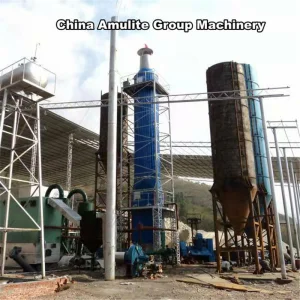
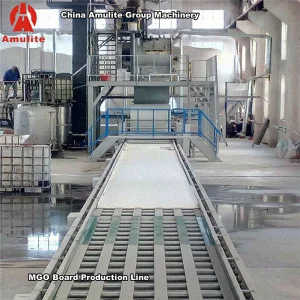
MGO Board Production Line Machinery

OEM Amulite Group MGO Board Production Machinery

Explore Line Specs
Flexible Clay Ceramic Tile Production Line

Flexible Clay Ceramic Tile Manufacturing Machinery

Explore Line Specs
Lithium Battery Recycling Equipment

Industrial Lithium Battery Recycling & Processing Line

Explore Line Specs
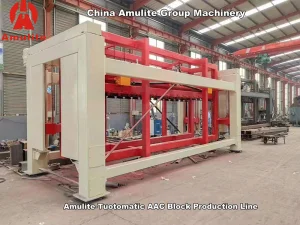
AAC Block Production Line

High-Quality Automatic AAC Block Production Line

Explore Line Specs
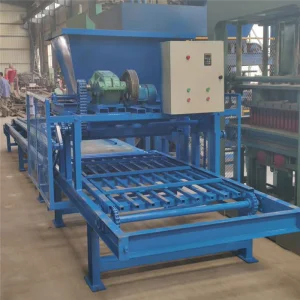
Automatic Bricks Making Production Line

Automatic Concrete & Fly Ash Brick Making Machinery

Explore Line Specs
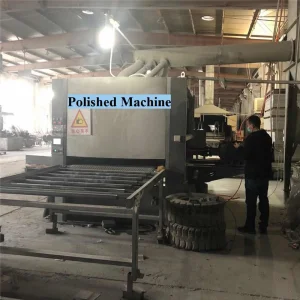
Single Face Polished Machine

High-Precision Single Face Board Polishing Machine

Explore Line Specs
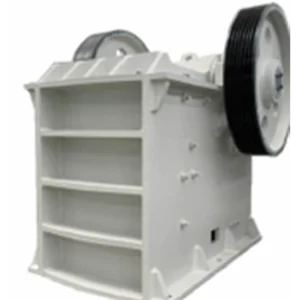
Stone Hammer Crusher

Euro Series Heavy-Duty Jaw & Hammer Crusher

Explore Line Specs
Industry White Paper

Engineering Principles of Modern Hatschek Calcium Silicate Board Production

An authoritative technical breakdown of wet-forming slurry filtration, hydrothermal reaction kinetics, and automated mechanical execution in non-asbestos building board plants.

The Evolution from Traditional Fiber Cement to High-Density Calcium Silicate

The production of modern Calcium Silicate Boards (CSB) represents one of the most sophisticated chemical and mechanical engineering processes in the non-metallic building materials sector. Unlike basic air-cured fiber cement sheets, calcium silicate boards rely on a precise hydrothermal synthesis reaction inside high-pressure autoclaves to form Tobermorite crystal matrixes ($5CaO \cdot 6SiO_2 \cdot 5H_2O$).

As a leading Hatschek Calcium Silicate Board Equipment Manufacturer and Supplier, China Amulite Group integrates heavy machinery precision with industrial automation. The core of this system is the refined Hatschek Wet-Forming Process, which utilizes multiple mesh-covered forming cylinders submerged in agitated slurry vats. Slurry consisting of fine silica quartz powder, unslaked lime (CaO), Portland cement, and reinforcing cellulose fibers is continuous filtered to create ultra-thin film layers ($0.2\text{ mm} - 0.3\text{ mm}$ per rotation) onto a running felt belt under high vacuum dewatering.

These microscopic film layers are continuously wound around a forming drum until the desired board thickness ($4\text{ mm} - 30\text{ mm}$) is reached. The laminated green sheet is then subjected to pre-curing, high-tonnage hydraulic pressing (up to 10,000 tons for high-density boards), and 12-hour high-pressure saturated steam autoclaving at 180°C - 190°C.

Key Hydrothermal Reaction Formula

5Ca(OH)₂ + 6SiO₂ → 5CaO·6SiO₂·5H₂O
(Crystalline Tobermorite Phase under 1.0 - 1.3 MPa Steam)
  • Lime Reactivity: Active $CaO \ge 85\%$, Slaking speed < 2 min.
  • Silica Fineness: Quartz powder Blaine surface area > 3500 cm²/g ($SiO_2 \ge 90\%$).
  • Cellulose Fiber: Unbleached Kraft Pulp, Schopper-Riegler freeness 50°-65° SR.
  • Autoclave Environment: Saturated steam at 185°C, pressure 1.1 - 1.25 MPa.
Mechanical Architecture

5-Stage System Process Engineering

From raw material dosing to final automated stacking, explore how our complete turnkey Hatschek lines achieve operational efficiency.

01
Raw Material Dosing & Slurry Prep
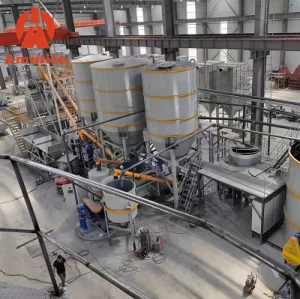
High-shear hydrapulpers disperse cellulose pulp into microscopic fibrils. Quartz sand, lime, and cement are weighed via micro-loss feeders and mixed into a homogeneous slurry ($15-20\%$ solid concentration).
02
Hatschek Vat Sheet Accumulation
3 to 6 stainless steel mesh cylinder vats continuously filter slurry onto a running high-tension felt belt. High-vacuum dewatering boxes strip excess moisture before reaching the forming drum.
03
Automated Cutting & Stacking
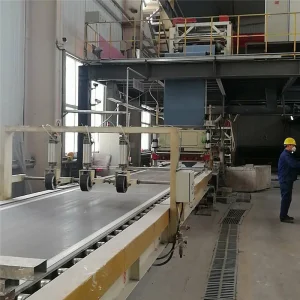
A flying rotary knife cuts the wet green sheet to exact length. Synchronized vacuum stackers transfer wet sheets onto stainless steel template plates with millimeter-level precision.
04
Hydraulic Press & Autoclaving
High-density boards undergo 7,000–10,000 ton hydraulic pressing. Placed inside heavy autoclaves for 10-14 hours under saturated steam to complete Tobermorite phase transformation.
05
Drying, Sanding & Profiling
Multi-deck energy-saving dryers reduce moisture below 10%. Heavy-duty double-sided sanders and edge trimming machines calibrate board thickness to ±0.2mm tolerance.
Competitive Advantage

Why Global Infrastructure Projects Choose China Manufacturers

China Amulite Group brings together heavy engineering capacity, complete supply-chain integration, and world-class automated control systems.

Heavy Mechanical Fabricating Base

Our 100,000 m² workshop houses heavy CNC floor-type boring machines, large lathe turning centers for 1,600mm forming drums, and robotic welding stations. Every autoclave and frame is stress-relieved and non-destructively tested in-house.

Formulation Customization for Local Raw Materials

We don't force rigid raw material requirements. Our process chemical engineers test your local silica sand, lime, cement, and alternative fibers (such as fly ash or recycled paper pulp) to formulate an optimal mix ratio that minimizes raw material CAPEX.

Industry 4.0 Siemens SCADA Architecture

Equipped with Siemens S7-1500 PLC control, Profinet communication networks, closed-loop vacuum regulation, real-time board weight tracking, and remote cloud diagnostic interface for instant global technical support.

100,000
m² Production Facility
200+
Turnkey Lines Built
60+
Global Export Countries
±0.15
mm Thickness Tolerance
Engineering Parameters

Turnkey Plant Capacity & Equipment Technical Data

Standard plant configurations for calcium silicate and fiber cement production lines engineered by China Amulite Group.

Plant Capacity (Annual) Forming Vat Configuration Sheet Width / Length Board Thickness Range Autoclave Units Required Installed Electrical Load
3,000,000 m² / Year 3 Cylinder Vats (Hatschek) 1220 mm × 2440 mm 4 mm – 20 mm 2 Units (Φ2.8m × 31m) ~ 650 kW
5,000,000 m² / Year 4 Cylinder Vats (Hatschek) 1220 mm × 2440 / 3050 mm 4 mm – 25 mm 3 Units (Φ2.8m × 31m) ~ 980 kW
8,000,000 m² / Year 5 Cylinder Vats (Hatschek) 1220 mm × 2440 / 3050 mm 4 mm – 30 mm 4 Units (Φ2.8m × 35m) ~ 1,450 kW
10,000,000+ m² / Year 6 Cylinder High-Speed Line 1220 mm × 2440 / 3660 mm 4 mm – 30 mm 5 Units (Φ2.8m × 38m) ~ 1,850 kW
Technology Trends

Future Trends in Non-Asbestos Calcium Silicate Board Manufacturing

How modern environmental regulations, green building standards, and energy costs are shaping equipment design.

100% Non-Asbestos Cellulose Matrix Shift

Global bans on chrysotile asbestos have accelerated the demand for high-freeness bleached/unbleached kraft pulp combined with synthetic matrix fibers (such as PVA or PP fibers). Amulite's Hatschek vat systems are designed with high-torque agitators to prevent fiber clumping and ensure homogeneous distribution.

Energy-Saving Steam Heat Recirculation

Autoclave steam costs account for over 35% of total plant OPEX. Our new generation autoclave systems incorporate automated steam-transfer piping loops. Waste steam from one finished autoclave vessel is transferred into a newly loaded vessel, reducing overall thermal energy consumption by 22% - 28%.

Ultra-Lightweight Board Density Engineering

Demand for indoor acoustic ceiling boards and fireproof partition linings requires low-density boards ($0.8 - 1.0\text{ g/cm}^3$). Amulite machinery integrates perlite/mica micro-dosing systems into the wet slurry phase to reduce board weight while retaining Class A1 fire rating integrity.

End-Use Applications

Global Application Scenarios & Macro Building Solutions

Calcium silicate boards produced by Amulite Hatschek machinery serve high-grade architectural, commercial, and industrial markets worldwide.

Commercial High-Rise Fireproof Partitions

Medium-density calcium silicate boards ($1.1 - 1.3\text{ g/cm}^3$) are ideal for 2-hour to 4-hour fire-rated dry wall partition systems in office towers, hospitals, and hotels. Excellent screw-holding power and total resistance to moisture degradation.

Exterior Ventilated Rain-Screen Facades

High-density compressed calcium silicate boards ($1.4 - 1.7\text{ g/cm}^3$) subjected to 10,000-ton hydraulic pressing deliver high flexural strength (> 16 MPa), low water absorption (< 25%), and extreme freeze-thaw durability for exterior building envelopes.

Cleanroom & Industrial Duct System Linings

100% fiber-reinforced non-combustible panels engineered for cleanroom wall systems, pharmaceutical facilities, subway tunnel passive fire protection, and high-temperature industrial duct isolation.

Investment Guide

Procurement Framework for Turnkey Board Machinery

Essential factors industrial investors and EPC contractors must evaluate before selecting a Hatschek calcium silicate board equipment partner.

1. Cylindrical Mold Precision

Inquire about the dynamic balancing and machining tolerance of the forming cylinders. Concentricity must be within ±0.05mm to ensure consistent web thickness and prevent premature felt wear.

2. Vacuum System Capacity

Evaluate the water-ring vacuum pump staging. Multi-chamber dewatering boxes with automatic vacuum control ensure moisture content drops from 70% to under 28% prior to green sheet wrapping.

3. Pressure Vessel Certification

Ensure autoclaves are manufactured according to ASME Section VIII Div 1 or European PED (2014/68/EU) standards, complete with quick-opening safety interlock doors.

Technical Knowledge Base

Frequently Asked Questions (FAQ)

In-depth technical answers addressing operational, mechanical, and material queries from plant managers and global procurement teams.

What is the fundamental difference between Hatschek Fiber Cement and Calcium Silicate Board Equipment?
While both processes use the Hatschek wet-forming method for sheet accumulation, the core difference lies in raw material chemistry and curing technology. Fiber cement boards rely mainly on Portland cement hydration and are typically air-cured or steam-cured at ambient pressure. Calcium silicate boards utilize high ratio silica quartz sand ($SiO_2$) and reactive quicklime ($CaO$). They require high-pressure autoclaving ($1.1-1.3\text{ MPa}$ at 190°C) to induce a chemical reaction that forms crystalline Tobermorite. This gives calcium silicate superior fire endurance (A1 rating), lower dry shrinkage, and zero warp under high-moisture conditions.
What raw material purity is required for reliable calcium silicate board production?
For optimal crystalline synthesis: 1. Quartz Silica Sand: $SiO_2$ content should be $\ge 90\%$, ground to a fineness where less than 5% remains on a 200-mesh sieve. 2. Quicklime: Active $CaO$ content should be $\ge 85\%$, with a slaking temperature rise time of less than 3 minutes. 3. Portland Cement: Grade 42.5 or higher Ordinary Portland Cement (OPC). 4. Cellulose Fiber: 100% unbleached kraft pulp with freeness adjusted to 45°-60° SR. Amulite's process lab assists customers with full local material testing.
How does China Amulite Group ensure board thickness uniformity across large sheets?
Thickness uniformity is governed by three primary sub-systems: first, our slurry vat agitators maintain consistent fiber suspension; second, laser-guided sensor feedback controls the felt speed and roll nip pressure on the forming drum; third, high-precision automated thickness measuring gauges automatically trigger the flying cutter once the target sheet thickness (e.g., 6.0mm ±0.1mm) is achieved.
What is the typical ROI payback period for an Amulite turnkey plant?
Depending on local building material market prices, local raw material costs, and fuel prices (steam generation), a standard 5 million m²/year Hatschek Calcium Silicate Board line typically reaches full investment payback within 18 to 30 months of commercial operation. Amulite provides custom feasibility reports and ROI calculation spreadsheets during project evaluation.
What overseas installation and commissioning services do you provide?
China Amulite Group dispatches experienced teams of mechanical installation engineers, electrical PLC technicians, and chemical process experts to your job site. We handle civil foundation checking, mechanical assembly, wiring, dry testing, wet trial production, raw material formulation tuning, and local workforce technical training until your team can operate the plant independently.
Auxiliary & Specialized Machinery Matrix

Complementary Plant Equipment & Processing Machinery

Full-line machinery solutions for non-metallic building panel production, recycling, and material processing.

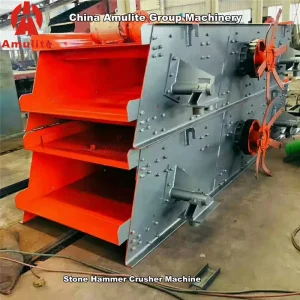
OEM Stone Hammer Crusher Machine

Heavy-Duty Rock & Stone Hammer Crusher Machine

Explore Line Specs
XPS Insulation Tile Backer Line

XPS Insulation Tile Backer Board Production Line

Explore Line Specs
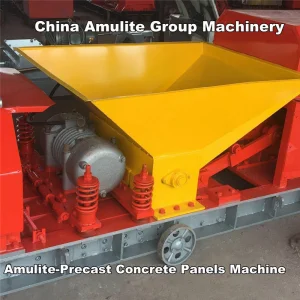
Precast Concrete Products Machinery

Precast Concrete Element & Panel Machinery Line

Explore Line Specs
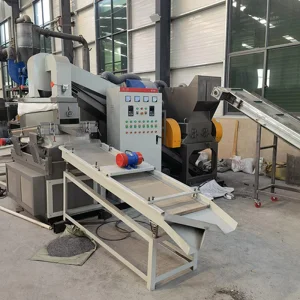
Copper Wire Recycling Machine

Automatic Scrap Copper Wire Granulator Recycling System

Explore Line Specs
Gypsum Board Production Line

High-Speed Paper-Faced Gypsum Plasterboard Line

Explore Line Specs
EPS Sandwich Wall Panels Line

Lightweight EPS Sandwich Cement Wall Panel Machinery

Explore Line Specs
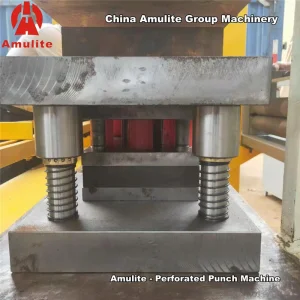
Perforated Punch Machine System

Acoustic Board Perforated Punching Machine System

Explore Line Specs
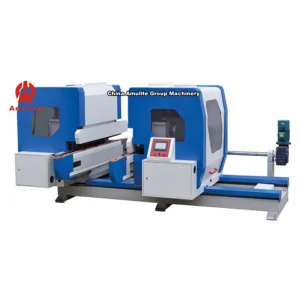
AM806BH-10 Machine Parameters

High-Performance AM806BH-10 Board Finishing System

Explore Line Specs
Turnkey Engineering Partner

Request a Customized Plant Proposal & Technical Blueprint

Submit your target annual board capacity, desired board dimensions, and raw material availability. Our engineering director will deliver a complete machinery list, civil layout drawing, and consumption analysis within 24 hours.

Contact Senior Project Engineer