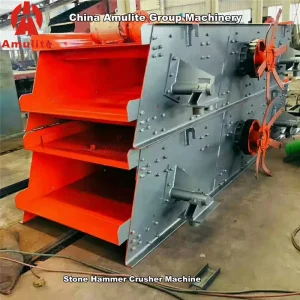
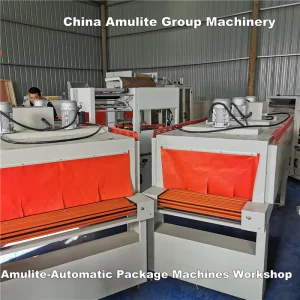
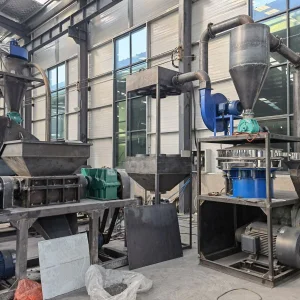
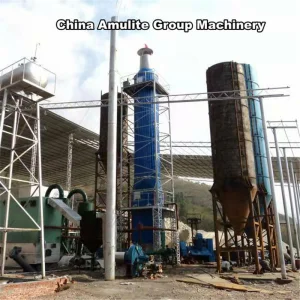
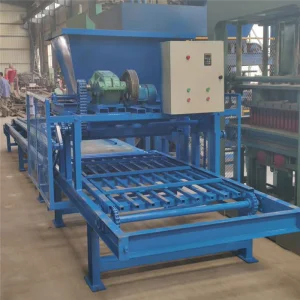
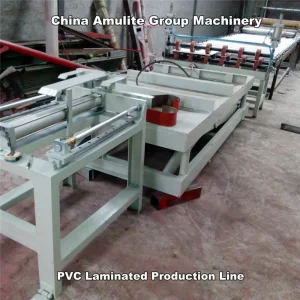
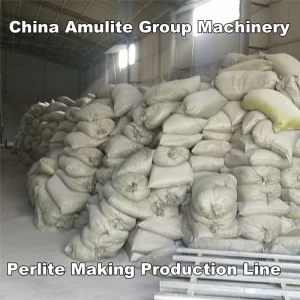
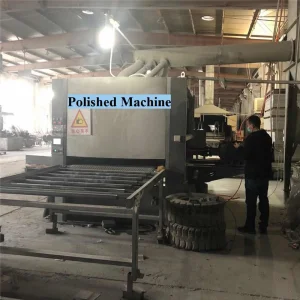
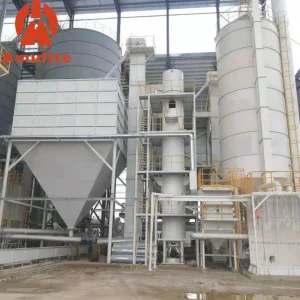
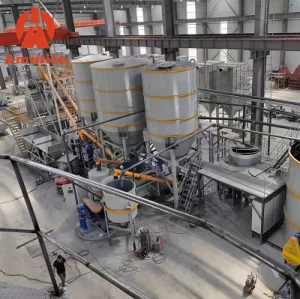
Explore our flagship heavy-duty manufacturing plant configurations, processing equipment, and specialized automated lines engineered for global infrastructure standards.
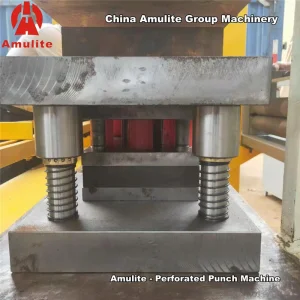
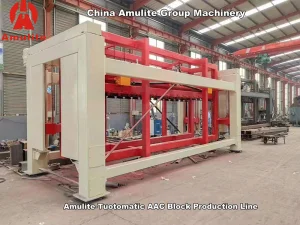
Analyzing the global paradigm shift toward industrialized building systems (IBS), carbon-neutral envelope materials, and automated factory machinery manufacturing.
The global construction equipment market is experiencing an unprecedented structural transition toward Industrialized Building Systems (IBS) and prefabricated off-site manufacturing. Driven by aggressive international net-zero initiatives, severe skilled-labor shortages, and escalating urban housing requirements, modern real estate developers and infrastructure turnkey contractors no longer view traditional brick-and-mortar masonry as commercially viable. Central to this global industrial metamorphosis is the Expanded Polystyrene (EPS) Sandwich Cement Wall Panel Machine—an advanced industrial production line that combines lightweight aggregate chemistry, continuous structural lamination, and automated thermal curing.
From the booming metropolitan expansions across Southeast Asia and the Middle East to modern energy-retrofit directives within the European Union and Latin America, high-capacity EPS wall panel manufacturing facilities represent a foundational industrial asset. Modern EPS panels consist of high-density fiber cement or calcium silicate surface boards encapsulating a core matrix of Ordinary Portland Cement (OPC), expanded polystyrene beads, fly ash, and proprietary chemical admixtures. The resulting composite element exhibits extraordinary flexural strength, superior acoustic attenuation (STC ratings exceeding 45 dB), and A-grade fire endurance, making it the premier choice for non-load-bearing internal partitions, exterior curtain walls, and fast-track modular housing units.
However, establishing a profitable, scalable EPS wall panel manufacturing facility requires far more than rudimentary machinery assembly. Global procurement directors, EPC contractors, and plant investors require deep technical precision, robust mechanical engineering tolerances, automated slurry rheology control, and guaranteed cycle times. A premier EPS wall panel machine factory must function not merely as an equipment vendor, but as a full-scope process engineering partner capable of translating raw materials into certified, market-ready structural panels.
A detailed step-by-step technical decomposition of an automated turnkey EPS wall panel manufacturing plant.
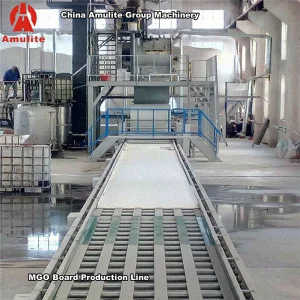
A high-output EPS sandwich panel manufacturing facility integrates mechanical, hydraulic, pneumatic, and electronic control subsystems into a continuous, high-efficiency production loop. Below is the standardized five-stage technological process engineered by leading machinery manufacturers:
Precision electronic scale hoppers meter OPC cement, fine silica sand/fly ash, water, and specialized foaming agents. Multi-axis high-shear planetary mixers ensure homogenous dispersion without crushing fragile expanded polystyrene beads.
Automated vacuum suction arms extract 4.5mm or 6mm calcium silicate facing boards from magazine stacks, aligning them seamlessly along both internal faces of vertical or horizontal precision steel mould cars.
Heavy-duty slurry pumps inject the micro-foamed EPS cement matrix into sealed mould cars equipped with hydraulic core-pulling tubes and high-frequency vibrators to eliminate internal void pockets and air inclusions.
Loaded mould cars transfer into automated curing chambers maintaining $45^\circ\text{C} - 65^\circ\text{C}$ controlled heat and steam humidity, accelerating hydration chemistry and shortening demoulding windows down to 3–4 hours.
Hydraulic tilting tables rotate cured panels 90 degrees vertically. Automated gantry cranes strip mould side-plates, inspect panel dimensions, and stack finished products onto wooden pallets for final packaging.
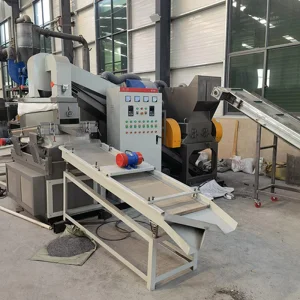
Integrated granulators process off-cut panel edge trims and defective EPS blocks, re-screening and blending recycled polystyrene back into the primary mixing hopper without sacrificing compressive strength.
When procuring an EPS wall panel production plant, enterprise buyers must evaluate mechanical specifications against desired annual output ($m^2/\text{year}$) and raw material availability. The matrix below contrasts standardized plant configurations:
| Plant Parameter | Compact / Semi-Auto Line | High-Output Automated Line | Ultra-Capacity Industry 4.0 Plant |
|---|---|---|---|
| Annual Output Capacity | 300,000 m² / year | 1,000,000 m² / year | 3,000,000+ m² / year |
| Mould Car System | Manual Push Vertical Cars | Automated Motorized Rail Cars | Continuous Vertical/Horizontal Loop |
| Slurry Batching System | Semi-Automated Weigh Hopper | Fully Automated PLC Central Silo | SCADA Dynamic AI Dosage Tuning |
| Direct Labor Requirement | 12 – 16 Operators / Shift | 6 – 8 Operators / Shift | 3 – 4 Operators (Robotic Supervisory) |
| Steam Curing Time | 6 – 8 Hours | 3.5 – 4.5 Hours | 2.5 – 3.5 Hours (Accelerated) |
| Target Panel Thickness | 60mm, 90mm, 120mm, 150mm | 60mm to 200mm Adjustable | 60mm to 250mm Multi-Layer Custom |
| Power Installed Load | ~ 75 kW | ~ 160 kW | ~ 320 kW (With Heat Recovery) |
Embracing IoT telemetry, real-time slurry diagnostics, and dynamic density automation for unprecedented manufacturing yield.
Leading EPS wall panel machine factories are actively transforming traditional mechanical production setups into smart, IoT-enabled industrial platforms. The integration of Industrial Internet of Things (IIoT) sensors, SCADA architecture, and machine learning slurry algorithms has dramatically resolved historical factory challenges such as board core delamination, density variance, and hydraulic mould wear.
Variation in ambient humidity, cement batch freshness, or EPS bead expansion ratio can alter core slurry density. Next-generation production lines utilize inline microwave density meters and viscometers. Connected PLC feedback loops automatically adjust water-to-cement ratios and chemical surfactant dosing in real-time, holding finished panel density within an ultra-strict tolerance of $\pm 1.5\%$.
Unexpected mold car leakage or hydraulic cylinder pressure loss halts entire factory shifts. Continuous telemetry sensors embedded inside hydraulic power units monitoring oil viscosity, micro-vibration, and thermal rise allow centralized SCADA platforms to flag seal degradation weeks before failure, preventing unplanned downtime and scrap material generation.
Furthermore, modern green building mandates demand zero waste output. Forward-thinking EPS plant designs incorporate closed-loop water filtration and steam condensate recovery units. Steam utilized during the 4-hour curing phase is captured, re-condensed, and diverted into the initial batching mixer, dropping overall factory water consumption metrics by up to 35% compared to legacy plants.
Navigating regional sand chemistry, local cement grades, and international structural building code certifications.
A primary failure point for international investors purchasing EPS wall panel machinery is assuming raw material chemical behavior is identical globally. In reality, silica sand particle sizing, fly ash calcium content (Class F vs. Class C), and local cement hydration rates differ widely between geographical regions. A world-class EPS panel machine factory must possess comprehensive material laboratory testing capabilities to customize chemical formulations prior to machinery dispatch.
EPS lightweight sandwich panels produced by high-tier equipment must satisfy rigorous international testing protocols before being accepted for commercial real estate or municipal infrastructure projects:
Our engineering team provides comprehensive localized support, sending resident process engineers directly to client factory sites across North America, the Middle East, Southeast Asia, and Africa. We supervise civil foundation preparation, direct mechanical assembly, execute live chemical batching trials, and remain on-site until local operators consistently produce certified, top-grade EPS sandwich panels.
Direct technical clarification on operational expenditures, machinery customization, raw material sourcing, and plant ROI.
Discover our comprehensive range of raw material recycling systems, board cutting machinery, perlite expansion furnaces, and precast concrete plants.