Precision-engineered continuous production lines and material processing units developed for ultra-high output, structural integrity, and strict thermal efficiency compliance.
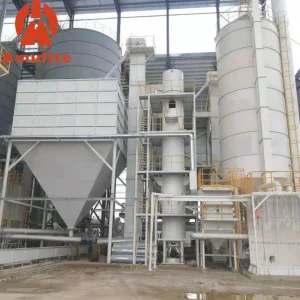
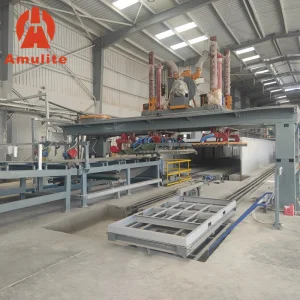
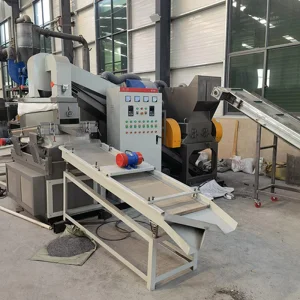
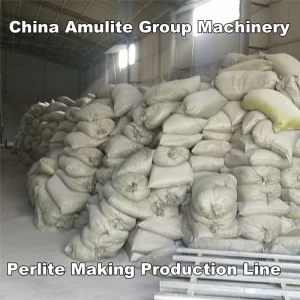
An In-Depth Engineering Overview of Industrial Sheet Dewatering, Continuous Hydrothermal Synthesis, and Automated Material Processing Equipment.
In modern structural civil engineering and building materials manufacturing, Plate & Board Machinery (often categorized under industrial sheet forming and plate ion reaction systems) represents the core mechanical backbone for producing fireproof cladding, lightweight partition panels, structural insulation boards, and high-performance AAC blocks. As global green building standards mandate higher fire resistance (EN 13501-1 Class A1), superior acoustic attenuation, and zero-asbestos compliance, the engineering demand has shifted from basic mechanical pressing to micro-level material reaction kinetics.
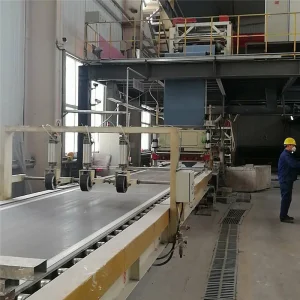
The primary engineering objective of a high-efficiency board manufacturing line is the control of liquid-solid phase separation and crystalline hydration dynamics. In Fiber Cement and Calcium Silicate Board Production Lines, this is achieved through the Hatschek process or modified Flow-on techniques. Silicious materials (pulverized quartz sand) and calcareous components (Ordinary Portland Cement and quicklime) are homogenized into a precise slurry with cellulose fibers acting as a flexible structural web. Vacuum dewatering cylinders extract free water down to 25–30% moisture content before the green sheet undergoes high-pressure hydraulic compaction (up to 7,000 metric tons) and subsequent hydrothermal curing inside high-pressure autoclaves.
Under saturated steam curing conditions ($191^\circ\text{C}$ at $1.25\text{ MPa}$), reactive silica ($\text{SiO}_2$) and calcium hydroxide ($\text{Ca(OH)}_2$) undergo hydrothermal synthesis to form Tobermorite crystalline structures ($\text{C}_5\text{S}_6\text{H}_5$). This mineral transformation confers ultra-low linear thermal expansion, zero dimensional distortion under high moisture, and high flexural strength ($>16\text{ MPa}$) to the finished building boards.
Next-generation engineering paradigms transforming heavy building material machinery through digital automation, carbon mitigation, and energy optimization.
Integration of closed-loop ultrasonic sensors and optical rheometers to continuously measure slurry viscosity, solid-to-liquid ratios, and fiber dispersion. Automated PLC feedback loops adjust flocculant dosage dynamically, eliminating thickness variance across high-speed forming cylinders.
Modern AAC and Gypsum plants are engineered to utilize up to 70% industrial solid waste—including fly ash, desulfurization gypsum (FGD), and blast-furnace slag. Future autoclave cycles incorporate direct $CO_2$ sequestration to accelerate carbonation hardening while reducing net carbon footprint.
Fully integrated Industry 4.0 architecture featuring vibration spectrum analysis on jaw crushers, real-time thermal telemetry on steam curing chambers, and automated tool-wear tracking for high-speed diamond edge trimming systems.
Comprehensive, modular plant architectures tailored to specific commercial building material sectors.
| Plant Sector Solution | Core Machinery Units | Target Output Parameters | Primary Commercial Application |
|---|---|---|---|
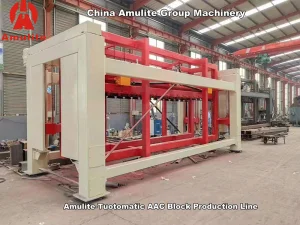
| AAC Block & Panel Systems | Slurry mixers, Tilting cutters, Autoclaves, Ferry carts, Automatic oiling systems | 50,000 – 600,000 m³/year; Density: 400–650 kg/m³ | Lightweight structural wall blocks, fire-rated floor slabs, prefab lintels. |
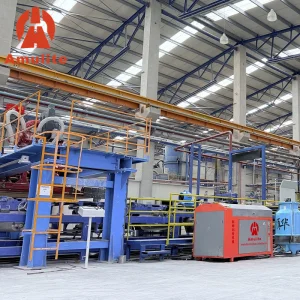
| Fiber Cement / Calcium Silicate | Hatschek forming vat, Vacuum dewatering, Stacker, 7000T Press, Autoclaves | 2,000,000 – 20,000,000 m²/year; Thickness: 4–30 mm | Exterior ventilated facade cladding, interior partitions, wet-area backer boards. |
| EPS Sandwich Wall Panel | Batching system, Core material foaming mixer, Vertical/Horizontal mold cars | 500,000 – 3,000,000 m²/year; Thickness: 60–200 mm | Rapid erection modular housing, insulated interior acoustic partitioning. |
| Gypsum Plasterboard & Powder | Calcination kiln, Continuous board mixer, Multi-deck dryer, Auto bundler | 5,000,000 – 30,000,000 m²/year; Thickness: 8–15 mm | Commercial suspended ceilings, fire-resistant drywall systems. |
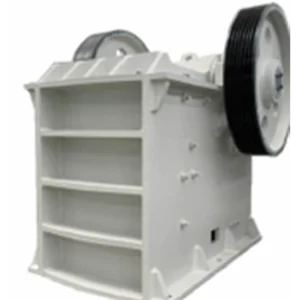
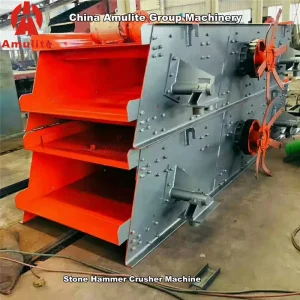
| Industrial Resource Recycling | Heavy Euro Jaw Crushers, Hammer Mills, Copper Wire Granulators, Battery Recyclers | 1 – 50 Tons/hour continuous material processing | Mineral aggregate crushing, scrap cable separation, secondary raw material recovery. |
Why premier global project developers choose China's integrated heavy machinery manufacturing hubs for large-scale industrial capitalization.
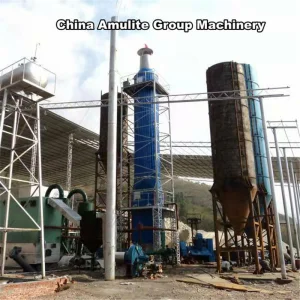
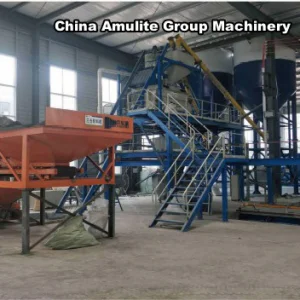
Operating from a centralized 100,000 m² heavy manufacturing facility in Hebei, China, China Amulite Group demonstrates complete vertical integration over the entire production lifecycle of building material equipment. Unlike European OEM assemblers who outsource structural fabrication to third-party contractors, our engineering campus executes raw casting, stress-relieving heat treatment, high-precision CNC gear hobbing, dynamic balancing of heavy rollers, and complete electrical PLC cabinet wiring under one unified Quality Management System (ISO 9001:2015).
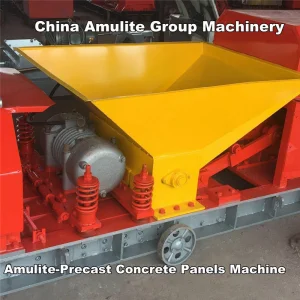
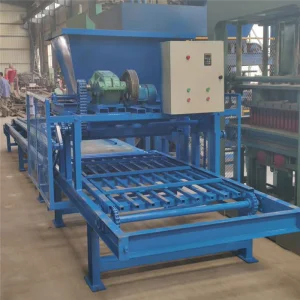
Every sheet-forming machine, cutting machine, and auto-stacking system undergoes rigorous no-load and dry-run mechanical testing in our workshop before container loading. This eliminates field alignment errors and slashes on-site commissioning timelines by up to 40%.
Structural machine frames are welded from premium-grade Q350B/Q345 structural steel, undergoing shot blasting and anti-corrosion epoxy priming. Drive shafts, forming cylinders, and press rollers utilize high-alloy steel (42CrMo) with induction hardening for decades of continuous 24/7 service.
By coupling China's mature industrial supply chain with advanced German/European design benchmarks (incorporating Siemens PLCs, SEW reducers, Schneider electrics, and FESTO pneumatics), global clients secure world-class reliability at a CAPEX saving of 35% to 50%.
Key mechanical and electrical parameters required when evaluating turnkey board plant bids for international project financing.
Procuring heavy plate and board machinery requires a rigorous engineering review beyond basic output numbers. Strategic buyers must evaluate electrical load distribution, steam mass balances, raw material conversion efficiencies, and foundation load capacities. Below is a baseline technical metric checklist established by our senior engineering division for international turnkey project tenders:
End-to-end commissioning, local raw material formulation tuning, and international compliance assurance.
A machine is only as effective as the process formulation behind it. The true value of partnering with China Amulite Group lies in our comprehensive engineering field service. When installing lines across different continents—from the high ambient humidity of Southeast Asia to the freezing conditions of Central Asia—our commissioning teams adjust chemical mix ratios based on local sand quartz purity, cement setting times, and available pulp grades.
We provide complete 3D BIM civil foundation layout drawings, trenching plans, load distribution maps, and utility hookup points (steam, compressed air, electricity, water) prior to machine delivery.
Our in-house analytical laboratory tests client-provided raw material samples (fly ash, lime, sand, pulp) to optimize slurry reactivity and guarantee target flexural strength ($>16\text{ MPa}$) prior to plant dispatch.
Our resident engineers remain on site post-commissioning to train local plant crews in PLC operation, preventive maintenance routines, quality testing protocols, and safety compliance.
Explore additional specialized manufacturing hardware, finishing machines, and recycling lines engineered for modern building material operations.
Direct technical responses from our project engineering team regarding machine performance, installation schedules, and formulation control.