Explore high-yield automated machinery engineered by leading Chinese equipment manufacturers for global building material plants.
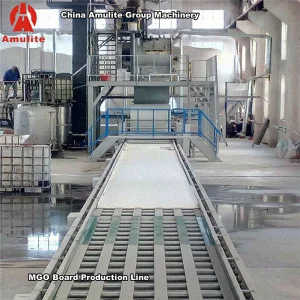
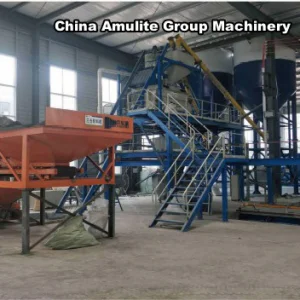
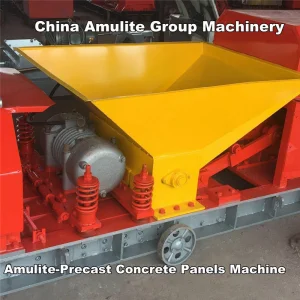
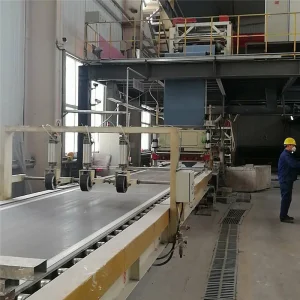
Understanding user intent and global supply metrics driving the modern non-metallic building material equipment market.
The global construction material ecosystem is undergoing a fundamental structural transition. Traditional gypsum drywall and fiber cement boards are increasingly constrained by heavy energy-consumption profiles, water sensitivity, and structural weight limits. In response, global EPC contractors, building material manufacturers, and commercial real estate developers are shifting towards Magnesium Oxide (MGO) boards—also known as magnesia boards.
Consequently, identifying famous MGO board manufacturing machine suppliers and companies has become a mission-critical objective for industrial capital projects. High-yield MGO board machinery integrates advanced hydro-chemical mixing, continuous tension-controlled fiber glass mesh embedding, automatic hydraulic de-stacking, and precision climate-controlled curing chambers. Investing in high-grade MGO manufacturing lines allows producers to yield boards exhibiting class A1 fire resistance, high flexural strength (up to 27 MPa), superior moisture resistance, and exceptional mold-proofing properties.
Inside the automated sub-systems that dictate density uniformity, surface flatness, and crystal phase stability.
Employs pneumatic powder conveying and loss-in-weight gravimetric feeders. Magnesia ($\text{MgO}$), Magnesium Chloride ($\text{MgCl}_2$) or Magnesium Sulfate ($\text{MgSO}_4$), expanded perlite, and sawdust are blended with micro-computer dosing precision within $\pm 0.5\%$, guaranteeing stoichiometric balance to eliminate unreacted free chloride ions.
Includes motorized automatic tensioning and tracking units for alkali-resistant (AR) fiberglass mesh. The machine embeds top and bottom mesh layers synchronously into the slurry under constant mechanical pressure, ensuring zero delamination and ultra-high impact resistance.
Heavy-duty chrome-plated calibration rollers compress the slurry to exact thickness tolerances ($\pm 0.2\text{ mm}$). Integrated high-frequency vibrators remove micro-air bubbles, guaranteeing a dense internal core without structural voids.
Automated transfer cars move wet boards into multi-stage thermal and humidity tunnels. Maintaining $35\text{--}45^\circ\text{C}$ and $>85\%$ relative humidity facilitates optimal 5.1.8 crystal phase ($\text{5MgO}\cdot\text{MgCl}_2\cdot\text{8H}_2\text{O}$) growth, avoiding cracking or warpage.
Equipped with diamond-blade edge cutters and double-sided wide-belt sanders. Boards are auto-trimmed to exact commercial dimensions ($1220\times 2440\text{ mm}$ or $1200\times 3000\text{ mm}$) with calibrated smooth or sanded finishes for direct laminating.
Industrial suction-cup manipulators automatically strip templates, separate boards, and stack finished products onto transport pallets with high repeatability, drastically reducing manual labor requirements.
Evaluating technical and operational parameters to guide capital investment decisions for building material plants.
| Evaluation Parameter | MGO Board Production Line | Fiber Cement Board Line (Hatschek) | Gypsum Drywall Production Line |
|---|---|---|---|
| Primary Chemical Binder | Magnesium Oxide ($\text{MgO}$) + $\text{MgCl}_2 / \text{MgSO}_4$ | Portland Cement + Silica Sand | Calcined Gypsum ($\text{CaSO}_4\cdot 0.5\text{H}_2\text{O}$) |
| Thermal Curing Energy | Low ($35\text{--}50^\circ\text{C}$ exothermic hydration) | Extremely High (Autoclave at $180^\circ\text{C}, 10\text{ bar}$) | High (Multi-deck drying kiln) |
| Fire Reaction Rating | A1 Non-Combustible (Zero Flame Spread) | A1 / A2 Non-Combustible | Class A (Combustible paper facer) |
| Flexural Strength (MPa) | 15 – 27 MPa (High structural strength) | 9 – 16 MPa | 6 – 10 MPa |
| Water Immersion Resistance | Excellent (No degradation, zero swelling) | Good (Slight water absorption) | Poor (Softens & loses integrity) |
| Equipment CAPEX ROI | Fast Payback (12 – 18 Months) | Capital Intensive (24 – 36 Months) | Moderate (18 – 24 Months) |
Unpacking the structural, geographical, and technological advantages offered by Chinese OEM equipment giants.
China commands over 85% of the world's MGO board manufacturing machinery supply chain. Leading equipment manufacturers—such as China Amulite Group—benefit from an integrated industrial ecosystem that seamlessly combines heavy metallurgy, precision CNC machining, and chemical process engineering. Evaluating Chinese machinery suppliers reveals distinct operational advantages:
China holds the world's largest magnesite reserves (Liaoning Province). Chinese machinery OEMs work hand-in-hand with raw material refiners, establishing in-house laboratories that test customer-provided magnesite powders, perlite, and local aggregates before designing custom machine screws, slurry pumps, and mixing blades.
Compared to European machinery counterparts, Chinese production lines offer equivalent automation levels (Siemens PLC, Schneider Electric components, Festo pneumatics) at a fraction of the capital cost. This lowers barrier-to-entry for plant investors while delivering faster ROI horizons.
Chinese machinery suppliers engineer modular production architectures. Plants can start with a semi-automated 1.5 million $m^2/\text{year}$ line and seamlessly integrate robotic stackers, automated curing tunnels, and inline lamination modules as market demand expands to 10 million $m^2/\text{year}$.
Reputable Chinese suppliers execute complete dry-run assembly and electrical testing in their heavy workshops prior to overseas packing. This rigorous factory acceptance testing (FAT) minimizes site commissioning timelines down to 30-45 days.
Deconstructing the intent and criteria of international procurement directors, plant engineers, and project developers.
When enterprise procurement teams search for "Famous Mgo Board Manufacturing Machine Suppliers & Companies", their query intent spans complex financial, operational, and technical evaluations. A successful purchasing strategy hinges on analyzing Total Cost of Ownership (TCO) across three fundamental pillars:
While equipment price dictates initial CAPEX, long-term profitability depends on OPEX efficiency. Leading MGO machinery features energy-optimized drive motors (IE3/IE4 efficiency standards), closed-loop water recycling, and precision slurry scraping systems that eliminate raw material waste. A well-engineered line reduces raw material scrap to under 1.5%.
Historically, low-grade MGO boards suffered from "sweating" or efflorescence caused by unreacted free chloride ions absorbing ambient moisture, leading to metal fastener corrosion. Modern OEM companies supply specialized Magnesium Oxysulfate ($\text{MgSO}_4$) manufacturing technology or advanced phosphoric acid / silane modification dosing systems. Procurement officers must ensure suppliers offer chemical formulation support alongside machinery delivery.
| Automation Tier | Annual Capacity ($m^2$) | Required Shift Workers | Key Automated Sub-Systems |
|---|---|---|---|
| Semi-Automated | 1,000,000 – 2,500,000 | 8 – 12 Operators | Mechanical batching, continuous forming, manual template handling |
| Fully Automated | 3,000,000 – 6,000,000 | 4 – 6 Operators | PLC auto-dosing, auto-trimming, robotic stripping, stacking & wrapping |
| Industry 4.0 Smart Line | 6,000,000 – 10,000,000+ | 2 – 3 Operators | SCADA centralized control, AI slurry viscosity sensing, auto palletizing |
Ensuring your manufacturing plant meets stringent international machinery directives and regional environmental codes.
Deploying heavy industrial board machinery into North American, European, Middle Eastern, or Southeast Asian jurisdictions demands compliance with rigorous mechanical, electrical, and environmental regulatory frameworks. Premium machine manufacturers provide comprehensive compliance documentationpackages:
Machinery must carry CE Marking under the Machinery Directive 2006/42/EC and Low Voltage Directive 2014/35/EU. Control cabinets are built with UL 508A or CSA certification for North American installations, featuring Siemens S7-1500 PLC systems and safety light curtains.
Compliance with OSHA guidelines requires complete safety fencing around high-speed cutting saws, hydraulic template lifts, and automatic stackers. Integrated emergency-stop circuits (Category 4 / PL e) ensure immediate shutdown upon safety zone intrusion.
The machinery must be guaranteed to produce panels meeting international standards: ASTM C1185 / C1186 (Flat Fiber-Cement Sheets), EN 12467, ASTM E119 (Standard Test Methods for Fire Tests of Building Construction), and EN 13501-1 (Class A1 Reaction to Fire).
From high-rise exterior cladding to prefabricated structural panels—exploring high-margin commercial outputs.
Produced high-density MGO boards ($1.2\text{--}1.5\text{ g/cm}^3$) coated with UV-cured acrylics or fluorocarbon paints deliver weatherproofing and hurricane-impact resistance for commercial exterior facades.
MGO boards act as structural skins bonded to EPS, XPS, or Rockwool cores. These SIP panels form structural load-bearing walls for rapid assembly in modular housing, modular schools, and disaster-relief shelters.
Thick MGO panels ($15\text{--}25\text{ mm}$) serve as non-combustible cores for fire-rated wooden and steel fire doors, achieving 2-hour to 4-hour fire ratings under UL 10C and BS 476 standards.
Zero-water absorption and mold resistance make smooth-surface MGO boards ideal for hospital cleanrooms, pharmaceutical laboratories, and moisture-prone bathroom subflooring applications.
Where the non-metallic building material machinery industry is heading over the next decade.
The MGO manufacturing landscape is advancing rapidly. Leading machinery suppliers are embedding cutting-edge technological innovations into their production lines:
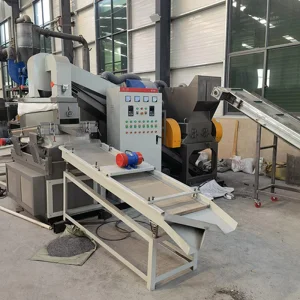
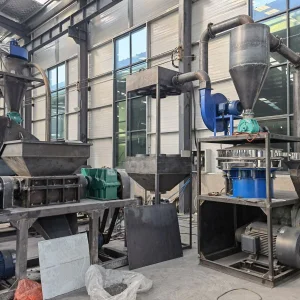
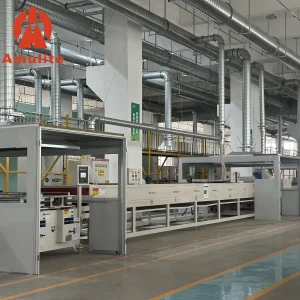
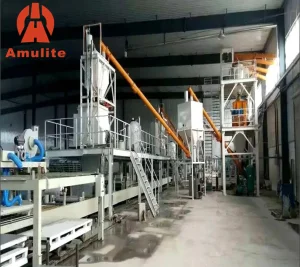
Expand your manufacturing campus with turnkey lines engineered by leading machinery manufacturers.
Detailed technical answers to common queries when auditing MGO board machine suppliers.
Manufacturing lead time for a complete automated line takes approximately 60 to 90 days. Sea freight logistics depend on destination port, while site civil setup, mechanical installation, electrical commissioning, and trial formulation runs typically require 30 to 45 days under the supervision of resident OEM engineers.
Preventing efflorescence relies on automatic gravimetric dosing precision that maintains the exact stoichiometric ratio of $\text{MgO}$ to $\text{MgCl}_2$ (or $\text{MgSO}_4$). Premium suppliers provide automated temperature-controlled curing tunnels and introduce proprietary chemical modifiers (such as phosphoric acid or silanes) into the mixer to lock unreacted free chloride ions into stable 5.1.8 crystal lattices.
A standard 3 million $m^2/\text{year}$ fully automated line requires a factory workshop footprint of approximately $120\text{ m}\times 18\text{ m}$ (minimum height of $6\text{ m}$). Connected electrical power load is roughly $250\text{--}350\text{ kW}$, alongside an industrial air compressor unit ($1.5\text{ m}^3/\text{min}$) and localized water recycling tanks.
Yes. By adjusting the calibration roller height via servomotors and changing template plates, a single line can seamlessly produce boards ranging from $3\text{ mm}$ (thin ceiling panels) up to $25\text{ mm}$ (heavy structural subflooring). Automated surface embossing rollers can also apply wood-grain or decorative stone textures inline.
Top Chinese machinery companies provide lifetime technical service support. This includes remote PLC online diagnostics, annual spare part inventory packages, local operator training updates, and continuous raw material testing assistance when sourcing new local mineral fillers.