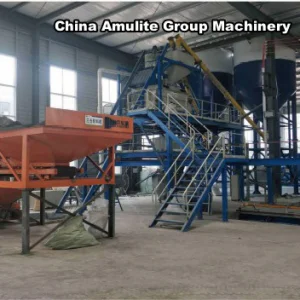
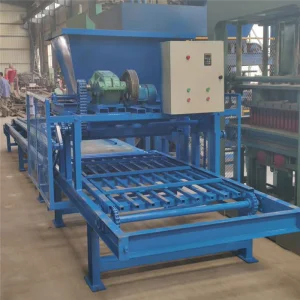
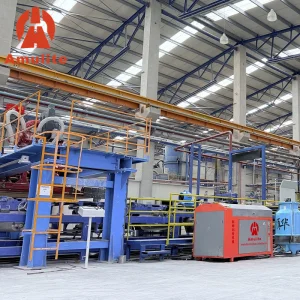
Famous Fiber Cement Board Equipment Manufacturers & Factory

Global Engineering Whitepaper on Turnkey Fiber Cement Board & Calcium Silicate Board Machinery, Hatschek Wet-Forming Process, Autoclaved Curing Tech & Industry 4.0 Supply Chain Integration

Hatschek & Flow-On Tech Non-Asbestos A1 Fireproof Global EPC Turnkey Supply
Featured Heavy Industrial Machinery

Primary Equipment Series & Production Lines

Explore our flagship heavy equipment and complete automated manufacturing solutions designed for high-yield building material production plants.
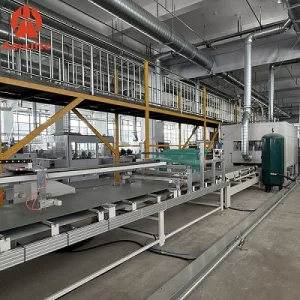
Best Flexible Clay Ceramic Tile Production Line Manufacturer, Companies
Explore Equipment →
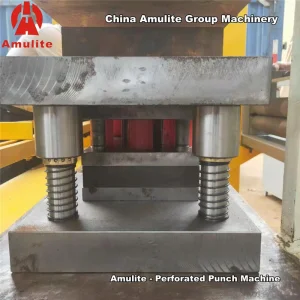
High-Quality Amulite Perforated Punch Machine System Technical Data Manufacturer, Suppliers
High-Quality Amulite Perforated Punch Machine System Technical Data
Explore Equipment →
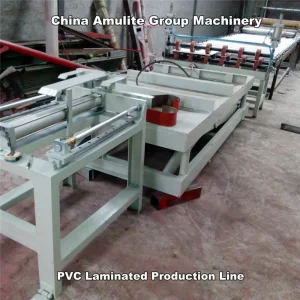
China PVC Laminated Production Line Factories, Products
Explore Equipment →
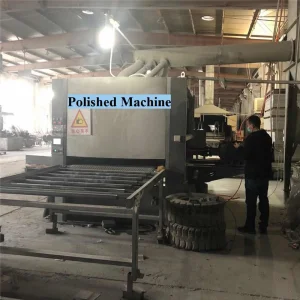
China Single Face Polished Machine Manufacturers, Suppliers
Explore Equipment →
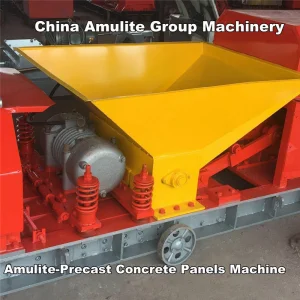
Best Precast Concrete Products Machinery Manufacturers, Products
Explore Equipment →
OEM EPS Sandwich Cement Wall Panels Production Line Companies, Products
OEM EPS Sandwich Cement Wall Panels Production Line Companies
Explore Equipment →
Buy Hollow Core Wall Panels Production Line Factory, Factories
Explore Equipment →
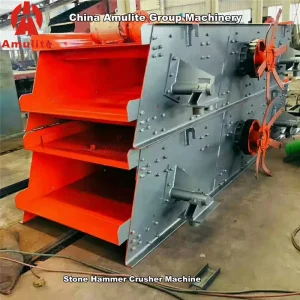
Buy Stone Hammer Crusher 6CX Euro Series Jaw Crusher Company, Product
Buy Stone Hammer Crusher 6CX Euro Series Jaw Crusher Company
Explore Equipment →
Engineered Benchmark Statistics

Industrial Scale & Operational Performance Metrics

Proven engineering capacity back-backed by decades of manufacturing refinement and global plant commissioning experience.

30M+
Annual Capacity (m²)
High-efficiency continuous Hatschek wet-forming lines
1.75
Max Board Density (g/cm³)
Autoclaved high-density architectural siding boards
60+
Export Destinations
Turnkey installations across Europe, Asia & the Americas
100%
Non-Asbestos Compliance
Eco-friendly pulp & synthetic fiber reinforced technology

1. Global Market Evolution: The Strategic Transition in Fiber Cement Board Production

The global construction and building envelope industry is experiencing a seismic paradigm shift toward lightweight, high-strength, non-combustible, and sustainable wall panel systems. Fiber Cement Boards (FCB) and Calcium Silicate Boards (CSB) have emerged as the premier non-metallic building material choices worldwide. As urban density increases and stringent building codes regarding fire safety (such as EN 13501-1 Class A1 non-combustible standards) become mandatory across Europe, North America, and the Asia-Pacific region, demand for advanced Fiber Cement Board Equipment Manufacturers & Factory capabilities has surged exponentially.

Historically dominated by labor-intensive, low-yield machinery, modern fiber cement board plants now require continuous automated processing capable of handling complex slurry chemistry, high-speed vacuum dewatering, precise multi-layer green sheet stacking, and high-pressure steam hydrothermal synthesis (autoclaving). Today's procurement teams and project developers no longer look simply for standalone machinery; they demand comprehensive process engineering, raw material recipe optimization (incorporating industrial waste like fly ash and quartz tailings), and long-term TCO (Total Cost of Ownership) reduction.

Key Strategic Takeaway for Plant Buyers: Modern fiber cement board equipment must balance high flexural strength (MOR > 16-28 MPa) with low water absorption (< 25%). Achieving this requires dynamic process control at the slurry pulp digestion, cylinder forming, and hydro-thermal autoclave phases.

The Driving Factors Behind Global Fiber Cement Equipment Sourcing:

  • Rigid Environmental Regulations: Global phase-out of chrysotile asbestos requires factories to re-engineer slurry formulations using refined cellulose pulp, PVA (Polyvinyl Alcohol) fibers, and synthetic matrices.
  • Prefabrication & Off-Site Construction: Rise of modular buildings and prefabricated light-gauge steel framing demands tight dimensional tolerances (±0.5mm) in cladding boards, reachable only via high-precision CNC edge-trimming and calibrated sanding lines.
  • Thermal Efficiency & Fire Integrity: Deep market penetration of autoclaved calcium silicate insulation boards for high-rise exterior rainscreen cladding, interior fire-rated partitions, and specialized ceiling tiles.

2. Hatschek Process vs. Flow-On Process: Machinery & Process Engineering Breakdown

In evaluating equipment suppliers, plant engineers must carefully analyze the core wet-forming mechanism. The two predominant manufacturing technologies are the Hatschek Process and the Flow-On (Emanating) Process. Leading machinery manufacturers must possess deep engineering mastery over both methodologies.

Hatschek Cylinder Vat Technology

Utilizes multi-vat rotating mesh cylinders (3 to 6 vats) to pick up micro-layers of dilute slurry (7-10% solid concentration). Layers are transferred via continuous felt under vacuum suction onto a forming drum to build up precise board thickness layer by layer.

High-Volume Flow-On Process

Ideal for thicker board production (12mm to 30mm) and high fly-ash formulations. Slurry (20-30% concentration) is distributed directly onto a dewatering wire belt, yielding high output with reduced energy consumption during initial slurry agitation.

Autoclave Hydrothermal Curing

High-pressure steam vessel curing (8 to 12 bar pressure at 175°C-190°C). Triggers a chemical reaction between reactive SiO2 (silica sand/quartz powder) and Ca(OH)2 (slaked lime/cement) to form stable crystalline Tobermorite structures.

Engineering Comparison Matrix: Equipment Configuration Parameters

Process Parameter Hatschek Production Line Flow-On Production Line Pressing & Autoclave Unit
Target Density Range 1.1 – 1.75 g/cm³ 0.95 – 1.30 g/cm³ 1.40 – 1.80 g/cm³ (Post-Press)
Slurry Concentration 7% – 12% (Low Consistency) 22% – 30% (High Consistency) N/A (Mechanical Dewatered Sheet)
Board Thickness Capability 4mm – 20mm 8mm – 30mm 4mm – 25mm (High Flexural Strength)
Curing Mechanism Air Curing / Autoclaved Autoclaved Steam Reaction High-Pressure Steam (10-12 Bar)
Flexural Strength (MOR) 12 – 22 MPa 9 – 16 MPa 18 – 28+ MPa
Primary Applications Exterior siding, ceiling, wet area backer Internal partitions, ceiling tiles Heavy-duty facade, structural flooring

3. China Factory 4.0: Supply Chain Resilience, Automation & Engineering Precision

In the competitive global market for building material plant engineering, Chinese equipment factories have evolved from simple machine builders into sophisticated Industry 4.0 turnkey solution providers. China’s advanced heavy manufacturing eco-system provides unprecedented advantages for global procurement directors, plant owners, and EPC contractors.

1. Precision Machining & Dynamic Balance of Forming Drums

The core stability of a Hatschek fiber cement board machine depends on the concentricity and dynamic balance of the main forming cylinder and accumulator drums. Leading Chinese manufacturers utilize multi-axis CNC horizontal lathes and automated dynamic balancing rigs to ensure surface run-out tolerances within ≤0.03mm. This eliminates sheet thickness variations across 1300mm–1600mm wide boards, minimizing material waste during final calibration sanding.

2. Integrated PLC/SCADA Smart Control Systems

Modern Chinese fiber cement board production lines feature fully integrated automation architectures driven by Siemens or Schneider PLC platforms paired with SCADA supervisory control. Real-time mass-flow meters, automatic pulp dosing units, vacuum digital pressure feedback loops, and thickness gauge feedback dynamically adjust slurry feed rates and machine speed in real time. This minimizes operator error and maintains product batch consistency.

3. Complete Metallurgical & Autoclave Safety Engineering

Autoclaves represent a critical pressure vessel component in calcium silicate board production. Advanced Chinese equipment plants hold ASME, CE (PED), and ISO pressure vessel engineering certifications. Fabricated from high-tensile Q345R vessel steel with automated submerged-arc welding (SAW) and 100% X-ray non-destructive testing (NDT), these autoclaves ensure safe, continuous 24/7 operation under intense thermal cycles.

4. Global Procurement Demand & Localized Application Scenarios

Understanding regional climate requirements and construction methodologies is essential when specifying fiber cement board equipment configurations. Equipment factories must customize the pre-dosing, pressing, and curing units according to local raw material availability and target end-use markets.

North America & Australia: Exterior Siding & Grain Cladding

Demands high-density, deep-embossed wood grain textures with high frost/thaw durability. Equipment requires specialized online embossing rollers, high-tonnage hydraulic presses (up to 7000 tons), and precise automated edge-lapping mill cutters.

Southeast Asia & Middle East: Interior Drywall & Wet Area Backer

Focuses on light-to-medium density (1.0-1.25 g/cm³) moisture-resistant ceiling and interior partition boards. Plants utilize low-cost local fly ash and sand with high-volume 4-to-6 cylinder Hatschek configurations for maximum throughput.

Europe: Architectural Ventilated Facades & Passive Fire Protection

Requires ultra-high density autoclaved boards (>1.6 g/cm³) with through-body pigment dosing units. Machinery must include multi-axis CNC sanding, online UV coating, and anti-graffiti surface sealing modules.

Expert Engineering Q&A

Frequently Asked Questions by Plant Buyers & Engineers

Direct technical answers regarding raw material adaptability, ROI estimation, plant footprint, and machinery operational maintenance.

What raw material formulas are typically used in non-asbestos fiber cement board plants?
A standard non-asbestos autoclaved formulation consists of Ordinary Portland Cement (35-45%), finely ground quartz sand/silica powder with SiO2 > 85% (35-45%), unbleached kraft cellulose wood pulp (7-10%), and auxiliary fillers such as wollastonite, mica, or fly ash (5-10%). For air-cured lines, cement content is increased and PVA fibers or glass fibers replace silica sand reactions.
What is the average land footprint and utility requirement for a 5-million m²/year plant?
A standard 5-million m²/year autoclaved fiber cement board line requires a factory workshop area of approximately 12,000 to 18,000 square meters (main workshop dimensions approx. 180m x 24m x 9m clear height), plus raw material storage yards. Utilities required include an installed electrical load of ~1,200 kW, a 10 ton/hour steam boiler (operating at 1.25 MPa), and a closed-loop water treatment system consuming ~15-20 m³/h makeup water.
Why is vacuum dewatering critical in the Hatschek wet-forming process?
Vacuum dewatering boxes beneath the running felt reduce the moisture content of the green film layer from over 75% down to approximately 28-32% before it winds onto the forming drum. Proper vacuum management (typically -0.04 to -0.06 MPa across multi-stage vacuum slots) prevents film delamination, ensures inter-layer bonding strength, and avoids surface blistering during green stacking.
What is the difference between air-cured and autoclaved fiber cement boards?
Air-cured boards rely solely on hydration of Portland cement over a 28-day curing process (or accelerated warm water bath). Autoclaved boards undergo high-pressure hydrothermal curing (175°C-190°C for 10-14 hours) where silica and lime react to form crystalline Tobermorite. Autoclaved boards exhibit significantly lower moisture movement (shrinkage/expansion < 0.12%), higher dimensional stability, and superior resistance to efflorescence.
How do Chinese machinery manufacturers ensure installation quality overseas?
Top Chinese engineering factories deploy dedicated overseas field installation teams consisting of mechanical erection engineers, electrical PLC programmers, and process chemists. Prior to shipment, whole-line mechanical pre-assemblies and dry runs are conducted. On-site commissioning includes raw material testing, recipe calibration, trial production runs, and comprehensive local workforce training until stable commercial output is achieved.
Complete System Portfolio

Auxiliary Equipment & Wall Panel Production Machinery

Explore our broader ecosystem of building material machinery including AAC block lines, perlite units, MGO board lines, and crusher systems.
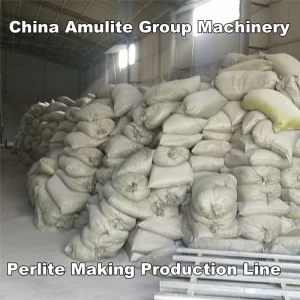
Buy Perlite Production Line Manufacturers, Company
Explore Equipment →
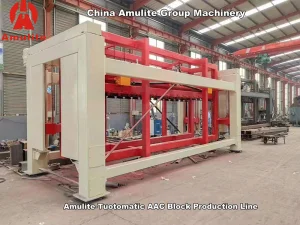
High-Quality Amulite Automatic AAC Block Production Line Manufacturers, Companies
High-Quality Amulite Automatic AAC Block Production Line Manufacturers
Explore Equipment →
China Automatic Bricks Making Production Line Manufacturers, Products
China Automatic Bricks Making Production Line Manufacturers
Explore Equipment →
China Fiber Cement Board /Calcium Silicate Board Production Line Factory, Companies
China Fiber Cement Board / Calcium Silicate Board Production Line
Explore Equipment →
OEM Stone Hammer Crusher Machine Suppliers, Factory
Explore Equipment →
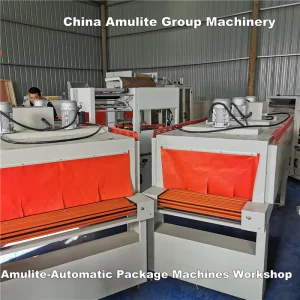
Famous Automatic Package Machines Workshop Factory, Company
Explore Equipment →
High-Quality Embossed Metal Composite Exterior Panels Production Line Manufacturers, Company
High-Quality Embossed Metal Composite Exterior Panels Line
Explore Equipment →
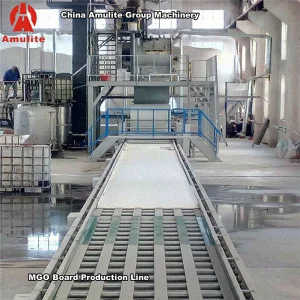
OEM China Amulite Group MGO Board Production Line Factories, Product
OEM China Amulite Group MGO Board Production Line Factories
Explore Equipment →

Plan Your Fiber Cement Board Plant Construction

Partner with leading process engineers and equipment manufacturers to design a optimized, high-yield plant tailored to your local raw materials and market demands.

Request Turnkey Proposal & Layout Drawings