Explore high-throughput manufacturing lines engineered for advanced structural panels, fiber cement boards, and heavy-duty building materials.
A comprehensive analysis of high-throughput extrusion manufacturing, composite board processing, and Chinese engineering leadership.
The global industrial sector is undergoing a profound paradigm shift driven by modern material science, automation, and sustainable infrastructure mandates. At the heart of this transformation lies advanced extrusion technology—a process that has evolved from basic polymer conditioning to highly complex, multi-component thermodynamic molding systems. Chinese extruder manufacturers have emerged as essential catalysts in this ecosystem, transitioning from cost-efficient machinery producers to high-precision engineering pioneers. By pairing continuous melt manipulation with specialized downstream shaping equipment, modern China extruder manufacturing facilities deliver industrial processing solutions that handle polymers, fiber-cement slurries, composite metal panels, and reactive mineral mixtures with unprecedented dimensional accuracy.
Historically, extrusion technology was restricted to single-screw thermoplastic profiling. Today’s industrial landscape demands co-rotating twin-screw systems, high-torque planetary extruders, and continuous hydrothermal slurry extruders capable of processing abrasive fillers, organic fibers, and inorganic cements. Global market data indicates that demand for structural extruders across green building materials, composite cladding, lightweight wall paneling, and circular economy recycling lines is growing at an annual CAGR exceeding 7.4%. Modern facilities require extrusion lines optimized for minimum specific energy consumption (SEC), real-time rheological feedback, and continuous 24/7 operational stability.
Engineered with specific torque ratings reaching up to 15 Nm/cm³, enabling maximum volumetric efficiency and reduced thermal stress during high-viscosity compounding.
Advanced barrel and screw metallurgy utilizing HIP-sintered bimetallic alloys designed to withstand abrasive mineral slurries, silica fibers, and reactive chemical agents.
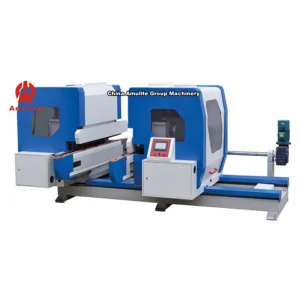
Synchronized multi-stage vacuum calibration, profile embossing, punch systems, and hydro-mechanical cutting guarantees exact dimensional tolerances.
Demonstrated operational capacity across heavy industry, structural building board production, and resource recycling projects worldwide.
An in-depth breakdown of thermodynamics, mechanical barrel design, melt pump synchronization, and automated PLC control systems.
The performance of modern extrusion equipment rests upon the precise balance of shear heating, pressure build-up, and residence time distribution (RTD). In twin-screw extrusion systems, the screw elements are modular, allowing application-specific tailoring of conveying, kneading, side-feeding, and degassing zones. For polymer profile extruders and mineral composite compounding, the length-to-diameter ratio (L/D) typically ranges between 32:1 and 52:1, guaranteeing thorough dispersion of raw materials such as flame retardants, micro-silica, expanded perlite, and plasticizers.
Achieving optimum dispersion without degrading polymer chains or fracturing delicate reinforcing fibers requires computational fluid dynamics (CFD) analysis of the melt flow. Kneading blocks with staggered angles of 30°, 45°, and 90° are strategically positioned within the melting and mixing zones. Right-handed elements convey material forward under pressure, while left-handed elements create local back-pressure, ensuring intense distributive mixing. In mineral panel extrusion, specialized screw geometries prevent phase separation of wet slurries, maintaining homogenous density throughout the continuous slab.
Extrusion barrels are structured with multi-zone heating and cooling systems. Ceramic heaters combined with high-velocity air blower cooling maintain thermal stability within ±1°C of setpoint across all barrel modules. High-vacuum multi-venting ports (operating down to -0.098 MPa) remove moisture, volatile organic compounds (VOCs), and entrapped air from the molten mass prior to reaching the die zone. Melt pump integration between the extruder screw and the die ensures pulse-free discharge pressure, reducing thickness variations in extruded sheet products to less than ±0.05 mm.
Choosing the correct extruder configuration depends heavily on raw material shear sensitivity, throughput requirements, and raw material formulation complexity:
To resist severe abrasive and corrosive wear during heavy mineral extrusion, barrels and screws utilize specialized alloy metallurgy:
From embossed composite facades to lightweight structural core panels—how China extrusion lines drive modern construction efficiency.
Continuous co-extrusion of core materials combined with automated inline metal foil embossing, PU core injection, and thermal laminating for energy-efficient commercial building facades.
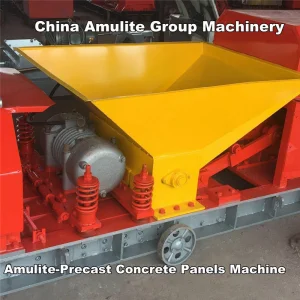
High-volume extrusion and molding lines processing lightweight aggregate mixes, EPS beads, and cement formulations into fire-rated, acoustic-insulated structural interior wall panels.
Low-energy traction extrusion forming systems capable of extruding modified inorganic clay into hyper-realistic textured stone, wood-grain, and split-brick exterior architectural veneers.
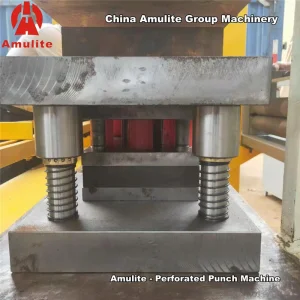
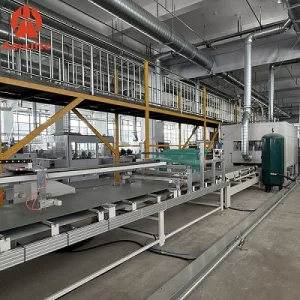
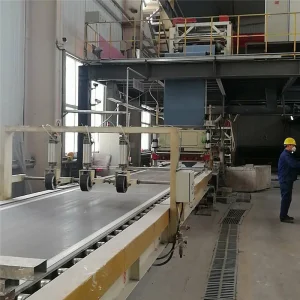
In structural wall panel manufacturing, traditional batch casting is rapidly being replaced by continuous extrusion and automated punch-and-cut lines. Continuous processing eliminates mold turnover bottlenecks, improves flexural strength through uniform fiber orientation, and reduces raw material waste by up to 14%. Furthermore, modern automated perforated punching systems allow precision acoustic conditioning on fiber cement and calcium silicate sheets, serving high-end architectural ceiling and wall partition installations.
Intelligent SCADA integration, automated closed-loop rheological control, and eco-friendly raw material recycling lines.
The future of industrial extrusion lies at the intersection of digitisation and resource efficiency. Modern Chinese extruder manufacturers lead this evolution by integrating industrial Internet of Things (IIoT) sensors directly into barrel zones, hydraulic power packs, and downstream cutting units. Edge-computing controllers aggregate melt temperature profiles, torque fluctuation data, motor drive currents, and vacuum pressure metrics, executing predictive maintenance algorithms before mechanical wear impacts product quality.
Siemens/Schneider PLC architectures running PID algorithms dynamically adjust feeder speeds, screw RPM, and die lip gap controls in real-time, eliminating human error during grade transitions.
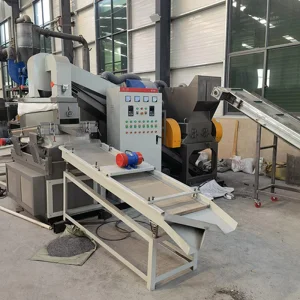
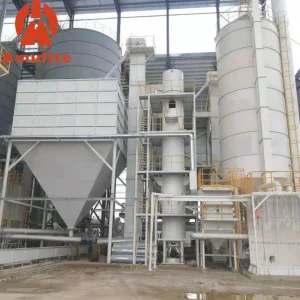
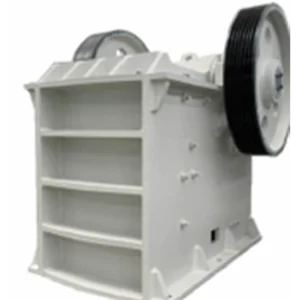
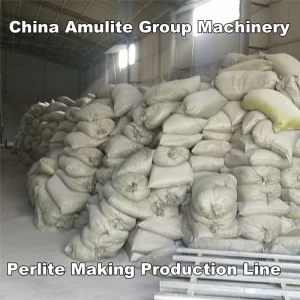
Integrated crushing, expanded perlite insulation compounding, and copper wire recycling systems transform post-industrial waste into high-value engineered building boards and raw metallic feedstocks.
Complete turnkey solutions: from primary raw material crushers to high-precision polishing, laminating, and recycling machinery.
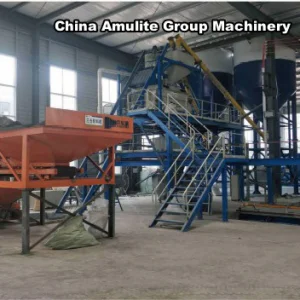
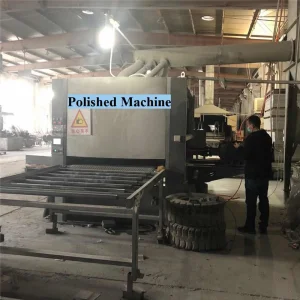
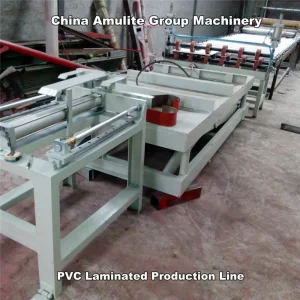
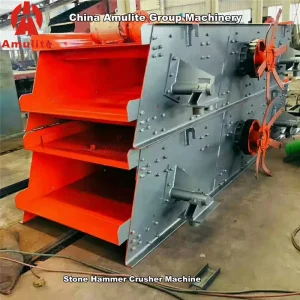
Crucial verification parameters for global engineering directors and project managers procuring machinery from China.
Selecting an industrial equipment partner requires rigorous evaluation beyond baseline capital expenditure (CAPEX). Total Cost of Ownership (TCO) encompasses energy efficiency, spare part availability, mechanical tolerances, component branding, and local installation engineering support. When evaluating Chinese manufacturing facilities for fiber cement board, wall panel, or extruder production lines, technical audit teams should inspect five fundamental criteria:
Ensure extruder screws, rollers, and sheet forming cylinders undergo high-precision CNC machining and dynamic balancing at maximum operating RPM to eliminate vibration-induced fatigue.
Autoclaves and steam deaerators integrated within cement panel lines must hold valid ASME, CE, or equivalent national pressure vessel safety certifications with non-destructive testing (NDT) reports.
Verify that control cabinets employ tier-one global brands (e.g., Siemens PLC, ABB frequency converters, Schneider low-voltage switchgear) to ensure long-term reliability and local component sourcing.
A reliable supplier must provide full process engineering—adjusting local cement, sand, fly ash, or polymer raw material formulations until board density and flexural strength targets are satisfied.
In-depth responses from our senior process engineering department addressing procurement, maintenance, and technical execution.