High-precision engineering solutions designed for high-capacity output, energy preservation, and seamless automated manufacturing.
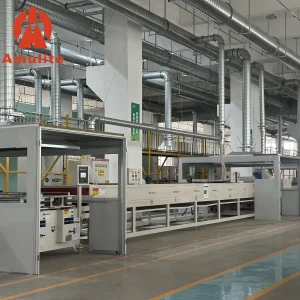
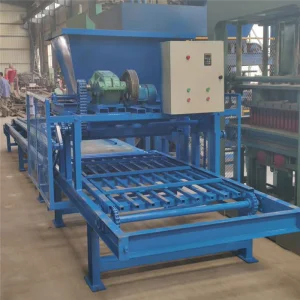
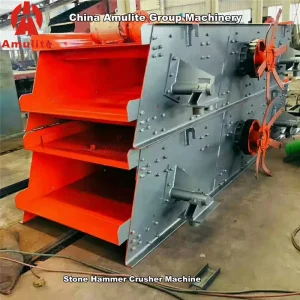
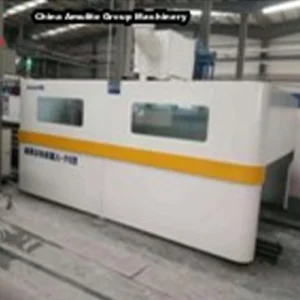
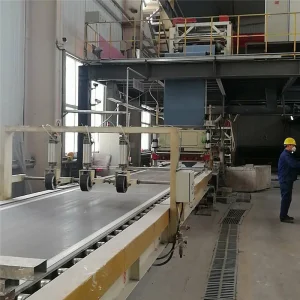
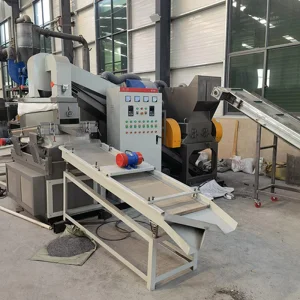
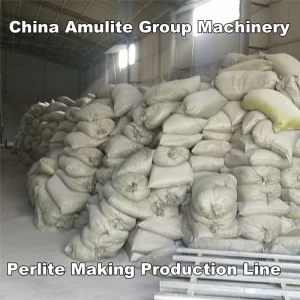
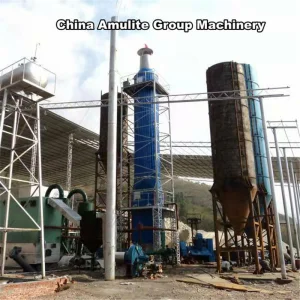
The global construction and building material industry is undergoing a structural paradigm shift toward prefabricated building systems, thermal envelope optimization, and decarbonized structural components. At the center of this transformation lies the high-efficiency **Expanded Polystyrene (EPS) Sandwich Cement Wall Panel Forming Machine**. Modern building codes across North America, the European Union, the Middle East, and Asia-Pacific demand rapid installation speed, superior fire resistance, and acoustic insulation—benchmarks that traditional masonry or basic block systems fail to deliver economically.
As urban density increases and labor costs surge globally, civil engineering contractors and commercial developers are increasingly specifying lightweight EPS sandwich cement panels. These panels consist of high-density fiber cement or calcium silicate facing boards encapsulating a lightweight core matrix composed of expanded polystyrene beads, Portland cement, fly ash, and specialized chemical admixtures. The equipment engineered to manufacture these complex composite panels must maintain ultra-precise mechanical tolerances, continuous slurry dispersion, and dynamic thermal curing.
Evaluating the **Best EPS Sandwich Forming Machine Manufacturer & Suppliers** requires assessing far more than mechanical steel assembly. Procurement directors and industrial plant engineers must analyze complete lifecycle performance: raw material yield ratios, steam-to-foam volumetric consistency, automated mold demolding speeds, and closed-loop water recovery systems. The industry leader, **China Amulite Group**, has set the engineering benchmark by integrating advanced digital PLC telemetry and heavy-duty structural automation, allowing factories to achieve unprecedented operational stability.
An industrial-grade EPS sandwich wall panel production system comprises five critical automated sub-systems operating in synchronized rhythm. Understanding these sub-systems provides industrial buyers with clear criteria to differentiate high-tier manufacturing equipment from inferior assemblers.
Utilizes fluid-bed drying and multi-stage continuous steam expansion to control EPS bead density down to ± 0.5 kg/m³. Consistent bead density is vital to prevent density segregation within the slurry matrix.
Fully computer-controlled planetary slurry mixers with load-cell weighing sensors measure cement, fly ash, expanded perlite, water, and foaming agents, ensuring uniform rheological flow.
Precision-machined structural steel molds featuring hydraulic opening/closing, automated tongue-and-groove side profiling, and high-frequency consolidation vibrators eliminate internal voids.
| Performance Specification | Standard Market Equipment | Amulite Advanced Industrial Line | Engineering Benefit |
|---|---|---|---|
| Bead Density Variance | ± 2.5 kg/m³ | ± 0.5 kg/m³ | Prevents wall delamination & structural cold spots |
| Hydraulic Mold Lock Pressure | 120 - 150 Bar | 220 - 250 Bar | Zero slurry leakage; perfect edge geometry |
| Daily Output (per 10-car mold) | 600 - 800 m² | 1,500 - 3,000 m² | Double throughput per labor shift |
| PLC System Architecture | Basic Relays / Generic Brand | Siemens S7-1500 / SCADA Cloud | Real-time telemetry, remote diagnostics, zero downtime |
| Board Surface Flatness | ≤ 2.0 mm / m | ≤ 0.5 mm / m | Direct finish application without heavy plastering |
When global building material manufacturers, state infrastructure funds, and private industrial consortiums evaluate EPS sandwich forming machinery suppliers, initial capital expenditure (CAPEX) represents less than 20% of total lifetime operational expenditures (OPEX).
A rigorous **Total Cost of Ownership (TCO)** evaluation must account for steam utilization efficiencies, chemical foaming agent consumption, raw material recipe versatility, scrap recycling capabilities, and labor automation ratios:
Amulite lines incorporate thermal heat exchangers and closed-loop condensate recovery, cutting boiler steam consumption by up to 30% per cubic meter of finished panel.
Replacing manual labor with automated vacuum turn-over stackers reduces direct plant labor requirements by 65%, eliminating operator injury hazards and board edge chipping.
Proprietary slurry mixing technology allows factory owners to utilize local Ordinary Portland Cement (OPC), low-cost fly ash, silica sand, and recycled EPS regrind without losing flexural strength.
EPS sandwich wall panels produced by China Amulite Group equipment are engineered to satisfy diverse structural, thermal, and acoustic building requirements. The modular design of our forming machines enables production of panels customized for varied global application vectors:
Lightweight EPS panels (density 600-700 kg/m³) drastically reduce dead-load stress on structural steel frames and concrete foundations. Their hollow-core or solid design allows integrated electrical conduits and plumbing channels to be routed directly through the wall prior to assembly, slashing MEP installation timelines by 50%.
By adjusting the core EPS bead concentration and board thickness (up to 200 mm), forming machines manufacture continuous insulated perimeter walls offering thermal conductivity lower than 0.038 W/m·K. These panels are key components in modern temperature-controlled agricultural distribution centers and pharmaceutical cold storage yards.
In earthquake-prone regions (such as South America, Southeast Asia, and Turkey), male-female tongue-and-groove EPS panel interlocks absorb dynamic shear energy. Houses constructed with structural steel framing and EPS sandwich walls withstand severe seismic activity while meeting 2- to 4-hour A1 fire resistance certifications.
Featuring acoustic attenuation performance up to Sound Transmission Class (STC) 48-52 dB, these lightweight panels serve as sound-insulating partition walls between hotel suites, hospital wings, multi-family apartment complexes, and high-noise manufacturing facilities.
Exporting machinery to over 60 countries requires deep alignment with diverse electrical standards, pressure vessel codes, and localized raw material variations.
China Amulite Group ensures every production line complies with destination-market regulatory frameworks, providing seamless deployment:
Control cabinets are wired in strict accordance with European CE Low Voltage Directives and North American UL 508A standards, using premium Siemens, Schneider, and ABB components.
Steam expansion tanks and curing autoclaves undergo rigorous X-ray non-destructive testing (NDT) and hydro-static testing, adhering to ASME Section VIII and PED guidelines.
Amulite deploys resident commissioning engineers to conduct civil foundation checks, mechanical assembly, electrical integration, and chemical raw material formulation tuning until commercial output is reached.
The future of EPS sandwich forming machinery lies in smart manufacturing integration, carbon footprint minimization, and advanced bio-composite insulation core formulations.
As a pioneer in green building equipment engineering, China Amulite Group’s R&D department is executing a clear multi-phase innovation roadmap:
Incorporating inline ultrasonic sensors and computer vision feedback to continuously monitor internal core bead distribution in real time, automatically adjusting slurry feed valves to eliminate voids.
Next-generation crushing and granulating units feed 100% of panel edge trimmings back into the raw material slurry matrix, completely eliminating solid industrial waste streams.
Remote telemetric modules securely broadcast machine operational metrics to the cloud, notifying plant management of component wear prior to unscheduled maintenance stops.
China Amulite Group operates an expansive 100,000 m² heavy industrial machinery fabrication complex equipped with modern CNC machining centers, automated submerged-arc welding systems, and full-line dry-testing bays.
With 27 specialized engineering teams and more than 200 complete turnkey production lines successfully delivered worldwide, Amulite is not merely an equipment vendor—we are a process engineering partner dedicated to ensuring your plant achieves sustainable commercial profitability.
We design, machine, assemble, and test every critical mechanical and electrical module under one roof. No critical sub-systems are outsourced to unverified job-shops.
Every commercial contract includes legally binding performance targets: daily output volume, board flexural strength (MPa), density uniformity, and utility consumption guarantees.
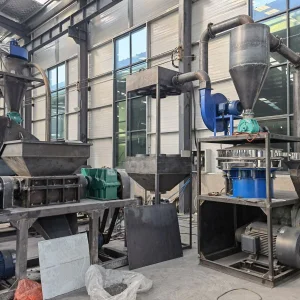
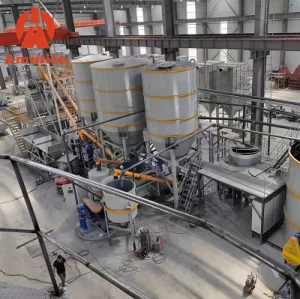
Explore our complete range of specialized equipment engineered for building board, recycling, and composite panel manufacturing plants.
Direct engineering clarity on EPS sandwich forming plant design, raw materials, installation timelines, and operational yields.
Amulite configures production lines for capacities ranging from 500,000 m² to 5,000,000 m² per year. Annual throughput depends on the number of vertical mold cars, automation level of the slurry batching system, sheet width (typically 610mm to 1200mm), and steam-curing cycle acceleration. We design modular layouts allowing initial stage production to scale effortlessly as local market demand expands.
Every turnkey contract includes comprehensive laboratory analysis of your locally sourced raw materials (cement, fly ash, quartz sand, EPS beads, and additives). Our chemical engineers prepare customized formulation recipes ensuring optimum board bonding strength, rapid initial setting times, and low core density without reliance on costly imported chemical additives.
Standard manufacturing and pre-assembly testing at our factory requires 90 to 120 days. On-site civil foundation checking, mechanical assembly, electrical wiring, and commissioning typically take 45 to 60 days under the supervision of senior Amulite field engineers. Operator training and trial runs are conducted simultaneously until target daily output is consistently achieved.
EPS sandwich panels manufactured using our automated lines meet Class A1 non-combustible fire safety standards according to EN 13501-1 and ASTM E84 tests. Depending on core panel thickness (ranging from 60mm to 200mm), panels deliver 2 to 4 hours of fire resistance, while achieving compressive strength exceeding 3.5 to 5.0 MPa.
All Amulite PLC systems feature encrypted remote VPN gateway hardware enabling our software engineering center in China to conduct diagnostic checks, program updates, and troubleshooting 24/7. We provide a 2-year operational spare parts kit with each machine shipment and maintain global regional service hubs for rapid dispatch of replacement components.