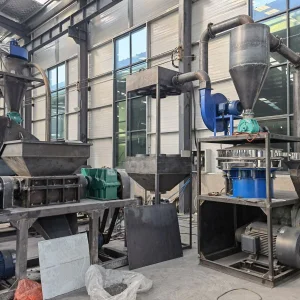
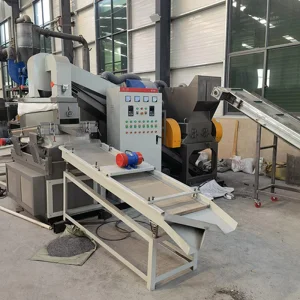
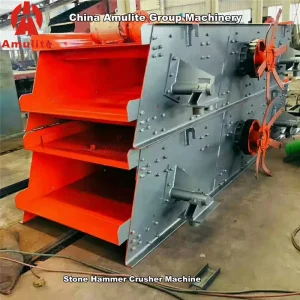
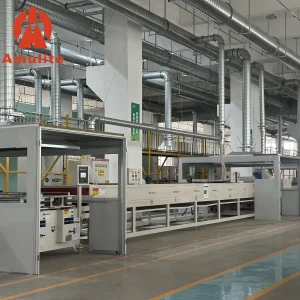
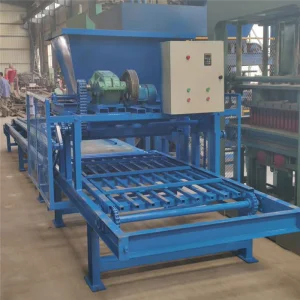
Explore our core lithium-ion battery shredding, sorting, copper reclamation, and structural auxiliary lines engineered for high-throughput operational stability in Thailand's industrial zones.
Thailand is rapidly cementing its status as the premier Electric Vehicle (EV) manufacturing hub of Southeast Asia, often referred to as the "Detroit of Asia." Under the aggressive government policy of "30@30"—which mandates that 30% of all vehicles produced in Thailand must be zero-emission vehicles by 2030—the country has witnessed an unprecedented influx of foreign direct investment (FDI). Global automotive giants and tier-1 battery cell makers, including BYD, Great Wall Motor (GWM), SAIC Motor, Chery, Changan, and Horizon Plus (a joint venture between PTT and Foxconn), have established gigafactories across the Eastern Economic Corridor (EEC) spanning Rayong, Chonburi, and Chachoengsao provinces.
However, the rapid escalation of EV assembly line capacities generates two distinct streams of lithium-ion battery waste: immediate industrial production scrap (module trim, off-spec cells, slurry residue, anode/cathode punchings) averaging 5% to 8% of total production output, and impending End-of-Life (EOL) battery packs from early EV adopters, commercial electric buses, and energy storage systems (ESS).
Establishing a lithium battery recycling facility in Thailand requires navigating rigorous statutory standards administered by the Department of Industrial Works (DIW) under the Ministry of Industry. Recyclers must secure a Factory License Type 105 (Separation or Landfilling of Unusable Materials) or Factory License Type 106 (Recycling of Industrial Waste). Furthermore, the Board of Investment of Thailand (BOI) offers lucrative privileges, such as corporate income tax exemptions under Section 1.25 for high-tech circular economy investments, provided the equipment meets international Environmental, Social, and Governance (ESG) criteria.
Equipment compliance is non-negotiable. Processing lines operating within EEC industrial estates like WHA, Amata City, or CPGC must demonstrate strict adherence to Environmental Impact Assessment (EIA) baselines regarding volatile organic compound (VOC) emissions, hazardous dust containment, and zero wastewater discharge protocols.
Modern lithium-ion battery recycling requires extreme precision to isolate high-value active cathode materials—specifically Lithium, Nickel, Cobalt, and Manganese—while recovering battery-grade Copper and Aluminum foils without causing environmental contamination or safety hazards.
Submerged automated salt-water electrolytic or high-voltage load discharging followed by robotic pack disassembling down to individual modules and cells.
Dual-shaft shear crushing conducted under continuous Nitrogen (N2) atmosphere purge with online O2 monitoring kept strictly under 2% concentration.
Indirect heating rotary kiln vacuum drying (300°C–450°C) to volatilize organic binders (PVDF) and electrolyte solvents without oxidation.
Multi-stage Z-box airflow sorting, vibrating screens, and magnetic separators producing purity-grade Black Mass (>98%) and clean Cu/Al granules.
While conventional pyrometallurgical smelting involves energy-intensive thermal reduction in blast furnaces—resulting in high carbon emissions and total loss of valuable Lithium in slag—our advanced dry-physical mechanical separation paired with downstream low-temperature hydrometallurgy offers maximum resource yield with minimal carbon intensity.
| Performance Metric | Amulite Dry Physical + Hydrometallurgy | Traditional Pyrometallurgical Smelting | Direct Chemical Leaching |
|---|---|---|---|
| Lithium (Li) Recovery Rate | > 92.5% | 0% (Lost in Slag) | 85.0% - 88.0% |
| Nickel & Cobalt Yield | > 98.5% | 90.0% - 92.0% | 95.0% |
| Copper & Aluminum Separation | > 99.0% Purity | Partial (Copper alloy only) | Requires chemical digestion |
| VOC & Flue Gas Emissions | Ultra-Low (RTO + Carbon Scrubbing) | High GHG & Acid Gas volume | Acid mist abatement needed |
| OPEX per Ton of Input | Optimized Energy/Ton ($180-$240) | High Energy Consumption ($350+) | High Chemical Reagent Cost |
For battery processors in Chonburi and Rayong, our fully closed-loop processing machinery guarantees that volatile organic compounds (VOCs) released during electrolyte evaporation are swept into a Regenerative Thermal Oxidizer (RTO), decomposing organic pollutants into harmless H2O and CO2 at temperatures exceeding 850°C, fully complying with Thai EPA standards.
China commands over 75% of the global lithium battery manufacturing and recycling equipment ecosystem. As a primary OEM equipment manufacturer with decades of industrial machinery fabrication experience, China Amulite Group integrates world-class precision component sourcing, advanced robotics, and heavy engineering capability.
Our state-of-the-art manufacturing facility leverages high-definition laser cutting, CNC multi-axis milling, and robotic automated welding bays to build industrial-grade crushers, thermal dryers, and pneumatic sorters. By sourcing directly from our vertically integrated manufacturing cluster in China, Thai plant owners reduce total initial Capital Expenditure (CAPEX) by 35% to 50% compared to European or North American equipment vendors—without sacrificing operational durability or technological sophistication.
Our plant in China maintains streamlined sea-freight corridors directly to Thailand's primary deep-sea port, Laem Chabang (Chonburi). Equipment containers and heavy skid units arrive on site within 7 to 12 transit days, ensuring project commissioning timelines remain strictly on schedule.
Investing in a multi-ton per hour lithium battery recycling line is not merely a machinery purchase; it is a long-term infrastructure partnership. We deliver comprehensive end-to-end engineering, procurement, and construction (EPC) turnkey support customized for local operators in Thailand.
Factory floor plan drawings, explosion-proof isolation zone layouts, pneumatic ductwork mapping, and electrical load distribution tailored to your industrial shed dimensions in Thailand.
Resident Chinese automation engineers deployed directly to your Thai plant site for mechanical erection, PLC programming, trial runs, and operator safety qualification.
24/7 IoT remote monitoring via Siemens SCADA modules for instant fault diagnosis, alongside localized warehouse stocking of wear parts like shredder blades and screen meshes.
Discover our extended portfolio of automated manufacturing lines, building material processing plants, and surface coating machinery built for sustainable industrial expansion.
Direct insights from our senior process engineers addressing regulatory permits, safety mechanisms, and equipment ROI in Thailand.
Contact our senior process engineering team today to receive a complete turnkey proposal, including equipment line layouts, mass-balance calculations, utility consumption estimates, and BOI incentive support.