Engineered for high-volume output, precision thickness regulation, and continuous automated production targeting strict Japanese construction standards.
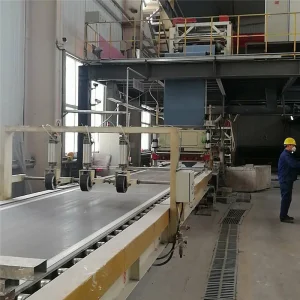
Full-scale automated line engineered for high-speed continuous plasterboard production meeting JIS standards.
Explore Technical Specs
Advanced fiber-reinforced gypsum board equipment optimized for Japanese seismic partition walls.
Explore Technical Specs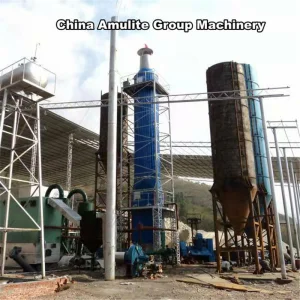
Precision fluidized bed calcining technology converting raw/FGD gypsum into premium beta-hemihydrate plaster.
Explore Technical Specs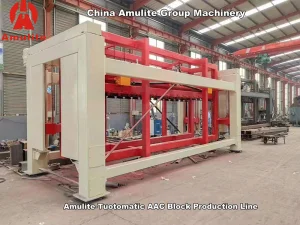
High-capacity autoclaved aerated concrete block machinery engineered for ultra-lightweight masonry applications.
Explore Technical SpecsThe Greater Tokyo Area, encompassing over 37 million residents, represents one of the most technologically demanding and densely populated urban construction ecosystems on Earth. Driven by massive urban revitalization projects across commercial hubs such as Shibuya, Toranomon-Azabudai, Tokiwabashi, and Yaesu, the requirement for lightweight, fire-rated, acoustic, and earthquake-resistant interior dry construction materials has reached an unprecedented peak.
Japanese Industrial Standards demand rigid physical parameters for board density, water absorption rate, sagittal deflection under humid conditions, and flexural strength. Production lines targeting Tokyo must operate with sub-millimeter precision tolerances.
Tokyo lies in an active seismic region. Partition systems must absorb shear stresses during tremors. Fiber-reinforced, high-density gypsum boards manufactured on stabilized forming lines provide the crucial shear resistance required by Japanese building codes.
High-density commercial districts in Tokyo require non-combustible materials under the Building Standards Law of Japan. Gypsum boards produced with precise crystalline water ratios (CaSO4·2H2O) serve as active heat sinks during building fires.
Designing a high-throughput gypsum board manufacturing facility involves mastering complex fluid dynamics, thermo-chemical calcination, continuous web synchronization, and automated material handling systems.
The core of plasterboard quality lies in the chemical conversion of raw gypsum (natural rock or Flue Gas Desulfurization FGD byproduct) into beta-hemihydrate (CaSO4·1/2H2O). Our lines utilize fluidized bed calcining kilns featuring precise thermal fluid oil exchangers. This ensures consistent crystal transformation, ultra-stable water demand, and minimal un-calcined anhydrite residue.
| Process Stage | Core Technical Mechanism | Tokyo Quality Control Impact | Automation Level |
|---|---|---|---|
| Raw Dosing & Calcination | Fluidized bed heating with automatic micro-powder weight feeders. | Guarantees 95%+ beta-phase purity for fast setting time. | 100% PLC Automated Closed-Loop |
| Dynamic Slurry Mixing | High-shear pin mixer with multi-point foaming agent injection. | Creates uniform micro-air pore structure, reducing board weight. | Digital Mass-Flow Control |
| Continuous Web Forming | Servo-driven glass-fiber/paper tensioning and pneumatic edge folding. | Prevents edge delamination and maintains exact squareness. | Laser Guidance & Auto Alignment |
| Multi-Deck Drying | Transverse hot-air circulation with multi-zone humidity monitoring. | Prevents face paper burning and interior moisture pockets. | SCADA Energy Balance Tuning |
When Japanese developers, contractors, and building material manufacturers evaluate production line machinery, total cost of ownership (TCO), equipment reliability, and rapid commissioning capabilities are paramount.
Chinese heavy machinery manufacturing yields a 40% to 55% reduction in initial capital expenditure compared to traditional European vendors, without compromising structural steel thickness, electrical component quality, or operational lifespan. This capital efficiency allows Tokyo plant operators to achieve ROI within 24 to 36 months.
Every production line engineered for export integrates globally recognized industrial automation hardware: Siemens S7-1500 series PLCs, Schneider low-voltage electrics, SEW Eurodrive gear reducers, SKF bearings, and Danfoss frequency converters. Full compatibility with Japanese power grids (50Hz Tokyo / 60Hz Western Japan) is factory-configured.
Urban developments in Tokyo present unique engineering challenges: ultra-dense vertical spaces, stringent acoustic isolation requirements between residential suites, and rapid modular construction schedules.
In skyscrapers exceeding 200 meters, interior non-load-bearing walls require lightweight plasterboards (density < 650 kg/m³) to reduce dead load on structural steel frames while maintaining high sound transmission class (STC > 55dB) ratings.
Multi-family apartment structures require double-layer 12.5mm fire-rated plasterboards over light-gauge steel studs. The boards must exhibit exceptional dimensional stability under seasonal relative humidity variations in the Tokyo bay area.
Subterranean shopping malls and transit hubs demand silicone-treated moisture-resistant gypsum boards. Our machinery integrates dual-liquid silicone metering systems directly at the wet mixer phase.
Procuring a multi-million-dollar building material manufacturing plant demands rigorous risk mitigation, clear milestone engineering, and transparent operational expenditure modeling.
A standard 20-million m²/year production line requires balanced energy and raw material management. Operating expenses typically consist of raw gypsum powder (55%), paper liner (25%), energy/steam for dryer (15%), and labor/maintenance (5%). By engineering a multi-stage waste-heat exchanger that captures dryer exhaust stack energy to preheat boiler feed water, our systems trim total energy costs by up to 18% annually.
Prior to international shipping, all mechanical components undergo a 72-hour continuous dry run at our 100,000m² manufacturing facility. overseas clients or third-party inspection firms (such as SGS or TÜV) evaluate:
Fully compatible equipment for specialized wallboard, ceiling panel, board finishing, and industrial recycling operations.
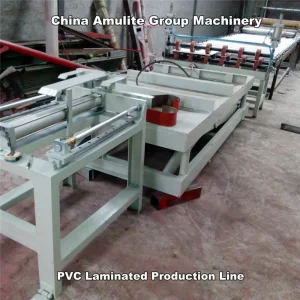
High-precision lamination and automated slitting line for acoustic gypsum ceiling tiles.
View Product Details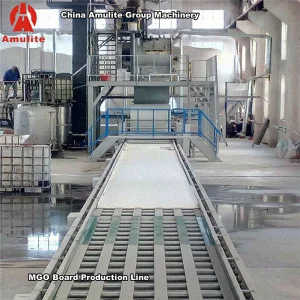
Magnesium oxide fireproof board machinery for heavy-duty structural partition panels.
View Product Details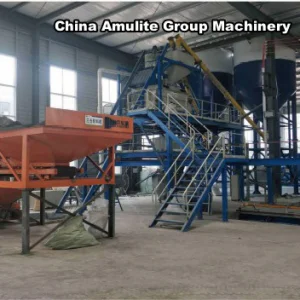
Extruded lightweight concrete hollow core wall panel extrusion equipment.
View Product Details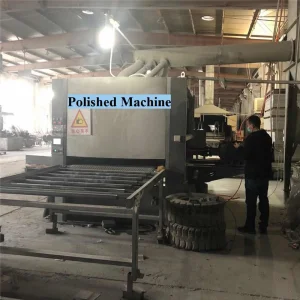
High-speed surface calibrating and sanding machinery for fiber cement and plasterboard.
View Product Details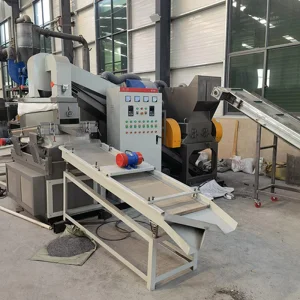
Resource recovery and copper granulating systems for industrial plant auxiliary facilities.
View Product Details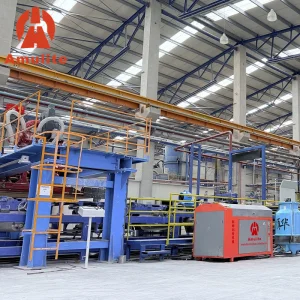
Hatschek process autoclaved calcium silicate board plant for heavy exterior cladding.
View Product Details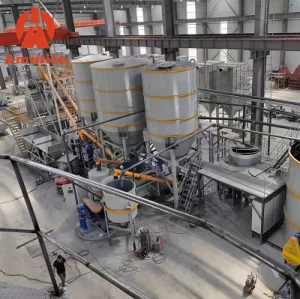
Lightweight compound wall panel forming equipment with EPS core injection.
View Product Details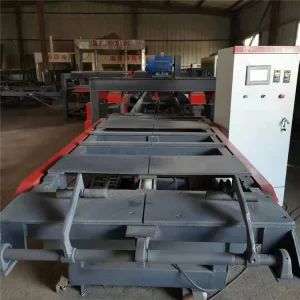
Ultra-precise dual-saw edge profiling and trimming unit for rigid building panels.
View Product DetailsAddressing essential technical, operational, compliance, and logistics queries regarding gypsum board line installation.
Our lines feature automated high-precision dynamic weighing systems, micro-metering chemical additive pumps, and laser-guided forming table controls. This guarantees that board density tolerance remains within ±1.5%, flexural breaking loads exceed JIS minimum thresholds, and edge bevel squareness is maintained consistently across high-speed shifts.
Our plant architecture is universally adapted to handle natural crude gypsum rock (dihydrate), Flue Gas Desulfurization (FGD) synthetic gypsum from thermal power stations, and Phosphogypsum byproduct. The calcination kiln temperature curves are customized based on your local raw material laboratory analysis.
A standard turnkey project spans 6 to 9 months: Engineering & Custom Fabrication (90–120 days), Sea Logistics & Port Clearance to Yokohama/Tokyo (20–30 days), On-Site Civil Supervision & Mechanical/Electrical Erection (60–90 days), followed by Commissioning and Local Staff Training (30 days).
We employ a multi-deck, longitudinal heat-zone drying tunnel equipped with air re-circulation fans and secondary heat exchangers. By continuously monitoring exhaust air dew points, the system auto-adjusts fresh air intake, achieving over 40% thermal efficiency compared to conventional single-pass kilns.
China Amulite Group provides resident field engineers during installation and commissioning. Post-commissioning, we offer 24/7 remote PLC diagnostics via encrypted IoT gateways, routine spare-part dispatch within 48 hours, and annual on-site process optimization audits.
Contact our senior industrial engineering team today to receive a complete feasibility study, custom equipment configuration list, plant layout drawings, and TCO ROI calculation tailored to your targeted regional capacity.
Send Inquiry Now