



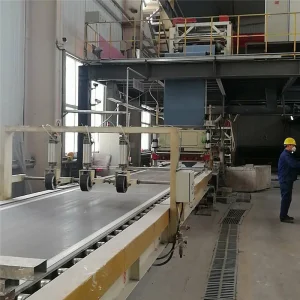
Engineered for high-capacity production, precision board calibration, and European EN-520 compliance standards.
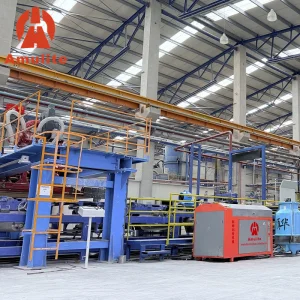
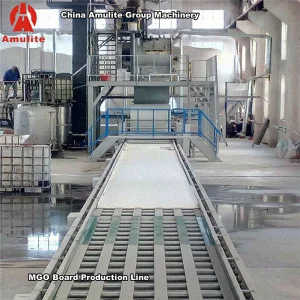
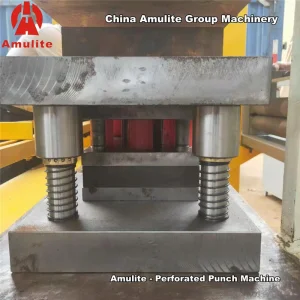
Analyzing local construction initiatives, Grand Paris Express demands, and RE2020 environmental compliance for building material machinery.
The Greater Paris region (Île-de-France) is currently undergoing one of the most ambitious urban transformations in modern European history. Driven by the Grand Paris Express megaproject, extensive urban renewal initiatives across Seine-Saint-Denis, and the ongoing retrofitting of commercial real estate in La Défense, demand for high-grade drywalls, plasterboards, and specialized gypsum products has reached an all-time high. Modern French construction projects strictly enforce the RE2020 environmental regulation, demanding building materials with minimal embodied carbon, superior thermal envelope efficiency, and certified acoustic isolation coefficients.
For industrial wallboard producers, factory owners, and building material investors targeting France and the broader Western European market, setting up a high-speed, automated Gypsum Board Production Line requires an engineered approach that balances operational CAPEX, thermal energy performance, and complete adherence to European standard NF EN 520 (Plasterboards - Definitions, Requirements, and Test Methods).
Integrated fluid-bed calcining technology designed to process both natural gypsum rock and FGD (Flue Gas Desulfurization) synthetic gypsum with up to 98.5% purity conversion, drastically cutting natural gas expenditure.
Configured to manufacture Type F (Fire Resistant), Type H2 (Water Repellent), and Type I (High Surface Hardness) acoustic boards specifically required for Paris luxury apartment partitions and hotel fit-outs.
Precision edge-trimming and paper-wrapping units capable of forming Tapered Edge (BA) and Square Edge (SB) specifications seamlessly at line speeds exceeding 60 meters per minute.
A comprehensive breakdown of the 6 core operational stages engineered for maximum linear throughput and structural stability.
The manufacturing process begins at the continuous pin mixer. Stucco (calcined gypsum), micro-silica, modified starch, glass fiber reinforcement, fluidizers, and foaming agents are metered using digital loss-in-weight feeders controlled by Siemens S7-1500 PLCs. Liquid foaming systems introduce ultra-fine, uniform air micro-bubbles to achieve target board densities ranging from 6.5 kg/m² to 10.5 kg/m² for standard 12.5mm boards.
The slurry is uniformly distributed between top and bottom high-tensile face papers on a flat rubber belt conveyor. Precision sizing plates calibrate the board thickness (typically 9.5mm, 12.5mm, or 15mm) while lateral folding wheels fold the bottom paper over the edge, creating a reinforced, smooth tapered edge (BA) ready for jointing compound application.
The setting line extends up to 180 meters, allowing the hemihydrate gypsum to re-hydrate into solid dihydrate gypsum crystals ($CaSO_4 \cdot 2H_2O$). Once the hydration phase reaches 95% hardness, high-speed rotary fly-cutters shear the continuous plasterboard ribbon into standard lengths (2500mm, 2700mm, or 3000mm) with sub-millimeter precision.
Water removal is the most energy-intensive process in gypsum board manufacturing. Amulite’s multi-deck drying kilns utilize cross-flow hot air circulation driven by low-NOx gas burners combined with heat exchanger loops. By recycling exhaust humidity, our system reduces fuel consumption by up to 35% compared to traditional vertical dryers.
Dried boards pass through edge-trimming saws to square off end edges, are automatically paired face-to-face to prevent surface damage during transit, and are stacked onto pallets via heavy-duty robotic gantries or mechanical lifts before final stretch wrapping.
Real-time telemetry monitors slurry viscosity, belt speed, drying temperature gradients, and board mass per square meter. Remote diagnostics enable immediate parameter tuning directly from our central engineering center.
| Performance Specification | Standard Conventional Line | Amulite High-Efficiency Line (EU Spec) | Paris Market Advantage |
|---|---|---|---|
| Annual Production Capacity | 2 Million to 8 Million m² | 5 Million to 30 Million m² | Scalable output for large-scale French housing developments |
| Drying Energy Consumption | ~ 0.35 Nm³ Gas / m² board | ~ 0.22 - 0.26 Nm³ Gas / m² board | Direct reduction in operational utility overhead & carbon tax |
| Thickness Control Precision | ± 0.5 mm | ± 0.2 mm (Laser Calibrated) | Perfect compliance with strict French interior finishing standards |
| Recycled FGD Gypsum Compatibility | 30% - 50% max ratio | Up to 100% FGD Gypsum | Complies with RE2020 circular economy mandates |
| Automation Level | Semi-manual stacking/dosing | Full PLC / SCADA Closed Loop | Drastically lowers high Western European labor costs |
Ensuring your plasterboard manufacturing plant meets all local CSTB guidelines, CE markings, and NF standards.
Our production lines are pre-configured to handle specialized additive dosing for standard plasterboard classifications:
In France, drywall installation is strictly governed by DTU 25.41. Amulite equipment produces plasterboards with exact edge dimensions, high screw retention strength, and minimal moisture expansion, guaranteeing seamless sign-off by French building inspectors (Bureau Veritas, SOCOTEC).
All mechanical components, hydraulic presses, high-voltage control panels, and conveyor lines built by Amulite come complete with full CE marking, integrated safety light curtains, emergency stop loops, and low-voltage control systems compliant with European electrical safety codes.
Delivering high-end heavy industrial engineering at optimal capital expenditure for global buyers.
Investing in a modern gypsum board plant requires balancing capital outlay (CAPEX) with long-term operational efficiency (OPEX). European machinery suppliers often present prohibitively expensive capital requirements that lengthen payback periods beyond 7–10 years. Conversely, standard low-cost vendors frequently lack structural steel quality, automated diagnostic controls, or long-term spare parts reliability.
China Amulite Group bridges this gap by combining state-of-the-art Chinese heavy industrial manufacturing with premium international components (Siemens, Schneider, SEW-Eurodrive, SKF Bearings). Operating from our massive 100,000 m² manufacturing base in Hebei, China, we offer:
Tailoring plasterboard specifications for diverse architectural and structural demands across France.
High-density acoustic partitions ($R_w + C_{tr} \ge 55 \text{ dB}$) using heavy gypsum boards produced on high-pressure calibrating forming tables. Ideal for corporate headquarters requiring complete sound isolation between meeting suites.
The rapid rise of timber-frame residential construction in France demands lightweight fire-resistant board (Euroclass A1) backing layers. Amulite lines produce rigid 15mm plasterboards engineered specifically for prefabricated wall cassettes.
Historic Paris masonry structures require breathable, moisture-regulating wall linings. Custom formulation mixing allows factories to produce micro-porous, low-weight gypsum panels designed to preserve original wall envelopes.
Direct answers from our senior project engineering team regarding installation, raw materials, capacity, and service.
Our standard production line capacities range from 2 million m² per year for regional specialized plants up to 30 million m² per year for continuous high-speed industrial facilities. Output is tailored by altering belt width (1200mm - 1300mm), forming line speed (15 m/min to 80 m/min), and dryer deck levels (usually 8 to 14 decks).
Yes. Amulite’s process engineering team tests your specific raw materials—whether natural gypsum rock from local French quarries or synthetic FGD gypsum derived from industrial power plants and chemical processing. We optimize the calcination temperature curves and additive dosing formulas specifically for your available raw material feed.
Manufacturing lead time at our factory takes between 90 and 150 days depending on plant capacity. Civil foundation work can occur simultaneously on your site. Once delivered to France, our resident mechanical and electrical engineers supervise installation within 45 to 60 days, followed by 15 to 30 days of live trial runs, formula tuning, and operator training.
Our drying kilns are highly versatile and can be engineered to run on Natural Gas (NG), Liquefied Petroleum Gas (LPG), Heavy Oil, Thermal Oil Systems, or Biomass Gasifiers. For modern European clients, we also offer direct electric heat integration and industrial waste-heat recycling connections to reduce carbon footprints.
We supply precision inline measuring instruments including continuous nuclear/gamma-ray or laser thickness sensors, digital moisture analyzers, and laboratory testing equipment (flexural strength test rigs, core hardness testers) to ensure every batch produced meets NF EN 520 parameters.
We provide a 24/7 remote PLC diagnostic connection, full original spare parts inventories, annual preventative maintenance visits by our field engineers, and continuous process updates for new board formulations (such as ultra-lightweight boards or acoustic damping boards).
Explore our full line of specialized building material production systems engineered by China Amulite Group.
Contact China Amulite Group’s engineering department today to receive customized plant layout drawings, detailed equipment lists, raw material feasibility analyses, and turnkey price quotations.
Send Inquiry Now