Deploying world-class automation, engineered to meet the growing demand for lightweight aggregates, energy-efficient building panels, and sustainable manufacturing across Luzon, Visayas, and Mindanao.
The Republic of the Philippines is undergoing a historic infrastructure metamorphosis driven by public-private investments, national urban development masterplans (such as the "Build Better More" initiative), and an urgent mandate for eco-friendly, disaster-resilient building technologies. As urban centers like Metro Manila, Metro Cebu, Davao City, and New Clark City experience explosive high-rise commercial construction and horizontal mass-housing development, the demand for lightweight, fire-rated, and thermally insulating building materials has reached an unprecedented peak.
Perlite—a naturally occurring volcanic glass possessing unique water-retention properties that expands 4 to 20 times its original volume when subjected to extreme heat—lies at the epicenter of this industrial evolution. However, the Philippine domestic market has historically relied on raw ore importation and inefficient, legacy expansion kilns that generate high carbon emissions, excessive dust pollution, and inconsistent bulk densities. Modern Philippine enterprise buyers, ranging from building material manufacturers to agricultural conglomerates, require high-output, automated perlite production lines engineered to operate reliably under tropical maritime atmospheric conditions while strictly adhering to local environmental laws.
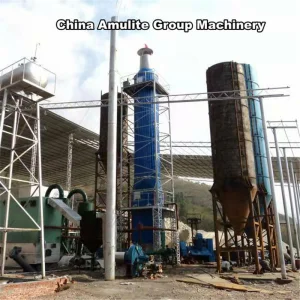
A modern perlite making production line is an integrated thermodynamic system designed to process raw perlite ore (typically sizing between 0.15mm to 3.0mm) into precisely classified expanded perlite products. Achieving high yield with minimal thermal fuel consumption requires absolute precision in furnace thermal dynamics, fluidization velocity, and real-time pneumatic collection. Below is an engineering overview of our proprietary production line architecture designed for Philippine factories.
Eliminates surface moisture and pre-conditions raw perlite ore to 250°C–350°C using recovered waste heat from the main furnace. This prevents thermal shock, reduces fuel consumption by up to 18%, and ensures uniform expansion inside the primary furnace shaft.
Features high-alumina refractory lining and multi-stage natural gas/LPG/diesel low-NOx burners capable of generating stable temperatures between 900°C and 1200°C. Raw ore instantly vaporizes its combined water content, popping into pristine closed-cell microspheres.
Draft fans draw expanded lightweight perlite out of the thermal zone into high-efficiency cyclone separators. Multi-stage cooling air manifolds rapidly drop product temperature to prevent particle collapse or agglomeration.
To safeguard factory personnel and comply with strict urban environmental laws, our production lines incorporate a negative-pressure pulse baghouse dust collector achieving particulate emission levels under 10 mg/Nm³. Automated PLC interface cabinets powered by Siemens or Schneider hardware allow plant operators to adjust feed rates, draft velocities, and burner flame geometry via touchscreen interfaces with automated diagnostics.
Selecting a machinery manufacturing partner is the single most critical decision for a project developer in the Philippines. China’s advanced machinery manufacturing sector has evolved into a global powerhouse, combining economies of scale, mature supply chains, and state-of-the-art technological R&D. As a top-tier Chinese enterprise, our production lines deliver tangible business advantages to Philippine investors:
Operating heavy thermal machinery in the Philippines requires strict alignment with local regulatory bodies, electrical standards, and safety mandates. Importing standard off-the-shelf equipment without localized modifications frequently results in customs delays, grid incompatibility, or failure to pass local environmental permits.
The Philippine standard industrial electrical grid operates at 220V / 440V, 60Hz, 3-Phase. All electric motors, VFD controllers, transformers, and PLC systems supplied in our plants are natively manufactured to 60Hz specifications, eliminating motor overheating or frequency conversion failures.
Our closed-loop exhaust dust scrubbers and pulse baghouses ensure full compliance with the Department of Environment and Natural Resources (DENR) Environmental Management Bureau (EMB) clean air guidelines, protecting your plant’s ECC (Environmental Compliance Certificate).
Perlite produced by our machinery conforms to Department of Public Works and Highways (DPWH) standards for lightweight structural aggregates and Philippine National Standards (PNS) for fire-rated wall panels and ceiling tiles.
Investing in an expanded perlite making line opens up diverse, highly lucrative market channels across various sectors of the Philippine economy:
| Target Sector | Primary Philippine Geographic Hubs | Perlite Grade & Density | End-Product Value Application |
|---|---|---|---|
| Lightweight Construction | Metro Manila, Cavite, Laguna, Cebu City | Ultra-Light (40–70 kg/m³) | EPS Sandwich Panels, Lightweight Concrete Blocks, Fireproof Ceiling Boards, Acoustic Mortar. |
| Horticulture & Agriculture | Benguet, Bukidnon, Davao, Cotabato | Coarse/Medium (80–120 kg/m³) | Soil Aeration Media for High-Value Crops, Sugarcane Farms, Greenhouse Hydroponics, Export Bananas. |
| Cryogenic & Industrial Insulation | Batangas (LNG Terminals), Bataan, Subic Bay | Cryogenic Grade (30–50 kg/m³) | Double-Walled LNG Storage Tank Insulation, Industrial Oxygen/Nitrogen Pipeline Thermal Jackets. |
| Food, Beverage & Sugar Filtration | Negros Occidental, Iloilo, Pampanga | Filter-Aid Fine (100–150 kg/m³) | Raw Sugar Juice Clarification, Coconut Oil Processing, Local Brewery Liquid Filtration. |
Below are standard engineering configurations engineered by our factory for industrial plant operators. Custom volumetric output ratings can be scaled to project requirements.
| Model Designation | Hourly Expanded Output | Burner Thermal Rating | Main Power Load | Dust Collector Emission | Automation Level |
|---|---|---|---|---|---|
| APL-1000-PH | 10 – 15 m³/hour | 600,000 kcal/h | 35 kW (440V/60Hz) | < 10 mg/Nm³ | Semi-Automated PLC |
| APL-2000-PH | 20 – 30 m³/hour | 1,200,000 kcal/h | 65 kW (440V/60Hz) | < 10 mg/Nm³ | Fully Automated SCADA |
| APL-4000-PH | 40 – 50 m³/hour | 2,400,000 kcal/h | 110 kW (440V/60Hz) | < 10 mg/Nm³ | Full Smart Factory iOT |
Expert answers from our senior thermal engineering and international project management teams.
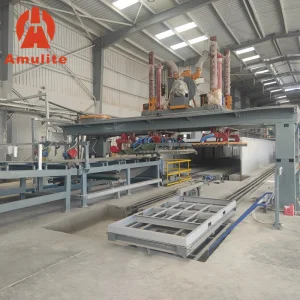
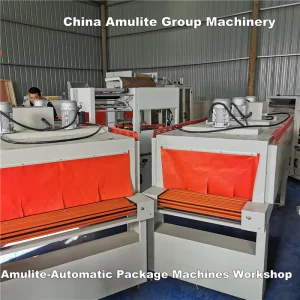
Explore our full suite of automated machinery lines, wall panel production plants, and industrial processing equipment engineered for global enterprise clients.
Contact our technical sales division today for complete plant design, layout CAD drawings, customized ROI estimations, and direct factory quotation packages tailored to your project requirements.
Send Inquiry Now