Engineered to deliver exceptional thermal insulation, fire resistance, and structural speed for housing and infrastructure projects in Morocco.
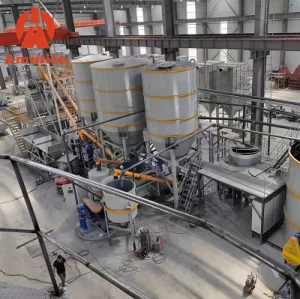
High-capacity automatic vertical and horizontal mold plant engineered for rapid assembly of lightweight cement-EPS structural panels.
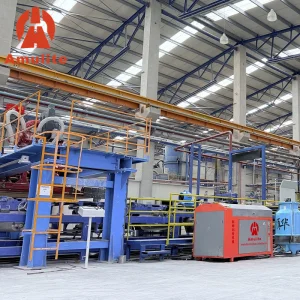
Autoclaved fiber cement facing board manufacturing equipment designed for high-density, weather-resistant structural wall skins.
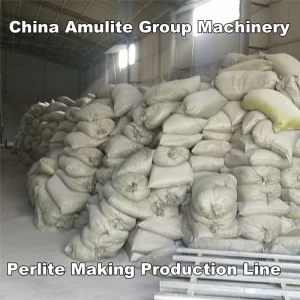
Thermal insulation mineral expansion furnace line producing ultra-lightweight aggregates for fire-rated composite wall panels.
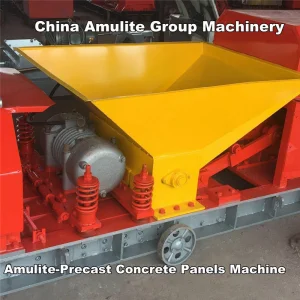
Multifunctional precast component production machinery customized for heavy residential partition walls and modular housing frames.
Understanding the tectonic shift toward modular, energy-efficient building materials driven by national urban renewal and global sports infrastructure commitments.
The Kingdom of Morocco is undergoing a unprecedented construction boom. Under the leadership of the Royal Government and driven by the economic roadmap of Vision 2030, alongside co-hosting the 2030 FIFA World Cup, the nation's demand for high-performance building materials has reached an all-time high. Major urban centers such as Casablanca, Rabat, Tangier, Marrakech, and Agadir are actively replacing slow, labor-intensive traditional masonry with automated precast systems.
Traditional clay brick and hollow concrete block construction methods face critical bottlenecks in modern North African development: excessive structural weight, high thermal conductivity, slow installation speed, and vulnerability to seismic events. In response, Expanded Polystyrene (EPS) Sandwich Cement Wall Panels have emerged as the premier structural solution. Delivering superior thermal resistance ($R$-value), acoustic isolation, A-grade fireproofing, and rapid dry-work installation, EPS cement panels are transforming commercial complexes, social housing initiatives, and industrial parks across Morocco.
For Moroccan building material manufacturers, real estate developers, and EPC contractors, establishing a localized EPS Sandwich Cement Wall Panels Production Line is no longer just an operational upgrade—it is a strategic requirement to capture market share. Importing finished wall panels from abroad incurs high freight tariffs and logistical delays at port hubs like Tangier Med. Local production powered by China Amulite Group's Industry 4.0 equipment enables manufacturers to leverage local Portland cement, sand, and labor while controlling margins.
Inside China Amulite Group's fully automated, SCADA-integrated EPS sandwich cement panel manufacturing plant.
Features automated multi-component weighing hoppers for OPC cement, fly ash, chemical foaming agents, and aggregate inputs. High-shear planetary mixers ensure uniform distribution of micro-air bubbles and lightweight EPS beads without bead rupture.
Utilizes a closed-loop fluidised bed drying expansion boiler system. EPS raw beads are expanded to a controlled density range of 8–15 kg/m³, with precise pressure valves regulating steam injection for uniform cell diameter.
High-rigidity structural steel vertical molding cars accommodate calcium silicate or fiber cement facing boards on both sides. High-pressure hydraulic clamping prevents wall panel thickness deviation ($\pm 0.5\text{ mm}$).
1. Board Feeding & Positioning: Fiber cement or calcium silicate boards are automatically loaded onto double-sided mold cars via vacuum suction manipulators.
2. Core Slurry Grouting: The homogenised slurry (Portland cement, expanded EPS beads, sand, water, foaming agent, and polycarboxylate superplasticisers) is pumped directly into the mold cavity.
3. Vibrational Compaction & Curing: High-frequency, low-amplitude vibrators purge air pockets. Mold cars enter steam-heated curing tunnels ($55^\circ\text{C} - 65^\circ\text{C}$) to accelerate 8-hour green strength development.
4. Automated Demolding & Stacking: Hydraulic tilt demolding arms rotate panels $90^\circ$, extracting finished panels cleanly onto automatic stacking conveyors for final curing and plastic wrapping.
Navigating Moroccan construction codes, thermal regulations (RTCM), and earthquake-resistant guidelines (RPS 2000).
Operating a production facility in Morocco requires total compliance with local engineering codes. China Amulite Group customises each plant’s operational parameter recipes to fulfill Moroccan technical certifications, including standard compliance under the Ministère de l'Aménagement du Territoire National, de l'Urbanisme, de l'Habitat et de la Politique de la Ville.
Morocco's Thermal Building Regulation (Règlement Thermique de Construction au Maroc - RTCM) divides the country into 6 distinct climatic zones (Zone 1 Agadir to Zone 6 Midelt). Amulite's EPS sandwich wall panels achieve thermal resistance ($R$-values) exceeding $2.4\text{ m}^2\cdot\text{K/W}$ for 100mm core panels, slashing HVAC energy demand in hot arid regions like Marrakech and cold mountain regions like Ifrane.
Following historical seismic events in Al Hoceima and Agadir, Moroccan structural codes enforce strict compliance with RPS 2000 / 2011 (Règlement de Construction Parasismique). The male-female tongue-and-groove joint profile engineered into Amulite’s mold cars allows flexible shear movement, ensuring zero wall collapse under Zone 3 seismic accelerations.
Furthermore, raw material adaptability is integrated into Amulite's process design. Moroccan operators can utilize domestically produced CPJ-35 and CPJ-45 Portland Cement from local suppliers (such as LafargeHolcim Maroc, Ciments du Maroc, and Ciment Témara) combined with local silica sand, eliminating dependence on costly imported binders.
Backed by a 100,000 m² heavy-fabrication base, 27 dedicated project teams, and installations in 60+ countries worldwide.
China Amulite Group stands as a premier global authority in non-metallic building material machinery. Unlike small trading intermediaries or uncertified workshops, Amulite executes every stage of production under strict ISO 9001 and CE compliance within its owned 100,000 m² heavy industrial campus in Hebei, China.
Key technological advantages provided by China Amulite Group for Moroccan industrial investors include:
A transparent financial blueprint for establishing a 500,000 m²/year to 2,000,000 m²/year production facility in Morocco.
Investing in an EPS cement sandwich panel plant offers one of the highest Returns on Investment (ROI) in North Africa's building material sector. Below is a financial framework reflecting average CAPEX and OPEX parameters for a medium-scale automatic production line (1,000,000 m²/year annual capacity operating on double shifts):
1. Equipment Scope: Raw material storage silos, EPS expander, automatic batching system, 40–80 vertical mold cars, de-moulding stackers, dry-run testing ($350,000 – $750,000 depending on automation level).
2. Civil Works & Steel Workshop: Recommended minimum factory footprint of 3,500 m² with 8-meter hook height.
3. Utilities: 150 kW power transformer, 1.5 t/h gas or oil steam boiler, compressed air plant.
1. Raw Material Cost (Morocco Local): Cement, sand, EPS beads, facing boards, chemical additives $\approx \$4.50 - \$5.80/\text{m}^2$.
2. Energy & Labor Cost: Utility power, steam fuel, 8 plant operators per shift $\approx \$0.80 - \$1.20/\text{m}^2$.
3. Wholesale Market Selling Price (Casablanca/Rabat): $\$14.00 - \$22.00/\text{m}^2$.
4. Estimated Payback Period: 10 to 14 months upon reaching 60% capacity utilization.
Complete your industrial park capabilities with Amulite's fully compatible crushing, board finishing, and eco-recycling machinery.
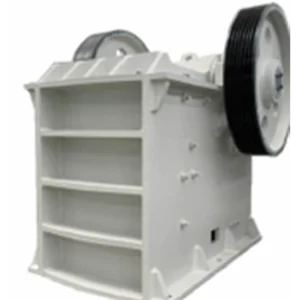
Heavy-duty aggregate crushing equipment engineered to supply fine silica sand and stone powder for cement wall panel core formulations.
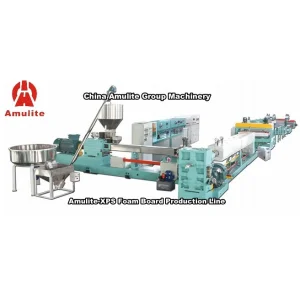
Eco-friendly CO2-foamed extruded polystyrene board production machinery delivering fire-retardant thermal insulation slabs for roof and foundation walls.
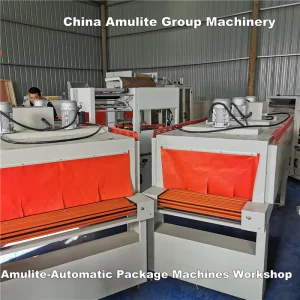
Full-line automated robotic palletizing, strapping, and stretch-wrapping equipment for damage-free wall panel transport across North Africa.
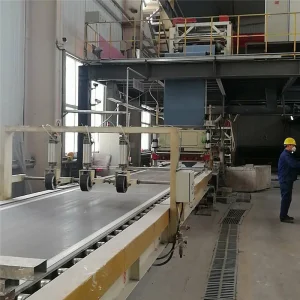
High-speed paper-faced plasterboard manufacturing plant with automated multi-deck drying ovens optimized for energy efficiency.
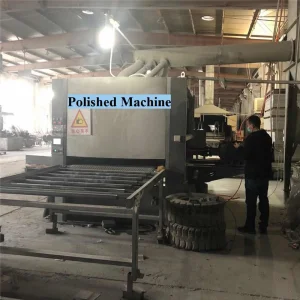
Precision calibration and sanding machine designed to deliver architectural-grade smooth surfaces on precast wall panel skins.
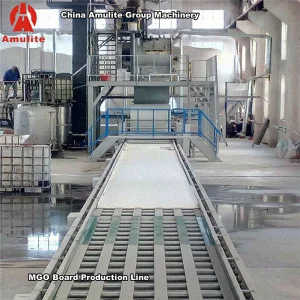
Advanced non-combustible A1-rated magnesium sulphate board machinery, ideal for fire-rated shaft walls and exterior cladding skins.
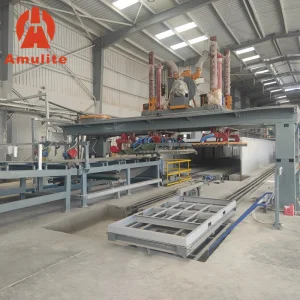
Hatschek-process fiber cement roofing sheet manufacturing line for agricultural sheds, industrial warehouses, and low-cost housing.
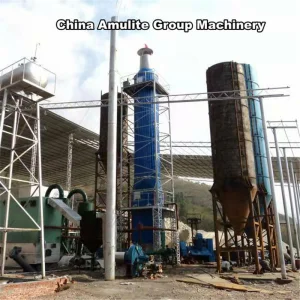
Industrial rotary kiln calcination system converting raw natural gypsum stone into high-purity plaster powder for board factories.
Expert answers addressing operational, regulatory, and procurement queries for investors targeting the Moroccan building materials sector.
Traditional red clay bricks suffer from high thermal conductivity ($k \approx 0.45\text{ W/m·K}$), slow installation requiring wet plastering, and significant weight burdens on structural frames. EPS cement panels install up to 6.5 times faster, reduce total building weight by 40%, and achieve superior compliance with Morocco’s RTCM energy efficiency standard without requiring extra external insulation layers.
Yes. Prior to equipment manufacturing, Amulite's process lab tests samples of your locally sourced Moroccan Portland cement (CPJ-35/CPJ-45), local sand, and water chemistry. We adjust slurry mixing ratios, chemical additive formulas, and curing tunnel temperature profiles to guarantee that your finished wall panels exceed national flexural strength standards ($\ge 9.0\text{ MPa}$).
Manufacturing and factory dry-testing take approximately 60 to 90 days. Ocean shipping from China (Qingdao/Tianjin) to major Moroccan ports like Tangier Med or Casablanca takes approximately 28 to 35 days. Amulite provides complete customs clearance documentation, including Certificate of Origin (CO), CE certifications, packing lists, and commercial invoices compliant with Moroccan customs regulations.
Amulite dispatches a dedicated team of senior mechanical and electrical engineers directly to your site in Morocco. Our team supervises civil foundation checks, machinery mounting, electrical wiring, PLC programming, and trial production runs. We stay on site to train your local Moroccan technical staff in machine operation, daily maintenance, and quality control testing until your plant operates at full designed output.
Panels produced using our tongue-and-groove joint mold car designs comply with Morocco’s RPS 2000 seismic code. When properly anchored with structural steel clips, EPS cement sandwich wall systems withstand ground acceleration shocks up to Zone 3 (Intensity IX on the MSK scale) without wall joint cracking or structural collapse.
Contact China Amulite Group’s senior process engineers today to receive a complete turnkey proposal, factory layout design drawing, raw material calculation, and financial feasibility analysis tailored to your target city in Morocco.
Send Inquiry Now